🚛 FREE DISCREET SHIPPING ON ALL ORDERS $49+













CBN vs CBD Gummies for Sleep: What’s the Difference?
You’re tired. Not “I could use a nap” tired. More like “I’ve been staring at the ceiling for two hours wondering if my body forgot how to sleep” tired. So you open a browser tab (not a good idea frankly due to the blue light – but that’s another story), and start searching for cannabis gummies that might actually help,

You’re tired. Not “I could use a nap” tired. More like “I’ve been staring at the ceiling for two hours wondering if my body forgot how to sleep” tired.
So you open a browser tab (not a good idea frankly due to the blue light – but that’s another story), and start searching for cannabis gummies that might actually help, and almost immediately land in an alphabet soup: CBN, CBD, THC, full-spectrum, broad-spectrum.
Two letters that come up constantly when people research sleep-specific gummies are CBN and CBD. You’ll see them marketed side by side, sometimes blended together in the same product, sometimes positioned as rivals. So which one actually does something useful when you’re trying to get a full night? And are they even that different?
Let’s break this down properly, without the hype or the hedging that makes most cannabis content exhausting to read.
Where CBN and CBD Come From
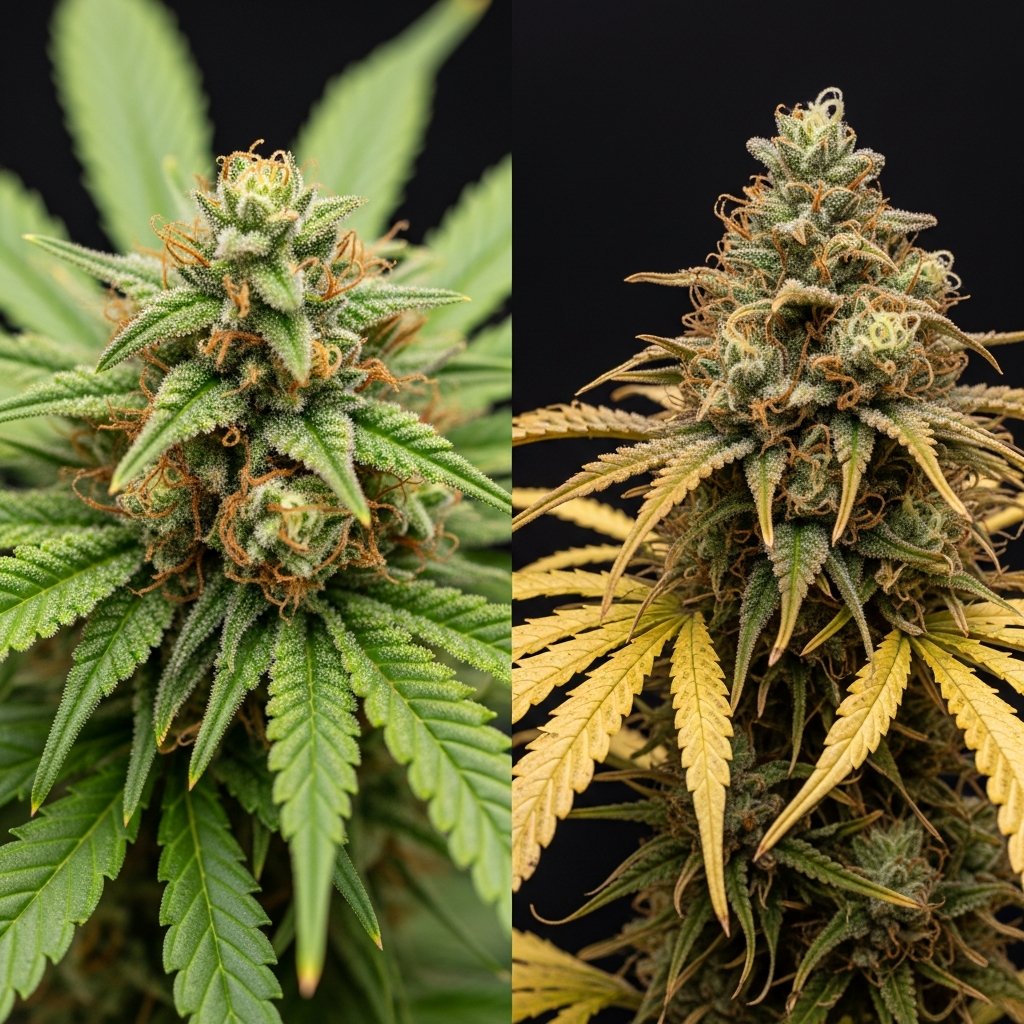
Both cannabinoids live in the cannabis plant, but they get there very differently. CBD is produced directly from CBDA, its acidic precursor, during the plant’s growth cycle. It’s abundant, well-studied, and relatively easy to extract in meaningful quantities. CBN, on the other hand, is what happens to THC when it ages. Heat, light, and time break THC down into CBN – a process called oxidation.
This is worth knowing for one practical reason: CBN content in a product depends heavily on the age and handling of the starting material. A freshly harvested, well-preserved plant has almost no CBN. Old flower that’s been sitting in a warm drawer for a year? It’s got some. Manufacturers now produce CBN more deliberately through controlled oxidation, but the origin story matters for understanding what you’re actually buying.
CBD, by contrast, is predictable. You know roughly how much you’re getting, the extraction is mature technology, and the regulatory landscape – imperfect as it is – has developed further around it than around CBN.
What the Science Actually Says About Sleep

Here’s where things get honest. CBD’s relationship with sleep is nuanced. At lower doses, it may actually be mildly alerting for some people – interesting, given that it’s sold heavily as a sleep aid. At higher doses, the evidence tips more toward a calming, anxiety-reducing effect that can support falling asleep. A lot of what CBD does for sleep seems to go through anxiety reduction rather than any direct sedative mechanism.
CBN has a reputation as “the sleepy cannabinoid,” but the clinical evidence for this is thinner than the marketing suggests. Much of what people cite comes from anecdote, older studies with methodological issues, or the simple fact that CBN-heavy products also often contain other sleep-promoting compounds. That doesn’t mean CBN does nothing; it means we’re still figuring out the mechanism.
A randomized, placebo-controlled crossover trial found that a 300mg dose of CBD significantly reduced anxiety in a simulated public speaking model, supporting the idea that CBD’s sleep benefits are partly mediated through anxiolysis rather than direct sedation. Lower doses showed much weaker effects — suggesting dose-response matters more than most product labels acknowledge. A separate 2019 trial found no acute effects of CBD on sleep architecture in healthy subjects at lower doses, which is consistent with that picture.
CBN research, by comparison, remains sparse in humans. Most mechanistic hypotheses about CBN as a sedative are extrapolated from older animal data or from studies that did not isolate CBN from other cannabinoids. The field genuinely hasn’t caught up to the marketing yet, and that gap should inform how you read label claims.
Bergamaschi MM et al. Neuropsychopharmacology. 2011;36(6):1219–1226. https://doi.org/10.1038/npp.2011.6 Linares IM et al. Front Pharmacol. 2019;10:1243. https://doi.org/10.3389/fphar.2019.01243
How Each Cannabinoid Feels Differently at Night
People who’ve tried both often describe the experience differently, and those descriptions are worth paying attention to even when clinical data is thin. CBD at a meaningful dose (we’re talking 25 mg to 75 mg, not the 5 mg that some products quietly use) tends to soften the mental chatter. Racing thoughts slow down. The body doesn’t feel drugged, just less wired.
CBN tends to be described as physically heavier. Users report a kind of bodily relaxation, a pull toward stillness that feels more somatic than mental. Some people find it more useful for staying asleep than falling asleep. Some don’t notice much at all. Individual variation here is real and significant.
What most experienced users agree on is that combinations often outperform either cannabinoid alone. A product with both CBD and CBN – especially alongside a small amount of melatonin or calming terpenes like myrcene and linalool – tends to get better reviews than single-cannabinoid options. The entourage effect isn’t proven at a mechanistic level for every compound combination, but the pattern shows up consistently enough to be worth noting.
Gummies Specifically: Why the Format Matters for Sleep

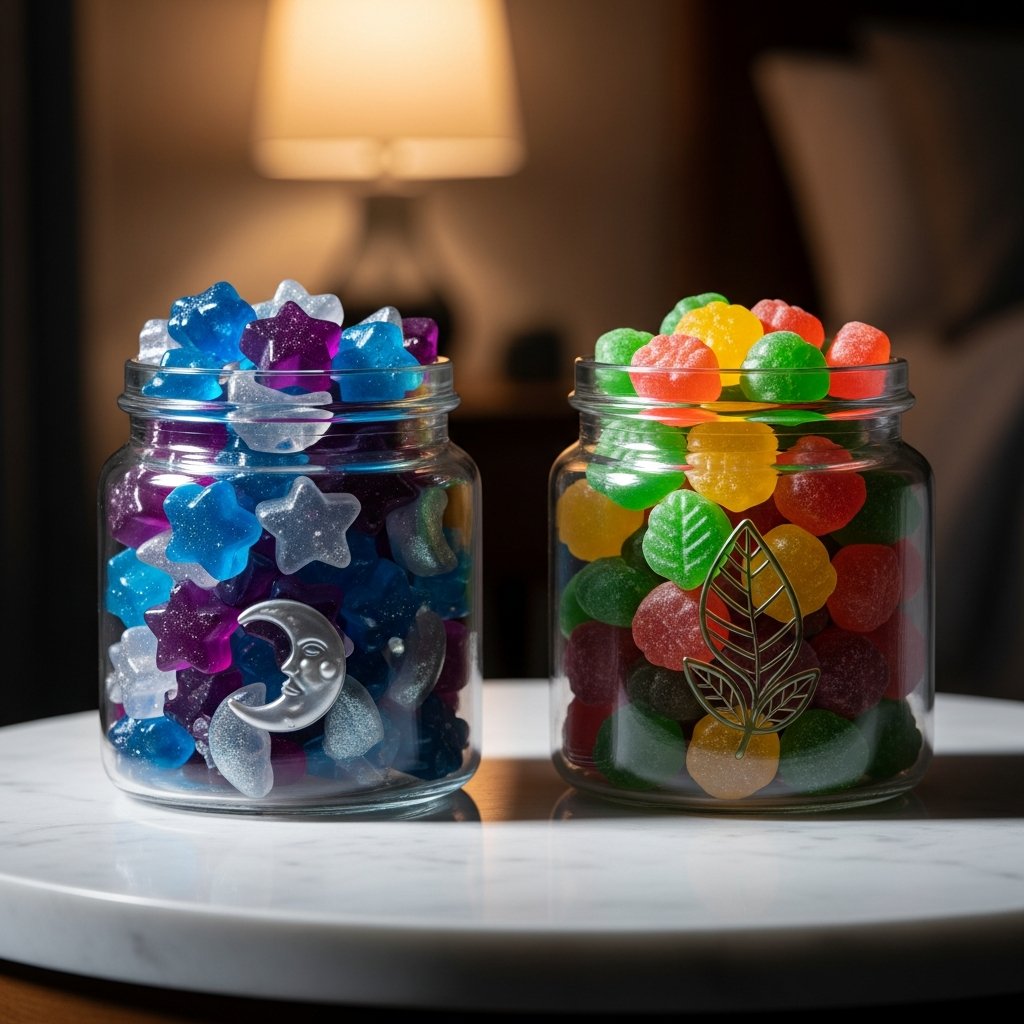
Gummies are slow. That’s their biggest feature and their biggest limitation when it comes to sleep. Because you’re digesting them, onset can take anywhere from 45 minutes to two hours depending on your metabolism, what you ate, and your body composition. If you pop a gummy 10 minutes before you want to be asleep, you might find yourself wide awake and frustrated at midnight.
The timing protocol most people land on is taking a sleep gummy 60 to 90 minutes before your target sleep time. This gives the cannabinoids time to get where they’re going. The upside of gummies over tinctures or vapes is duration: the effects, when they kick in, tend to last longer because of how the liver processes the compounds.
For people who struggle with middle-of-the-night waking rather than initial sleep onset, this slow-release profile is actually a genuine advantage. You’re not just getting a spike and a crash; you’re getting a more sustained effect through the early morning hours.
When you’re weighing gummy options for sleep, it helps to look at products that combine cannabinoids thoughtfully rather than just stacking one active ingredient. Readers comparing options in this category often look at something like the cbdMD Delta 9 THC Lights Out Sleep Gummies, which pairs Delta 9 THC with other sleep-supporting compounds – a formulation approach that reflects what the evidence suggests works better than any single cannabinoid in isolation.
cbdMD Delta 9 THC Lights Out Sleep Gummies
Multi-cannabinoid formula designed for sleep onset and duration support
Dosing: The Part Most People Get Wrong
Underdosing is probably the single most common reason people try CBD or CBN gummies for sleep and walk away thinking they don’t work. A 5 mg CBD gummy is a starting point, not a therapeutic dose for sleep. Most of the positive human data on CBD for sleep or anxiety uses doses that most consumer products don’t come close to.
A reasonable starting point for sleep-focused use is 25 mg of CBD, taken consistently for at least a week before drawing conclusions. CBN tends to be used in smaller amounts – 5 mg to 15 mg is common – partly because it’s more expensive to produce and partly because the dose-response curve isn’t as well established.
Start low, give it time, and adjust. That’s genuinely the most evidence-aligned advice here. And if you want to understand how cannabinoids behave in your system more broadly, including how long they stay detectable, the ultimate guide to drug testing and cannabinoids covers that territory in useful detail.
Expert Insight
Dr. Alexander Tabibi
Dr. Alexander Tabibi
A large retrospective chart review found that CBD at doses of 25 mg to 175 mg per day was associated with improved sleep scores in the majority of patients over the first month, though scores fluctuated in subsequent months – suggesting that consistent dosing and expectation management matter as much as the cannabinoid itself. The study was retrospective and uncontrolled, which limits causal inference.
What the data pattern suggests is that CBD is not a one-night fix. People who try it once or twice at a low dose and report no effect have likely not given the compound a fair trial at a relevant dose. Titrating slowly and tracking subjectively over two to four weeks gives you much more usable information than a single night’s experiment.
Shannon S et al. Cannabidiol in anxiety and sleep: a large case series. Perm J. 2019;23:18–041. https://doi.org/10.7812/TPP/18-041 — PMID: 30624194
What to Look for on a Label Before You Buy

Not all sleep gummies are created equally, and the label tells you more than the marketing copy does – if you know what to look for. First: total cannabinoid content per gummy, not per package. Some brands list the total milligrams across all gummies in the bottle, which makes a 5 mg gummy look like a 300 mg product.
Second, look for a certificate of analysis (COA) from an independent third-party lab. This is the only way to verify that the CBN or CBD content on the label is actually in the product. The gap between labeled and actual content in unverified products can be significant. For a fuller picture of what those lab results actually mean and how to read them, the cannabinoid safety and lab testing guide is a useful companion resource.
Third: additional ingredients. Melatonin, L-theanine, and specific terpene profiles (myrcene in particular) are commonly added to sleep gummies and may contribute more to the effect than the cannabinoid dose alone. Whether that’s a good or bad thing depends on your preferences and sensitivities.
For people who want to experiment with different cannabinoid ratios across day and night use, a product like the Hometown Hero 5mg Live Rosin Day & Night Discovery Pack is worth looking at – it’s structured specifically around the idea that your daytime and nighttime cannabinoid needs are different, which they often are.
Hometown Hero 5mg Live Rosin Day & Night Discovery Pack
Separate day and night formulations for experimenting with cannabinoid ratios at different times
So Which One Should You Actually Try?
If you’re brand new to cannabis for sleep and you want the most studied option with the clearest safety profile, start with CBD. Use a real dose (25 mg or more), give it two to three weeks, and take it about 90 minutes before bed. You’re more likely to find consistent products, more likely to have data-backed expectations, and less likely to be surprised by the effects.
If you’ve already tried CBD and found it didn’t do enough, or if you’re specifically struggling with waking up in the middle of the night rather than initial sleep onset, CBN – either alone or in combination with CBD – is a reasonable next experiment. Just go in with realistic expectations and a willingness to titrate.
And if your sleep problems are persistent, significant, or accompanied by other symptoms, none of this replaces a conversation with a healthcare provider. Gummies are not a diagnosis or a treatment plan. They’re a tool, and like any tool, they work best when you understand what they’re actually designed to do.
Frequently asked questions
Is CBN or CBD better for sleep?
CBD has more clinical research behind it, particularly for anxiety-related sleep difficulties. CBN is often reported to feel more physically sedating, but the human data is thinner. Many people find a combination of both, sometimes with melatonin or calming terpenes, works better than either alone.
How long before bed should I take a CBD or CBN gummy?
Plan for 60 to 90 minutes before your target sleep time. Gummies are digested rather than absorbed immediately, so onset is slower than tinctures or inhaled products. Taking them too close to bedtime is one of the most common reasons people report they “didn’t work.”
Will CBN or CBD gummies make me feel high?
CBD is non-intoxicating at normal doses. CBN is very mildly psychoactive compared to THC, but most people don’t report a “high” from typical CBN doses in commercial products. Products containing Delta 9 THC alongside these cannabinoids will have a more noticeable psychoactive effect.
How much CBD should I take for sleep?
Research suggesting sleep benefits typically used doses between 25 mg and 175 mg. Most consumer gummies start at 5 mg to 25 mg per piece. Start at 25 mg and give it at least one to two weeks of consistent nightly use before deciding whether to adjust upward.
Can I take CBD or CBN gummies with other sleep medications?
CBD is metabolized by the same liver enzymes (CYP450) responsible for processing many medications, including some sleep drugs. This creates potential interaction risks. Always consult a pharmacist or physician before combining cannabinoids with prescription or over-the-counter sleep aids.
Does CBN show up on a drug test?
Standard urine drug tests screen for THC metabolites, not CBN directly. However, because CBN is a degradation product of THC, some CBN products may contain trace THC that could trigger a positive result. If drug testing is a concern, verify the COA for THC content before using any cannabinoid product.
Are CBN gummies legal?
CBN derived from hemp with less than 0.3% Delta 9 THC by dry weight is federally legal under the 2018 Farm Bill, but individual state laws vary. Some states have enacted restrictions on hemp-derived cannabinoids beyond CBD. Check your state’s current regulations before purchasing.
Important Notice
This article is for informational purposes only and does not constitute medical advice, diagnosis, or treatment. The information presented about CBN and CBD for sleep reflects current research, which is ongoing and evolving. Individual responses to cannabinoids vary significantly. Consult a qualified healthcare provider before using any cannabinoid product, particularly if you have a diagnosed sleep disorder, take prescription medications, are pregnant or nursing, or have underlying health conditions. Do not discontinue prescribed medications in favor of cannabinoid supplements without medical supervision.
Sources
Linares et al. (2019). No acute effects of cannabidiol on the sleep-wake cycle of healthy subjects: a randomized, double-blind, placebo-controlled, crossover study. Frontiers in Pharmacology, 10:1243. PMID: 31749696
Shannon et al. (2019). Cannabidiol in anxiety and sleep: a large case series. The Permanente Journal, 23:18-041. PMID: 30624194
Zuardi AW. (2008). Cannabidiol: from an inactive cannabinoid to a drug with wide spectrum of action. Revista Brasileira de Psiquiatria, 30(3):271-280. PMID: 19696995
Russo EB. (2011). Taming THC: potential cannabis synergy and phytocannabinoid-terpenoid entourage effects. British Journal of Pharmacology, 163(7):1344-1364. PMID: 21749363
Murillo-Rodriguez E et al. (2014). Potential effects of cannabidiol as a wake-promoting agent. Current Neuropharmacology, 12(3):269-272. PMID: 24923340
For adults 21+ only. Cannabis laws vary by state. If you are experiencing a medical emergency, call 911 or go to your nearest emergency room immediately. Do not rely on cannabinoid products in place of emergency medical care.
Weed.com does not sell cannabis products directly. Product availability, pricing, and legality differ by location. This content is intended for informational purposes only and does not constitute an endorsement of any specific product or brand.