🚛 FREE DISCREET SHIPPING ON ALL ORDERS $49+














Can Delta-9 Gummies Make Anxiety Worse? What to Know
Here’s something that trips people up: you tried a delta-9 gummy to take the edge off, and instead of feeling calm, you felt your heart hammering and your thoughts racing. You weren’t imagining it. THC and anxiety have a genuinely complicated relationship, and understanding why can save you a lot of unpleasant evenings on the couch wondering if you’ve broken

Published on: April 30, 2026
Here’s something that trips people up: you tried a delta-9 gummy to take the edge off, and instead of feeling calm, you felt your heart hammering and your thoughts racing. You weren’t imagining it. THC and anxiety have a genuinely complicated relationship, and understanding why can save you a lot of unpleasant evenings on the couch wondering if you’ve broken your brain.
The short answer is yes, delta-9 gummies can make anxiety worse – for some people, in some situations, at some doses. But that’s not the whole story. Context matters enormously here, and so does how you approach the experience before you ever open the bag.
Why THC Can Trigger Anxiety in the First Place

Delta-9 THC works primarily by binding to CB1 receptors in the brain, particularly in areas like the amygdala – the part of your brain that’s basically a full-time threat-detection department. When THC floods those receptors, the amygdala can respond with heightened alertness. For some people that reads as pleasant euphoria. For others, especially in higher doses, it tips into paranoia and a sense that something is very, very wrong.
The dose-response curve here is genuinely unusual. Low doses of THC tend to reduce anxiety; higher doses often amplify it. This biphasic pattern is well-documented in research, and it’s one of the main reasons “just eat a whole gummy” is advice that has ended a lot of people’s evenings badly.
Edibles – including gummies – complicate this further because the delay between eating one and feeling it can be anywhere from 30 minutes to two hours. People eat a gummy, feel nothing after 45 minutes, eat another one, and then both hit simultaneously at full force. It’s a very common story, and it’s a reliable path toward a very anxious night.
Expert Insight Dr. Alexander Tabibi
A guided systematic review of 31 studies examining medical cannabis and mental health confirmed that the biphasic dose-response relationship between THC and anxiety is one of the most reproducible findings in cannabinoid pharmacology. At lower doses, THC appears to modulate amygdala activity in ways that reduce perceived threat. At higher doses, the same CB1 receptor activation produces the opposite effect — elevated heart rate, racing thoughts, and a threat-signaling cascade the brain interprets as danger. The crossover point varies considerably between individuals and depends on prior exposure, baseline anxiety state, and whether CBD is present in the formulation.
Edible pharmacokinetics compound this meaningfully. Unlike inhaled THC, gummies are metabolized hepatically to 11-hydroxy-THC — a metabolite that crosses the blood-brain barrier more readily and produces a longer, often more intense effect. The review identified that cognitive function can be acutely affected even in users without a psychiatric history, and that individuals with pre-existing anxiety vulnerability face a consistently higher risk of dose-dependent worsening. Evidence suggests that patience with onset timing and conservative starting doses are the most protective variables available to edible users.
Walsh Z, Gonzalez R, Crosby K, Thiessen MS, Carroll C, Bonn-Miller MO. (2016). Medical cannabis and mental health: A guided systematic review. Clinical Psychology Review, 51:15-29. PMID: 27816801
Who Is More Likely to Feel Anxious After a Delta-9 Gummy
Not everyone responds to THC the same way, and it’s not entirely random. A few patterns show up consistently. People who already deal with anxiety disorders tend to have a lower threshold before THC tips from relaxing into activating. First-time or infrequent users are more vulnerable simply because tolerance to the anxiogenic effects of THC builds with regular use, meaning what sends a newcomer into a spin might be completely unremarkable to a regular consumer.
There’s also a setting component that people underestimate. Eating a gummy in a familiar environment when you’re already feeling okay is a very different experience from eating one when you’re already stressed, around people you don’t entirely trust, or somewhere unfamiliar. THC doesn’t generate feelings out of nowhere – it tends to amplify what’s already present. If you’re tense going in, there’s a reasonable chance you’ll be more tense once it kicks in.
Genetics also plays a role. Variations in the FAAH gene (which affects how your body breaks down endocannabinoids) can influence sensitivity to THC, and some people simply produce fewer CB1 receptors in the regions that modulate anxiety. This isn’t something you can test for at home, but it’s a useful reminder that “this worked fine for my friend” is not a universal guarantee.
The Dose Conversation Nobody Wants to Have
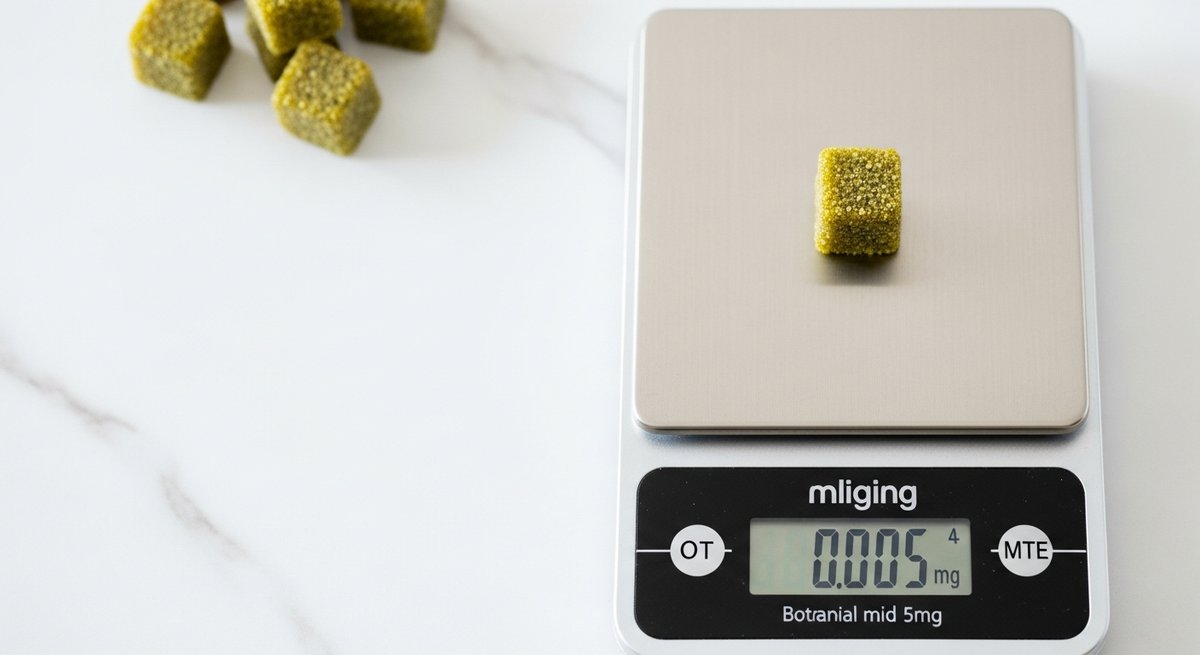
Most commercially available delta-9 gummies are dosed somewhere between 5mg and 25mg per piece. For context, the general guidance from harm reduction and cannabis health researchers is that 2.5mg to 5mg is a reasonable starting dose for someone new to edibles, or for someone who has previously experienced anxiety with THC. Five milligrams is the widely cited “standard” serving, but plenty of products package their gummies at 10mg or higher as the default unit.
That gap between “standard serving” and “what the package actually contains” is where a lot of anxiety-inducing experiences live. Cutting a gummy in half or even into quarters isn’t glamorous advice, but it’s genuinely practical. And waiting – actually waiting two full hours before deciding the first dose didn’t work – is one of the most protective habits you can build.
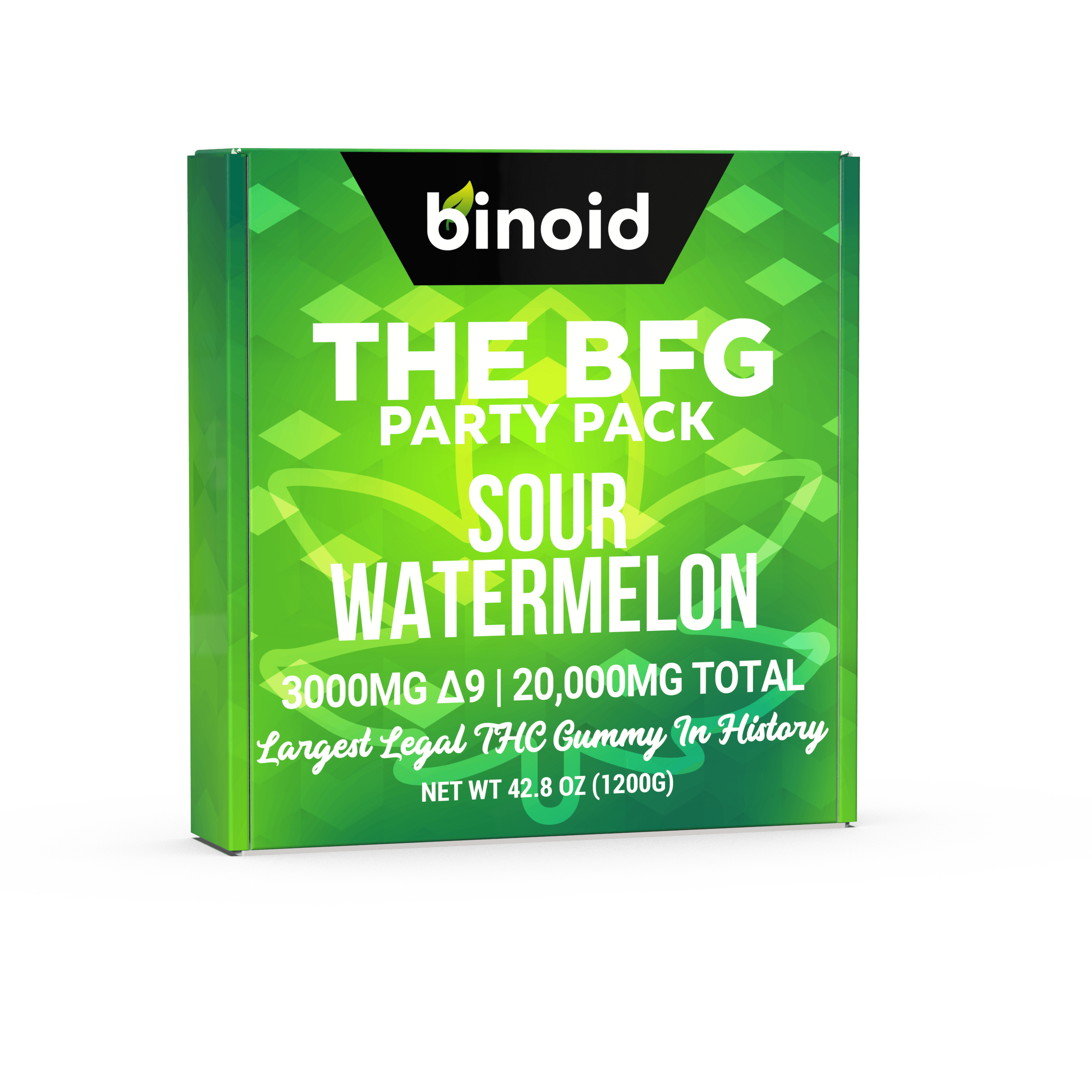
Binoid The BFG – 3000mg Delta 9 THC Gummy – Sour Watermelon
Binoid The BFG – 3000mg Delta 9 THC Gummy – Sour Watermelon is a superior edible that truly stands out in the crowd.
It’s also worth understanding the full spectrum of what delta-9 gummies can contain. Many products now include CBD alongside THC, which evidence suggests can blunt some of the anxiogenic effects of THC. A 1:1 or 2:1 CBD-to-THC ratio tends to produce a more level experience for anxiety-prone users. If you’ve had difficult experiences with THC-only products, a formulation with meaningful CBD content is worth exploring. For a broader look at how delta-9 compares to other hemp-derived cannabinoids and what’s actually in these products, the ultimate guide to delta-9 THC covering hemp-derived and cannabis-derived differences breaks down the formulation distinctions clearly.
What to Do If Anxiety Hits Mid-Session

First: you are not in danger. THC-induced anxiety is deeply unpleasant, but it is time-limited and not physically harmful. Reminding yourself of this – even saying it out loud – can interrupt the feedback loop where anxiety about the anxiety makes everything worse.
Changing your environment helps. If you’re in a loud or bright space, move somewhere quieter and darker. Lying down with a blanket and something low-stakes on in the background (familiar TV, not a thriller) reduces sensory input and gives your nervous system less to react to. Black pepper – yes, really – contains beta-caryophyllene, a terpene that binds to CB2 receptors and has anecdotally been reported to ease THC-related anxiety. The evidence base for this is limited, but it’s harmless and some people find it genuinely useful. Smell or chew a few peppercorns and see.
CBD taken after the fact may also help shorten the duration of an anxious THC response. It won’t reverse the experience immediately, but some users report meaningful relief from a moderate CBD dose (25mg to 50mg) taken during a difficult session. And water, a light snack, and slow breathing are genuinely not nothing.
Expert Insight Dr. Alexander Tabibi
A review of cannabinoid interactions with cytochrome P450 liver enzymes established that CBD is the most potent cannabinoid inhibitor of CYP2C9, CYP2C19, and CYP3A4 — the pathways responsible for metabolizing both THC itself and a wide range of psychiatric medications. In combined CBD:THC gummies, this metabolic interaction means CBD does not merely compete at CB1 receptors; it also alters how THC is processed systemically, which contributes to the qualitatively different experience users describe when moving from a THC-only product to a ratio formulation. The practical implication is that a gummy labeled full-spectrum with trace CBD is unlikely to produce the same modulating effect as one specifically formulated with a meaningful CBD:THC ratio.
This is precisely why reading the actual cannabinoid panel on a certificate of analysis matters more than marketing language. The CYP450 inhibition effect scales with CBD dose — meaning a product listing only “full-spectrum extract” without quantified CBD content gives you no reliable basis for predicting whether meaningful THC modulation is occurring. Evidence suggests that for anxiety-prone users seeking the protective effect of CBD alongside THC, verified cannabinoid ratios on a third-party COA are the only reliable purchasing signal.
Zendulka O, Dovrtelova G, Noskova K, Turjap M, Sulcova A, Hanus L, Jurica J. (2016). Cannabinoids and Cytochrome P450 Interactions. Current Drug Metabolism, 17(3):206-26. PMID: 26651971
Picking a Gummy That’s Less Likely to Cause Problems
If anxiety is a concern for you, product selection genuinely matters. You’re looking for a few things: a lower per-unit THC dose (5mg or under), a formulation that includes CBD, and a brand that publishes its third-party lab results so you can confirm the cannabinoid content before you eat it.
Terpene profile is also worth paying attention to. Some terpenes – particularly linalool (found in lavender) and myrcene – are associated with more sedating, relaxed effects. Others, like limonene, tend toward uplifting and occasionally activating. Gummies made from whole-plant or broad-spectrum extracts will retain more of these terpenes than isolate-based products, giving you more influence over the type of experience you’re likely to have.
For people specifically trying to find formulations designed with calm in mind, the roundup of weed gummies for anxiety and stress relief in 2025 covers a curated selection of products that address exactly this – lower doses, CBD-inclusive formulas, and transparent lab testing. It’s a useful reference if you’re starting from scratch or trying to switch away from something that hasn’t been working for you.
One category worth considering for anxiety-prone users is gummies that lean on the delta-8 and delta-9 spectrum difference. Delta-8 THC is often described as producing a milder, less racey effect than delta-9 – and while the science on this is still developing, many users with delta-9 anxiety sensitivity report better experiences with delta-8 products. The breakdown of delta-8 vs. delta-9 THC and what distinguishes them is a good place to get oriented if you’re considering that switch.
The Bigger Picture: When to Reconsider THC Altogether
Here’s a thing that doesn’t get said enough: if delta-9 gummies consistently produce anxiety for you even at low doses, they may simply not be the right tool. That’s not a failure – it’s useful information. Some people’s endocannabinoid systems respond better to CBD-dominant products, or to non-psychoactive approaches to stress management entirely.
Chronic, frequent use of THC in anxiety-prone individuals has also been associated with a kind of paradoxical worsening over time – where tolerance builds to the pleasurable effects faster than to the anxiogenic ones, leaving people needing more product to feel good while the anxiety component stays stubbornly present. If that sounds familiar, it’s worth an honest evaluation of your usage pattern.
Cannabis is not a monolith, and neither is anxiety. The goal is finding what actually works for your particular nervous system – not persisting with something that reliably makes things worse because it works for someone else.
Frequently asked questions
Can delta-9 gummies cause a panic attack?
Yes, high doses of delta-9 THC can trigger panic-like episodes, particularly in people with pre-existing anxiety or low THC tolerance. The experience is time-limited and not physically dangerous, but it can be
very distressing. Keeping doses low and waiting the full onset window before redosing substantially reduces this risk.
very distressing. Keeping doses low and waiting the full onset window before redosing substantially reduces this risk.
How long does THC-induced anxiety last after eating a gummy?
Edible effects typically peak between 2 and 4 hours after ingestion and can linger for 6 to 8 hours total. Anxiety symptoms usually follow the same curve and ease as THC levels drop. Staying calm, changing your environment, and using grounding techniques can help the time pass more comfortably.
Does CBD in a gummy actually reduce THC anxiety?
Evidence suggests CBD acts as a negative allosteric modulator at CB1 receptors, partially blunting THC’s anxiogenic effects without eliminating the experience entirely. Products with a CBD-to-THC ratio of 1:1 or higher tend to produce noticeably calmer outcomes for anxiety-prone users compared to THC-only formulations.
What is a safe starting dose of delta-9 gummies for someone with anxiety?
Harm reduction guidelines and cannabis researchers generally recommend 2.5mg as a starting dose for anxiety-prone individuals. Five milligrams is the commonly cited standard serving, but starting lower and waiting at least two hours before considering more is the most reliable way to avoid an unpleasant experience.
Why do gummies cause more anxiety than other forms of THC?
Edibles are metabolized into 11-hydroxy-THC in the liver, a compound that crosses the blood-brain barrier more readily than inhaled THC. Combined with the delayed and unpredictable onset, this often leads to unintentional overdosing and a longer, more intense effect that can be harder to manage than inhaled forms.
Is it possible to build tolerance to the anxiety from delta-9 THC?
Some tolerance to THC’s anxiogenic effects does develop with regular use, but it tends to lag behind tolerance to the pleasurable effects. This means frequent users may find they need higher doses to feel good while anxiety sensitivity persists, potentially worsening the overall risk profile over time with heavy use.
Should I stop using delta-9 gummies if they consistently make me anxious?
If low doses consistently produce anxiety despite adjusting dose, timing, and setting, delta-9 THC may not suit your particular endocannabinoid system. CBD-dominant products or non-psychoactive approaches may be better alternatives. Persistent anxiety related to cannabis use is worth discussing with a healthcare provider familiar with cannabinoid medicine.
Important disclaimer
This article is for informational purposes only and does not constitute medical advice. Delta-9 THC affects individuals differently, and people with anxiety disorders, mental health conditions, or those taking prescription medications should consult a qualified healthcare provider before using any cannabis or hemp-derived product. Nothing in this article should be used to diagnose, treat, or manage any medical condition.
Sources
Walsh Z, Gonzalez R, Crosby K, Thiessen MS, Carroll C, Bonn-Miller MO. (2016). Medical cannabis and mental health: A guided systematic review. Clinical Psychology Review, 51:15-29. PMID: 27816801
Zendulka O, Dovrtelova G, Noskova K, et al. (2016). Cannabinoids and Cytochrome P450 Interactions. Current Drug Metabolism, 17(3):206-26. PMID: 26651971
Rodas JD, George TP, Hassan AN. (2024). A Systematic Review of the Clinical Effects of Cannabis and Cannabinoids in Posttraumatic Stress Disorder Symptoms and Symptom Clusters. The Journal of Clinical Psychiatry, 85(1). PMID: 38353645
For adults 21+ only. Cannabis laws vary by state. If you are experiencing a medical emergency, severe chest pain, difficulty breathing, or symptoms that feel life-threatening, call 911 or go to the nearest emergency room immediately. Do not use this content as a substitute for professional medical advice, diagnosis, or treatment.