🚛 FREE DISCREET SHIPPING ON ALL ORDERS $49+









Best Vapes for Anxiety Relief: Calm Strains and Products
There is a particular kind of anxiety that hits right before a social event, a difficult conversation, or just on a random Tuesday afternoon when your brain decides it has processed enough. You want relief that is fast, controllable, and does not knock you flat. That is exactly the conversation this guide is designed for – specifically, which vape products

There is a particular kind of anxiety that hits right before a social event, a difficult conversation, or just on a random Tuesday afternoon when your brain decides it has processed enough. You want relief that is fast, controllable, and does not knock you flat. That is exactly the conversation this guide is designed for – specifically, which vape products and strain types are worth considering for anxiety, and what the science actually says about why some vapes work better than others.
Why Inhalation Changes the Anxiety Equation
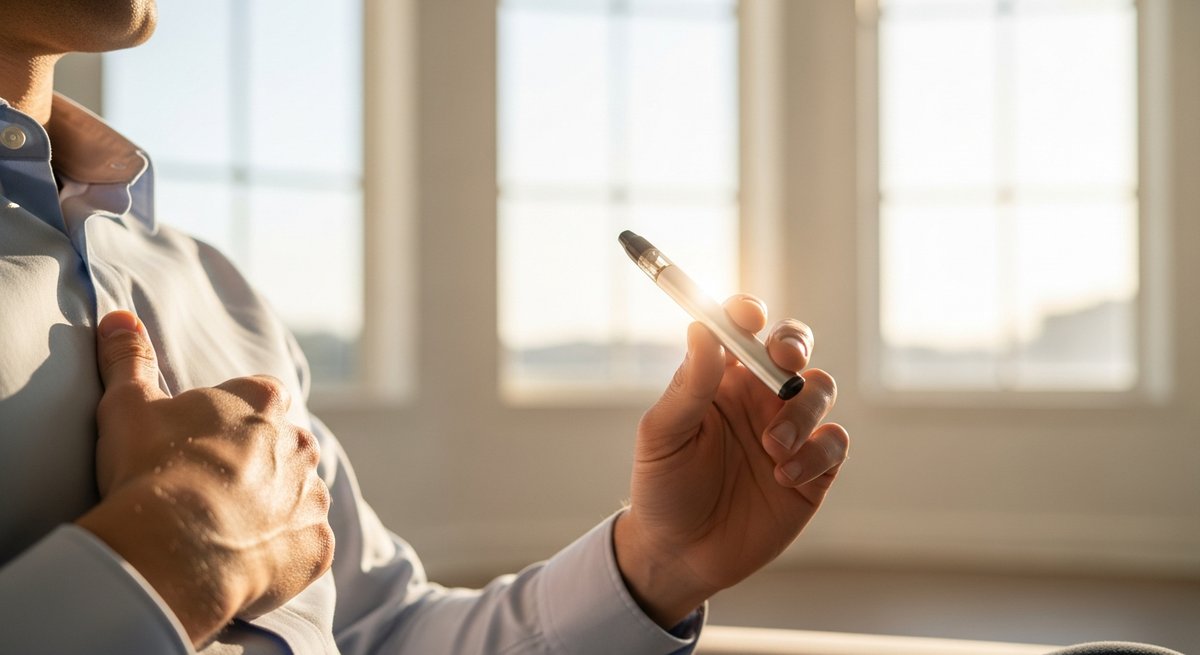
Edibles and tinctures are excellent tools, but they require patience. Onset can be anywhere from 30 minutes to two hours, which is not terribly helpful when a wave of anxious energy is already cresting. Vaping changes the timeline completely. Inhalation delivers cannabinoids to the bloodstream through the lungs in a matter of minutes, sometimes under five. That rapid onset is the key reason vaping gets discussed so often in the context of acute stress and anxiety.
The flip side is that quick onset also means you can feel the full effect before you realize you have taken too much. This is especially relevant with anxiety: while modest doses of THC tend to reduce stress in most people, higher doses frequently do the opposite. The relationship between THC and anxiety follows something close to an inverted U – a little helps, a lot can spiral. Knowing that before you pick up a vape is genuinely useful.
CBD-dominant vapes sidestep this issue significantly. CBD does not produce intoxicating effects, and the available evidence suggests it interacts with anxiety-related receptors through pathways that are quite different from THC. Balanced or CBD-leaning products represent a solid starting point for people who are new to cannabis or particularly sensitive to the anxious edge THC can produce at higher doses.
Expert Insight
Dr. Alexander Tabibi
Dr. Alexander Tabibi
A well-cited crossover trial found that low doses of smoked THC (7.5 mg) reduced self-reported stress responses compared to placebo, while higher doses (12.5 mg) increased negative mood and anxiety ratings. The pattern held across most participants and is one of the cleaner pieces of evidence supporting a cautious, low-and-slow approach to inhaled cannabis for anxiety management.
What the trial cannot tell us is how individual cannabinoid sensitivity, tolerance history, or strain terpene profile modifies that curve for any given person. The dose-response finding is robust, but the clinical picture remains more variable than a single number suggests. Treat the low-dose principle as a floor, not a formula.
Childs E et al. (2017). Dose-related effects of delta-9-THC on emotional responses to acute psychosocial stress. Drug and Alcohol Dependence, 177:136-144. PMID: 28570972
Strain Types That Show Up Most Often for Anxiety
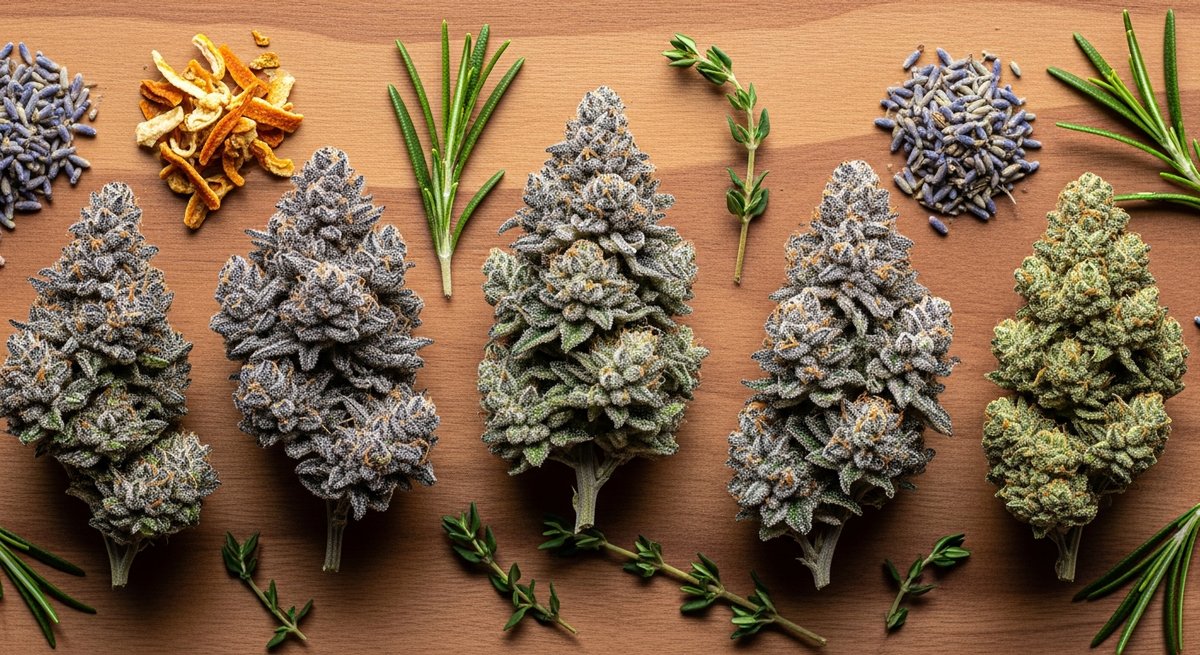
The indica/sativa binary is more of a marketing shorthand than a pharmacological fact, but it persists because it loosely correlates with how people describe their experience. Indica-leaning strains tend to be associated with body-heavy, sedating effects – which many people find calming. Sativa-leaning strains tend toward more cerebral, sometimes energetic effects, which can occasionally amplify anxiety in sensitive individuals. Hybrids sit somewhere between, and honestly, most commercially available strains are hybrids at this point.
What matters more is the terpene and cannabinoid profile. Strains high in myrcene, linalool, and beta-caryophyllene are frequently cited as contributing to a calmer, more relaxed experience. Limonene tends to appear in mood-lifting, more uplifting varieties. Beta-caryophyllene is particularly interesting because it is the only terpene known to directly bind to CB2 receptors, the same receptors involved in modulating inflammation and, to some degree, stress response.
Strains like Granddaddy Purple, OG Kush, Blue Dream, and Northern Lights appear consistently on anxiety-related strain lists, and they tend to share a terpene overlap with the compounds above. ACDC and Harlequin are worth knowing for anyone who wants minimal intoxication – both are CBD-dominant and have become reliable choices for daytime anxiety management.
THCA Vapes and the Live Rosin Difference
THCA is the raw, non-intoxicating precursor to THC. At room temperature it does nothing psychoactive. When you heat it – through vaping, for example – it decarboxylates and converts to Delta-9 THC in real time. This means a THCA vape delivers active THC when used, so it carries the same dosing considerations as any Delta-9 product.
Live rosin changes the picture because of how it is extracted. Unlike distillate, which strips terpenes out during processing, live rosin is made from fresh-frozen flower using only heat and pressure. The result preserves the full terpene and minor cannabinoid profile of the original plant. For anxiety, this matters because the entourage effect – the idea that cannabinoids and terpenes work better together – is most plausible when the source material stays intact.
People comparing distillate-based cartridges to live rosin disposables often describe a noticeably smoother, more nuanced effect from the latter. Whether that holds up in controlled trials is still an open question, but the anecdotal weight behind live rosin for anxiety is hard to ignore when you encounter it consistently across user communities.
For readers looking at live rosin specifically as a format, Binoid’s THCA disposable line is a clear example worth considering. The Binoid THCA Disposable Vapes in the live rosin format come in a 2g size – enough for extended use without constant restocking – and several strain options that lean toward the terpene profiles discussed above.
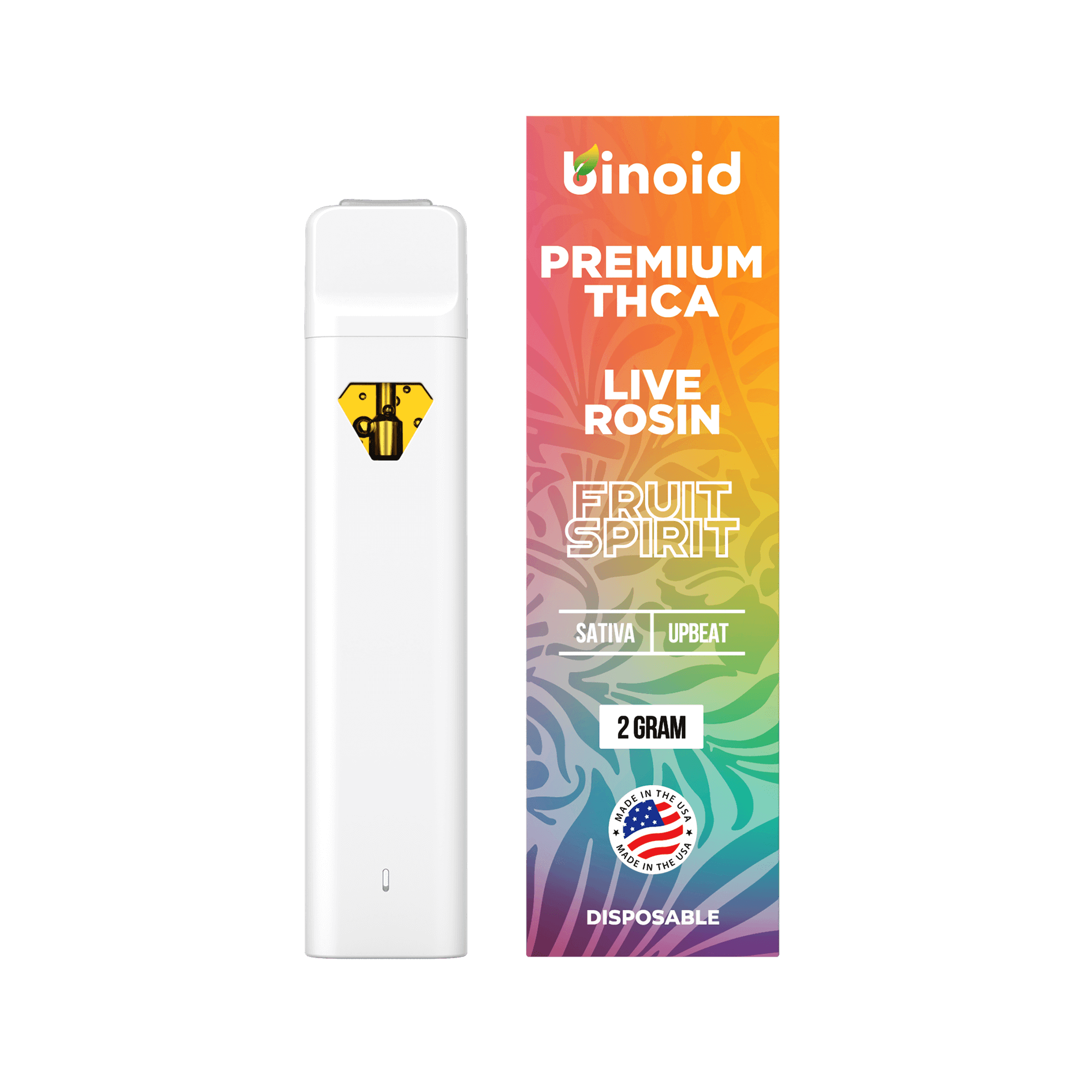
Binoid THCA Disposable Vapes – Live Rosin – 2g
Fresh-frozen live rosin extraction, full terpene profile, 2g disposable format
Dual-Chamber Vapes and Why Flexibility Matters for Anxiety
Anxiety is not static. Morning anxiety and late-night anxiety can feel like entirely different animals – one is edgy and restless, the other is heavy and ruminative. A vape that only offers one strain option does not always map well to that variability. Dual-chamber designs address this directly by putting two distinct formulations in a single device, letting you choose which side to draw from based on how you actually feel in that moment.
The Cookies 2G Dual Chamber Vape in the Triple Scoop and Georgia Pie pairing is a practical example of this approach. Triple Scoop runs sweet and dessert-forward with a relaxing lean, while Georgia Pie brings a fruitier, slightly more uplifting profile. Having both accessible through one device gives you genuine moment-to-moment flexibility without carrying two separate products.
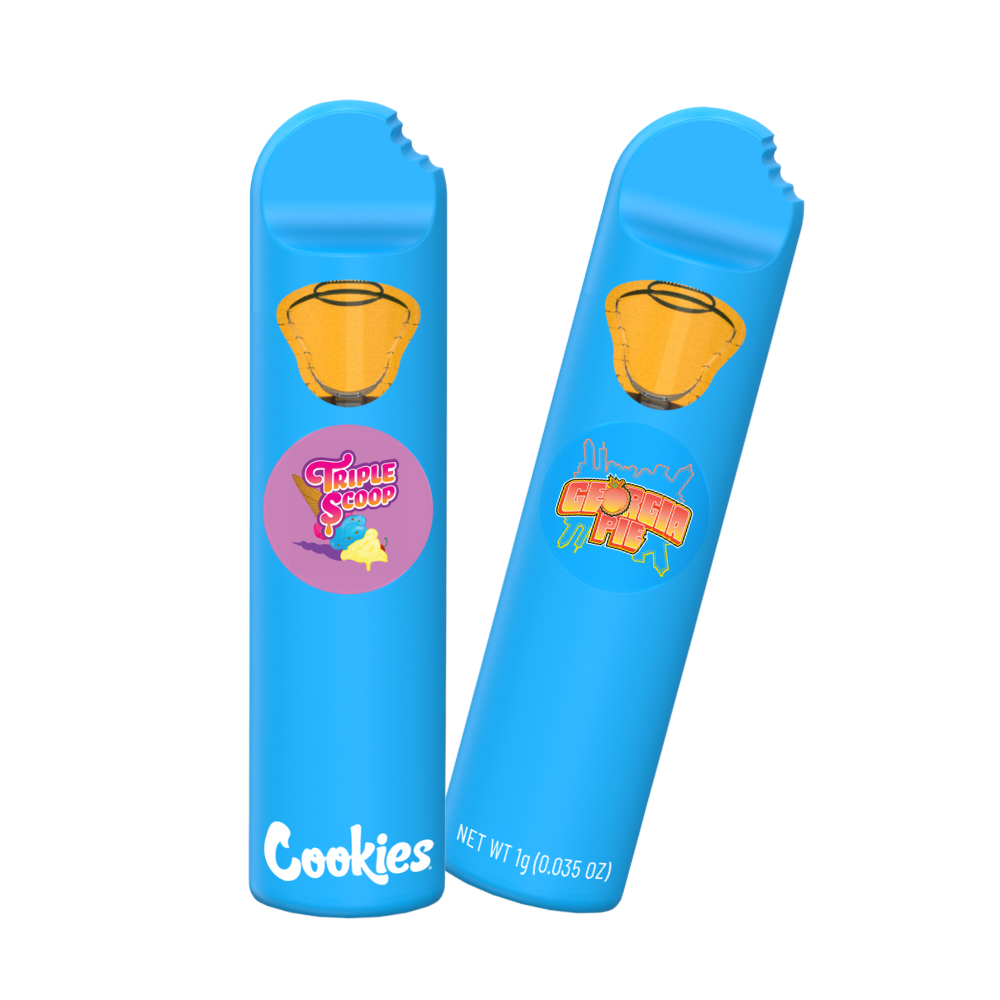
Cookies 2G Dual Chamber Vape – Triple Scoop & Georgia Pie
Two strain options in one device; switch profiles to match your mood
Anxiety That Bleeds Into Sleep Problems
Anxiety and sleep disruption feed each other in a loop that feels genuinely miserable. You cannot sleep because your mind is running, and you are anxious the next day because you did not sleep. Vaping before bed is a pattern many people adopt specifically to interrupt that cycle – the fast onset means the effect hits while you are still in wind-down mode rather than peaking at 2am.
For readers navigating both anxiety and sleep disruption, the cannabinoid choices shift a bit. CBN is increasingly paired with THC in nighttime-focused products for its potential sedating contribution. Indica-dominant profiles with higher myrcene content also tend toward heavier, sleep-adjacent effects. If this is your situation, the cannabinoids-for-sleep breakdown at Weed.com is worth reviewing alongside your vape choices – the two topics overlap more than most people expect.
One practical consideration: THC suppresses REM sleep at higher doses, which can leave you feeling unrested even after a full night. Lower doses appear to preserve sleep architecture better than larger ones – the same principle that applies to anxiety during waking hours carries through to nighttime use.
Expert Insight
Dr. Alexander Tabibi
Dr. Alexander Tabibi
Research on THC and sleep architecture consistently shows REM suppression with higher doses, which explains why some users wake feeling unrefreshed despite longer sleep duration. Titrating to the lowest effective dose remains the most evidence-aligned recommendation for anyone using inhaled cannabis to address both anxiety and sleep simultaneously.
CBN’s sedating properties are often cited but remain under-studied in rigorous trials. The available evidence is mostly preclinical or anecdotal at this stage. It may contribute meaningfully in combination formulations, but it should be considered a supporting ingredient rather than a primary sleep driver until more human trial data emerges.
Babson KA et al. (2017). Cannabis, cannabinoids, and sleep: a review of the literature. Current Psychiatry Reports, 19(4):23. PMID: 28349316
Temperature Settings and Their Effect on Your Experience
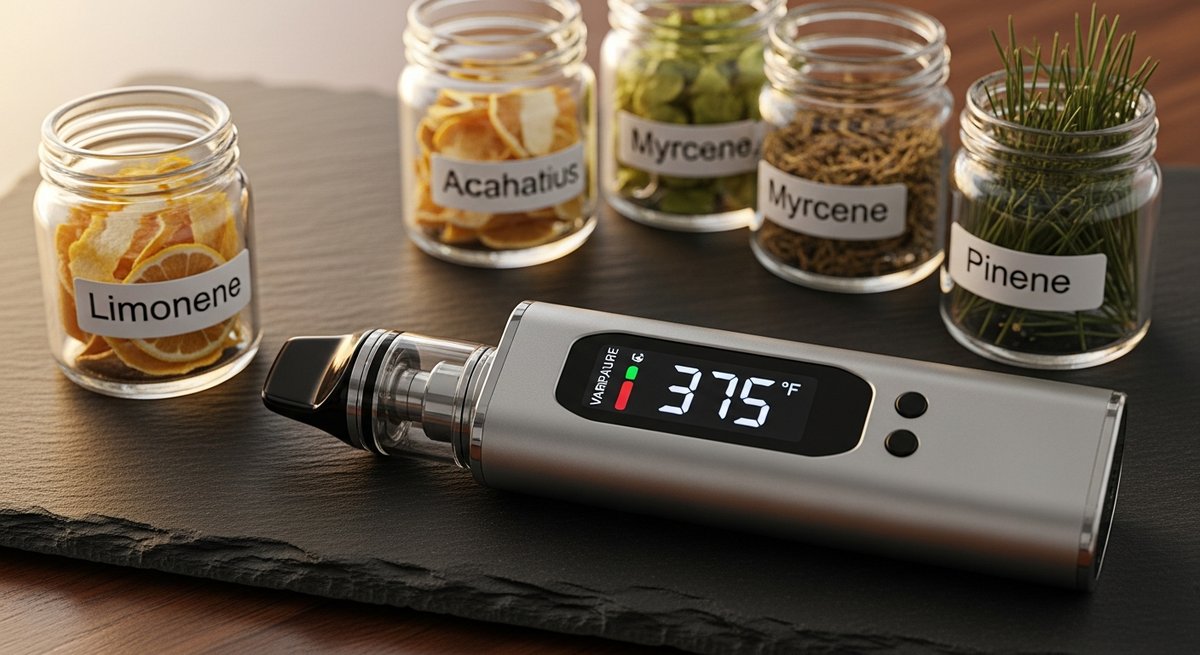
If you are using a variable-temperature vape, temperature actually matters for how calming or stimulating the experience feels. Lower temperatures, roughly 315 to 350 degrees Fahrenheit, tend to preserve more terpenes and produce a lighter, more clear-headed vapor. Higher temperatures, above 390 degrees, extract more cannabinoids and produce denser, more sedating vapor but can degrade heat-sensitive terpenes like linalool and limonene in the process.
For daytime anxiety, a lower temperature setting generally serves better. For evening or sleep-adjacent use, a slightly higher setting can help bring out the heavier, myrcene-dominant effects that many people associate with physical relaxation. Most disposable vapes run at a fixed temperature, so this matters more for cartridge-based setups with dedicated battery controllers that allow adjustment.
Choosing Between Disposables and Cartridges
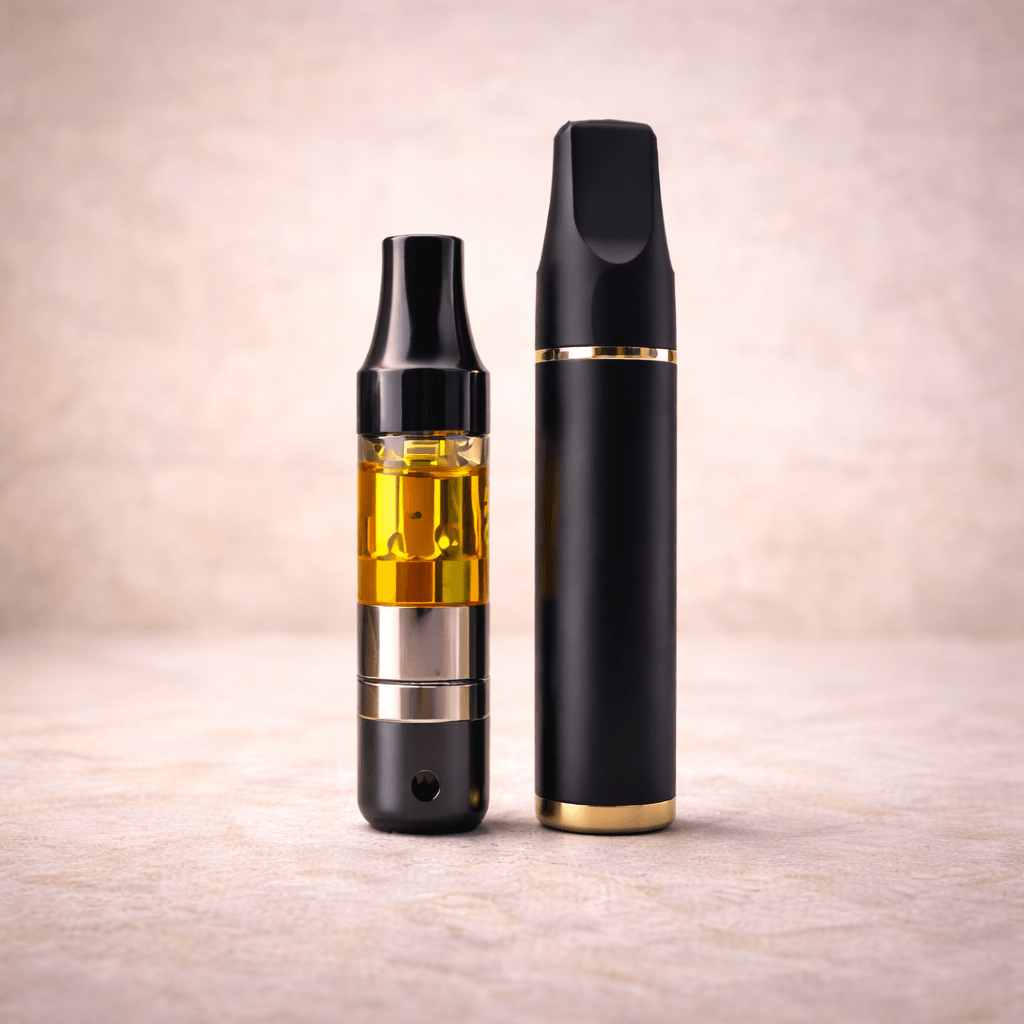
Disposables are self-contained and require no separate hardware. You open them, use them, and discard when empty. That simplicity is genuinely appealing if you want a low-maintenance option, and most modern disposables have resolved the connectivity and airflow issues that plagued earlier designs. The tradeoff is less flexibility – when the oil is gone, the device is gone with it.
Cartridges attach to a reusable battery and tend to offer more variety per price point. You can swap strains without buying a new device, and many batteries allow temperature adjustment as noted above. The Binoid THCA Vape Cartridges are a well-regarded option in this category – the 1g format is widely available across their strain lineup, and the THCA-forward formulation converts fully to active Delta-9 upon heating.
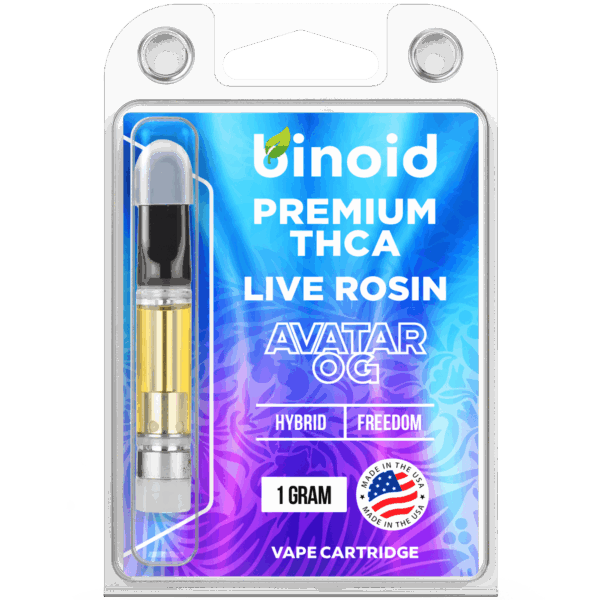
Binoid THCA Vape Cartridge – 1g
THCA converts to Delta-9 upon heating; multiple strain options; reusable battery compatible
Microdosing as a Strategy
Microdosing with a vape means taking a single, short draw – sometimes called a puff-and-wait approach – and then sitting with that for ten to fifteen minutes before deciding whether more is needed. The goal is to stay well below the threshold where THC starts pushing anxiety upward rather than downward. Many experienced users describe this as the most reliable way to use inhaled cannabis for anxiety without overshooting.
A single draw from a typical vape cartridge delivers somewhere in the range of 3 to 5 milligrams of cannabinoids depending on draw length and device efficiency. That estimate aligns well with the lower end of the dosing curve from the Childs trial discussed earlier, where 7.5 mg produced positive effects without the anxiety amplification seen at higher amounts. One careful draw, wait, assess – that sequence is more effective for anxiety management than continuous use throughout a session.
A Note on Set and Setting
The environment in which you vape shapes the experience substantially. Using cannabis for anxiety in a calm, familiar setting with no pressing obligations ahead is a very different situation from using it in a crowded or unpredictable one. THC in particular amplifies sensory input, which can heighten anxiety in overstimulating environments even when the dose is otherwise appropriate. If you are new to using vapes for anxiety, starting at home in a low-demand context gives you a much more accurate read on how a given product works for you before testing it in more complex situations.
The same product can produce noticeably different results depending on whether you are already calm when you use it versus already activated. Cannabis tends to extend and modulate whatever state you start from more than it reverses it outright. That is not a reason to avoid it – it is a reason to pay attention to your baseline before you reach for the vape, and to use it as one tool in a broader anxiety management approach rather than the only
Frequently asked questions
What are the best vapes for anxiety in terms of cannabinoid profile?
Low-THC or balanced CBD-to-THC products tend to perform best for anxiety because they reduce the risk of dose-dependent THC-induced anxiety. Look for products with clear cannabinoid ratios and terpene information. CBD-dominant options like ACDC-derived cartridges are reliable starting points for sensitive users.
Is THCA the same as THC when vaped?
Yes, effectively. THCA decarboxylates into Delta-9 THC when heated, so vaping a THCA product delivers active THC. The same dosing caution applies. The main advantage of THCA products is legal accessibility in some markets, not a fundamentally different pharmacological effect once heated.
Why does higher THC sometimes make anxiety worse?
THC follows an inverted-U dose-response curve for anxiety. At low doses it reduces stress responses; at higher doses it can increase heart rate, amplify sensory input, and trigger paranoid thinking. Individual sensitivity varies, but this pattern is consistent enough across studies to treat higher THC doses cautiously for anxiety purposes.
Which terpenes are most associated with a calming vape experience?
Myrcene, linalool, and beta-caryophyllene appear most frequently in strains described as calming or sedating. Beta-caryophyllene is uniquely notable because it binds directly to CB2 receptors. When shopping for vapes targeting anxiety, looking for these three on a product’s terpene panel is a practical first filter.
What is live rosin and why does it matter for anxiety vapes?
Live rosin is extracted from fresh-frozen cannabis using only heat and pressure, preserving the full terpene and minor cannabinoid profile. For anxiety, this matters because a more complete terpene spectrum may support a smoother, more nuanced effect compared to stripped distillate products. It is considered among the cleaner extraction formats available.
How should I approach microdosing with a vape for anxiety?
Take one short draw, then wait ten to fifteen minutes before assessing your state. A single puff delivers roughly 3 to 5 milligrams of cannabinoids, which sits near the lower end of the therapeutic dose range identified in research. This puff-and-wait method is the most reliable way to stay below the threshold where THC can increase rather than reduce anxiety.
Does set and setting really affect how a vape works for anxiety?
Yes, significantly. THC amplifies your existing emotional and sensory state more than it reverses it. Using a vape in a calm, familiar environment gives you a much more representative experience than using it in a crowded or stressful setting. For new users, starting at home on a low-demand day is strongly recommended before testing products in social contexts.
Important Disclaimer
This article is for informational purposes only and does not constitute medical advice. Cannabis affects individuals differently and is not a substitute for professional mental health treatment. If you are experiencing significant anxiety or a mental health crisis, please consult a licensed healthcare provider. Do not use cannabis products to replace prescribed medications without medical supervision.
Sources
- Childs E, Lutz JA, de Wit H. (2017). Dose-related effects of delta-9-THC on emotional responses to acute psychosocial stress. Drug and Alcohol Dependence, 177:136-144. PMID: PMID: 28599212
- Babson KA, Sottile J, Morabito D. (2017). Cannabis, cannabinoids, and sleep: a review of the literature. Current Psychiatry Reports, 19(4):23. PMID: 28349316
- Blessing EM, Steenkamp MM, Manzanares J, Marmar CR. (2015). Cannabidiol as a potential treatment for anxiety disorders. Neurotherapeutics, 12(4):825-836. PMID: 26341731
- Ferber SG, Namdar D, Hen-Shoval D, et al. (2020). The entourage effect: terpenes coupled with cannabinoids for the treatment of mood disorders and anxiety disorders. Current Neuropharmacology, 18(2):87-96. PMID: 31481004
- Huestis MA. (2007). Human cannabinoid pharmacokinetics. Chemistry and Biodiversity, 4(8):1770-1804. PMID: 17712819
For adults 21+ only. Cannabis laws vary by state. If you are experiencing a medical emergency or a severe mental health crisis, call 911 or go to your nearest emergency room immediately. Nothing in this article should be used as a substitute for emergency medical care.