🚛 FREE DISCREET SHIPPING ON ALL ORDERS $49+









Sativa vs Indica Carts for Anxiety: What’s Better?
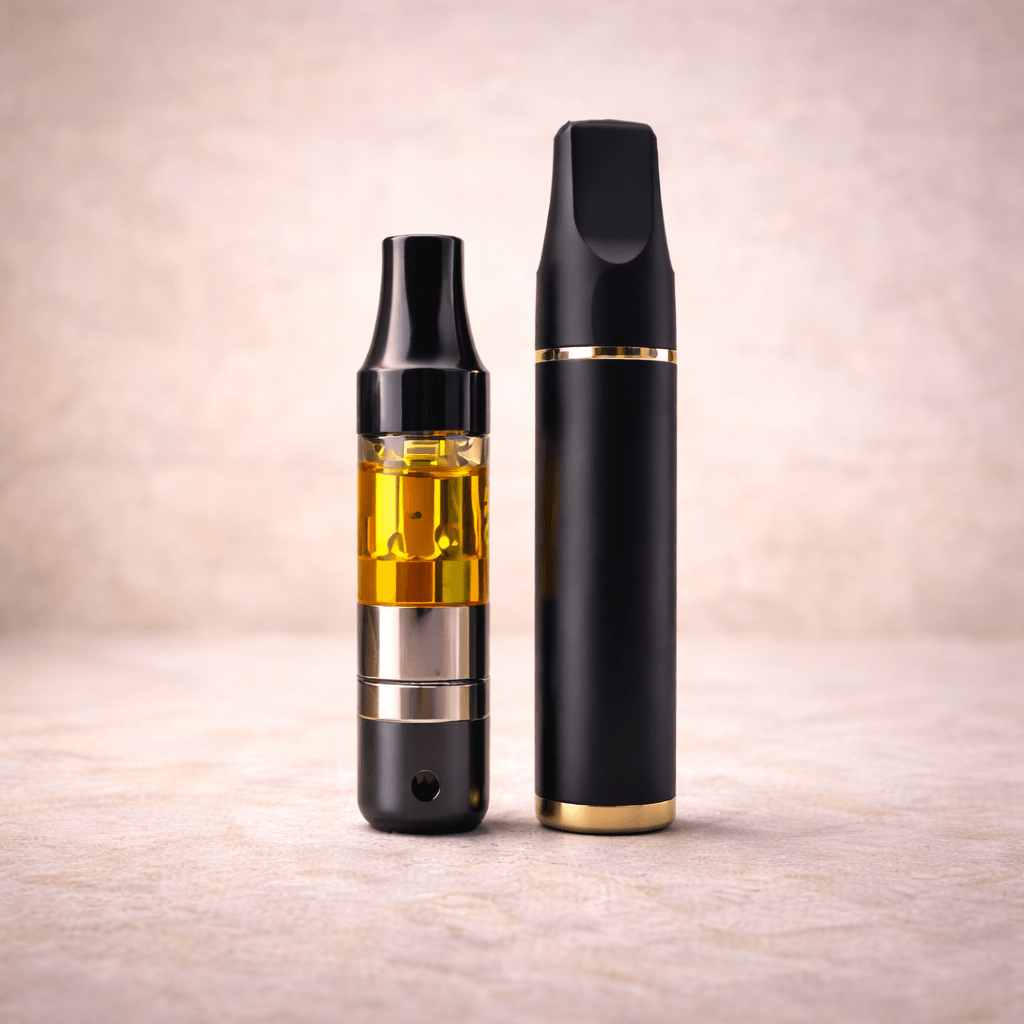
You’ve been there. Anxiety is creeping up on you, you reach for a vape cart, and suddenly you’re faced with a label that says “Sativa” or “Indica” – and you genuinely don’t know which one to pick. One of your friends swears by sativa for daytime stress. Another says indica is the only thing that calms them down at night.

Published on: April 18, 2026
You’ve been there. Anxiety is creeping up on you, you reach for a vape cart, and suddenly you’re faced with a label that says “Sativa” or “Indica” – and you genuinely don’t know which one to pick. One of your friends swears by sativa for daytime stress. Another says indica is the only thing that calms them down at night. A third person got paranoid on a sativa cart last week and won’t stop talking about it. Everyone has an opinion. Almost none of them agree.
Here’s the uncomfortable truth: the sativa-versus-indica distinction is one of the most misunderstood shorthand labels in cannabis culture. It still dominates dispensary menus and vape cart packaging, but the science behind it is far messier than those two tidy categories suggest. That doesn’t mean the labels are useless – they just don’t mean what most people think they mean, especially when anxiety is in the mix.
So let’s actually dig into this. What do sativa and indica carts really deliver? Which one is more likely to help with anxiety – and which one might backfire? And why does the same cart affect two people completely differently? There are real answers here, even if they come with some important asterisks. Getting clear on those answers before you buy can save you from an unpleasant evening of racing thoughts and regret.
The Sativa/Indica Label Problem (And Why It Still Matters)
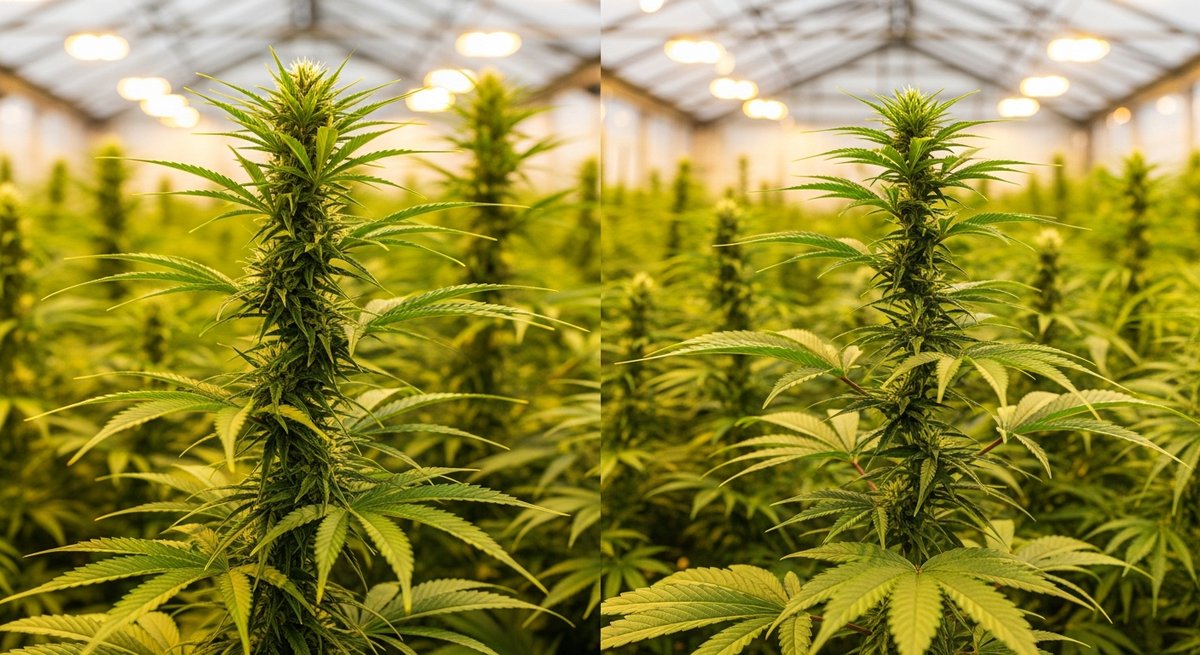
Modern cannabis genetics research has made it pretty clear that most commercial strains – including those filling vape cart cartridges – are hybrids. The ancestral divide between Cannabis sativa (tall, narrow-leafed, originating in equatorial regions) and Cannabis indica (shorter, broader-leafed, from the Hindu Kush mountain range) barely maps onto today’s consumer market. A strain marketed as “sativa” at one dispensary might share more genetic overlap with an “indica” than either label implies.
Decades of unregulated crossbreeding, informal seed-bank naming conventions, and a commercial market that incentivizes memorable branding over botanical accuracy have produced a situation where the words on the packaging often tell you more about marketing decisions than about the plant’s actual chemical composition. Genetic testing of commercially available strains has repeatedly shown that products with the same name from different producers can have meaningfully different cannabinoid and terpene profiles – and products with different names can be nearly identical chemically.
If you want to go deeper on why the plant classification science is more complicated than the budtender shorthand, the modern science behind indica, sativa, and hybrid classification is worth a careful read before you make purchasing decisions based solely on those words on a label.
What Actually Drives the Experience in a Cart
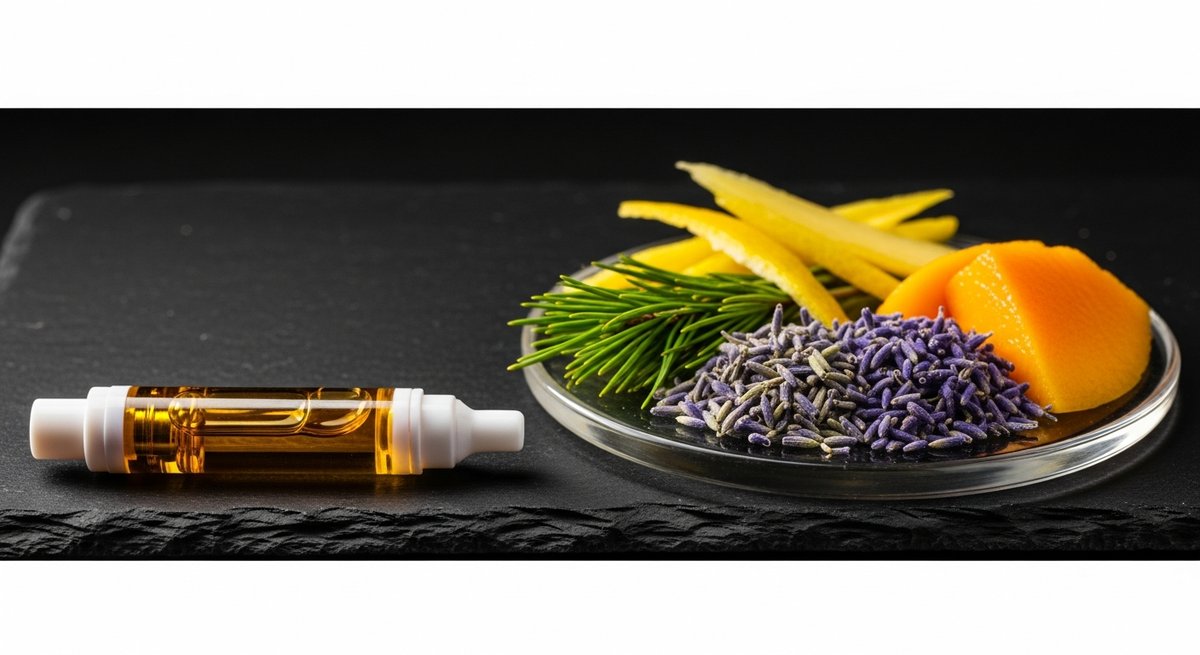
Before comparing sativa and indica carts for anxiety specifically, it’s worth understanding what’s actually producing the effects. Two things matter more than the sativa/indica label: cannabinoid profile and terpene composition.
THC is the primary psychoactive cannabinoid in most vape carts. At lower doses, THC can produce feelings of calm and mild euphoria. At higher doses – or for people who are THC-sensitive – it can amplify anxious thoughts, accelerate heart rate, and trigger that “I’ve made a terrible mistake” spiral that nobody wants. This dose-dependent relationship with anxiety is one of the most clinically documented patterns in cannabis research, and it’s crucial context for any conversation about carts and anxiety.
CBD, when present, tends to buffer THC’s more anxiogenic effects. A cart with a meaningful CBD-to-THC ratio is a genuinely different product from a high-THC isolate cart, regardless of whether it’s labeled sativa or indica. This is a critical distinction that gets lost when buyers focus only on the strain category rather than looking at the actual cannabinoid numbers on the label. Even a modest amount of CBD in the formulation can substantially soften the edge of a high-THC experience.
How Indica Carts Tend to Affect Anxiety

Indica carts are broadly associated with physical relaxation, body calm, and a quieting of mental noise. For many anxious users, particularly those whose anxiety lives in the body – tight chest, tense muscles, restlessness, racing thoughts at night – an indica cart can feel genuinely settling. The body-heaviness effect that indica-leaning strains often produce can be welcome when your nervous system is wound up and you just need something to interrupt the stress cycle.
The terpene profile in most indica-dominant carts tends to be myrcene-heavy, sometimes with caryophyllene (peppery, also found in black pepper, and potentially a CB2 receptor partial agonist) contributing to the overall calming character. The combination of these terpenes with THC at moderate doses is why a lot of people reach for an indica cart specifically when anxiety is the problem they’re trying to address.
However, indica carts are not universally anxiety-relieving. For some people, the sedating, slightly dissociative quality of a heavy indica hit – especially on a high-THC cart – makes anxiety worse by inducing a kind of foggy paranoia or an uncomfortable disconnection from their surroundings. This is more likely if you’re new to cannabis, if you take multiple puffs quickly, or if the cart is a high-potency live resin or distillate with minimal CBD.
Expert Insight
Dr. Alexander Tabibi
Dr. Alexander Tabibi
A 2016 systematic review of 31 studies on medical cannabis and mental health found preliminary evidence supporting cannabinoid therapy for PTSD and as a potential substitute for other substance use. Crucially, the review also identified that cannabis did not appear to increase self-harm risk – though acute cognitive effects were noted as a concern worth monitoring, particularly in populations with existing mental health vulnerabilities.
The review underscores the tension at the core of cannabis and anxiety research: existing evidence is preliminary, studies vary widely in methodology, and no strain-level classification like sativa or indica was examined as a variable. What mattered more in the reviewed literature was cannabinoid composition and dose, not plant taxonomy. That’s a meaningful caution for anyone choosing a cart primarily based on its label category.
Walsh et al. (2016). Medical cannabis and mental health: A guided systematic review. Clinical Psychology Review, 51:15-29. PMID: 27816801
How Sativa Carts Tend to Affect Anxiety
Sativa carts are where things get more complicated for anxious users. The uplifting, cerebral, energizing character that defines the sativa experience in popular culture is genuinely appealing – until it isn’t. For people whose anxiety is low-grade, situational, or tied to mild social stress, a sativa cart at a modest dose can produce a light, mood-lifting shift that feels anxiety-reducing. The mind gets busy in a more pleasant direction. Conversation flows more easily. Music sounds better. It’s fun.
But here’s the thing: that same cerebral activation that makes sativa appealing for mild situational anxiety can become a direct anxiety amplifier when the underlying anxiety is more significant. The racing-thoughts quality of a sativa high, especially at higher THC concentrations, can take someone who is already overthinking and push them into full-on anxious spiraling. The heart rate increase that often accompanies sativa-dominant effects can be misread by a nervous system already on edge as a sign that something is wrong, which feeds the anxiety loop further.
This is why sativa carts have a reputation for being more likely to produce paranoia or acute anxiety compared to indicas. It’s not universal – individual neurochemistry, tolerance, set, and setting all play roles – but as a general pattern, people with generalized anxiety disorder or panic tendencies tend to report more adverse reactions with high-THC sativa carts than with indica-leaning alternatives.
Context and environment also matter considerably with sativa products. A sativa cart used in a comfortable, familiar setting where you feel safe is a very different experience from the same cart used in a crowded, unfamiliar environment where your nervous system is already scanning for threats. The stimulating quality of a sativa high interacts with your environment in ways that indica’s more inward, body-focused effect typically does not. For anxious users, being thoughtful about where and when you use a sativa cart can meaningfully change whether the experience tips toward pleasant or uncomfortable.
There are sativa-labeled carts formulated with anxiety in mind, though. Products that pair sativa terpene profiles (limonene, pinene, terpinolene) with more balanced THC-to-CBD ratios can produce an uplifting effect without the anxiety-amplifying edge that pure high-THC sativa distillate can carry. The label says “sativa” but the formulation is doing most of the real work.
The Case for Hybrid Carts When Anxiety Is the Priority
Let’s be honest about something: if anxiety relief is your primary goal and you’re navigating the cart market, hybrid-labeled products are often the most practically useful category. They represent the middle ground – some of the mood lift associated with sativa character, combined with some of the physical calm associated with indica influence. And because most commercial cannabis genetics are already hybridized anyway, a “hybrid” label is arguably more transparent about what you’re actually getting.
More to the point, the best hybrid carts for anxiety aren’t chosen by label alone – they’re chosen by looking at the terpene breakdown and cannabinoid ratio on the lab report. If the packaging shows a Certificate of Analysis (COA), that’s your actual map to what the product will do. A hybrid with dominant myrcene and caryophyllene terpenes and a 3:1 THC-to-CBD ratio is going to behave very differently from a hybrid with dominant limonene and 90% THC distillate.
For readers who want to understand how genetics and terpene profiles interact across strain categories, the deeper context on crossbred cannabis varieties and what defines their character is genuinely useful before you start comparing cart options by effect profile rather than by label alone.
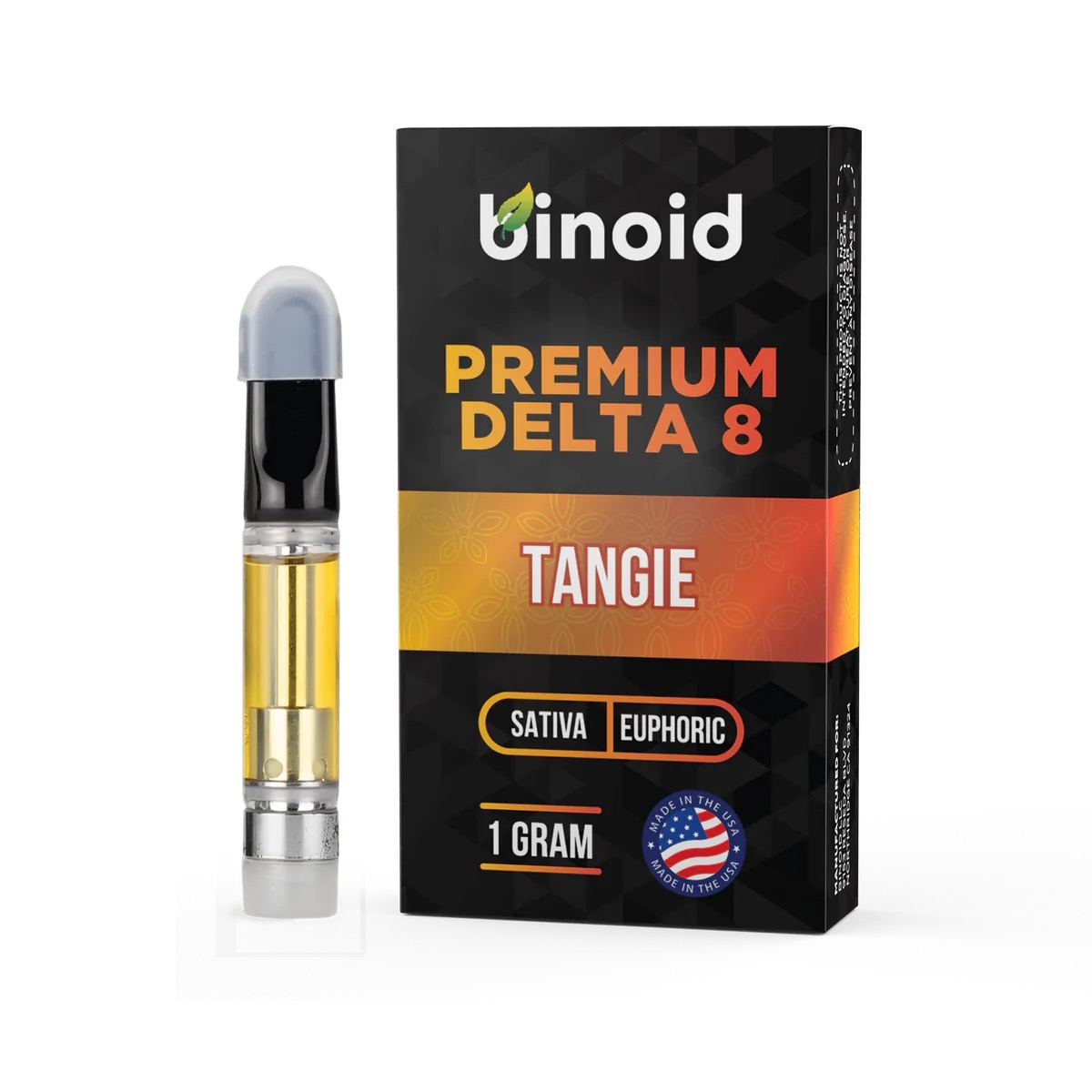
Binoid Delta 8 THC Vape Cartridge – Tangie
Delta-8 cart with citrus Tangie terpene profile; third-party tested by Binoid
What the Evidence Actually Says About Cannabis and Anxiety
It’s worth pausing on what clinical research actually tells us here, because the popular narrative around cannabis and anxiety sometimes runs ahead of the science. The endocannabinoid system (ECS) does play a well-documented role in stress regulation. Endocannabinoids act on receptors in the amygdala, prefrontal cortex, and hypothalamus – areas directly involved in how the brain processes and responds to perceived threats. This is why cannabinoids can, under the right conditions, produce a calming effect on an overactive stress response.
But the clinical evidence on cannabis as an anxiety intervention remains genuinely preliminary. Most research examines CBD specifically rather than whole-plant products or specific cart formulations. The literature on THC and anxiety is particularly nuanced because THC behaves differently at different doses, different delivery speeds (vaping delivers THC very quickly to the bloodstream), and across different individual endocannabinoid system baselines. Two people with the same anxiety diagnosis, using the same cart, can have opposite experiences – and both responses are consistent with what the research predicts.
A 2024 meta-analysis on cannabis and anxiety in cancer patients found that higher-dose THC actually increased anxiety risk rather than reducing it – a finding that underscores why potency control matters enormously, especially with fast-acting delivery formats like vape carts. This isn’t a reason to avoid carts; it’s a reason to approach them with dose awareness rather than assuming more THC equals more relief.
Expert Insight
Dr. Alexander Tabibi
Dr. Alexander Tabibi
A 2024 systematic review and meta-analysis covering 15 studies and 1,898 participants examined whether medicinal cannabis improved depression, anxiety, and stress outcomes in people with cancer. The meta-analysis found that cannabis significantly improved appetite (OR 12.3), but found no clinically significant effect on depression or anxiety as primary outcomes. Importantly, higher-dose THC was associated with increased anxiety risk – a pattern that held regardless of strain category.
This evidence is a useful calibration for anyone using high-potency carts specifically for anxiety relief. The speed of vaping delivers THC rapidly, and dose control matters far more than sativa-versus-indica labeling in determining whether the outcome is calming or anxiety-amplifying. Lower doses, slower pacing between puffs, and attention to the total THC concentration in the cart are the variables that most directly shape the anxiety-relevant outcome.
Crichton et al. (2024). Does medicinal cannabis affect depression, anxiety, and stress in people with cancer? A systematic review and meta-analysis of intervention studies. Maturitas, 184:107941. PMID: 38430618
Practical Cart Choices: What to Look for If Anxiety Is a Factor
If anxiety is the reason you’re reaching for a cart, the label category — sativa, indica, hybrid — is probably the least useful thing on the packaging. Here’s what actually matters.
THC concentration first. The biphasic relationship between THC and anxiety is one of the most consistently reproduced findings in cannabinoid research: low doses tend to be anxiety-reducing, higher doses tend to be anxiety-amplifying, and the crossover point varies by individual. In practical terms, this means a cart in the 60–75% THC range gives you more control over that threshold than an 85–95% distillate cart where a single draw delivers a large dose before you’ve had time to calibrate. Start lower than you think you need.
Look for CBD alongside THC. Real-world evidence from an observational study of 629 medical cannabis users found that CBD-dominant products were more frequently used for anxiety and depression, while THC-dominant products were more commonly used for pain and sleep — a pattern that held across gender and age groups. A balanced THC:CBD formulation isn’t just marketing hedging; it reflects how many anxiety-focused consumers actually use these products in practice.
Read the terpene panel, not just the strain name. If the cart has a COA with a terpene breakdown, look for dominant myrcene or caryophyllene rather than terpinolene or ocimene. The former two are consistently associated with calming, body-focused effects; the latter two skew stimulating. A cart labeled “sativa” with dominant myrcene will often behave more like a calm indica experience than the label implies.
Live resin and live rosin over distillate. Full-spectrum extracts preserve the natural terpene complement of the source plant. Distillate carts frequently strip terpenes out during processing and add them back in — sometimes with botanically derived rather than cannabis-derived terpenes. If you’re specifically looking for a profile that may modulate the anxiety response, the original chemistry is worth preserving.
One or two draws, then wait. Vaping delivers THC to the bloodstream faster than any other consumption route. The same dose-response principles that make low-dose THC potentially calming make it easy to overshoot into anxiogenic territory if you take multiple draws quickly. Ten minutes is a reasonable window to assess where you’ve landed before deciding whether you need more.
FAQs
How do I choose the right THC level in a vape cart for anxiety?
When you’re standing in a dispensary or browsing online, it’s easy to get distracted by labels like “sativa” or “indica.” But in reality, THC concentration matters much more. High-potency carts in the 85–95% range can feel intense and may increase anxiety, especially if you’re sensitive to THC. Many people looking for a calmer experience prefer carts in the 60–70% range or products that include some CBD, since they tend to feel more balanced and manageable.
Do terpenes actually matter when picking a vape cart?
They do—more than most people realize. Terpenes shape the overall feel of the experience. For example, carts with myrcene or caryophyllene often feel more relaxing and body-focused, while limonene tends to feel more uplifting and mentally stimulating. Neither is inherently good or bad, but knowing the dominant terpenes can help you choose something that fits your mood and timing.
How should I dose a vape cart to avoid anxiety?
One of the biggest advantages of vaping is how quickly you feel the effects. Unlike edibles, where you might wait an hour, vape carts give feedback within minutes. The safest approach is to take one or two puffs, wait about ten minutes, and then decide if you need more. Most negative experiences happen when people take several hits back-to-back without giving their body time to respond.
Are live resin or rosin carts better than distillate for anxiety?
They can be, depending on what you’re looking for. Live resin and rosin carts preserve more of the plant’s natural terpene profile, which can create a more balanced and nuanced experience. Distillate carts are usually higher in THC but often have added terpenes rather than naturally occurring ones. If you’re sensitive to how cannabis feels, full-spectrum options like live resin or rosin may offer a smoother, more controlled experience.
Should I track how different carts affect me?
It might sound unnecessary at first, but keeping a simple log can make a huge difference. Just noting the product, THC level, terpene profile, how much you used, and how you felt afterward can quickly reveal patterns. Over time, this helps you make much smarter choices instead of relying on guesswork or recommendations that may not match your body’s response.
Sources
- Kalaba M, Ware MA. (2021). Cannabinoid Profiles in Medical Cannabis Users: Effects of Age, Gender, Symptoms, and Duration of Use. Cannabis and Cannabinoid Research, 7(6):840-851. PMID: 33999649. DOI — T3a, observational. Claim language: “associated with.”
- Rubino T, et al. (2007). CB1 receptor stimulation in specific brain areas differently modulate anxiety-related behaviour. Neuropharmacology, 54(1):151-60. PMID: 17692344. DOI — T4, preclinical. Claim language: “shown in preclinical models.” Supports the biphasic dose/anxiety paragraph only — Dr. Tabibi to confirm this is the right citation or substitute a T2 review if one is preferred.
Crichton et al. (2024). Does medicinal cannabis affect depression, anxiety, and stress in people with cancer? A systematic review and meta-analysis of intervention studies. Maturitas, 184:107941. PMID: 38430618
Walsh et al. (2016). Medical cannabis and mental health: A guided systematic review. Clinical Psychology Review, 51:15-29. PMID: 27816801
Important Notice
Cannabis affects individuals differently. If you have a history of anxiety, panic disorder, or other mental health conditions, consult a qualified healthcare provider before using any cannabis product. This article is for informational purposes only and does not constitute medical advice. If you experience severe anxiety, chest pain, difficulty breathing, or feel you are in crisis, call 911 or go to your nearest emergency room immediately.
For adults 21+ only. Cannabis laws vary by state. This content is intended for informational purposes only and does not constitute medical or legal advice. If you are experiencing a medical emergency, call 911 or go to your nearest emergency room immediately.