🚛 FREE DISCREET SHIPPING ON ALL ORDERS $49+










Best CBD Gummies for Pain Relief: Top Picks
You wake up with that familiar ache – the one in your knees, your lower back, or maybe your hands – and you find yourself scrolling through an overwhelming sea of CBD products, wondering which one actually does something. It is a reasonable question, and honestly, a complicated one. CBD gummies have become one of the most popular formats for

Published on: April 18, 2026

You wake up with that familiar ache – the one in your knees, your lower back, or maybe your hands – and you find yourself scrolling through an overwhelming sea of CBD products, wondering which one actually does something. It is a reasonable question, and honestly, a complicated one. CBD gummies have become one of the most popular formats for pain support because they are discreet, easy to dose, and taste nothing like the hemp-flavored tinctures of a few years ago. But not all gummies are created equal, and the difference between a product that helps and one that sits in your drawer collecting dust often comes down to formulation, sourcing, and what else is in the mix alongside the CBD.
This guide cuts through the noise. Whether you are dealing with joint discomfort, muscle soreness, or low-grade chronic pain that will not quit, here is what you need to know about choosing the best CBD gummies for pain – and why some options stand out from the crowd.
How CBD Interacts With Pain Signals in the Body
Cannabidiol interacts with the endocannabinoid system (ECS), a signaling network that plays a role in regulating inflammation, pain perception, and mood. The ECS has receptors distributed throughout the body – including in joints, nerve tissue, and the gut – which is part of why CBD research has explored so many different pain contexts. CBD does not bind strongly to CB1 and CB2 receptors the way THC does. Instead, it works through indirect mechanisms – modulating receptor activity, influencing ion channels like TRPV1 and TRPA1, and potentially affecting inflammatory pathways. That complexity is part of why results vary from person to person.
Expert Insight
Dr. Alexander Tabibi
Dr. Alexander Tabibi
Preclinical research has shed light on some of the receptor-level mechanisms that may underlie CBD’s pain-modulating effects. A rat model study found that CBD and the minor cannabinoid CBC both reduced activity in pain-signaling neurons and produced antinociceptive effects. These effects were tied to CB1, adenosine A1, and TRPA1 receptors – not TRPV1 – which is a reminder that CBD’s analgesic pathways are genuinely multifaceted. The critical word is “preclinical.” Animal models are useful for identifying mechanisms, but they do not always translate cleanly to human outcomes. What this research does suggest is that formulation choices (like including CBC or specific terpenes) may matter more than label CBD milligrams alone.
Maione et al. (2011). Non-psychoactive cannabinoids modulate the descending pathway of antinociception in anaesthetized rats through several mechanisms of action. British Journal of Pharmacology, 162(3):584-96. PMID: 20942863
Full-Spectrum vs. Broad-Spectrum vs. Isolate: Why It Matters for Pain
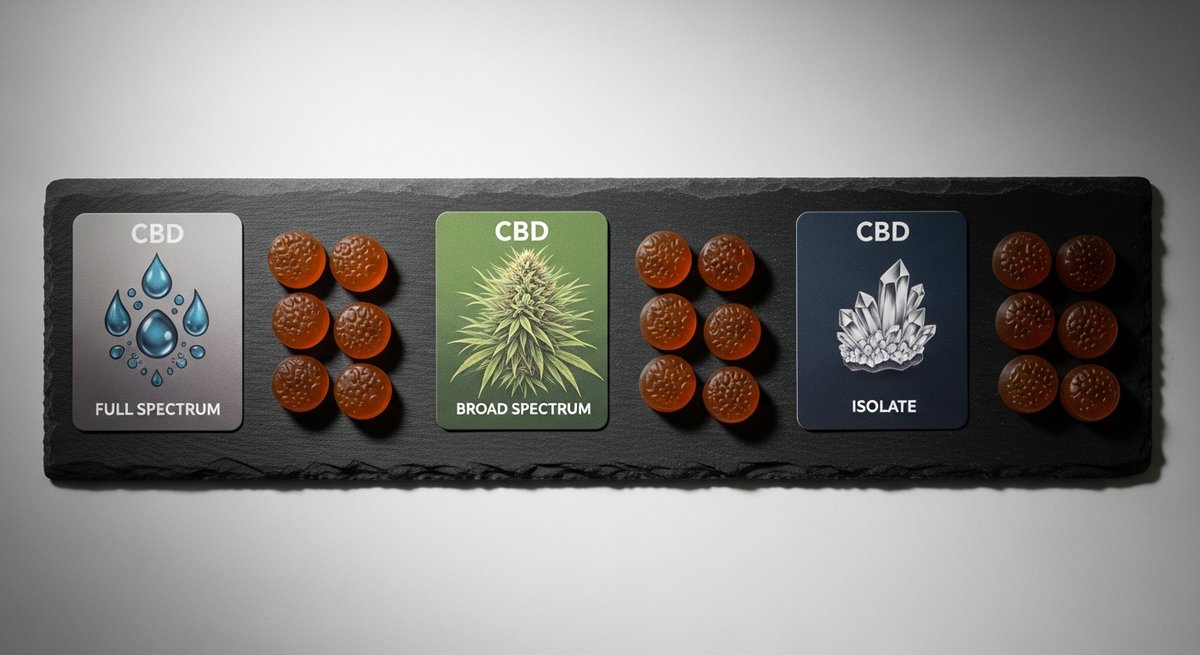
The type of CBD extract in your gummy shapes the kind of experience you are likely to have. Full-spectrum extracts retain the full range of cannabinoids, terpenes, and flavonoids present in the hemp plant – including trace THC within the federally legal 0.3% limit. Broad-spectrum removes THC but keeps other compounds. Isolate is pure CBD gummies with everything else stripped away.
For pain specifically, many formulators and researchers lean toward full-spectrum or broad-spectrum products because of the entourage effect – the idea that cannabinoids and terpenes work better together than any single compound alone. Terpenes like beta-caryophyllene have shown CB2 receptor activity in preclinical models, putting them squarely in the conversation around inflammation and pain modulation. Isolate-based products are not without merit – they are predictable, contain zero THC, and work for people subject to drug testing. The choice depends on your situation and whether trace THC is a dealbreaker.
What to Look for in a Pain-Focused CBD Gummy

Third-party lab testing is the baseline requirement. If a brand does not publish its certificate of analysis (COA), move on. The COA should confirm cannabinoid content, the absence of pesticides and heavy metals, and residual solvent levels. Dosage clarity matters too – look for products where the CBD per piece is clearly stated, not buried in two-gummy serving size math. For pain management, starting low and titrating upward based on response is the recommended approach.
Live rosin extraction is worth a specific mention. Unlike solvent-based methods, live rosin uses heat and pressure to pull cannabinoids from fresh-frozen plant material, resulting in a fuller terpene profile and a cleaner product. This is one reason live rosin gummies have become a preferred format for people who care about what goes into their body alongside the CBD.
Top Product Picks: CBD Gummies Worth Trying for Pain Relief
When it comes to gummies that check the boxes above, Hometown Hero consistently earns attention. Their live rosin line is formulated with cannabinoid-rich extracts and natural terpenes that support the entourage approach. A discovery pack format lets you compare how different strengths feel before settling on a routine – ideal if you are new to CBD gummies for pain.
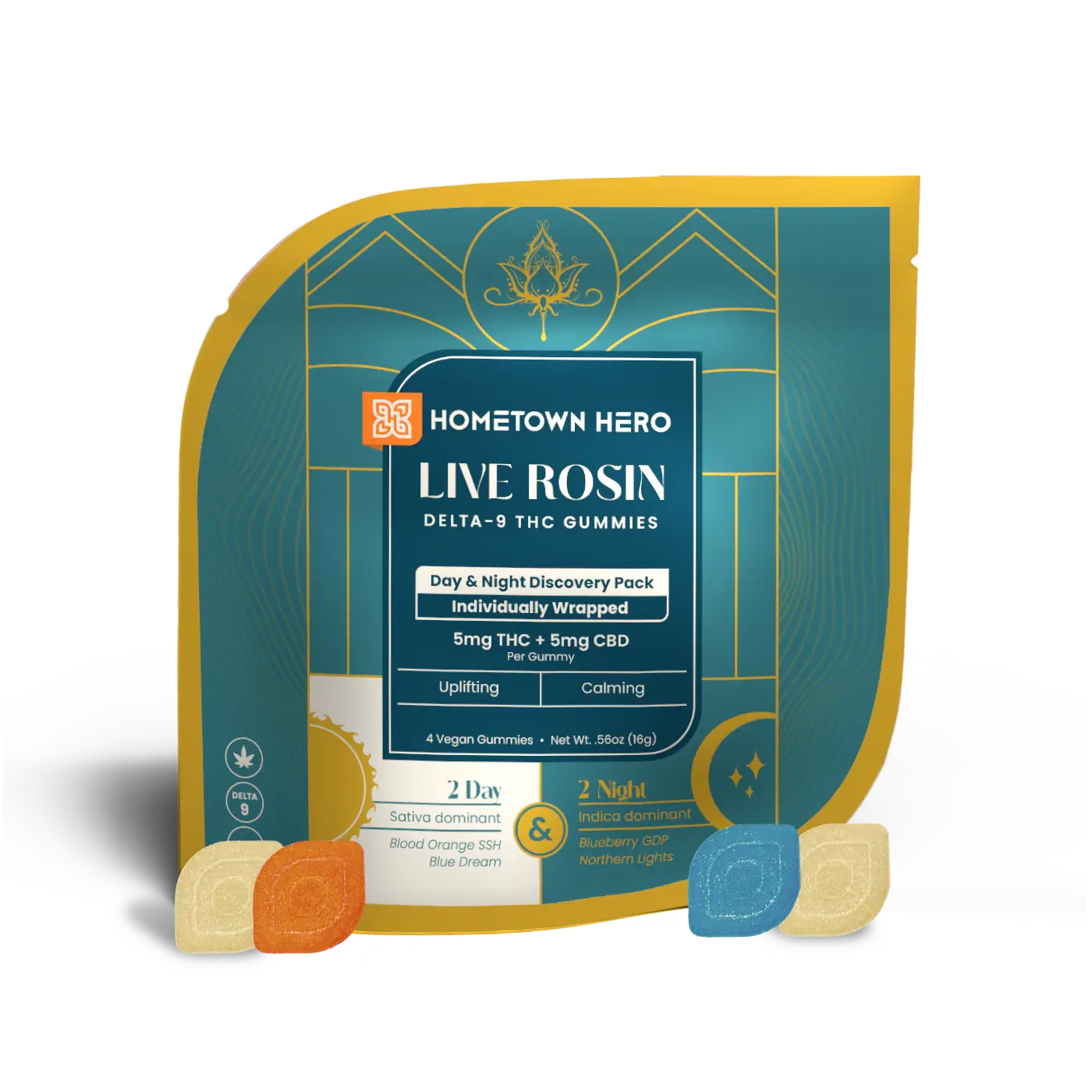
Hometown Hero 5mg Live Rosin Day & Night Discovery Pack
Low-dose live rosin gummies in day and night formulas for flexible exploration
For people who want a slightly higher baseline dose, Hometown Hero also offers a 25 mg live rosin version of the same day and night format. The 25 mg tier suits those who have already established that lower doses are not delivering the relief they are looking for.
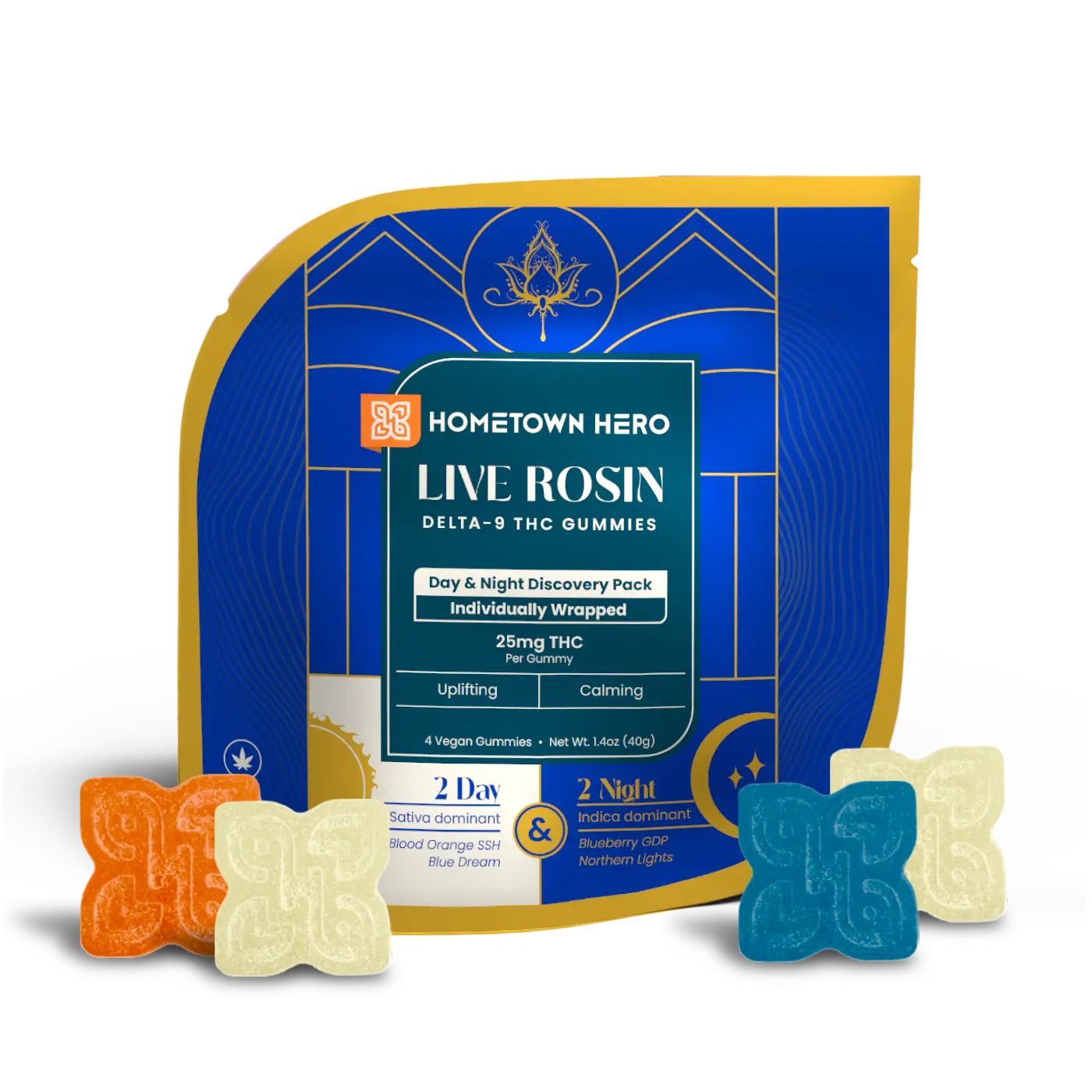
Hometown Hero 25mg Live Rosin Day & Night Discovery Pack
Higher-dose live rosin gummies for those stepping up from a lower starting point
Dosing CBD for Pain: Start Low, Go Slow, Stay Consistent

There is no universal dose for pain because body weight, metabolism, pain type, and individual endocannabinoid tone all influence how a given amount of CBD lands. Expert guidance consistently points toward a CBD-predominant starting strategy – lead with CBD, establish a baseline, and adjust upward based on how you respond over days to weeks. Gummies are well-suited for this methodical approach: take one at a consistent time each day, note how you feel, and give it at least a week before drawing conclusions.
Expert Insight
Dr. Alexander Tabibi
Dr. Alexander Tabibi
A modified Delphi consensus process involving 20 global experts across 9 countries produced structured dosing recommendations for medical cannabis in chronic pain. The panel outlined three titration approaches but aligned on a CBD-predominant start for most pain types, including neuropathic, inflammatory, nociplastic, and mixed presentations. The consensus also placed a ceiling of 40 mg per day for THC and emphasized titration toward individual response goals rather than a fixed target dose. For CBD gummy users, this reinforces the value of low-dose formats that allow incremental increases – and highlights that chronic pain is not a single condition, which is why tracking your own response over time matters as much as any label claim.
Bhaskar et al. (2021). Consensus recommendations on dosing and administration of medical cannabis to treat chronic pain: results of a modified Delphi process. Journal of Cannabis Research, 3(1):22. PMID: 34215346
When CBD Gummies Might Not Be Enough on Their Own
CBD gummies are not a cure-all. For severe or acute pain, they are unlikely to provide adequate relief on their own. They work best as part of a broader approach alongside movement, good sleep, stress management, and appropriate medical care. Some users find that pairing oral CBD gummies with a topical product creates a more targeted effect for localized pain. If you are curious how topical CBD formats compare to ingestibles, the Binoid CBD creams and topicals review covers formulation quality and real-use impressions across that product line.
Pain and anxiety often co-occur, and CBD’s effects on the ECS touch both. If your pain has an anxiety component, the guide to the best gummies for anxiety covering CBD and THC options is useful reading alongside this one. Similarly, chronic pain and poor sleep create a frustrating cycle where each one makes the other worse. Many CBD gummy users report that sleep improvement is the most noticeable benefit, which then reduces how much pain interferes with their day. If this overlap applies to you, the complete guide to the best CBD gummies for sleep covers what to look for in a sleep-specific formula.
Reading Labels Without Getting Lost in the Jargon
Look for the total milligrams of CBD per container, the milligrams per piece, and whether the product is labeled full-spectrum, broad-spectrum, or isolate. “Hemp extract” without further specification is vague – check the COA to confirm actual cannabinoid content. Watch for inflated serving sizes: a product that says “50 mg per serving” may only deliver 12.5 mg per gummy if the serving is four pieces. The COA should match the label; if numbers are off by more than about 10%, that is a red flag about quality control. Price per milligram of CBD is a useful comparison metric once quality is confirmed – premium live rosin products will cost more than standard distillate-based gummies, and for many users that premium reflects real differences in terpene content and extraction quality.
Frequently asked questions
What are the best CBD gummies for pain relief?
Full-spectrum or broad-spectrum live rosin gummies with clear per-piece dosing and verified COA testing tend to rank highest. Products like the Hometown Hero Live Rosin Discovery Pack offer clean extraction, terpene-rich profiles, and flexible dose options suited to starting a pain-focused CBD routine.
How many milligrams of CBD should I take for pain?
Expert consensus recommends starting low, often 5 to 10 mg per day, and titrating upward gradually. There is no universal dose because body weight, metabolism, and pain type all influence response. Track your experience over at least one week before increasing.
Is full-spectrum CBD better than isolate for pain?
Many researchers and formulators favor full-spectrum for pain because of the entourage effect, where cannabinoids and terpenes work synergistically. Isolate offers predictability and zero THC, which matters for drug testing. The better choice depends on your individual needs and sensitivity.
How long does it take for CBD gummies to work for pain?
Onset through oral ingestion typically takes 30 to 90 minutes because gummies must pass through digestion. Effects may last 4 to 6 hours. Consistent daily use over several weeks often produces more noticeable cumulative results than single-dose use.
Can I use CBD gummies alongside other pain medications?
CBD can interact with certain medications metabolized by liver enzymes, including some common pain drugs. Always consult a healthcare provider before combining CBD with prescription or over-the-counter medications to avoid unintended interactions or dosing complications.
What does a certificate of analysis (COA) tell me about a CBD gummy?
A COA from an independent lab confirms actual cannabinoid potency, verifies THC is within legal limits, and screens for pesticides, heavy metals, and residual solvents. It is the most reliable way to verify that label claims match what is actually inside the product.
Sources
Maione et al. (2011). Non-psychoactive cannabinoids modulate the descending pathway of antinociception in anaesthetized rats through several mechanisms of action. British Journal of Pharmacology, 162(3):584-96. PMID: 20942863
Bhaskar et al. (2021). Consensus recommendations on dosing and administration of medical cannabis to treat chronic pain: results of a modified Delphi process. Journal of Cannabis Research, 3(1):22. PMID: 34215346
Important Notice
Cannabis affects individuals differently. If you have a history of anxiety, panic disorder, or other mental health conditions, consult a qualified healthcare provider before using any cannabis product. This article is for informational purposes only and does not constitute medical advice. If you experience severe anxiety, chest pain, difficulty breathing, or feel you are in crisis, call 911 or go to your nearest emergency room immediately.
For adults 21+ only. Cannabis laws vary by state. This content is intended for informational purposes only and does not constitute medical or legal advice. If you are experiencing a medical emergency, call 911 or go to your nearest emergency room immediately.