🚛 FREE DISCREET SHIPPING ON ALL ORDERS $49+










Microdosing Gummies for Productivity: A Beginner’s Guide
Here is a question worth sitting with: what if getting more done didn’t require more caffeine, more pressure, or another productivity app you’ll forget about in two weeks? A growing number of people are experimenting with low-dose cannabis gummies as a quiet tool for focus, creativity, and calm – not to get high, but to take the edge off whatever


Here is a question worth sitting with: what if getting more done didn’t require more caffeine, more pressure, or another productivity app you’ll forget about in two weeks? A growing number of people are experimenting with low-dose cannabis gummies as a quiet tool for focus, creativity, and calm – not to get high, but to take the edge off whatever is standing between them and their best thinking. It sounds counterintuitive. Cannabis and productivity in the same sentence? And yet the interest is real, the anecdotal reports are compelling, and the science – while early – gives us enough to work with.
This guide is for anyone who is curious but cautious. Maybe you have heard a coworker mention it. Maybe you tried a full-strength gummy once and spent three hours watching the ceiling fan spin. Either way, the story of microdosing gummies for productivity is worth understanding before you try it – or before you dismiss it entirely.
What microdosing actually means (and what it doesn’t)
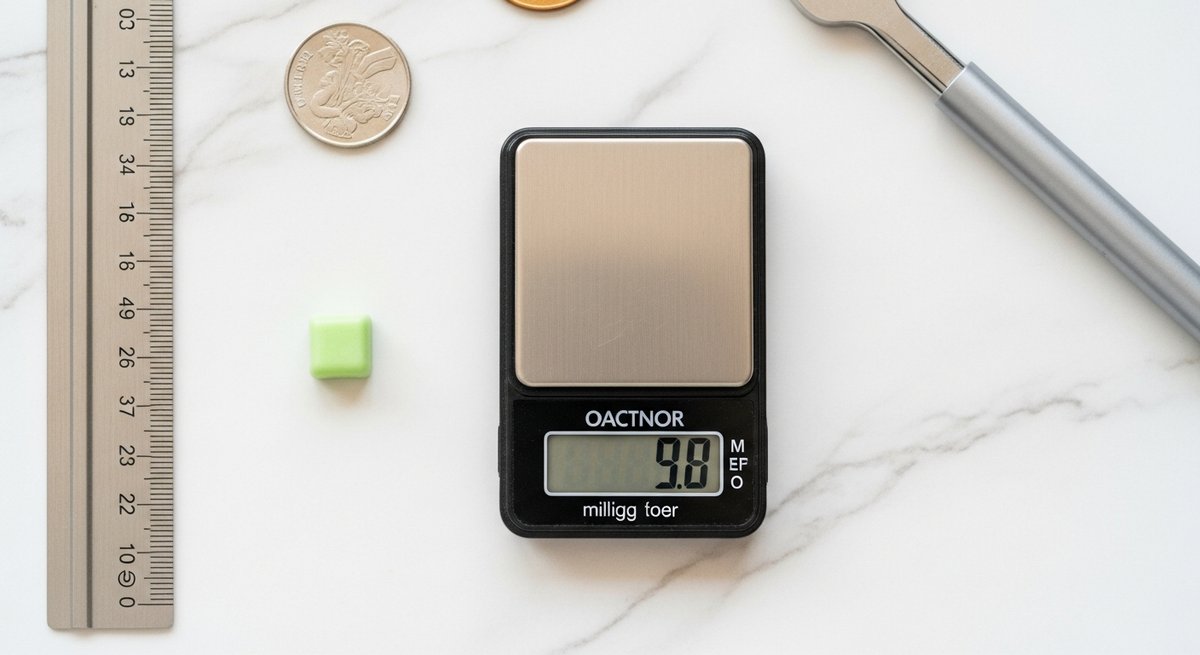
Let’s be honest about what the word microdosing gets used to mean. In cannabis culture, it often gets tossed around loosely to describe anything smaller than a “proper” dose. But there is a more useful definition: a microdose is an amount small enough that it does not produce significant intoxication, but large enough that you notice something – a subtle shift in mood, a loosening of mental rigidity, or a reduction in background anxiety that was quietly eating your focus.
For cannabis gummies, that typically means somewhere between 1 mg and 5 mg of THC, sometimes paired with CBD. Standard recreational gummies often come in at 10 mg per piece – a dose that works beautifully for relaxation on a slow Friday night, but that is probably too much if you have a project deadline at two in the afternoon. The microdosing range sits well below that threshold. If you want to understand the full landscape of how cannabis edible doses interact with your experience, the safe dosing framework for weed gummies is a genuinely useful starting point.
Gummies are a popular vehicle for this kind of low-dose experimentation because they are precise, portable, and slow-releasing. You know exactly what you consumed, and the digestion process means the onset is gradual – which suits the workday better than faster delivery methods.
Why some people swear by it for focus
The endocannabinoid system plays a role in mood regulation, stress response, and the way the brain filters incoming information. THC at low doses interacts with this system differently than it does at high doses. High doses can amplify anxiety and scatter attention. Low doses, for many people, seem to do something closer to the opposite – quieting the mental noise that makes it hard to settle into deep work.
This is not universal. Tolerance, genetics, and the specific task at hand all matter. Someone doing repetitive creative work – writing, designing, editing – may find a 2.5 mg microdose opens up their thinking. Someone needing precise logical output might find even that amount slows them down. The honest answer is that there is significant individual variation, and the only way to know which camp you are in is careful self-experimentation.
One thing productivity-focused users consistently report is a reduction in task-switching anxiety – that low-level dread that makes you check your inbox seventeen times instead of finishing the thing you started. Whether that is pharmacological or psychological is genuinely hard to separate, which brings us to something important.
Expert Insight
Dr. Alexander Tabibi
Dr. Alexander Tabibi
A 4-week observational study of 81 microdosers found that participants reported improved wellbeing, reduced anxiety, and lower depression scores. Critically, positive expectancy scores – how much participants expected microdosing to help – were themselves strong predictors of those improvements. This is the placebo signal that keeps appearing in microdosing research across substances.
This does not mean the reported benefits are fake. It means they are harder to disentangle from belief and ritual than advocates sometimes acknowledge. For cannabis microdosing specifically, the evidence base is even earlier-stage. The takeaway for beginners: keep expectations calibrated. The ritual of intentional low-dose use may itself be part of what works, and that is not a flaw in the approach.
Kaertner et al. (2021). Positive expectations predict improved mental-health outcomes linked to psychedelic microdosing. Scientific Reports, 11(1):1941. PMID: 33479342
How to actually start: dose, timing, and format
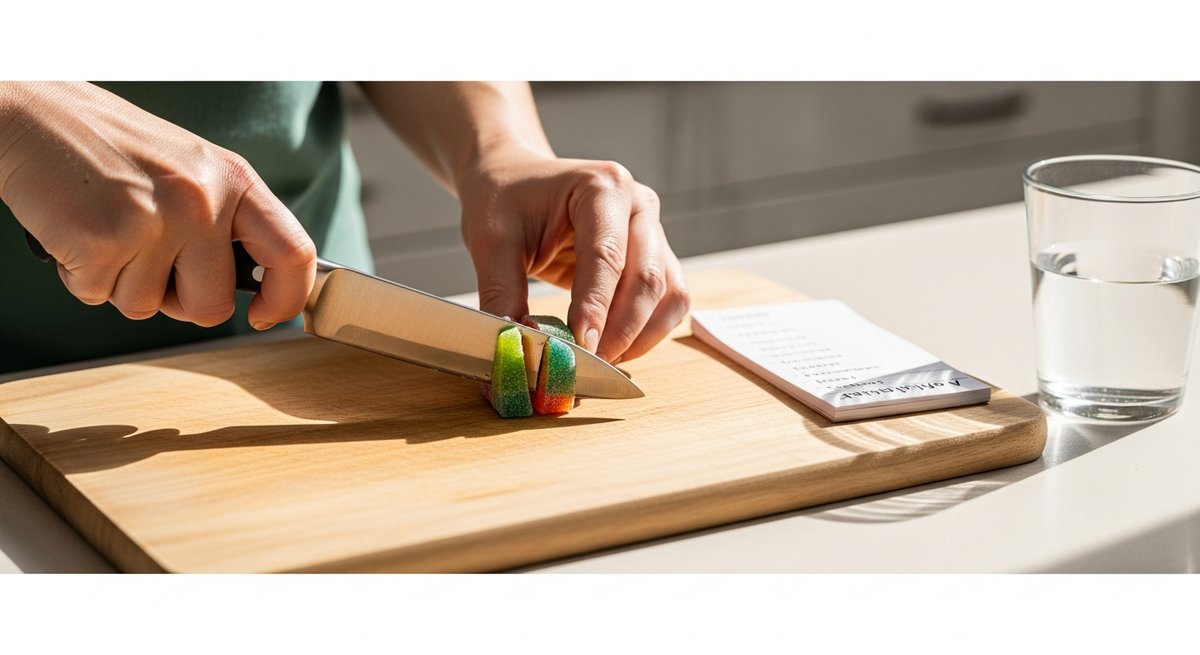
Starting low is not just a cliche here – it is genuinely the most useful advice you can follow. If you have no recent cannabis tolerance, begin at 1 mg to 2.5 mg of THC. If gummies in your area come in 5 mg or 10 mg pieces, look for products designed for this range or check whether the packaging suggests a half-piece serving. Many modern formulations are built with low-dose users in mind.
Timing matters more than most beginners expect. Edibles take between 30 minutes and 2 hours to come on, depending on your metabolism, whether you have eaten recently, and the specific formulation. Taking a microdose gummy right before a meeting and then feeling it mid-presentation is a classic beginner mistake. Give yourself at least 90 minutes of buffer before any commitment that requires sharp performance.
The question of THC-to-CBD ratio also deserves attention. Many people find that adding CBD to a low-THC dose smooths the experience and reduces the edge of any latent anxiety. Ratios like 1:1 or 2:1 (CBD to THC) are common in products aimed at this use case. If you are new to all of this, the beginner’s complete cannabis microdosing guide covers the full conceptual framework in detail, including how to track your sessions and adjust over time.
For people exploring the low-dose gummy category, the Hometown Hero 5mg Live Rosin Day and Night Discovery Pack is a well-regarded option. Live rosin extraction preserves the full terpene profile of the plant, which matters because terpenes contribute to the character of the experience. The Day and Night format lets you compare a daytime-oriented formulation against an evening one – useful when figuring out what works for your focus window versus your wind-down.
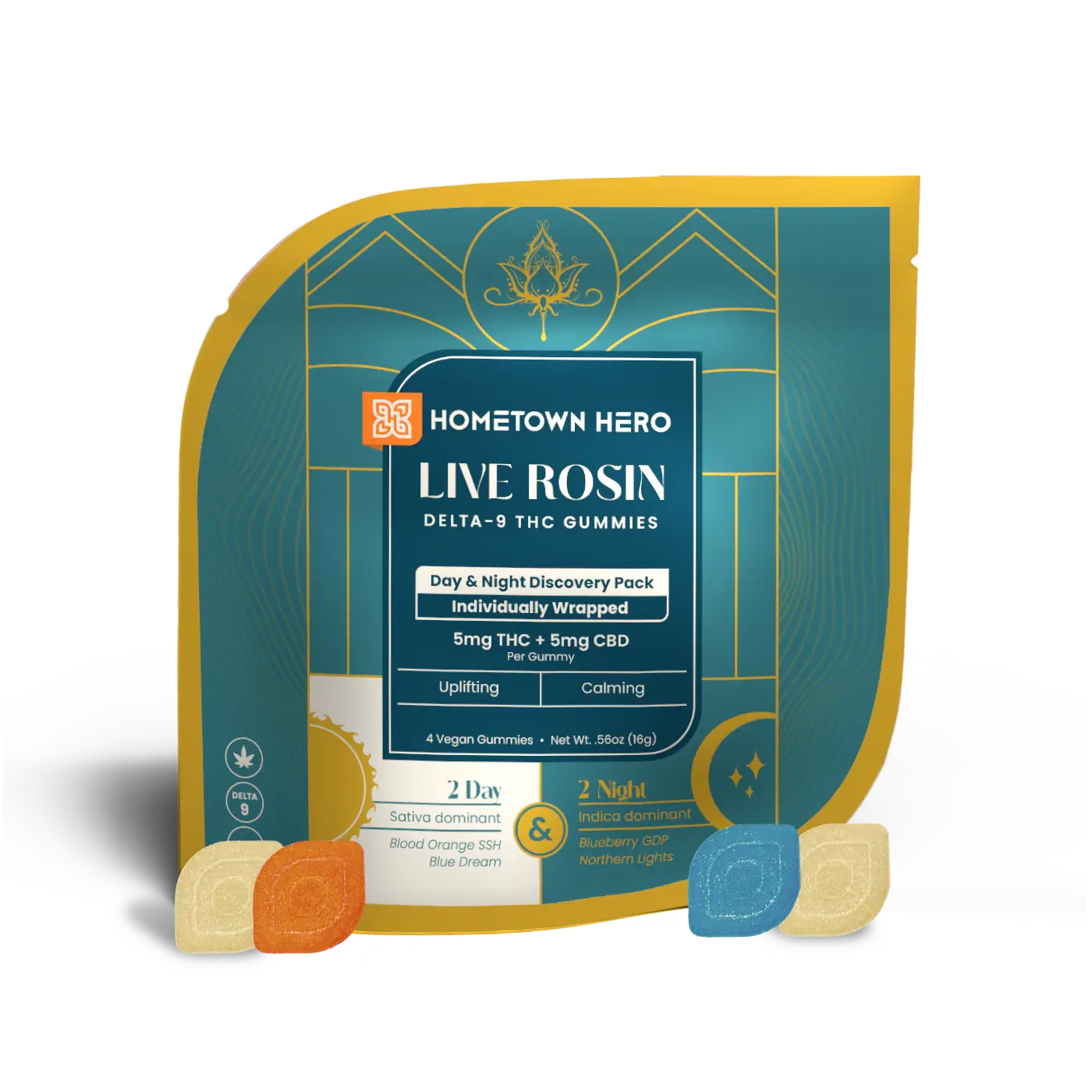
Hometown Hero 5mg Live Rosin Day & Night Discovery Pack
5mg live rosin gummies in day and night formulations – built for low-dose experimentation
Building a protocol that doesn’t backfire
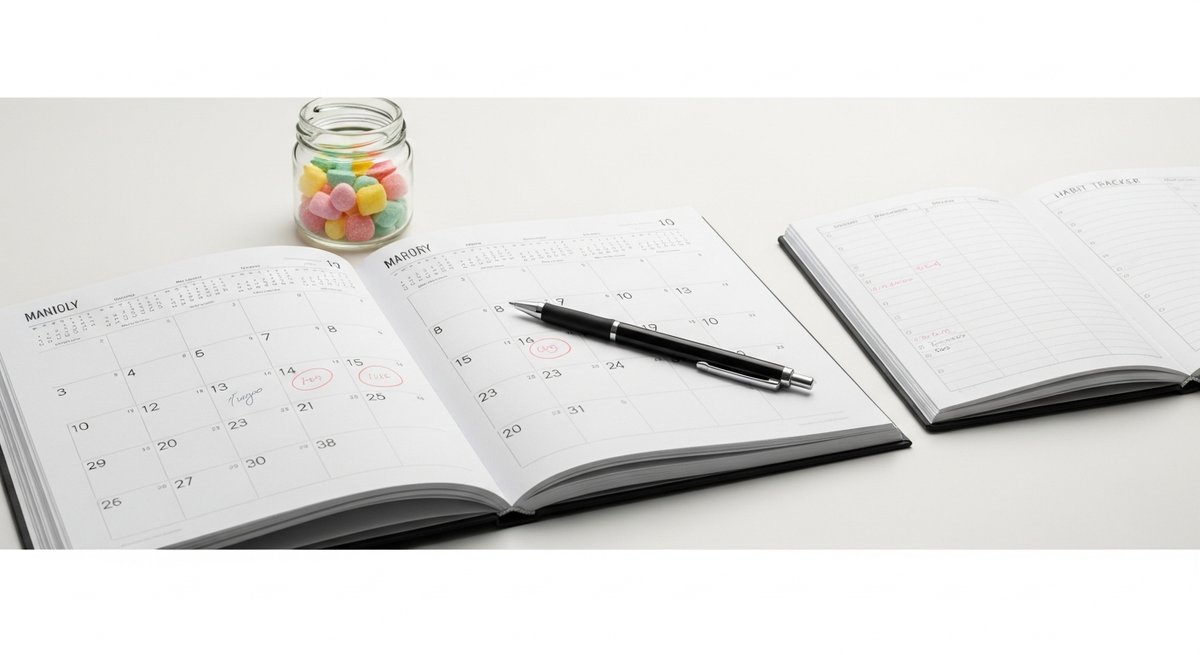
Here is the thing about using any substance as a productivity tool: consistency matters, but so does restraint. Daily cannabis use, even at low doses, can gradually raise your baseline tolerance. What starts as a 2 mg dose that reliably takes the edge off can, over weeks, feel like nothing at all. This is why most people who do this seriously build in regular off days – sometimes called “tolerance breaks” – to keep the dose range effective.
A common structure is: use on two or three days, skip one day. Others prefer a five-days-on, two-days-off pattern tied to the work week. The underlying principle is the same: protect your sensitivity to the compound so it keeps working when you want it to.
Journaling is underrated here. A simple log – dose, time, task, and how the session went – gives you data after a few weeks that is far more reliable than memory. You will start to notice patterns: maybe you always feel clearer when you microdosed two hours before starting work rather than thirty minutes before. Maybe a 2.5 mg dose works beautifully for writing but leaves you slightly foggy during calls. These are things you cannot know in advance.
It is also worth being clear-eyed about what you are optimizing for. If the underlying issue is burnout, chronic stress, or poor sleep, a microdose gummy is not addressing the root cause – it is softening the symptoms. That is sometimes exactly what you need to get through a particular season of work, but it is not a substitute for sleep, exercise, or dealing with whatever is actually draining you.
Cannabinoid options beyond standard THC gummies
Most of the conversation about microdosing gummies centers on Delta-9 THC, and that makes sense – it is the most studied compound. But the gummy category has expanded considerably. Delta-8 THC is often described as producing a cleaner, less anxious experience than Delta-9 for the same dose, though the research here is much thinner. THCV has been anecdotally associated with a stimulant-like quality at low doses. And THC-P, a more potent compound, requires even more conservative dosing if you are trying to stay in the functional range.
When looking at higher-potency gummies, product labeling and third-party testing become especially important. A 25 mg gummy might sound comparable to a standard product, but if the cannabinoid is significantly more potent than Delta-9, the effective dose is much smaller. For experienced users who want to explore this range carefully, Binoid’s THC-P gummies represent one of the more rigorously formulated options – available with clear potency labeling and consistent batch quality.
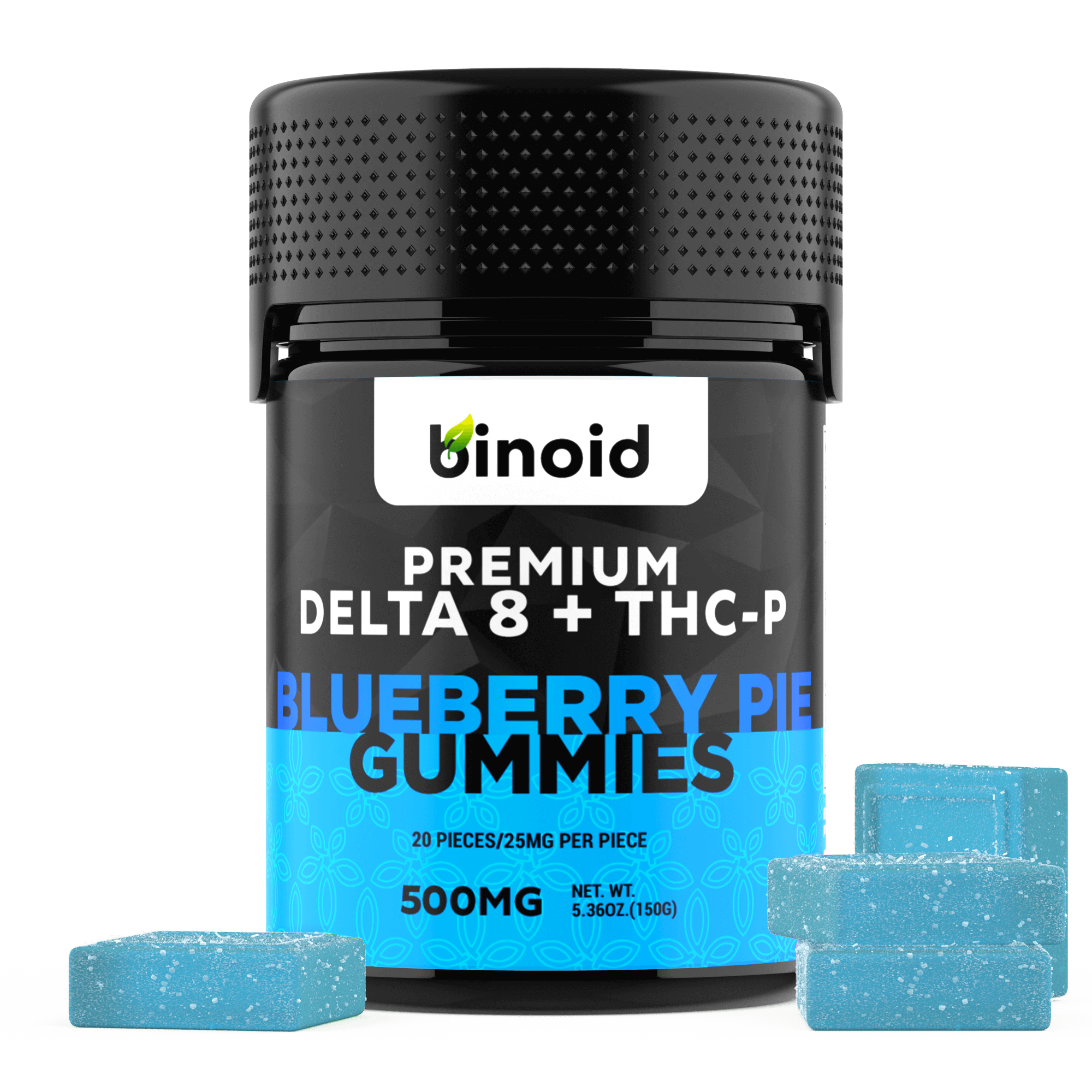
Binoid THC-P Gummies
High-potency THC-P gummies with consistent batch testing – for experienced users adjusting dose carefully
The sleep connection: why nighttime matters for daytime performance

You cannot talk about productivity without talking about sleep. Many people who use low-dose gummies for focus find their biggest gains come not from the daytime dose at all – but from using a CBD-forward gummy at night to improve sleep quality.
Poor sleep is probably the single most underrated productivity killer in most people’s lives. It degrades decision-making, working memory, and emotional regulation in ways that no amount of focus or discipline fully compensates for. If low-dose CBD gummies help you fall asleep more easily and stay asleep longer, you are solving a root cause rather than just chasing a symptom. The best CBD gummies for sleep and what to look for in a formulation is a useful companion read if this angle resonates with you.
The day-and-night pairing concept – a low-THC daytime gummy for focus, a CBD-leaning evening gummy for sleep – reflects how many experienced users actually structure their use. It is less about chasing effects and more about supporting the conditions under which your brain does its best work.
Expert Insight
Dr. Alexander Tabibi
Dr. Alexander Tabibi
A systematic review of 31 studies examining medical cannabis and mental health found preliminary evidence that cannabis may support wellbeing in certain contexts. Reviewers also identified that acute cannabis use can affect cognitive assessment outcomes – meaning measurable performance on cognition tasks can shift with use – which is directly relevant for anyone using cannabis during work hours.
The review noted that effect direction varies substantially by individual and context. For productivity-focused users, this underscores why the timing of a microdose matters as much as the dose itself – and why tasks requiring sustained cognitive precision may warrant more caution than creative or low-stakes work.
Walsh et al. (2016). Medical cannabis and mental health: A guided systematic review. Clinical Psychology Review, 51:15-29. PMID: 27816801
Common mistakes beginners make (and how to skip them)
The most common beginner mistake is being impatient when the first dose does not do anything obvious. You take 2 mg, notice nothing dramatic after 45 minutes, and decide it is not working. So you take another. And then 90 minutes later both doses land simultaneously and you are very much not being productive. Start with a single low dose, wait the full two hours, and assess from there. That rule is not negotiable.
The second mistake is using a microdose gummy as a substitute for solving structural problems. Procrastination driven by fear, creative blocks caused by perfectionism, and exhaustion from overcommitment are not things that 2.5 mg of THC will fix. The microdose might lower the activation energy for starting, but you still have to do the work. It is a lubricant, not an engine.
Third: environment matters. If your workspace is chaotic and your phone is buzzing, you are not setting up the conditions for the approach to work. The people who report the best results tend to pair their low-dose session with intentional setup: cleared workspace, defined task, phone on do-not-disturb. The gummy is part of a deliberate ritual, not a standalone fix.
Finally, if you are on any prescription medications – particularly anything that affects your central nervous system, sleep cycles, or mood – talk to your pharmacist before experimenting. Cannabis can interact with how certain medications are metabolized, and that conversation is worth having before you start.
Is this for everyone? Honest caveats before you decide
Microdosing gummies for productivity is not a universally good idea. If you have a personal or family history of anxiety disorders, psychosis, or cannabis use disorder, low-dose experimentation warrants particular caution – and a conversation with a clinician is the right starting point.
If you are in a profession where cannabis use carries legal or safety consequences – operating heavy machinery, certain federal employment categories, commercial driving – the risks outweigh any potential productivity benefit. Cannabis stays detectable in drug screens long after any functional effect has worn off, and that asymmetry matters.
For people who do not fall into those categories, approach this as an experiment rather than a commitment. Try it deliberately, track what happens, and be willing to conclude it is not the right tool for you. The goal is better work and a better relationship with how you spend your energy – and there are plenty of paths to that outcome that do not involve cannabis at all.
FAQs
What does “microdosing gummies” mean?
Microdosing means taking a very small amount of THC or CBD—just enough to feel subtle effects without getting high. It’s about staying functional while getting a slight mental boost.
Can microdosing gummies really improve productivity?
For some people, yes. Low doses may help reduce stress, improve focus, and enhance creativity. The key is keeping the dose low enough to avoid feeling distracted or overly relaxed.
How much should a beginner take?
Most beginners start with 1–2.5 mg of THC. It’s best to start low, wait at least an hour, and see how your body responds before taking more.
Will I feel high from microdosing?
At proper microdose levels, you shouldn’t feel “high.” You may notice a light mood lift or clearer thinking, but not strong psychoactive effects.
How long do microdose gummies take to work?
Gummies usually take 30–60 minutes to kick in, and the effects can last 4–6 hours. Timing matters, especially if you’re using them for work or study.
Sources
Kaertner et al. (2021). Positive expectations predict improved mental-health outcomes linked to psychedelic microdosing. Scientific Reports, 11(1):1941. PMID: 33479342
Walsh et al. (2016). Medical cannabis and mental health: A guided systematic review. Clinical Psychology Review, 51:15-29. PMID: 27816801
Important Notice
Cannabis affects individuals differently. If you have a history of anxiety, panic disorder, or other mental health conditions, consult a qualified healthcare provider before using any cannabis product. This article is for informational purposes only and does not constitute medical advice. If you experience severe anxiety, chest pain, difficulty breathing, or feel you are in crisis, call 911 or go to your nearest emergency room immediately.
For adults 21+ only. Cannabis laws vary by state. This content is intended for informational purposes only and does not constitute medical or legal advice. If you are experiencing a medical emergency, call 911 or go to your nearest emergency room immediately.