🚛 FREE DISCREET SHIPPING ON ALL ORDERS $49+










How to Use a Vape for Work Without Getting Too High
Here’s a question that comes up more often than you’d think: can you use cannabis during a workday without turning your brain into a slow-moving fog machine? The answer is yes – but only if you actually know what you’re doing. Most people who’ve tried and failed didn’t fail because cannabis is incompatible with focus. They failed because they used


Here’s a question that comes up more often than you’d think: can you use cannabis during a workday without turning your brain into a slow-moving fog machine? The answer is yes – but only if you actually know what you’re doing. Most people who’ve tried and failed didn’t fail because cannabis is incompatible with focus. They failed because they used too much, chose the wrong product, or didn’t account for timing. Vaping is particularly tricky in this regard. The onset is fast, the effects can stack quietly, and by the time you realize you’ve overdone it, you’re three paragraphs into an email that makes no sense.
This isn’t about encouraging you to get high at your desk. It’s about understanding how to use a vape with intention – low doses, smart strain choices, and an honest read of your own tolerance – so that cannabis becomes a tool rather than a liability. Think of it as the difference between a cup of coffee and an accidental triple espresso: one sharpens you, the other has you staring at the ceiling wondering why your heart is beating so fast.
Why Vaping Catches People Off Guard at Work
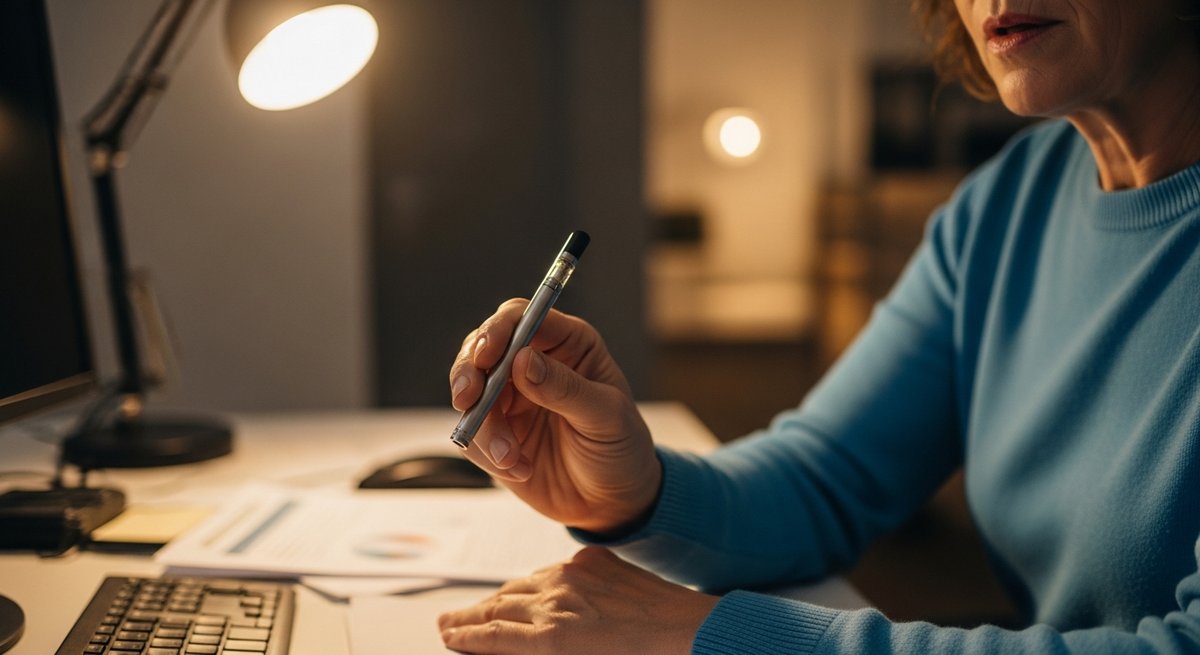
Inhaled cannabis hits your bloodstream through the lungs, bypassing the long digestive route that edibles take. Effects typically show up within minutes – sometimes as fast as two to five. That speed is part of why vaping appeals to people who want precise control. But it’s also why dosing goes sideways quickly: the window between “just right” and “too much” is narrower than most people expect, especially during work hours when your baseline stress level is already doing something to your nervous system.
There’s also the tolerance factor. Someone who vapes regularly at night will have a different daytime experience than they expect. Fatigue, food intake, hydration, and ambient stress all interact with how THC lands. A product that felt balanced at 9 PM on the couch may feel overwhelming at 10 AM before a video call. Recognizing that variability is step one.
And then there’s the product itself. Cartridges and disposables now routinely reach THC concentrations that would have seemed extreme just a few years ago. Understanding what’s actually in your vape – and how the cannabinoid profile shapes the experience – matters more than most people give it credit for. For a deeper look at how those compounds interact with your body’s own signaling system, the article on THCA and the endocannabinoid system is genuinely useful context.
The Micro-Dose Principle: One Puff Is a Starting Point
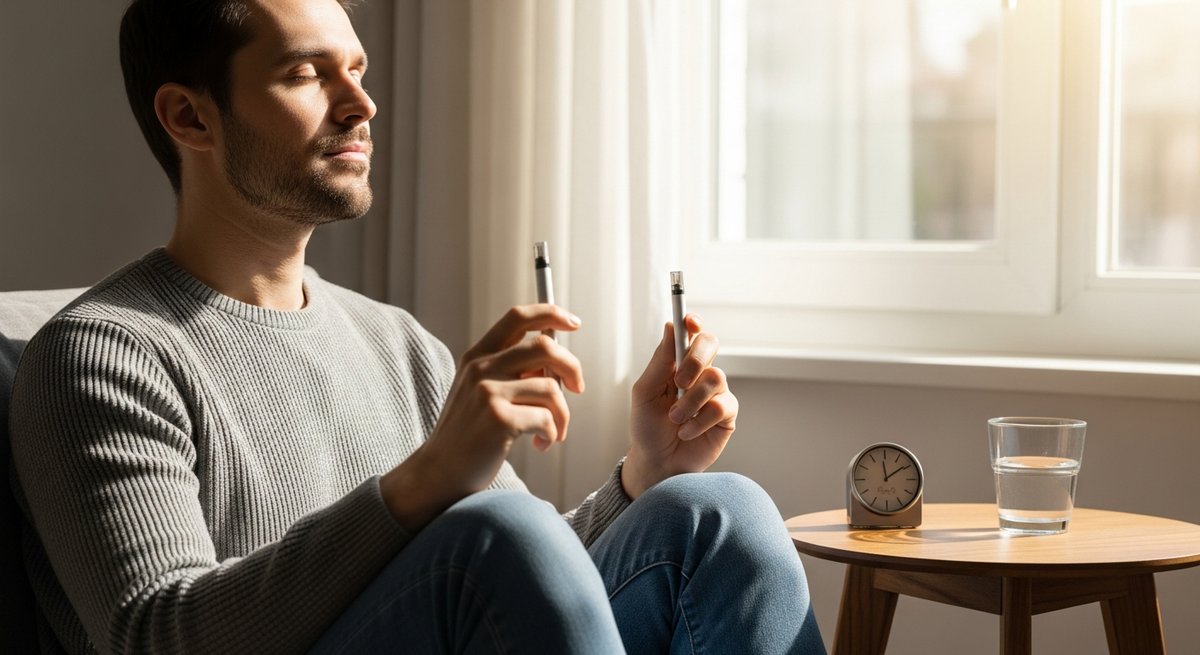
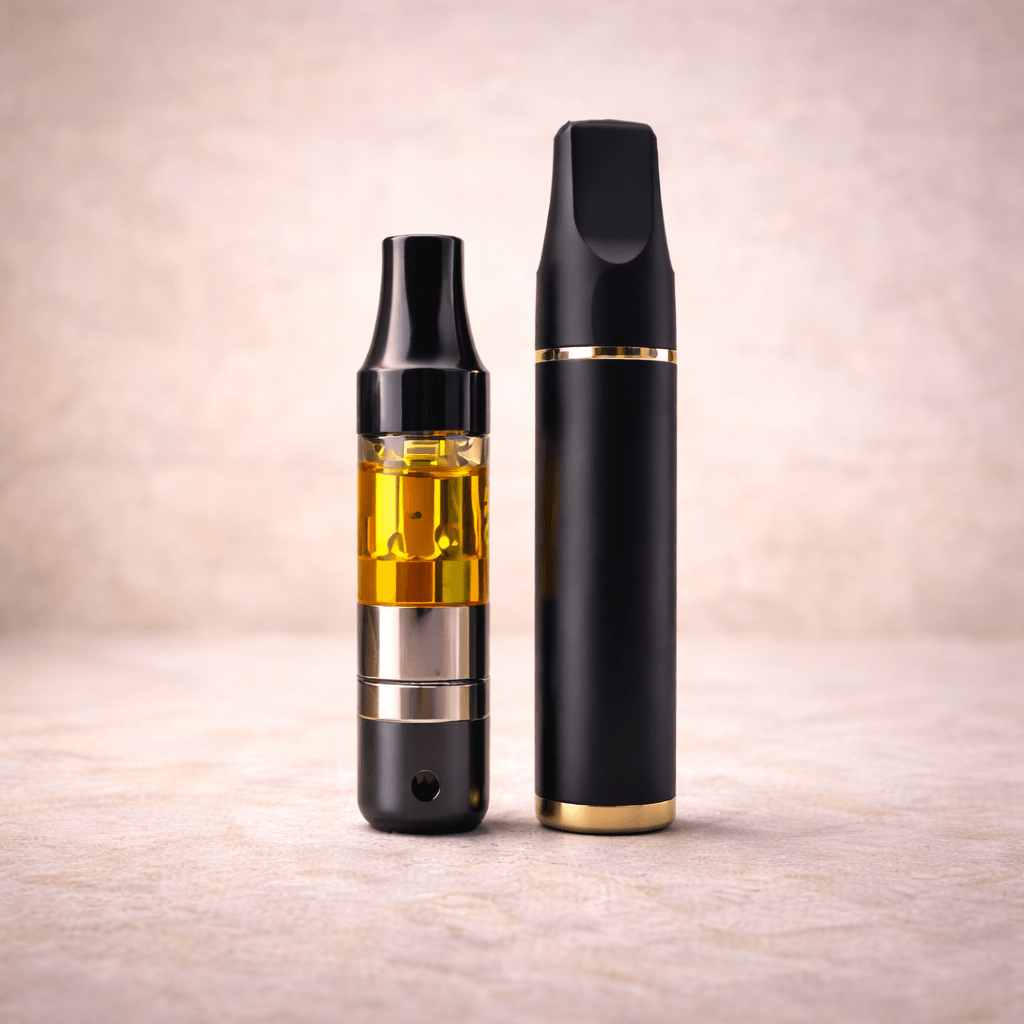
Microdosing with a vape is conceptually simple: take the smallest possible inhale, wait fifteen to twenty minutes, and then honestly assess how you feel before taking more. The problem is that “smallest possible inhale” is not an intuitive instruction. We’re conditioned to take a full drag. Practice taking a two-second, shallow inhale – barely pulling vapor through the mouthpiece – and you’ll be surprised how much cannabinoid content even that delivers.
The goal for a work session is a light, clean lift – not sedation, not euphoria, just a slight reduction in the internal noise that makes concentration difficult. Some people describe it as turning down a background hum. Others say it feels like their thoughts finally agree to move in one direction. Neither description sounds like being high, and that’s intentional. Vaping for work focus is about ceiling management, not peak-seeking.
One practical rule: set a time buffer before your first demanding task. Take your small dose, then spend fifteen minutes on something low-stakes – clearing notifications, reviewing your task list, making coffee. By the time you sit down to write, present, or problem-solve, you’ll have a much clearer read on where you actually are. Don’t start your most demanding work the moment you exhale.
Strain and Cannabinoid Profile: It Really Does Matter
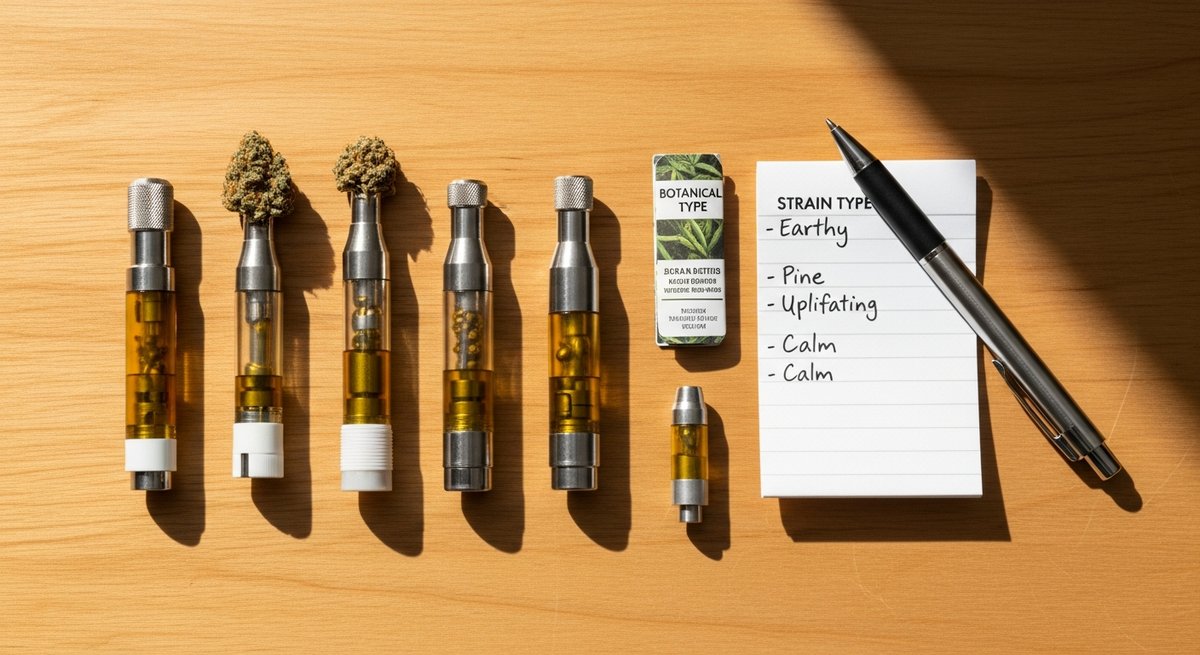
Not all vape cartridges are built the same. For daytime use, the difference between a sativa-dominant and an indica-dominant profile can be the difference between a productive afternoon and an unexpectedly long couch visit. Sativa-leaning cultivars tend to deliver more cerebral, energetic effects – though the simplified sativa/indica binary is increasingly considered an oversimplification. Terpene profile arguably matters just as much as classification.
Terpenes like limonene and pinene are commonly associated with uplifting, clear-headed effects. Myrcene tends toward sedation and body relaxation – not ideal when you need to write a proposal. When shopping for a work-compatible vape, look for products that list their terpene profile and lean toward limonene, pinene, or terpinolene. These compounds aren’t just flavor; they genuinely shape how the high lands.
Delta-8 THC vapes are worth mentioning because many users report a noticeably calmer, less anxiety-prone effect compared to delta-9 THC at comparable doses. For people who find that standard THC makes them second-guess everything they type, delta-8 can be a more manageable entry point. It’s still a psychoactive cannabinoid, so the same micro-dose patience applies, but the ceiling tends to feel lower and the ride smoother. The technology behind today’s vapes is explored in more depth in this look at smart weed pens and personalized vaping technology.
Reading the Science on Cannabis and Cognitive Performance
Let’s be honest about what the research actually says. High-dose THC consistently impairs working memory, attention, and processing speed in controlled studies. That’s not a debatable point. But the research picture at very low doses is considerably more nuanced – most studies showing impairment use doses that would be considered excessive by any reasonable microdosing standard.
The honest position: for people who experience significant anxiety or mental noise that disrupts concentration, a very small cannabis dose may functionally improve output by reducing that friction. That’s not a therapeutic claim – it’s a realistic observation about how some people experience low-dose cannabis. For others, even tiny amounts increase anxiety or derail focus. Individual variation is real and can be dramatic. You need to know your own response before building a workflow around it.
Expert Insight
Dr. Alexander Tabibi
Dr. Alexander Tabibi
A 2016 systematic review of medical cannabis and mental health covering 31 studies found that cannabis can acutely affect cognitive assessment performance. The review noted preliminary evidence for cannabis as a useful tool in certain populations, but also identified that psychotic disorders may worsen and that cognitive effects during acute intoxication are documented and real.
What this means practically is that the cognitive picture is not uniformly negative or uniformly positive – it depends heavily on dose, individual response, and the specific domain of cognition being measured. For work-focused use, keeping doses minimal and allowing enough time to assess your state before demanding tasks is the responsible approach.
Walsh et al. (2016). Medical cannabis and mental health: A guided systematic review. Clinical Psychology Review, 51:15-29. PMID: 27816801
Timing Your Sessions Around Your Actual Schedule
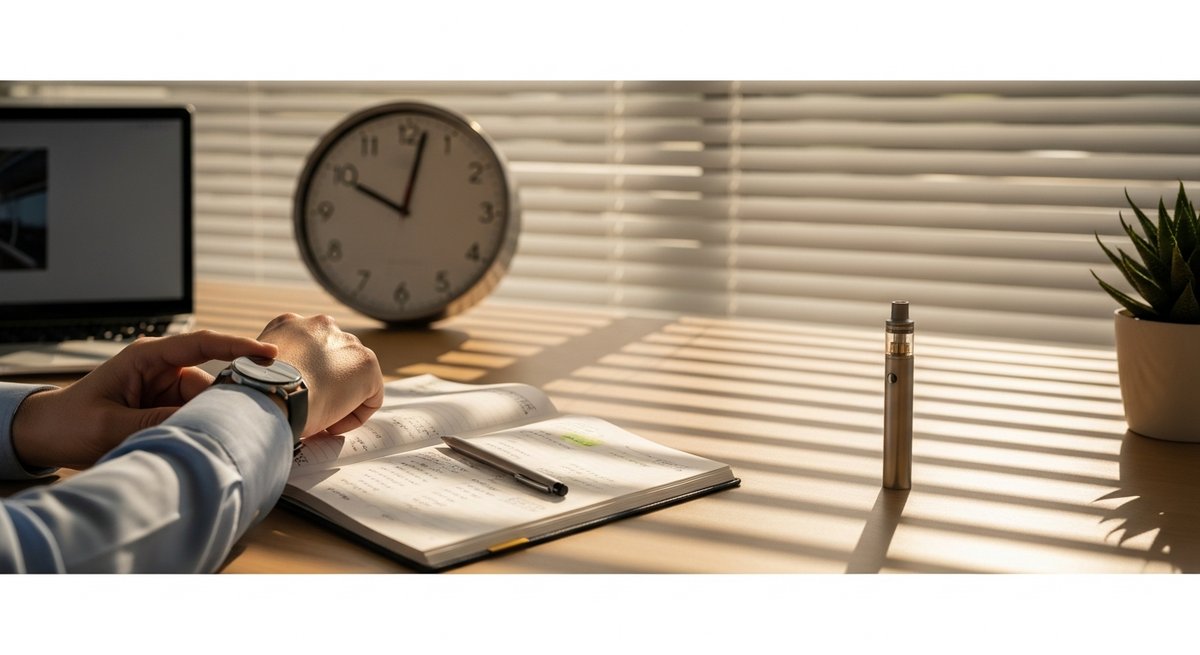
Timing is probably the most underrated variable in the whole vaping-for-work equation. Even if you’ve nailed the dose and the product, poor timing can sabotage everything. The general principle is to work with your natural focus rhythms rather than against them. Most people have a two to three hour window in the late morning where cognitive output peaks. Dosing right before that window begins means your light effect will carry you through it.
Avoid vaping immediately before meetings, especially video calls. Not because of impairment necessarily, but because the first twenty minutes after an inhale is genuinely not the time to be reading other people’s faces and choosing your words carefully. Give yourself a buffer. If a meeting lands at 11, dose at 9:30 at the earliest – and only if your tolerance is well-established and your response is predictable.
Some people find a single small session in the mid-afternoon works better than a morning dose – particularly for creative or writing-heavy work. Experiment with timing as deliberately as you experiment with dosage. Keep notes. What worked on Tuesday might not work the same way on Thursday after a bad night of sleep.
Choosing the Right Vape Product for Work Use
Product selection for daytime use deserves its own conversation. The most important thing to avoid is reaching for whatever is convenient rather than what’s appropriate. High-potency THCA or THC-P products are excellent for recreational sessions where sedation is welcome. They are not the right choice for anyone trying to maintain functional output during work hours – at least not without a very high tolerance and a precisely calibrated routine.
For a manageable daytime vaping experience, delta-8 cartridges from well-formulated brands tend to offer a more predictable, lower-intensity effect. Binoid’s delta-8 cartridges are a useful example – the Tangie strain has a citrus-forward terpene profile that skews energetic rather than sedating, which is exactly what you want when trying to sharpen focus rather than unwind.
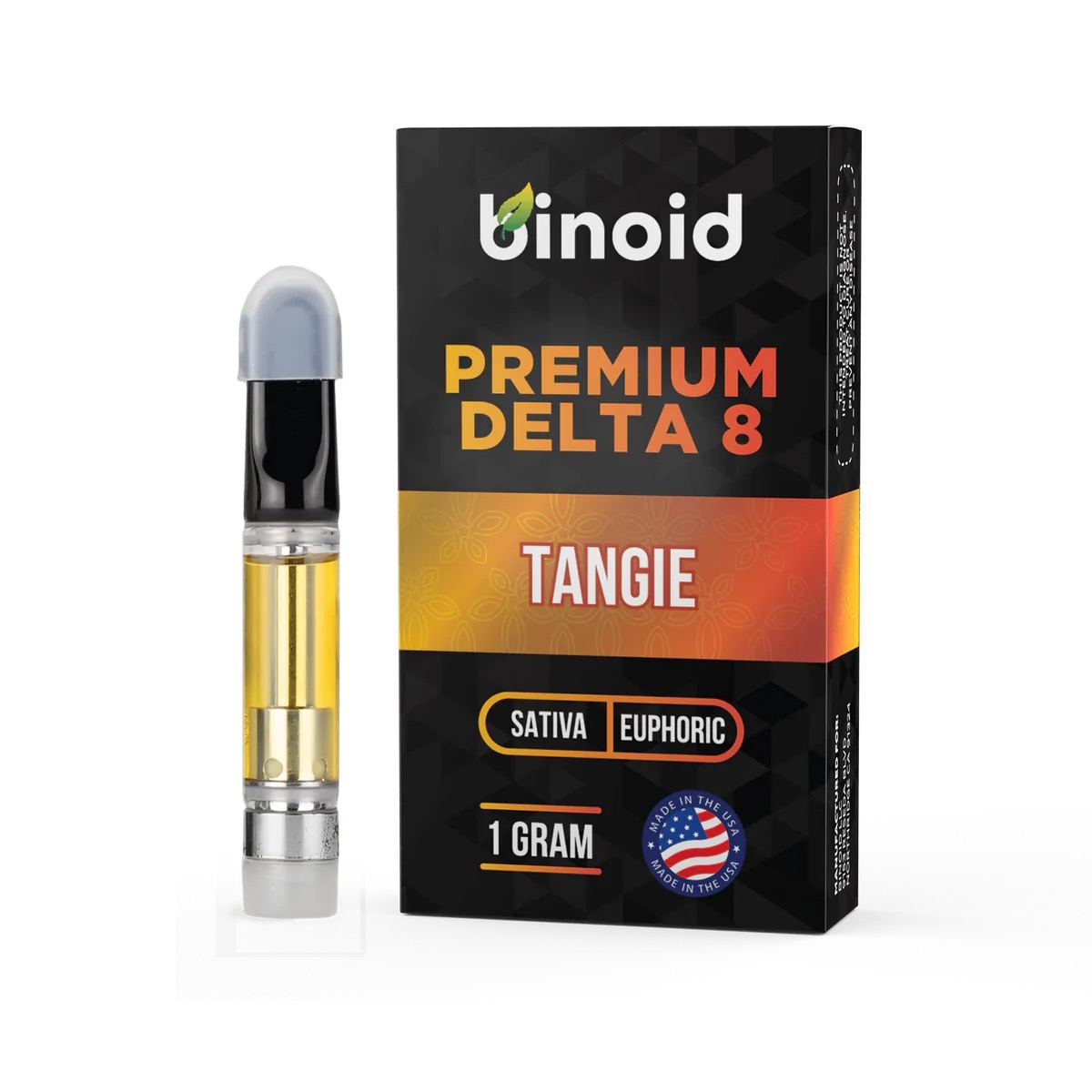
Binoid Delta 8 THC Vape Cartridge – Tangie
Citrus-forward sativa-leaning delta-8 cartridge designed for clear-headed, manageable effects
For those who prefer a dual-chamber option, Cookies makes a product worth considering. The Adios MF and Miami Mint dual-chamber design lets you pull from a more cerebral side or a smoother blend depending on what your afternoon needs. That flexibility is genuinely useful for creative professionals whose work shifts between analytical and generative modes throughout the day.
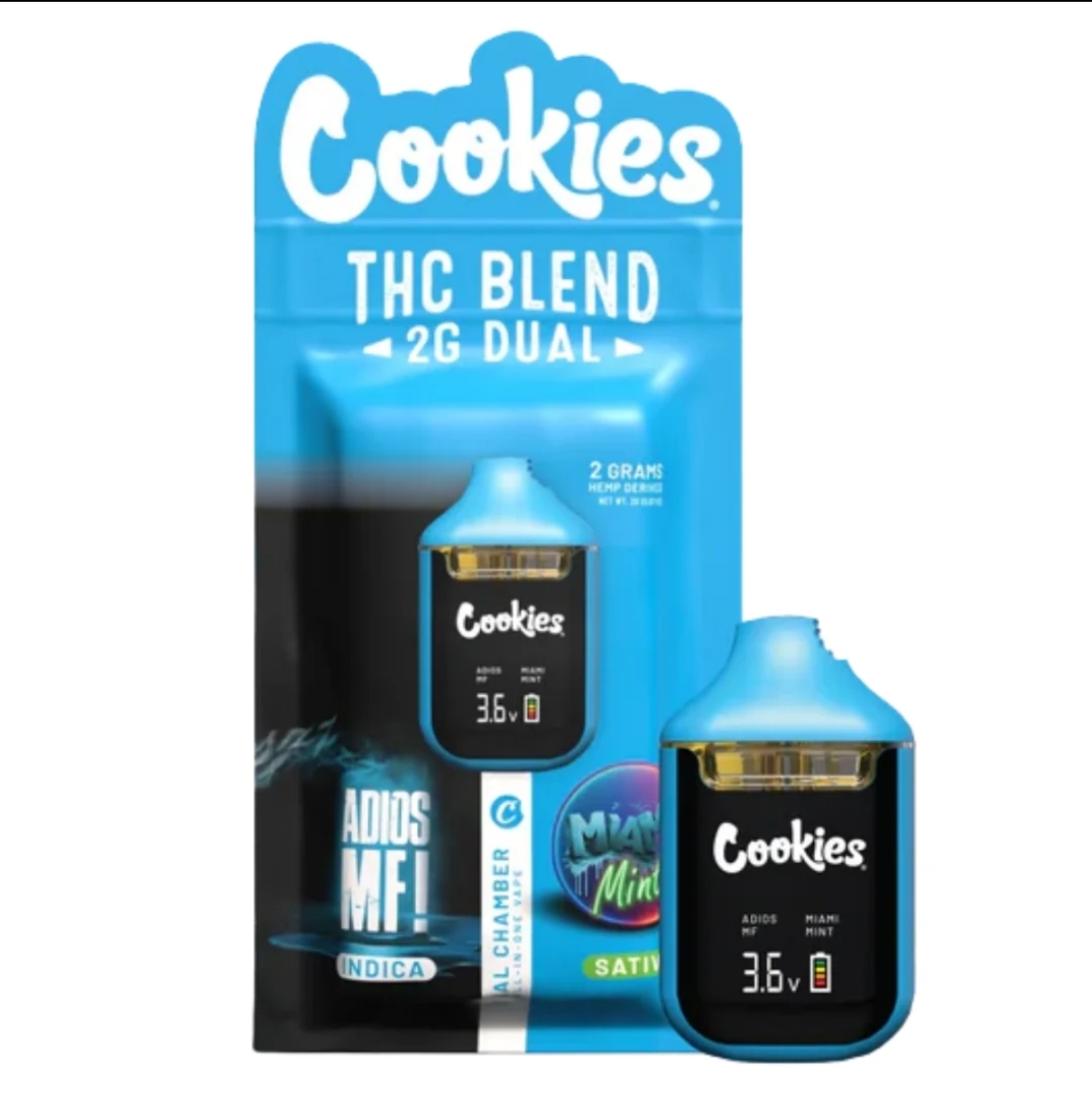
Cookies 2G Dual Chamber Vape – Adios MF! & Miami Mint
2g dual-chamber design with two distinct strain profiles in one device
What to Do If You Overshoot
It happens. You misjudge the dose, or forgot that you haven’t eaten since 7 AM, and suddenly the room feels slightly larger than it should. First thing: don’t panic, because panic reliably makes it worse. Sit somewhere quiet, drink water, and do something low-demand – put on a podcast, take a slow walk if you can, eat something. The effects will pass.
CBD is genuinely useful as a counterbalance to THC overconsumption. Several reports suggest CBD can temper the more anxiety-producing aspects of THC, though the science here is more anecdotal than conclusive at typical use doses. Keeping a CBD-dominant product nearby is a reasonable harm-reduction strategy. Black pepper is another folk remedy with some biochemical plausibility thanks to the terpene beta-caryophyllene – whether it works dramatically is debatable, but it’s harmless and the grounding act of doing something can interrupt the anxiety spiral that sometimes follows an overshoot.
When Vaping for Work Probably Isn’t the Right Fit
This whole approach assumes you’re working in a context where cannabis use is legal, your employer doesn’t have a zero-tolerance policy, you’re not operating machinery or driving, and you’re not in a high-stakes role where impairment – even mild – creates real risk for other people. If any of those conditions aren’t met, this isn’t the right experiment to run. Cannabis is broadly legal for adults in many states, but the legal landscape varies enormously, including workplace drug testing policies that don’t distinguish between use hours and off-hours detection.
There’s also the matter of frequency. Using cannabis daily for productivity purposes is worth examining honestly. Dependence develops gradually and often without the person noticing. If you find yourself needing to vape before you can concentrate – rather than choosing to as an enhancement – that’s a meaningful signal worth paying attention to. The line between tool and crutch is real, and crossing it quietly is one of the more common stories in cannabis culture.
Expert Insight
Dr. Alexander Tabibi
Dr. Alexander Tabibi
A 2018 Cochrane systematic review of cannabis for Crohn’s disease noted a 91% clinical response rate for THC cannabis versus 40% for placebo in a small sample across three RCTs – but also flagged very low certainty of evidence due to small sample sizes. This kind of evidence pattern is common across cannabis research: promising signals that remain inconclusive at scale.
The broader lesson for anyone using cannabis functionally is that low certainty in the research doesn’t mean the effects aren’t real for an individual. It means you can’t rely on population-level findings to predict your own response. Self-observation, conservative dosing, and honest tracking of outcomes is the only reliable method when clinical literature is this thin on real-world dose-response data for cognitive tasks.
Kafil et al. (2018). Cannabis for the treatment of Crohn’s disease. Cochrane Database of Systematic Reviews, 11:CD012853. PMID: 30407616
The honest takeaway is that vaping for work focus is a personal experiment, not a universal upgrade. For some people, it genuinely helps. For others, even careful microdosing introduces more friction than it removes. Knowing which category you fall into requires patience, honest self-assessment, and a willingness to stop if the answer turns out to be unfavorable.
FAQs
How can I avoid getting too high when vaping at work?
Start with just one small puff and wait 10–15 minutes before taking another. This helps you gauge how your body reacts and prevents overdoing it.
What type of vape is best for staying productive?
Look for low-THC or balanced CBD:THC vapes. High-CBD products are less likely to cause strong psychoactive effects and are better for maintaining focus.
How many puffs should I take during work hours?
Usually one or two light puffs is enough. Microdosing is key—taking more can quickly shift from focus to distraction.
How long should I wait between puffs?
Wait at least 15–30 minutes between puffs. Vaping effects come on quickly, so spacing helps you stay in control.
Will vaping make me feel obviously high at work?
If you stick to low doses, most people experience mild relaxation or clarity rather than a noticeable “high.” Overuse, however, can be obvious.
Sources
Kafil et al. (2018). Cannabis for the treatment of Crohn’s disease. Cochrane Database of Systematic Reviews, 11(11):CD012853. PMID: 30407616
Walsh et al. (2016). Medical cannabis and mental health: A guided systematic review. Clinical Psychology Review, 51:15-29. PMID: 27816801
Important Notice
Cannabis affects individuals differently. If you have a history of anxiety, panic disorder, or other mental health conditions, consult a qualified healthcare provider before using any cannabis product. This article is for informational purposes only and does not constitute medical advice. If you experience severe anxiety, chest pain, difficulty breathing, or feel you are in crisis, call 911 or go to your nearest emergency room immediately.
For adults 21+ only. Cannabis laws vary by state. This content is intended for informational purposes only and does not constitute medical or legal advice. If you are experiencing a medical emergency, call 911 or go to your nearest emergency room immediately.