🚛 FREE DISCREET SHIPPING ON ALL ORDERS $49+









Do-Si-Dos strain vs Wedding Cake strain — Which Is Right for You?
Do-Si-Dos strain is the stronger nightly pain pick for most chronic pain patients – faster body lock, heavier caryophyllene load, and a linalool pairing that hits both tissue and nervous-system amplification. The one exception: when anxiety is cranking your pain louder, Wedding Cake strain‘s slower euphoric ramp edges ahead. Compare more cultivars on our strains hub. If you’ve been alternating

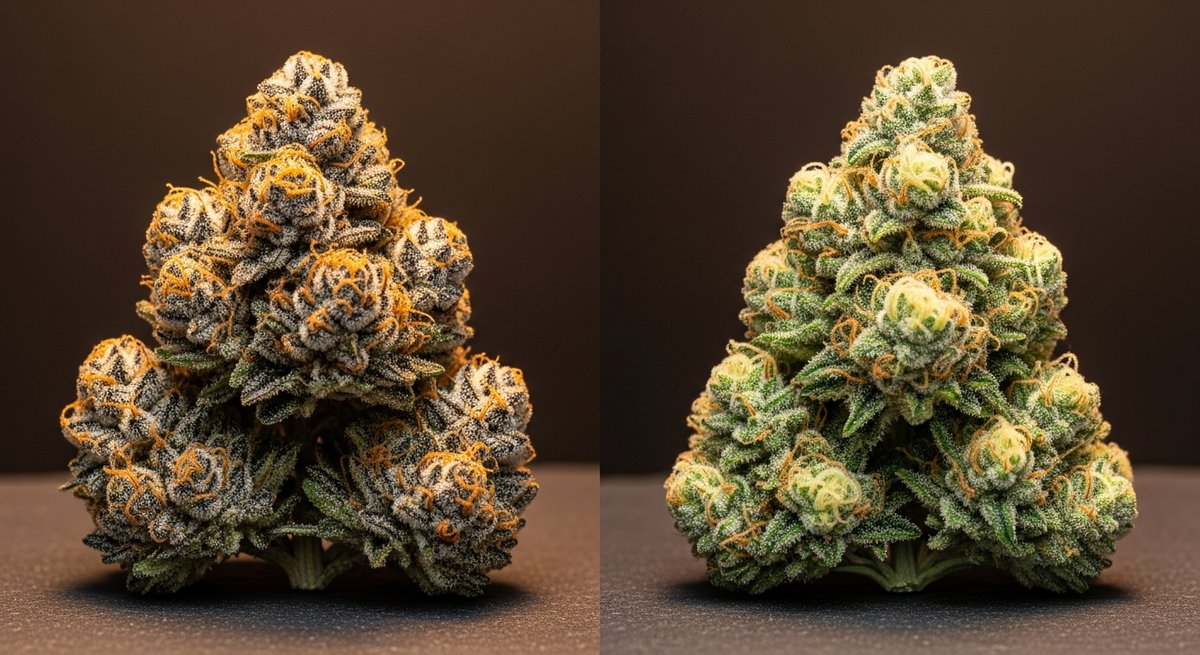
Do-Si-Dos strain is the stronger nightly pain pick for most chronic pain patients – faster body lock, heavier caryophyllene load, and a linalool pairing that hits both tissue and nervous-system amplification. The one exception: when anxiety is cranking your pain louder, Wedding Cake strain‘s slower euphoric ramp edges ahead. Compare more cultivars on our strains hub.
If you’ve been alternating between the two without a real framework, that stops here. This comparison settles onset timing, terpene mechanics, and the specific pain profiles each strain actually fits – no lifestyle fluff, just the reasoning you need to make every dose intentional.
How Do-Si-Dos Strain and Wedding Cake Strain Actually Differ for Pain
Both strains are indica-dominant hybrids with high THC ceilings, but their lineages pull pain relief in meaningfully different directions. Do-Si-Dos strain descends from OG Kush Breath and Face Off OG – parentage that tends to produce fast, pronounced body sedation. Wedding Cake strain comes from Triangle Kush and Animal Mints, a cross that typically builds toward deeper, slower full-body relaxation rather than an immediate lock.
On potency, Do-Si-Dos strain runs roughly 25–30% THC, while Wedding Cake strain generally ranges 22–27%. Both carry less than 1% CBD, so neither offers meaningful cannabinoid-driven anti-inflammatory support beyond THC itself. The real distinction is onset and terpene architecture. Do-Si-Dos strain delivers a faster, body-heavy response – more predictable if you need relief within a defined window before sleep. Wedding Cake strain is generally reported as slower-building, with sedation that deepens over time.
Terpene Stacks and Why They Shape Pain Relief Differently
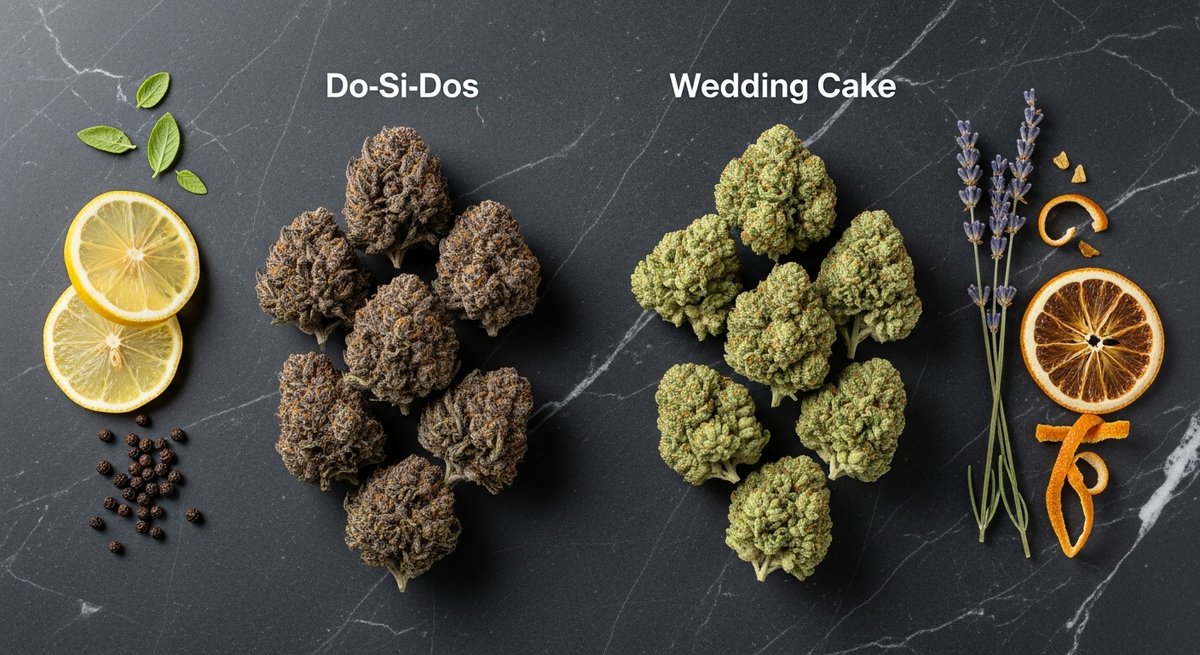
Do-Si-Dos strain leads with limonene, followed by caryophyllene and linalool. Caryophyllene is the terpene most directly linked to CB2 receptor activity, which may relate to inflammation and tension responses. Linalool adds a calming, muscle-loosening quality that complements it. Wedding Cake strain shifts that hierarchy – caryophyllene still anchors the profile, but myrcene moves into a prominent secondary role, likely explaining why Wedding Cake’s relief tends to feel slower but more enveloping. If your pain disrupts sleep continuity rather than just initial onset, that myrcene-forward depth may matter more than Do-Si-Dos strain’s faster, sharper body effect.
Side-by-Side: Do-Si-Dos Strain vs Wedding Cake Strain at a Glance
| Factor | Do-Si-Dos Strain | Wedding Cake Strain |
|---|---|---|
| THC range | ~25–30% | ~22–27% |
| CBD content | Typically <1% | Typically <1% |
| Dominant terpenes | Limonene, caryophyllene, linalool | Caryophyllene, myrcene, limonene |
| Primary effects | Hard muscle relaxation, mental quieting | Euphoric buffer, progressive body stone |
| Onset timing | Fast, abrupt body lock | Gradual, tiered sedation |
| Ideal use-case fit | Acute flare, late-night bedtime dosing | Evening wind-down, anxiety-layered pain |
| Flavour profile | Earthy, floral, cookie-sweet | Vanilla, sweet cream, tangy dough |
| Grow difficulty | Moderate | Moderate to challenging |
For pain patients scanning that table, two rows do the most decisive work: dominant terpenes and onset timing. Terpenes tell you which pain pathway each strain is more likely to address; timing tells you whether it fits your actual nightly window. Explore effects and lineage on the Wedding Cake strain page.
Body High Character: Sedating Muscle Melt vs Deep Numbing Relaxation

The physical effects of these two strains differ less in intensity than in architecture – how the body stone arrives, how long it stays functional, and how completely it pins you down. Related reading: What is a Cannabis Strain?. Related reading: Jealousy Strain Vs Wedding Cake Strain.
Do-Si-Dos strain delivers fast-onset limb heaviness and hard muscle relaxation that many users describe as arriving with little warning. Mental quieting tends to follow quickly – useful if racing thoughts are keeping pain awake, but potentially jarring if you weren’t quite ready to be horizontal. Wedding Cake strain builds progressively. There’s a euphoric buffer before the body stone sets in, giving you a small functional window at the start of a session – enough to settle into a comfortable position before the sedation takes hold.
For nightly analgesic use, couch-lock timing is a practical variable. Do-Si-Dos strain demands you’ve already finished everything for the night before dosing. Daily users also report that Do-Si-Dos’s sharp, high-intensity onset appears to plateau faster at the receptor level, while Wedding Cake’s more gradual arc may produce a slightly slower tolerance curve – a meaningful consideration for patients who rely on one strain consistently.
Which Strain Handles Inflammatory Pain vs Nerve-Related Discomfort
Do-Si-Dos strain’s heavier caryophyllene load targets inflammatory pain pathways through CB2 receptor activity – less relevant to neuropathic mechanisms. Wedding Cake strain is also caryophyllene-forward, but its limonene presence may blunt anxiety at the edges, which matters when nerve pain is being amplified by an anxiety feedback loop. The raw caryophyllene density in Do-Si-Dos points more directly at inflammatory flares, while Wedding Cake’s slower build makes it a more tolerable fit for neuropathic discomfort where arriving at sedation too hard and fast can leave patients feeling worse.
For Nightly Pain Relief, Do-Si-Dos Strain Wins – Here’s the Specific Case
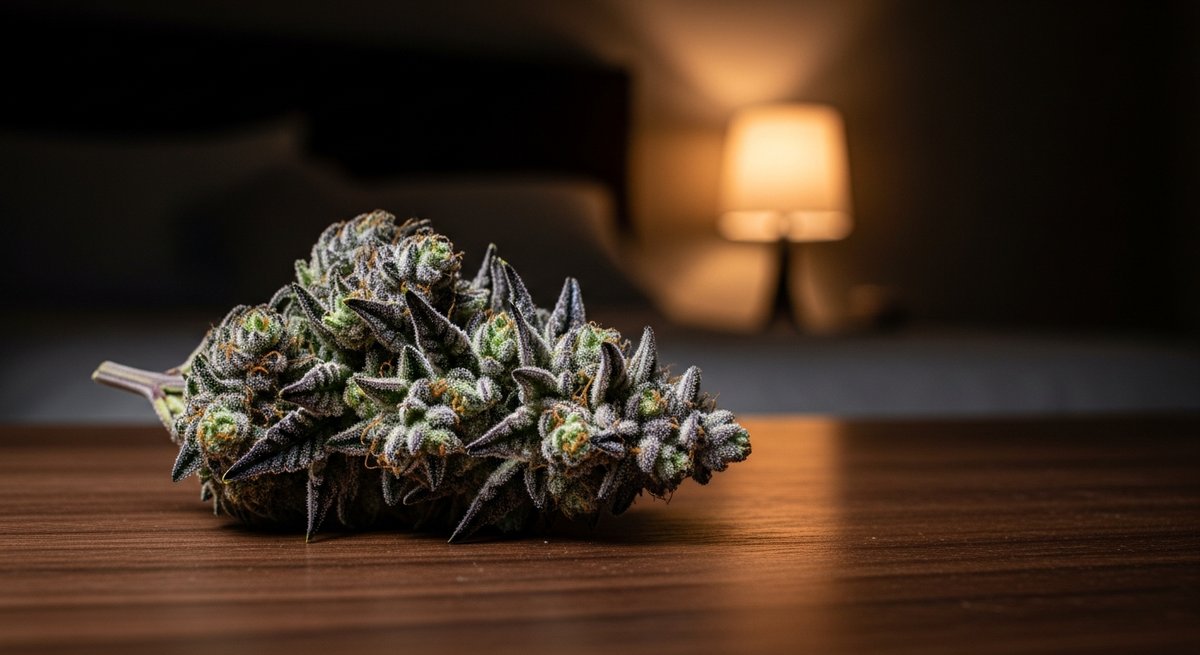
Adults dealing with chronic joint inflammation or musculoskeletal wear need something built around the specific biochemistry of pain. The Do-Si-Dos strain pulls ahead on that basis. Caryophyllene and linalool don’t just coexist here; they work on different points in the same pain pathway. Caryophyllene functions as a COX inhibitor, hitting inflammatory receptors rather than merely dulling perception. Linalool operates further upstream, suppressing the neural amplification that turns a 4/10 ache into a sleepless 7/10 by midnight. One terpene handles the tissue; the other handles the brain’s reaction to it.
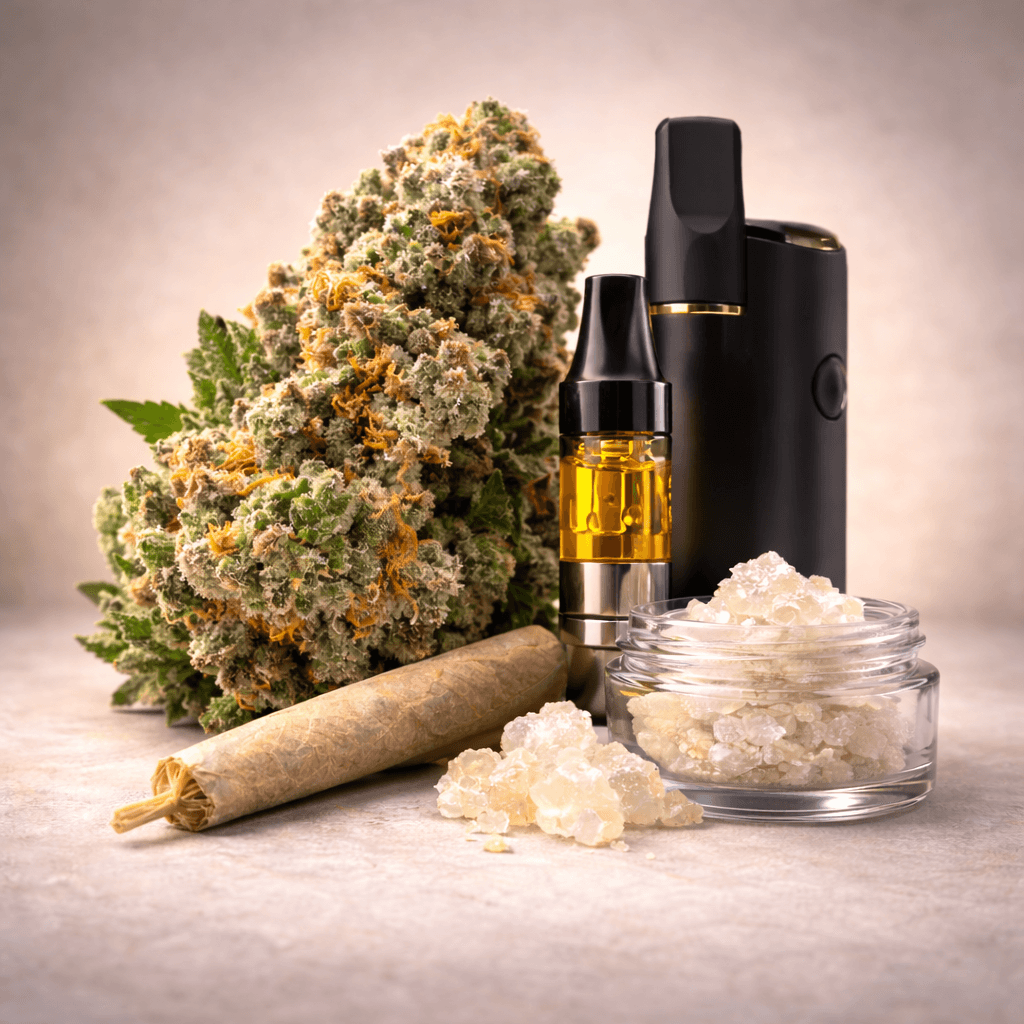
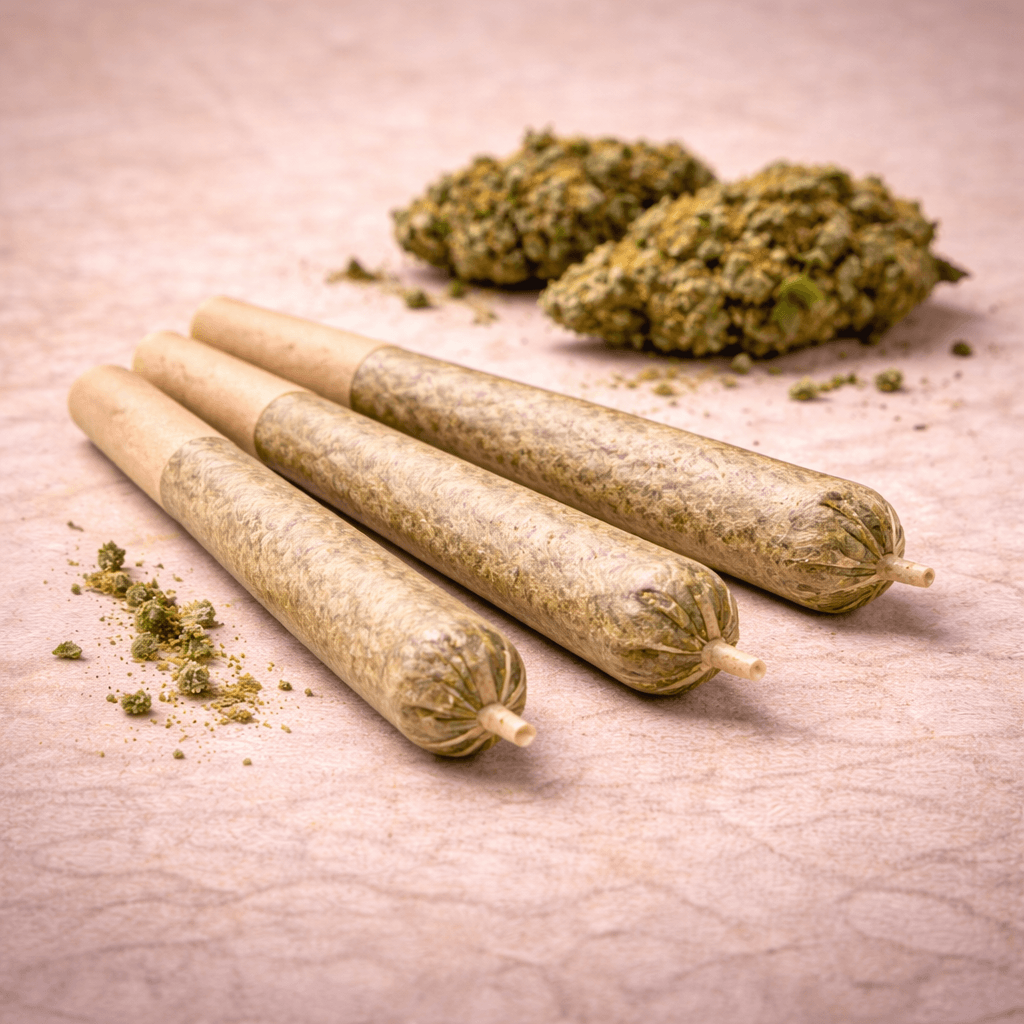
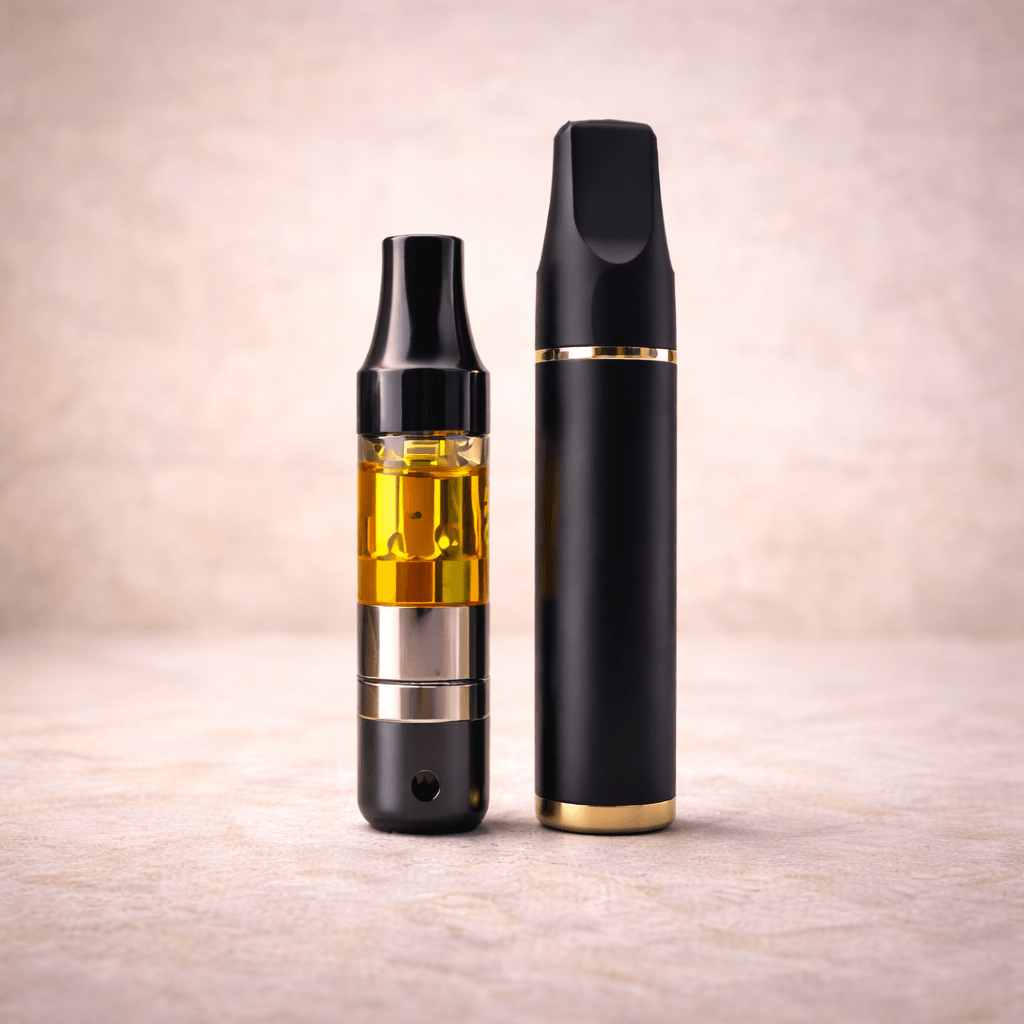
The ideal Do-Si-Dos patient is dosing once at night, dealing with joint or muscle pain, and needs sedation to arrive quickly and stay. Flower suits a full night’s sleep window; concentrates front-load intensity – useful if pain is severe at bedtime, but potentially too heavy for lower tolerances. Browse flower and prerolls or vapes and carts on Weed.com to find verified batches. Long-term patients rotating both strains may find the alternation preserves efficacy, preventing the receptor blunting that comes from leaning on a single cultivar indefinitely.
When Wedding Cake Strain Is Still the Right Choice for Pain Patients
If your pain arrives wrapped in anticipatory anxiety – the kind that spikes before sleep and makes the body stone feel threatening rather than relieving – the Wedding Cake strain earns its place. Its gentler euphoric ramp-up may ease tension before physical sedation sets in, preventing the panic response some patients experience with Do-Si-Dos’s more abrupt body drop. For pain layered with insomnia rooted in anxious rumination, Wedding Cake’s sequencing may produce better overall sleep outcomes. The Jealousy strain vs Wedding Cake strain comparison covers how Wedding Cake measures up against another heavy-hitter in the same lineage family.
Shop Do-Si-Dos Strain and Wedding Cake Strain on Weed.com
Dispensary listings for Do-Si-Dos strain and Wedding Cake strain are both live in Weed.com’s flower and prerolls catalog. Filter by indica-dominant classification, then set a THC floor that fits your tolerance. Prioritize batches high in caryophyllene – that terpene does the most work for body-focused pain relief. Pull up the Certificate of Analysis before anything else; label claims are shorthand, and the COA is what actually tells you terpene percentages for that specific batch. Shop Do-Si-Dos strain and Wedding Cake strain at Weed.com: Vapes & carts.
Physical pain that needs fast relief – reach for Do-Si-Dos strain. That caryophyllene-linalool stack hits tissue and nervous-system interpretation together. When anxiety is amplifying pain, Wedding Cake strain’s slower euphoric ramp is the right mechanism. Verified listings for both are at Weed.com’s flower and prerolls catalog.
Buy Do-Si-Dos strain and Wedding Cake strain Seeds
Home growers comparing Do-Si-Dos strain and Wedding Cake strain can browse verified seed genetics at Weed.com. Shop cannabis seeds to find cultivars suited to your grow setup and experience level.
Frequently asked questions
Is Do-Si-Dos strain stronger than Wedding Cake strain for pain relief?
Generally, yes – but “stronger” depends on pain type. Do-Si-Dos strain’s higher consistent THC ceiling (~25–30% vs Wedding Cake’s ~22–27%) combines with a heavier caryophyllene and linalool load, making it a sharper analgesic pick for inflammatory or musculoskeletal pain. Wedding Cake strain isn’t weaker so much as differently aimed – its myrcene-forward profile trades raw speed for deeper, more enveloping sedation.
Which terpenes in Do-Si-Dos strain are responsible for its body high?
Caryophyllene and linalool do most of the work. Caryophyllene locks onto CB2 receptors and may hit inflammatory pathways at the source rather than just dampening perception. Linalool operates earlier in the chain, dialing back nervous system amplification before it worsens what you’re already feeling. Limonene is the quieter contributor – a mood shift that takes some of the edge off the anxiety chronic pain almost always drags along.
What’s the difference between Do-Si-Dos strain and Wedding Cake strain for anxiety-related pain?
Wedding Cake strain handles this better. Its slower euphoric ramp-up gives anticipatory anxiety somewhere to go before the body stone arrives – useful when pain and anxious tension are feeding each other. Do-Si-Dos strain’s more abrupt body drop can feel jarring if anxiety is already elevated, occasionally making discomfort worse before better. If the pain is primarily physical with no anxiety overlay, Do-Si-Dos is still the stronger call.
Can you build a tolerance to Wedding Cake strain faster than Do-Si-Dos strain?
Evidence points the other way – Do-Si-Dos strain appears to plateau faster for daily users, likely because its sharp, high-intensity onset hits receptors hard and consistently. Wedding Cake strain’s slower, more tiered effect may produce a slightly more gradual tolerance curve. That’s one reason chronic pain patients rotating both strains often report better long-term efficacy than locking into either one exclusively.
Does Wedding Cake strain help with sleep or just pain?
Both – but how those effects arrive is what matters. Wedding Cake strain’s myrcene-forward profile pulls hard toward sedation, making it useful when sleep is being disrupted by pain or anxious rumination. The euphoric window before full body sedation draws you gradually toward rest rather than shutting things down abruptly. For anyone who needs relief paired with a controlled descent into sleep, Wedding Cake earns its place. Raw, fast pain interruption is still Do-Si-Dos territory.