🚛 FREE DISCREET SHIPPING ON ALL ORDERS $49+

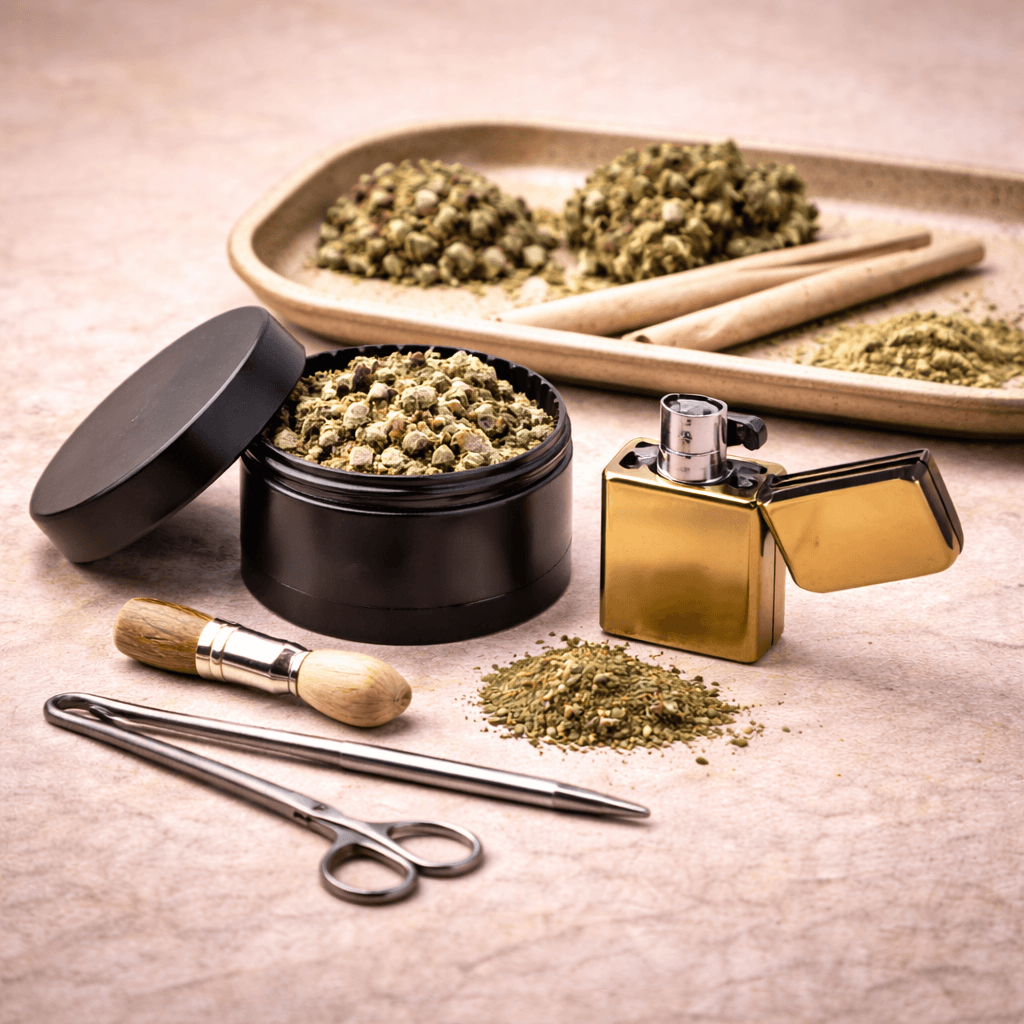








The Complete Guide to Indica, Sativa & Hybrid (Modern Science Edition)
Introduction For decades, cannabis consumers were taught a simple rule:Indica = relaxingSativa = upliftingHybrid = somewhere in between It was a tidy explanation, repeated by budtenders, blogs, dispensaries, and THC packaging worldwide. But as cannabis science matured — especially between 2018 and 2025 — researchers uncovered a different truth: Indica and sativa categories are often poor predictors of effects. The

Published on: December 1, 2025
Introduction
For decades, cannabis consumers were taught a simple rule:
Indica = relaxing
Sativa = uplifting
Hybrid = somewhere in between
It was a tidy explanation, repeated by budtenders, blogs, dispensaries, and THC packaging worldwide. But as cannabis science matured — especially between 2018 and 2025 — researchers uncovered a different truth: Indica and sativa categories are often poor predictors of effects. The real drivers of how cannabis makes you feel are far more complex, rooted in terpenes, cannabinoids, minor compounds, genetics, and your own unique physiology.
Today’s cannabis world is flooded with new products — THCA flower, hemp-derived Delta-9, craft indoor strains, designer hybrids, and 30% THC cultivars engineered for potency. In this environment, consumers are asking smarter questions:
-
Are indica and sativa labels still meaningful?
-
Why do two “indicas” feel completely different?
-
Why does a “sativa” sometimes make you sleepy?
-
What’s the true science behind cannabis effects?
-
How should a beginner choose the right strain today?
The Complete Guide to Indica, Sativa & Hybrid (Modern Science Edition) gives you the updated, research-based explanation — without throwing away the practical language consumers still use. You will learn what indica, sativa, and hybrid really mean in 2025, how strain effects actually work, and how to shop intelligently in a world where labels don’t tell the whole story.
What Indica, Sativa, and Hybrid Actually Are (Science Explained Simply)
Originally, the terms were botanical — not experiential.
-
Cannabis sativa → tall, narrow-leaf plants grown near the equator
-
Cannabis indica → short, broad-leaf plants from colder regions
-
Hybrid → crossbreeding of the two species
These terms described how plants looked and grew, not how they affected the mind and body.
Today, nearly every strain is a hybrid genetically.
Extensive crossbreeding over 40+ years means:
-
true landrace indica strains are extremely rare
-
true sativa strains are nearly extinct
-
most “indicas” and “sativas” share significant genetic overlap
-
chemical profiles vary widely even within the same label
Modern lab testing shows that appearance does not reliably predict effects. Two strains labeled “sativa” may have completely opposite terpene and cannabinoid profiles — and therefore opposite effects.
So why do dispensaries still use these categories?
Because they offer a simple, familiar framework for beginners.
But scientifically, the categories are outdated.
What matters most today?
-
Terpene profile (most important for effects)
-
Cannabinoid ratio (THC, CBD, CBG, etc.)
-
Minor compounds (THCP, CBN, CBC)
-
Individual tolerance & body chemistry
To understand effects, you must understand chemistry — not marketing labels.
Why These Categories Still Matter to Consumers
Although modern science shows that indica/sativa labels are unreliable, consumers continue to rely on them because they offer a psychological shortcut.
Common modern interpretation:
-
Indica → body-heavy, sedating “couch-lock” relaxation
-
Sativa → energetic, creative, cerebral uplift
-
Hybrid → balanced, blended, or strain-specific effects
Even if not scientifically perfect, these categories give beginners a starting point.
But demand is shifting.
A 2024 Leafly review of 6,000+ strains and 260,000 lab results found:
-
terpenes predict effects more accurately than strain names
-
indica/sativa labels predicted effects inaccurately in over 60% of samples
-
consumers increasingly search for terpene-based recommendations (e.g., “myrcene heavy,” “limonene dominant”)
This is why modern cannabis education focuses on chemotype (chemical profile) rather than strain type (indica/sativa).
Effects, Benefits & Use Cases (Not Based on Old Labels — Based on Chemistry)
Indica-Lean Strains (Typically Relaxing)
Many “indicas” contain:
-
Myrcene (sedating, muscle relaxing)
-
Linalool (calming, anti-anxiety)
-
β-caryophyllene (stress-relieving, anti-inflammatory)
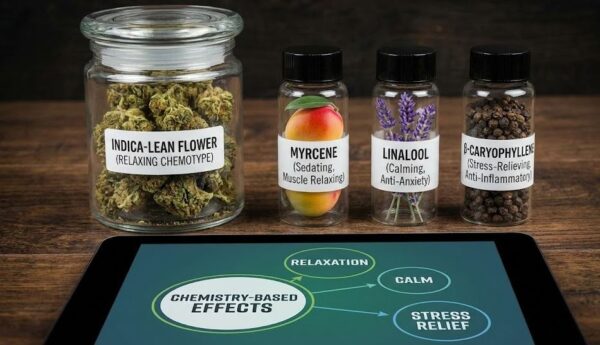
These strains commonly support:
-
evening relaxation
-
insomnia relief
-
physical tension release
-
pain management
-
appetite stimulation
Sativa-Lean Strains (Typically Energizing)
“Sativas” often contain:
-
Limonene (uplifting, mood-boosting)
-
Terpinolene (stimulating, creative)
-
Pinene (alertness, focus)
Effects often include:
-
daytime focus
-
creativity boosts
-
mood elevation
-
social engagement
-
improved motivation
Hybrid Strains (Balanced or Targeted Effects)
Hybrids combine terpene profiles, creating:
-
balanced mental & physical effects
-
strain-specific experiences
-
customizable product types
Examples:
-
Indica-dominant hybrid → relaxing but mentally functional
-
Sativa-dominant hybrid → energizing but not overstimulating
-
True hybrid → evenly blended
Modern Reality:
Chemistry predicts effects far more accurately than strain names.
Safety, Risks & Important Considerations
Cannabis categories don’t determine safety — your dose and body chemistry do.
1. High-THC sativa strains can trigger anxiety.
Because they elevate cerebral activity.
2. Heavy indica strains can impair coordination.
Useful for sleep, risky for new users or daytime use.
3. Edibles produce different effects than flower or vapes.
The liver converts THC → 11-hydroxy-THC (stronger, longer-lasting).
4. Hybrids are unpredictable without lab reports.
Some are uplifting hybrids; others are sedating hybrids disguised with bright packaging.
5. Terpenes matter.
Terpenes interact with cannabinoids through the entourage effect, shaping your high more than the strain category.
6. Product formatting matters.
Vapes, disposables, and distillates may reshape effects even within the same strain due to terpene stripping or artificial re-addition.
Modern Legal Landscape (Indica vs. Sativa vs. Hybrid)
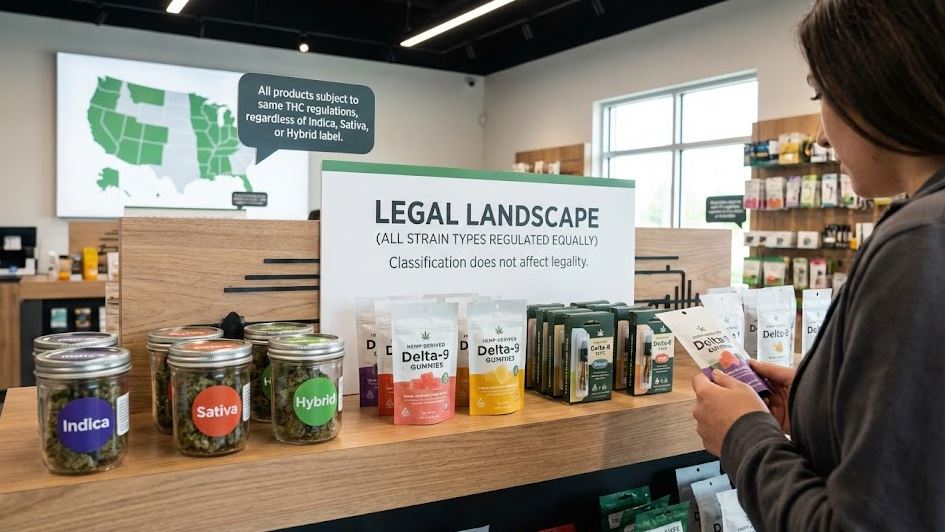
Legality does NOT depend on strain type.
All cannabis categories fall under the same state regulations.
THCA flower, hemp-derived Delta-9, and Delta-8 products may appear labeled as “indica/sativa/hybrid,” but legally:
-
a sativa THCA flower is treated the same as an indica
-
hybrid gummies follow the same THC limits as others
-
effects do not change legal compliance requirements
Some states restrict or ban hemp intoxicants, but the strain classification has no regulatory meaning.
Comparison Chart: Indica vs. Sativa vs. Hybrid (Modern Evidence Version)
Table 1 — Traditional Classification vs. Modern Science
| Category | Old (Traditional) View | Modern Scientific View |
|---|---|---|
| Indica | Sedating, relaxing, body-heavy | Effects depend on terpenes; many “indicas” can be energizing |
| Sativa | Energizing, creative, cerebral | Plant shape ≠ effect; some “sativas” can be sedating |
| Hybrid | Balanced mix | True descriptor only if terpene profile is mixed |
| Real Predictor | Strain name | Terpenes + cannabinoids + individual body chemistry |
Table 2 — Key Terpenes Driving Effects
| Terpene | Common Strains | Typical Effects | Found In |
|---|---|---|---|
| Myrcene | Indicas | Sedation, muscle relaxation | Mango, thyme |
| Limonene | Sativas | Uplift, mood boost | Citrus fruits |
| Pinene | Sativas | Alertness, focus | Pine needles |
| Linalool | Indicas | Anxiety relief, calm | Lavender |
| Caryophyllene | Hybrids | Anti-inflammatory, stress relief | Pepper, cloves |
| Terpinolene | Sativas | Creative, stimulating | Nutmeg, lilac |
Table 3 — Consumer Use Cases and Best Categories
| Goal / Benefit | Recommended Category | Explanation |
|---|---|---|
| Sleep & Insomnia | Indica-leaning (myrcene, linalool) | Sedation driven by calming terpenes |
| Anxiety Relief | Balanced hybrid | Avoid overstimulating sativas |
| Creativity | Sativa-leaning (limonene, terpinolene) | Energizing terpene profile |
| Pain Relief | Indica or hybrid with caryophyllene | Helps reduce inflammation |
| Social Energy | Sativa with limonene | Mood-elevating effects |
How Strains Are Made Today (Modern Breeding, Terpenes & Cultivation)
Cannabis strains in 2025 are no longer defined by the traditional indica–sativa divide. Instead, they’re engineered through advanced genetics, precision-controlled environments, and careful post-harvest handling designed to optimize terpene profiles, cannabinoid balance, and overall experience. Today’s strains are built with intention — not guesswork — and cultivators have more control than ever over how a plant smells, tastes, and feels.
Genetic Breeding
Breeding is the foundation. Modern cultivators intentionally cross strains to enhance or suppress specific traits. Instead of breeding for appearance or plant height, breeders now target:
-
Terpene dominance, such as limonene-forward strains for uplifting effects
-
Cannabinoid ratios, like 1:1 THC:CBD for therapeutic balance
-
Effect-driven profiles, including strains designed for sleep, anxiety relief, or creativity
-
High yield and potency, ensuring commercial viability without sacrificing quality
Through repeated backcrossing and phenotype selection, breeders stabilize traits so each batch expresses a consistent chemical fingerprint.
Cultivation Environment
Once a genetic line is established, the growing environment shapes how those genes express themselves. Indoor and greenhouse grows allow cultivators to fine-tune the plant’s development by adjusting:
-
Temperature (directly influences terpene volatility)
-
Humidity (affects trichome production and mold prevention)
-
CO₂ levels (boosts growth rates and cannabinoid synthesis)
-
Nutrient delivery (customized feeding schedules for terpene expansion)
-
Light spectrum and intensity (controls resin production and cannabinoid output)
These factors impact terpene and cannabinoid concentration far more than indica/sativa lineage ever could.
Processing and Post-Harvest
After harvest, quality depends heavily on drying, curing, and storage. Modern growers use cold curing and low-oxygen environments to preserve:
-
Delicate terpenes
-
THCA structure
-
Flavor and aroma profiles
Careful post-harvest handling helps maintain consistency within a batch, even if two brands label their strains the same name. In today’s market, chemistry and technique — not old plant categories — determine what a strain truly becomes.
How to Choose the Right Strain (2025 Shopping Guide)
Choosing the right cannabis strain in 2025 requires a more informed approach than simply picking an “indica,” “sativa,” or “hybrid” based on the label. Because nearly all modern strains are hybrids and the indica–sativa system no longer predicts effects reliably, successful strain selection now depends on understanding chemistry, potency, and your individual physiology.
The most important starting point is the terpene profile, not the strain name. Terpenes shape the character and direction of the high more than any other factor. If you want something energizing, uplifting, or creative, look for strains high in limonene, pinene, or terpinolene. If you’re seeking relaxation, sleep support, or physical ease, strains rich in myrcene or linalool tend to deliver more sedating, body-heavy effects. Terpenes also influence anxiety response, flavor, and how long the effects last.
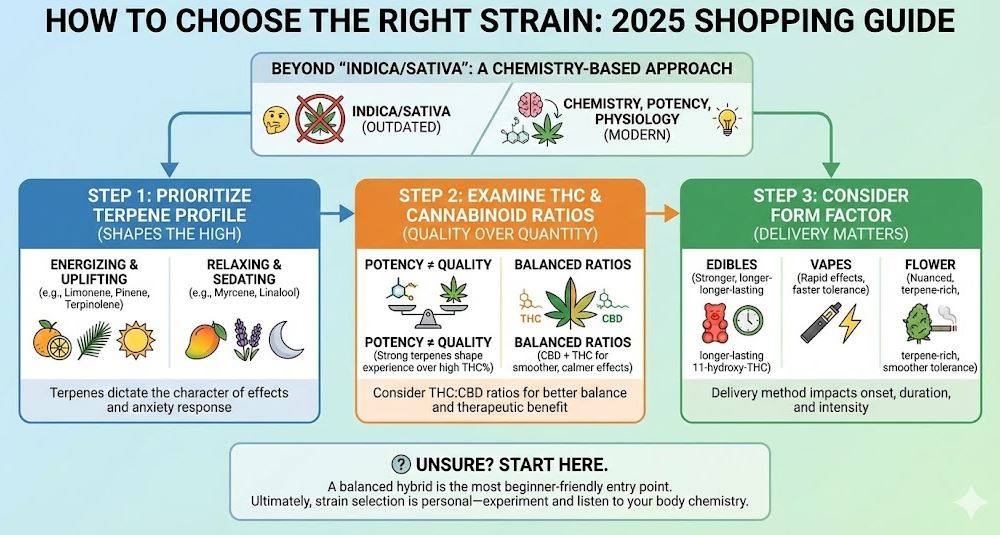
THC percentage is the next factor to examine, but higher isn’t always better. A 35% THCA flower with weak terpene expression can feel flat or one-dimensional, while an 18–22% strain with a strong terpene profile often produces a richer and more enjoyable experience. Potency affects intensity, but terpenes shape the quality.
Cannabinoid ratios also matter. Strains with CBD alongside THC tend to feel smoother, calmer, and less anxiety-prone. Some people prefer THC-only strains, while others find that 1:1 or 2:1 THC:CBD profiles provide better balance and therapeutic benefits.
Your choice should also reflect the form factor. Edibles convert THC into 11-hydroxy-THC, which is stronger and longer-lasting. Vapes and disposables deliver rapid effects but build tolerance fastest. Flower offers a more nuanced, terpene-rich experience and generally a smoother tolerance curve.
If you’re unsure where to start, a balanced hybrid is the most beginner-friendly entry point. Ultimately, strain selection is personal and requires experimentation. Your body chemistry will guide you toward strains that match your mood, needs, and desired outcomes.
Future Outlook — The End of Indica & Sativa?
The cannabis industry is evolving toward a chemistry-driven model. Expect:
1. Strain labels based on chemotypes
“High myrcene,” “Limonene-dominant,” “Balanced terpene profile.”
2. Personalized cannabis recommendations
Algorithms based on your:
-
genetics
-
tolerance
-
cannabinoid preferences
-
anxiety sensitivity
-
lifestyle goals
3. Enhanced terpene engineering
Growers will breed strains for specific effects — not aesthetics.
4. Federal legalization trends
Once national regulation arrives, cannabis may adopt standardized classification systems similar to alcohol’s strength categories.
5. Consumer demand will shift toward science
Educated buyers will choose based on verified lab chemistry, not folk categories.
Conclusion
Indica, sativa, and hybrid labels still dominate packaging and dispensary menus, but they no longer reflect what actually determines how a strain will make you feel. Modern cannabis research is clear: the effects of any strain come from its terpene profile, cannabinoid composition, genetic expression, and your own individual metabolism — not the plant’s height, leaf shape, or historical classification. Two strains labeled “indica” can produce completely opposite experiences, while a so-called “sativa” may feel calming or sedating depending on its chemistry.
If you’re choosing a strain today, it’s essential to look beyond the label and examine what’s inside the plant. Ask yourself: Which terpenes dominate? Limonene and terpinolene often energize, while myrcene and linalool typically relax. What cannabinoids are present? THC drives intensity, CBD softens the edges, and minor cannabinoids like CBG or THCV subtly shape the experience. How does your own body respond? Factors like tolerance, body chemistry, diet, sleep, and even time of day influence how cannabis will feel.
Finally, consider product format and potency — edibles, vapes, and flower each create different physiological effects. By using a chemistry-first, evidence-based approach, you can choose cannabis that truly aligns with your lifestyle, therapeutic goals, and personal preferences.
If you’re choosing a strain today, don’t rely solely on the label. Look deeper:
-
What terpenes dominate?
-
What cannabinoid ratios exist?
-
How does your body respond?
-
What’s the product format and potency?
This modern, evidence-based approach will help you find cannabis that truly fits your lifestyle, medical needs, and personal preferences.