🚛 FREE DISCREET SHIPPING ON ALL ORDERS $49+









The Comprehensive Cannabinoid Dosage Guide
Introduction Finding the right dose of cannabinoids has always been one of the biggest challenges for new and experienced users alike. Two people can take the same edible, puff the same vape, or use the same tincture—and experience completely different effects. The reason is simple: cannabinoid dosage is influenced by body chemistry, metabolism, tolerance, delivery method, product type, and the

Published on: December 1, 2025
Introduction
Finding the right dose of cannabinoids has always been one of the biggest challenges for new and experienced users alike. Two people can take the same edible, puff the same vape, or use the same tincture—and experience completely different effects. The reason is simple: cannabinoid dosage is influenced by body chemistry, metabolism, tolerance, delivery method, product type, and the specific cannabinoid being consumed.
With THC, too much leads to overwhelming intensity. With CBD, too little leads to no noticeable effect. With newer cannabinoids—like Delta-8, HHC, THCP, or THCA—potency varies dramatically, making dosing even more complex.
The Comprehensive Cannabinoid Dosage Guide brings everything together. If you’ve ever wondered how many milligrams to take, why some products feel stronger, or how to safely try new cannabinoids, this is the definitive resource. By the end, you’ll understand how dosing works across edibles, oils, vapes, and flower—and how to personalize your dosage safely and effectively.
Why Cannabinoid Dosage Varies So Much
Cannabinoid effects are not one-size-fits-all. Two main factors influence how strongly a dose hits: your physiology and the delivery method.
Physiology includes metabolism speed, body fat percentage, liver enzyme activity (particularly CYP450), tolerance, hydration level, and even hormones. Delivery method matters just as much. Edibles convert THC into 11-hydroxy-THC, a stronger metabolite. Vapes hit fast but fade quicker. Oils absorbed sublingually skip parts of digestion. Flower absorbs through the lungs and interacts differently than vapor.
This variability is why starting low and adjusting slowly remains the most responsible approach—especially with high-strength cannabinoids.
Understanding Different Cannabinoids and Their Potency
Not all cannabinoids have equal intensity. Some are gentle and subtle, like CBD and CBG. Others, like THCP and HHC, amplify psychoactive effects even at micro doses.
Table: Relative Potency of Popular Cannabinoids
| Cannabinoid | Psychoactive? | Relative Strength vs Δ9 THC | Notes |
|---|---|---|---|
| CBD | No | 0× | Non-intoxicating; wellness-focused. |
| CBG | No | 0× | Gentle focus and calm. |
| CBN | Mild | ~0.1× | Often used for sleep. |
| Delta-8 THC | Yes | ~0.5× | Smooth, milder high. |
| Hemp Delta-9 THC | Yes | 1× | Classic THC experience. |
| THCA (heated) | Yes | 1× | Converts into Delta-9 THC. |
| HHC | Yes | ~1.2× | Longer-lasting, uplifting. |
| THCP | Yes | 10–30× | Extremely potent; microdosing required. |
This table alone explains why dosing varies so significantly between products.
Dosage Basics Across Different Product Types
Different consumption methods change how quickly cannabinoids activate and how long the effects last. Here’s how they compare.
Table: Dosage Onset, Peak, and Duration by Method
| Method | Onset Time | Peak Effects | Duration | Notes |
|---|---|---|---|---|
| Vapes | 1–2 minutes | 10–20 minutes | 2–4 hours | Fastest onset; easy to adjust. |
| Flower | Seconds | 10–20 minutes | 1–3 hours | Classic experience; variable potency. |
| Edibles | 30–90 minutes | 2–3 hours | 6–10 hours | Strongest and longest-lasting. |
| Tinctures (sublingual) | 15–30 minutes | 1–2 hours | 4–6 hours | Balanced onset and duration. |
| Capsules | 45–120 minutes | 2–3 hours | 6–8 hours | Precise but slower onset. |
Because edibles convert THC into a stronger metabolite, doses must be much lower than inhaled forms.
Recommended Dosage Ranges by Cannabinoid
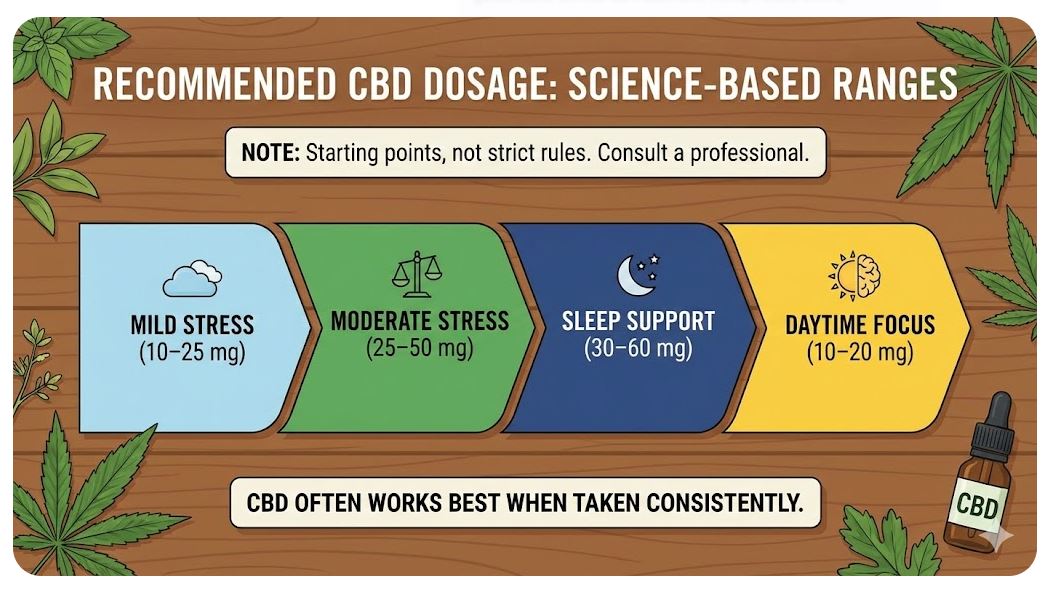
Below is the most accurate, science-based dosage guide used across cannabis and hemp researchers, clinicians, and experienced users. These are starting points, not strict rules.
CBD Dosage
CBD has a wide safety margin and is non-intoxicating.
Most users feel effects between 15 mg and 50 mg.
-
Mild stress: 10–25 mg
-
Moderate stress: 25–50 mg
-
Sleep support: 30–60 mg
-
Daytime focus: 10–20 mg
CBD often works best when taken consistently.
CBG Dosage
CBG is stimulating for some and balancing for others.
Common dose range: 10–40 mg.
-
Daytime clarity: 10–20 mg
-
Mood support: 15–30 mg
-
Combination CBD+CBG blends: 20–50 mg total cannabinoids
CBN Dosage
CBN is often used as a nighttime compound.
Common dose range: 5–20 mg, often paired with small THC doses.
-
Mild sleep support: 5–10 mg
-
Stronger sedation: 15–20 mg
-
CBN + Delta-8 blends enhance relaxation significantly.
Delta-8 THC Dosage
Delta-8 is smoother but still psychoactive.
Common range: 5–25 mg for edibles or 1–2 puffs for vapes.
-
Mild high: 5–10 mg
-
Balanced high: 10–20 mg
-
Stronger effects: 20–30 mg
Beginners should avoid large doses due to delayed onset.
Hemp Delta-9 THC Dosage
Delta-9 THC delivers classic potency.
Common dosage for edibles: 2.5–10 mg.
-
Microdose: 1–2 mg
-
Mild experience: 2.5–5 mg
-
Standard dose: 5–10 mg
-
High tolerance users: 10–20 mg
New users should avoid anything above 5 mg initially.
THCA Dosage
THCA becomes Delta-9 THC upon heating.
This means dosing is identical to traditional THC for:
-
flower
-
vapes
-
concentrates
-
homemade edibles
Inhaled dose: 1–3 puffs
Edibles (after decarboxylation): 2.5–10 mg
HHC Dosage
HHC hits harder than Delta-8 and lasts longer.
Common edible dosage: 5–15 mg.
-
Mild uplift: 5 mg
-
Balanced effects: 10 mg
-
Stronger euphoria: 15–20 mg
HHC vapes often require fewer puffs than THC.
THCP Dosage (Proceed with Caution)
THCP is extremely potent.
Recommended starting dose: 0.25–0.5 mg for edibles.
-
Microdose: 0.1–0.3 mg
-
Standard beginner dose: 0.25–0.5 mg
-
Experienced users: 1 mg or less
THCP vapes require tiny, short puffs. Overdosing is easy and unpleasant.
Factors That Influence Dosage
Even perfect dose guidelines won’t apply universally because body chemistry changes how cannabinoids are processed. Some major factors include:
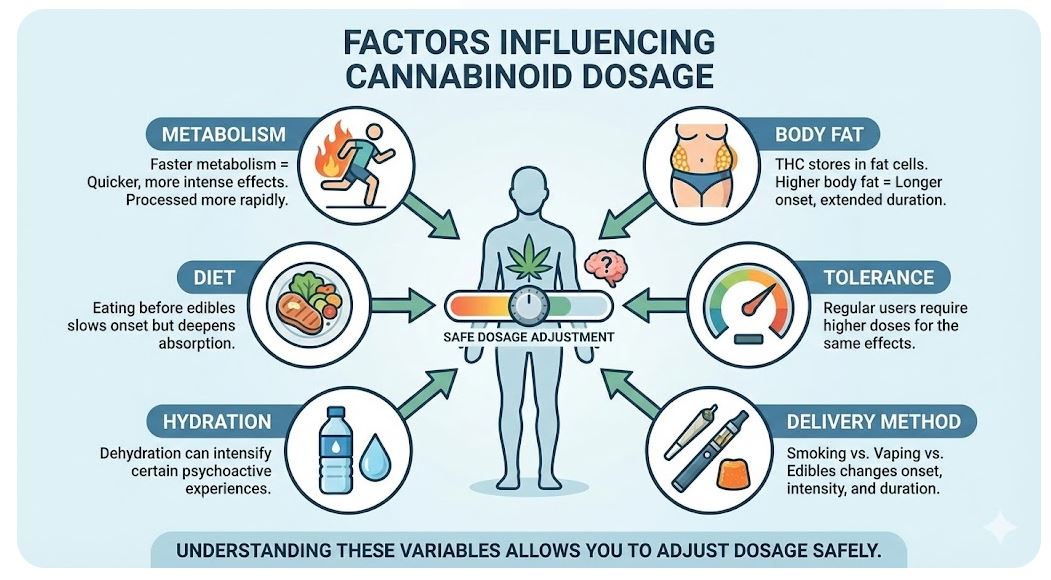
Metabolism: Faster metabolisms process cannabinoids more quickly and more intensely.
Body fat: THC stores in fat cells, influencing both onset and duration.
Diet: Eating before taking edibles slows onset but deepens absorption.
Tolerance: Regular users require more for the same effects.
Hydration: Dehydration can intensify certain psychoactive experiences.
Delivery method: Smoking vs vaping vs edibles changes everything.
Understanding these variables allows you to adjust dosage safely.
How to Find Your Perfect Dose
The safest, most reliable method is known as “start low and grow slow.”
This means beginning with minimal doses and gradually increasing only when needed.
A smart strategy:
-
Choose a cannabinoid and product type.
-
Start with the lowest measurable dose.
-
Wait for full onset (especially with edibles).
-
Increase by small increments on future sessions only.
Finding your dose is personal—but once you identify your ideal range, the experience becomes predictable, enjoyable, and safe.
Safety Considerations
Cannabinoid overdosing rarely causes physical harm, but it can cause:
-
anxiety
-
racing thoughts
-
dizziness
-
temporary impairment
-
uncomfortable intensity
This is especially true with edibles and ultra-potent cannabinoids like THCP.
Mixing cannabinoids with alcohol also increases risk. Always dose separately, never simultaneously, and never increase dosage mid-experience.
The Science Behind Cannabinoid Dosage
Understanding dosage becomes much easier when you understand how cannabinoids move through the body. Most effects depend on three biological processes:
1. Absorption
This determines how quickly a cannabinoid enters the bloodstream.
-
Inhalation has the fastest absorption—cannabinoids enter directly through the lungs.
-
Sublingual oils bypass digestion and enter through blood vessels under the tongue.
-
Edibles must move through the stomach and liver before becoming active.
2. Metabolism
The liver converts cannabinoids into new compounds.
THC → 11-hydroxy-THC
This metabolite is stronger and longer-lasting, which is why edibles feel so intense.
Other cannabinoids follow similar pathways but produce different metabolites—some weaker, some stronger, and some that create prolonged effects (HHC has an unusually long half-life).
3. Elimination (Half-Life)
This determines how long cannabinoids remain active.
Approximate half-lives:
| Cannabinoid | Typical Half-Life | Notes |
|---|---|---|
| CBD | 6–12 hours | Builds up with daily use. |
| Delta-8 THC | 4–6 hours | Milder peak, shorter tail. |
| Delta-9 THC | 3–6 hours | Metabolites stay in body much longer. |
| HHC | 6–12 hours | Long-lasting effects. |
| THCP | Unknown (very long) | Potentially far longer due to strong receptor binding. |
This explains why some people feel lingering effects long after others.
Why Some People Need Higher or Lower Doses
Cannabinoid dosage is often misunderstood because people assume body weight is the main factor. In reality, other variables matter far more.
Genetics
Certain people have naturally low expression of CB1 receptors, meaning they need more THC to feel the same effects. Others have hypersensitive endocannabinoid systems.
Liver Enzymes (CYP450 Pathway)
These enzymes determine how quickly cannabinoids are metabolized.
For example:
-
Fast metabolizers need higher doses.
-
Slow metabolizers feel stronger effects from smaller doses.
-
Medications that affect CYP450 can also influence cannabinoid intensity.
Stress Levels and Hormones
Stress hormones like cortisol can:
-
weaken THC effects
-
shorten CBD’s calming window
-
change onset time
This is why the same dose may feel different on different days.
Menstrual Cycle
Women may feel cannabinoids more intensely during certain hormonal phases. This is well-documented in cannabis pharmacology studies.
Cannabinoid Interaction Chart (The Entourage Effect)
Cannabinoids do not work in isolation. They influence each other:
Table: How Cannabinoids Influence Each Other’s Effects
| Combination | Effect Result | Notes |
|---|---|---|
| CBD + THC | Moderates psychoactive intensity; smoother high | CBD reduces THC-induced anxiety. |
| CBN + THC | Stronger sedation | Popular in sleep blends. |
| CBG + THC | Increased focus and mental clarity | Helps counteract “heavy head.” |
| THCP + THC | Exponentially stronger high | Avoid unless experienced. |
| HHC + THC | Longer-lasting euphoria | Many report deeper body high. |
| CBD + CBG | Focused calm | Ideal for daytime clarity. |
This helps explain why different products—even with identical THC mg—can feel completely different.
Microdosing vs Macrodosing: Two Different Strategies
Cannabinoids are not only about getting “high.” Many people use microdosing, especially with THC, THCA, CBD, or CBG.
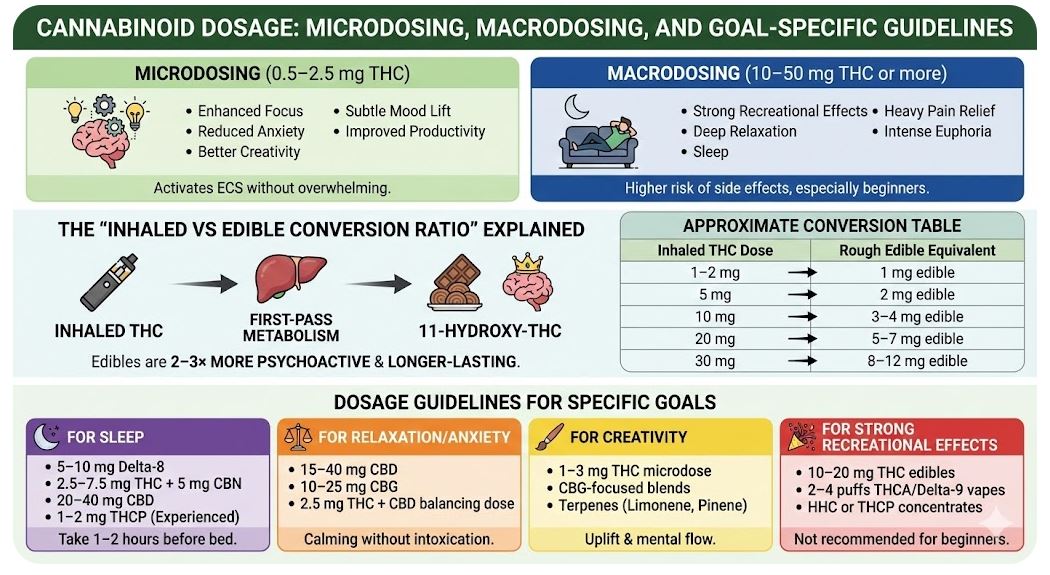
Microdosing (0.5–2.5 mg THC)
Benefits include:
-
enhanced focus
-
reduced anxiety
-
better creativity
-
subtle mood lift
-
improved productivity
Microdosing works because tiny amounts of THC activate the endocannabinoid system without overwhelming it.
Macrodosing (10–50 mg THC or more)
Used for:
-
strong recreational effects
-
deep relaxation
-
sleep
-
heavy pain relief
-
intense euphoria
This strategy carries a higher risk of side effects, especially for beginners.
The “Inhaled vs Edible Conversion Ratio” Explained
A very important but often overlooked concept is that:
10 mg inhaled ≠ 10 mg eaten
Edibles undergo first-pass metabolism, creating 11-hydroxy-THC, which is estimated to be:
-
2–3× more psychoactive
-
much longer-lasting
-
more intense at peak
Approximate Conversion Table
| Inhaled THC Dose | Rough Edible Equivalent |
|---|---|
| 1–2 mg | 1 mg edible |
| 5 mg | 2 mg edible |
| 10 mg | 3–4 mg edible |
| 20 mg | 5–7 mg edible |
| 30 mg | 8–12 mg edible |
This is why a “10 mg gummy” hits some people like a 25 mg vape session.
Dosage Guidelines for Specific Goals
Here are research-aligned guidelines depending on intention.
For Sleep
Most users succeed with:
-
5–10 mg Delta-8
-
2.5–7.5 mg THC + 5 mg CBN
-
20–40 mg CBD
-
1–2 mg THCP for very experienced users
Sleep blends work best when taken 1–2 hours before bed.
For Relaxation and Anxiety Relief
For calming effects without intoxication:
-
15–40 mg CBD
-
10–25 mg CBG
-
2.5 mg THC + CBD balancing dose
For Creativity
For uplift and mental flow:
-
1–3 mg THC microdose
-
CBG-focused blends
-
Terpenes like limonene and pinene enhance the effect
For Strong Recreational Effects
Experienced users often seek:
-
10–20 mg THC edibles
-
2–4 puffs of high-THCA or Delta-9 vapes
-
HHC or THCP concentrates
This is not recommended for beginners.
Tolerance Management and Reset Strategies
Frequent use increases tolerance due to CB1 receptor downregulation. Signs include needing:
-
more puffs
-
higher mg amounts
-
longer sessions
-
stronger cannabinoids like HHC or THCP
A tolerance break (T-break) helps reset sensitivity.
How Long Should a T-Break Last?
-
48 hours: noticeable improvement
-
5–7 days: strong reset
-
14 days: near-full receptor reset
-
30 days: complete restoration for most people
Adding CBD during a T-break may support receptor recovery.
Product-Specific Dosing Tables
These help users pick the right starting point immediately.
Table: Edible Dosage by Experience Level
| User Type | Recommended THC Dose |
|---|---|
| Beginner | 1–2.5 mg |
| Occasional User | 2.5–5 mg |
| Weekly User | 5–10 mg |
| Daily User | 10–20 mg |
| High Tolerance | 20–50 mg |
Table: Vape Dosage by Cannabinoid Strength
| Cannabinoid Vape | Recommended Puff Range | Notes |
|---|---|---|
| Delta-8 | 1–3 puffs | Mild and smooth. |
| Delta-9 / THCA | 1–2 puffs | Stronger and fast-hitting. |
| HHC | 1 puff | Longer-lasting. |
| THCP | A micro-puff | Extremely potent—use extreme caution. |
When to Increase or Decrease Your Dose
Increase your dosage when:
-
you feel no noticeable effects after multiple sessions
-
you have a naturally high metabolism
-
your tolerance has grown due to frequent use
-
switching to a different cannabinoid with lower potency (e.g., Delta-8)
Decrease dosage when:
-
you feel overwhelmed or anxious
-
edibles last too long
-
your sleep quality worsens
-
your heart rate increases
-
you feel “foggy” the next day
The best dose is the one that supports your goals without side effects.
Safe Dosing Rules for All Cannabinoids
A few principles universally apply:
-
Always wait for full onset before taking more.
-
Avoid mixing edibles with alcohol.
-
Store anything potent away from children and pets.
-
Don’t escalate doses too quickly.
-
Keep track of what you take and how you feel.
-
For THCP or high-THCA concentrates, microdosing is mandatory.
Conclusion
Cannabinoid dosing is both an art and a science. The right dosage transforms cannabinoids from unpredictable into powerful tools for wellness, creativity, sleep, productivity, or recreational enjoyment. The wrong dosage can lead to discomfort, anxiety, or overwhelming intensity.
By understanding potency differences, metabolic factors, interactions between cannabinoids, and how delivery methods alter effects, anyone can find a personalized dosage that aligns with their body and goals. As new cannabinoids and products emerge, this knowledge becomes even more valuable.
With the guidance in this expanded dosing guide—and with mindful experimentation—you can navigate the cannabinoid landscape with confidence, precision, and safety.