🚚 Free Discreet Shipping on Orders $49+ | Lab-Tested Quality Guaranteed









The Ultimate Edibles Guide: Gummies, Chocolates, Drinks & More (2025 Edition)
Published on December 1, 2025
Last Updated on January 6, 2026
By Raven Ballou
Introduction
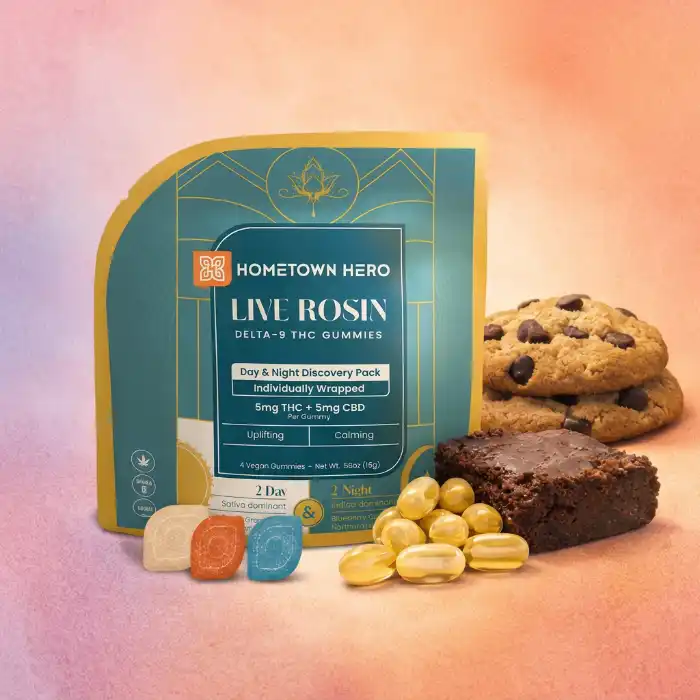
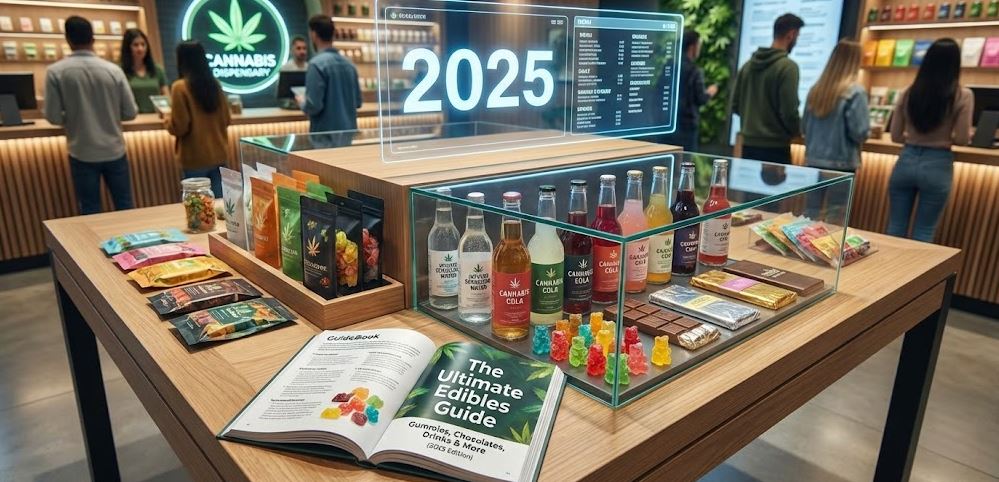
Edibles have become one of the most popular ways to enjoy cannabis and hemp in 2025. What started as simple brownies in someone’s kitchen has evolved into a massive, regulated industry offering everything from hemp Delta-9 gummies shipped nationwide to boutique THC chocolates found in dispensaries. Edibles now cater to every type of consumer—those seeking wellness benefits, those looking for a gentle mood lift, and those wanting a potent, long-lasting experience.
Yet with so much variety comes a growing amount of confusion. Many beginners don’t understand how edibles actually work, why some hit harder than others, why hemp Delta-9 is legal while THC from a dispensary is heavily regulated, or why a “10 mg gummy” can feel dramatically different depending on the cannabinoid used. Others are unsure how to dose safely or how different edible formats—gummies, chocolates, beverages—affect onset and intensity.
This guide aims to simplify everything. Whether you’re exploring CBD wellness gummies, trying hemp-derived Delta-9 edibles for the first time, experimenting with THCA or Delta-8, or simply comparing dispensary THC products to hemp alternatives, this comprehensive guide provides clear, science-backed answers. The goal is simple: help you understand how edibles work, how to choose the right type, and how to use them responsibly.
What Edibles Are (Science Explained Simply)
Edibles are ingestible products infused with cannabinoids. Unlike inhaled forms such as smoking or vaping, edibles rely on digestion and metabolism to deliver effects. When you consume an edible, the cannabinoids travel through the stomach and liver before entering the bloodstream. This process is known as first-pass metabolism, and it dramatically shapes how edibles affect your body.
For THC-based edibles, the liver converts Delta-9 THC into 11-hydroxy-THC, a more potent metabolite that crosses the blood-brain barrier more efficiently. This is why edibles often feel stronger and longer-lasting than smoking. With CBD, CBN, CBG, and other non-intoxicating cannabinoids, the digestive system allows slow absorption, creating sustained effects ideal for relaxation, sleep support, or focus.
Different cannabinoids behave differently:
-
CBD remains non-intoxicating but interacts with serotonin and other receptors.
-
CBN and CBG support sleep or daytime clarity without a high.
-
Delta-8 THC produces milder psychoactive effects than traditional THC.
-
Hemp Delta-9 behaves exactly like dispensary THC, but must stay within federal limits.
-
THCA remains non-intoxicating until heated, but when used in baked edibles, it converts into Delta-9 THC.
-
HHC and THCP have their own metabolic pathways, with THCP being significantly more potent.
All edibles follow the same basic principle: digestion first, effects second. But the experience varies dramatically based on cannabinoid choice, edible format, dose, and individual metabolism.
Why Edibles Matter / Why They’re Popular in 2025
The edible market exploded over the last five years for several reasons. The biggest driver is discrete consumption. Edibles don’t produce smoke, odor, or vapor, which makes them appealing for people who want a private experience. Social acceptance has also increased, especially as cannabis beverages become alternatives to alcohol in many settings.
The second major reason is consistency and precision. Edibles allow consumers to take a known dose, unlike smoking where potency can vary. A 5 mg gummy will always be 5 mg, and for many people, that predictability creates comfort and confidence.
Third, changes in law dramatically expanded access. Hemp-derived edibles—containing hemp Delta-9, Delta-8, THCA (after cooking), HHC, and THCP—are legally sold online and shipped nationwide. This has created an edible market worth billions of dollars, particularly in states without recreational cannabis. Analysts estimate the hemp Delta-9 edible market alone exceeded $1.2 billion in 2024, and growth continues as more consumers seek safer alternatives to alcohol.
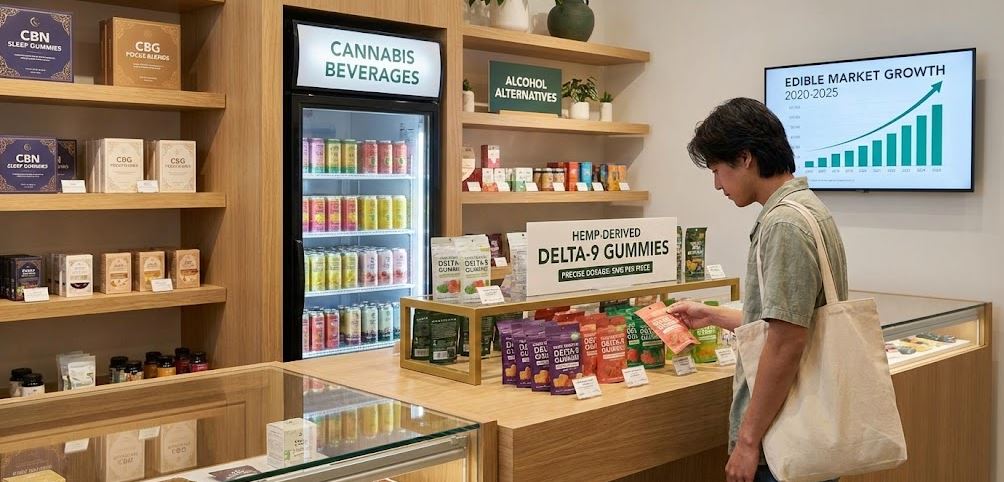
Wellness-focused edibles have also surged. CBD gummies remain the most popular supplement in the hemp category, while CBN sleep gummies and CBG focus blends have carved out strong demand in wellness circles.
Edibles are now a mainstream category in both cannabis dispensaries and the national hemp market, and consumers benefit from more choices, better quality, and improved product consistency compared to earlier years.
Effects / Benefits / Use Cases
Edibles offer a wide range of effects depending on the cannabinoid used. The experience is shaped by chemistry, digestion, metabolism, and even what you ate earlier in the day.
Psychoactive Edibles (THC, Hemp Delta-9, THCA, Delta-8, HHC, THCP)
Traditional THC edibles and hemp-derived psychoactive edibles share similar pathways. They can produce euphoric, relaxing, or sensory-enhancing effects depending on dose and cannabinoid strength. Most people report:
-
deep relaxation
-
enhanced sensory perception
-
stress relief
-
uplifted mood
-
increased appetite
-
creative thought
-
muscle relaxation
Delta-8 tends to feel gentler and smoother. HHC is often described as long-lasting and less anxiety-prone. THCP is extremely strong and typically reserved for advanced users. Hemp Delta-9 behaves exactly like dispensary THC once metabolized.
Non-Intoxicating Edibles (CBD, CBG, CBN)
CBD edibles are commonly used for:
-
stress regulation
-
mood support
-
general wellness
-
post-exercise recovery
CBG is often chosen for daytime clarity and focus, while CBN is popular for nighttime use, providing soothing, calming effects.
Use Cases Across All Categories
Many people prefer edibles because they produce long-lasting effects, often lasting 6–10 hours depending on metabolism. Edibles are also a popular alternative for those avoiding smoking or vaping. In medical contexts, edibles provide steady support for chronic discomfort, sleep issues, or long-term management needs due to their extended duration.
Overall, edibles are valued for consistency, convenience, longer effect profiles, and the ability to choose exactly the experience you want based on cannabinoid type.
Edible Onset, Peak, and Duration Table
| Edible Type | Onset Time | Peak Effects | Total Duration | Notes |
|---|---|---|---|---|
| Gummies | 30–90 minutes | 2–3 hours | 6–10 hours | Most consistent dosing; digestion slows onset. |
| Chocolates | 30–60 minutes | 1.5–3 hours | 5–8 hours | Cocoa butter improves absorption slightly. |
| Beverages (Nano THC/CBD) | 10–30 minutes | 45–90 minutes | 3–5 hours | Fastest onset due to nanoemulsified cannabinoids. |
| Baked Goods (Brownies, Cookies) | 45–120 minutes | 2–4 hours | 6–10 hours | High-fat foods enhance THC conversion. |
| Capsules/Softgels | 45–120 minutes | 2–3 hours | 6–8 hours | Medical-style precision; delayed but smooth onset. |
| Tincture-Based Edibles | 20–40 minutes (if held under tongue) | 1–2 hours | 4–6 hours | Sublingual intake bypasses digestion partially. |
| THCA Edibles (Baked/Cooked) | 45–90 minutes | 2–3 hours | 6–10 hours | THCA converts to Delta-9 during cooking. |
Safety, Risks, and Important Considerations
Despite their accessibility, edibles require careful, informed use. Their delayed onset leads many beginners to accidentally consume more than intended, resulting in overly strong effects.
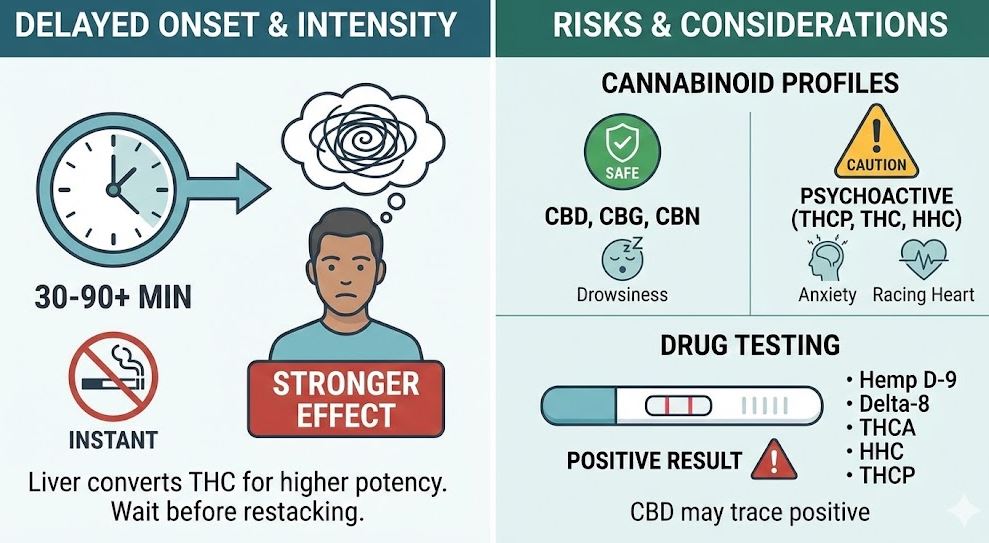
Delayed Onset and Intensity
Unlike smoking, which produces effects in seconds, edibles typically take 30–90 minutes to activate. For some people, especially after a meal, activation might take two hours. Because the liver converts THC into the more potent 11-hydroxy-THC, edibles can feel significantly stronger than smoking the same amount.
Beginners should avoid “stacking doses” until enough time has passed to feel the initial effects.
Different Cannabinoids Have Different Safety Profiles
CBD, CBG, and CBN have wide safety margins, though very high doses may cause drowsiness or digestive discomfort. Psychoactive edibles, especially strong ones like THCP, require caution. Overconsumption can lead to temporary effects such as anxiety, racing thoughts, disorientation, or increased heart rate.
Drug Testing Considerations
All psychoactive cannabinoids—including hemp Delta-9, Delta-8, THCA (after heating), HHC, and THCP—can trigger positive THC results. CBD users may also test positive if the product contains trace amounts of THC or is contaminated.
Product Quality and Lab Testing
The biggest risks in edible safety involve:
-
inaccurate labeling
-
contamination
-
residual solvents
-
inconsistent dosing
-
untested synthetic additives
Consumers should only purchase edibles from reputable brands that show full third-party lab results, including cannabinoid potency, microbiological analysis, and purity data.
Cooking with THCA
When using THCA in homemade edibles, heating automatically converts it into Delta-9 THC. This conversion increases potency significantly, so responsible dosing is essential.
Legality and Regulatory Landscape
Edible legality depends heavily on the cannabinoid and the source.
THC Edibles (Dispensary Products)
These remain regulated at the state level. In legal states, THC edibles can be purchased by adults over 21. In medical states, they require a medical cannabis card. Regulations dictate:
-
maximum THC per serving
-
maximum THC per package
-
packaging rules
-
child-resistant requirements
-
lab testing
Legality & Restrictions Table (2025)
| Cannabinoid | Federal Status | Typical State Restrictions | Notes for Edibles |
|---|---|---|---|
| CBD | Federally legal | Minimal; labeling varies | Safe for nationwide shipping. |
| CBG / CBN | Federally legal | Rare restrictions | Often sold with CBD in wellness blends. |
| Delta-8 THC | Federally legal via Farm Bill | Banned/restricted in 18–20 states | Edibles remain the most common format. |
| Hemp Δ9 THC | Federally legal if <0.3% by dry weight | Some states impose mg caps | Legal gummies often contain 10–15 mg each. |
| THCA Edibles | Federally legal before heating | Some states test “total THC” | Cooking converts THCA → Delta-9. |
| HHC | Federally legal gray area | Increasing scrutiny | Still widely available nationwide. |
| THCP | Federally legal gray area | Expected future restrictions | Very potent; age-gated in many shops. |
| Dispensary THC | Federally illegal | Legal in adult-use/medical states | Regulated heavy testing, packaging, dosage. |
Hemp-Derived Edibles (Delta-8, Hemp Delta-9, HHC, THCA Edibles)
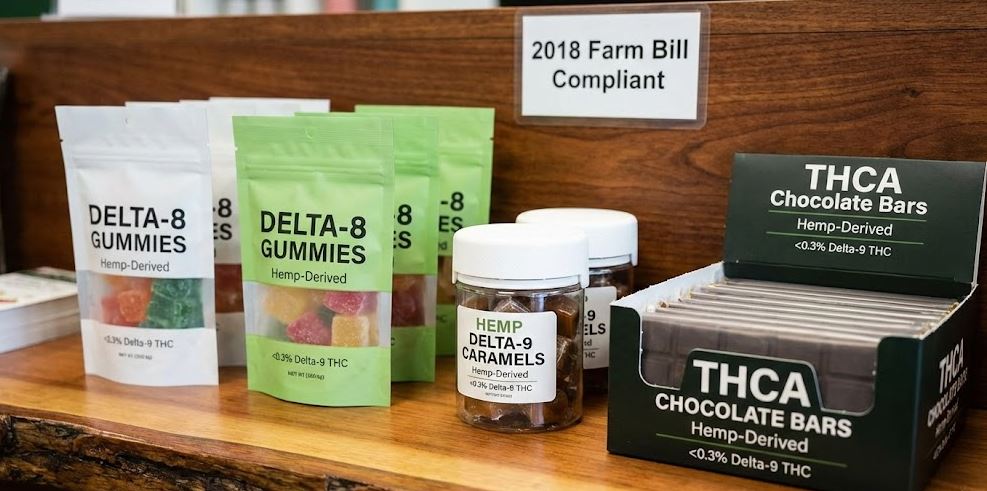
The 2018 Farm Bill allows edibles derived from hemp if they contain less than 0.3% Delta-9 THC by dry weight. This loophole allows companies to create potent edibles by manipulating product weight. For example, a 5-gram gummy can legally contain 10–15 mg of hemp-derived Delta-9 THC.
Delta-8 remains federally legal but is restricted in 18+ states. THCA edibles are legal as long as the product remains under the Delta-9 limit before heating.
CBD, CBG, CBN Edibles
These are federally legal and widely available. However, the FDA has not approved CBD for dietary use, which keeps labeling rules inconsistent.
State-Level Variability
Some states have moved to regulate “intoxicating hemp cannabinoids,” particularly THCA, Delta-8, and THCP. Other states allow full access. Because laws change frequently, consumers should check state guidelines.
Comparison to Related Concepts
Edibles differ from other cannabis consumption methods in several major ways.
Compared to smoking, edibles deliver slower but longer-lasting effects. They also bypass lung irritation and eliminate odor. Compared to vaping, edibles offer a more sustained experience but lack quick controllability. Compared to tinctures, edibles are slower but often smoother and longer-lasting because they must pass through digestion rather than absorbing sublingually.
Beyond consumption method, cannabinoids themselves differ. CBD and CBG are wellness-focused, while Delta-8 provides a mild high. Hemp Delta-9 and THCA edibles mimic the effects of dispensary THC. HHC offers long-lasting euphoria, while THCP produces intense potency that only experienced consumers should approach.
Understanding these differences helps consumers choose an edible that aligns with their goals, tolerance, and lifestyle.
How Edibles Are Made / How They Work
The edible-making process varies by product type but follows a few universal principles.
Creating Cannabis and Hemp Extracts
Manufacturers start with hemp or cannabis plant material and extract cannabinoids using CO₂, ethanol, or hydrocarbon extraction. The resulting oil is refined and standardized. For edibles, extracts often take the form of:
-
distilled oils
-
cannabinoid isolates
-
nanoemulsions (for beverages)
-
THCA crystals (for baked goods)
These forms allow precise dosing.
Infusing Gummies and Chocolates
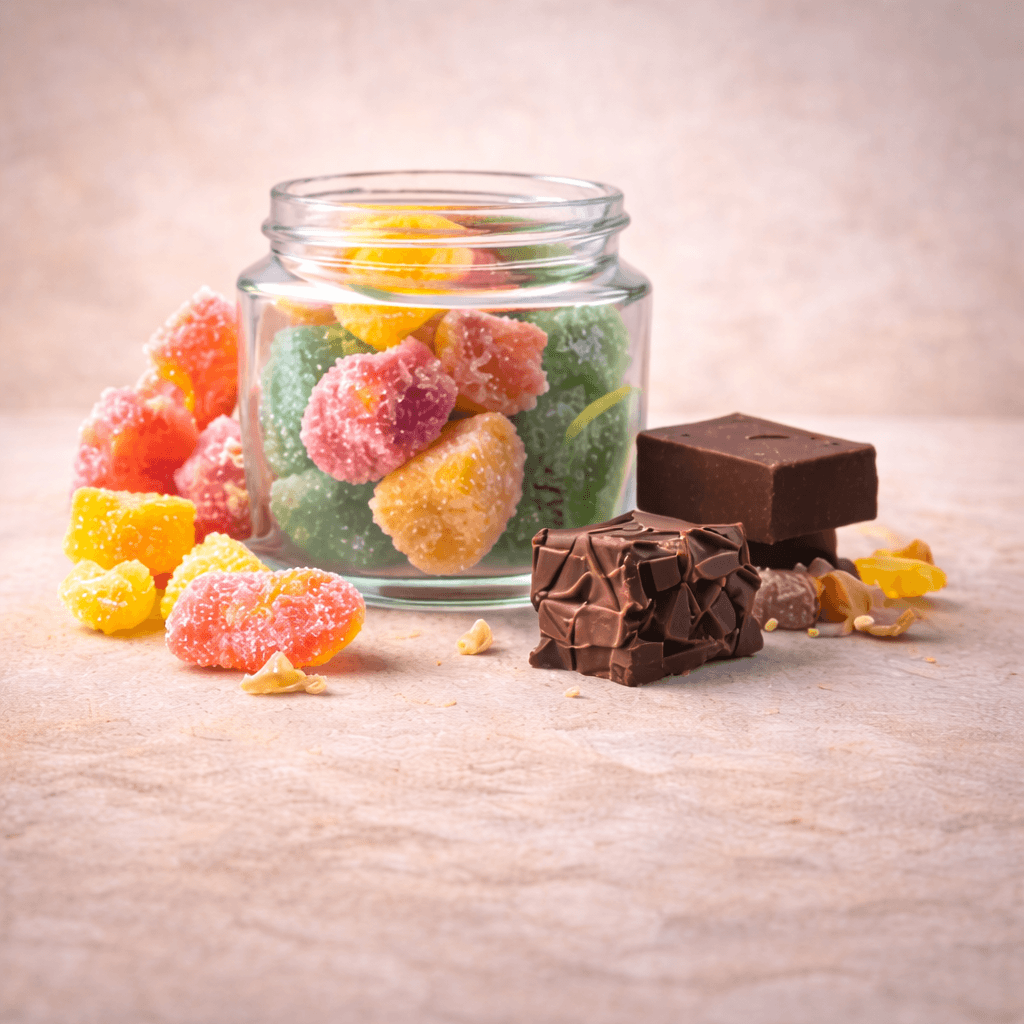
Gummies are made by incorporating cannabinoids into the mixture before molding. Chocolates are infused by mixing cannabinoids into melted chocolate. In both cases, careful temperature control protects cannabinoid integrity.
Beverages and Nanoemulsions
Cannabinoids are naturally hydrophobic. To mix with water, manufacturers create nanoemulsions, which break cannabinoids into microscopic droplets suspended in liquid. This also speeds up onset, sometimes activating within 15–30 minutes.
Edible Formats Comparison Table
| Format | Pros | Cons | Best For |
|---|---|---|---|
| Gummies | Consistent dosing, wide variety, easy to travel | Slow onset; sugar content | Beginners & everyday use |
| Chocolates | Great flavor, smoother onset | Heat-sensitive; contains dairy/fats | Moderate users & discreet consumption |
| Nano Beverages | Fast onset, session-friendly | Higher cost per mg | Social settings & alcohol replacement |
| Baked Goods | Rich effects, long-lasting | Harder to dose when homemade | Experienced users & celebrations |
| Capsules | Precise dosing, tasteless | Slow onset; clinical feel | Medical or wellness-focused users |
| Tincture-Infused Edibles | Faster onset, customizable | Taste may vary | Users needing flexible dosing |
| THCA Edible Conversions | Strong potency after heating | Requires understanding decarboxylation | Experienced consumers & DIY baking |
Finally, Digestion and Metabolism
Once consumed, cannabinoids are broken down in the stomach, processed by the liver, and converted into forms that circulate in the bloodstream. Onset, intensity, and duration depend on factors such as metabolism, body fat, food intake, and gastrointestinal health.