🚛 FREE DISCREET SHIPPING ON ALL ORDERS $49+








Best Low-Dose Gummies for Artists Writers and Musicians
Here’s a question worth sitting with: why do so many creative people describe their best work as happening in a slightly altered state – not wrecked, not anxious, just shifted a few degrees off baseline? Writers talk about the “flow” that arrives after the world gets quiet. Musicians describe finding a groove that locks in when self-criticism steps back. Visual


Here’s a question worth sitting with: why do so many creative people describe their best work as happening in a slightly altered state – not wrecked, not anxious, just shifted a few degrees off baseline? Writers talk about the “flow” that arrives after the world gets quiet. Musicians describe finding a groove that locks in when self-criticism steps back. Visual artists notice colors differently. None of this is accidental, and none of it requires a heroic dose of anything. The sweet spot, for a lot of creative people, is actually quite small.
Low-dose cannabis gummies have quietly become a go-to tool for people who create things for a living – or just for the love of it. They’re discreet, predictable, and easy to titrate in a way that smoking or vaping simply isn’t. The challenge is that “low-dose” means different things on different labels, and not every gummy designed for relaxation is designed for the particular kind of relaxed alertness that creativity actually needs.
This piece breaks down what actually happens in the creative brain on a small amount of cannabis, what to look for in a gummy if your goal is output rather than couch time, and which specific products are worth considering when you’d rather be painting than puzzling over packaging.
Why Low-Dose Is the Right Conversation for Creative Work
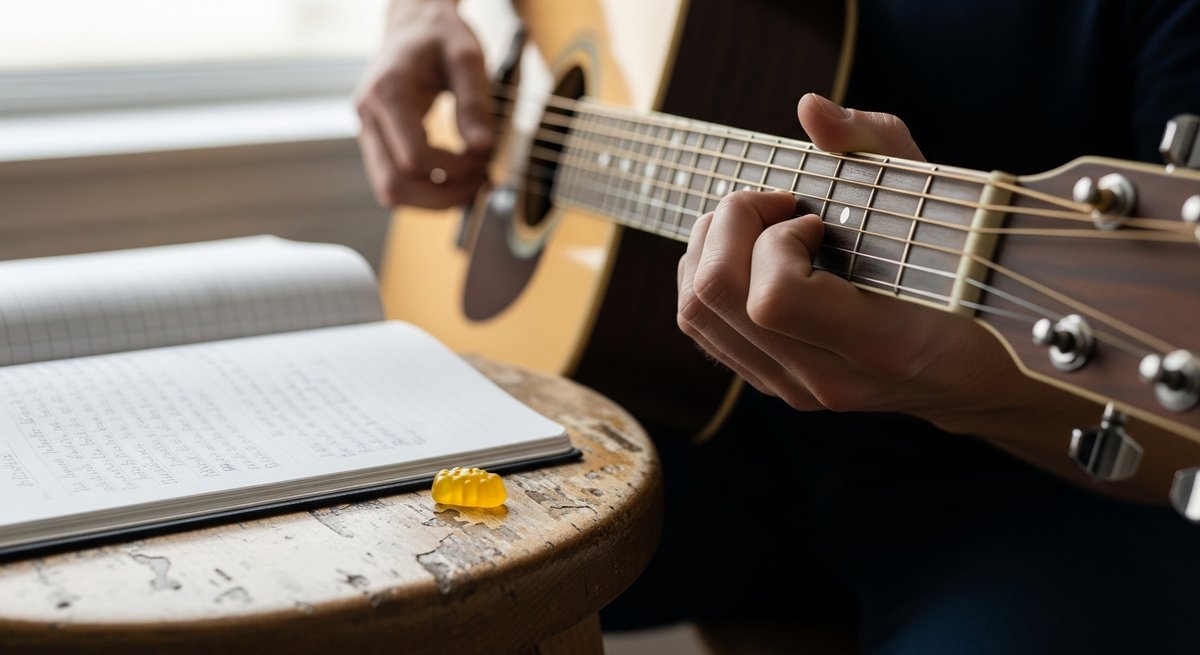
There’s a real tension in cannabis and creativity. A bit of THC can loosen associative thinking – the mental process that lets you connect two unrelated ideas and call it a lyric or a plot twist. Too much THC, and that same looseness becomes noise. You have seventeen ideas and can’t finish any of them. The internal editor that normally feels like a tyrant suddenly seems very useful, and you’re wishing it would come back.
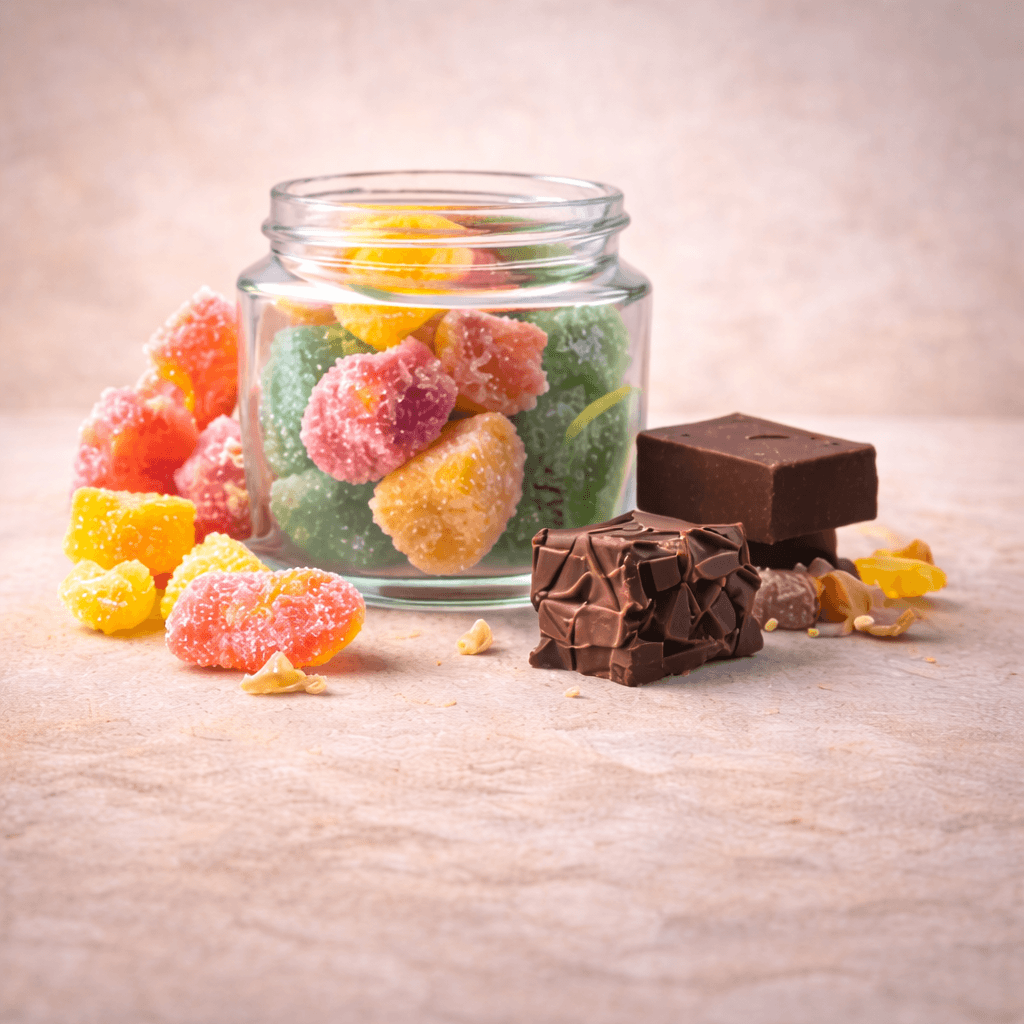
Low-dose gummies – typically 2.5 mg to 5 mg of THC, sometimes with a counterbalancing amount of CBD – aim for that narrow band where inhibition softens without falling apart entirely. The practical benefit for a writer staring at a blank page or a musician stuck on a bridge is that anxiety around the work often diminishes before the ability to execute does. That ordering matters more than most product descriptions acknowledge.
It’s also worth knowing what you’re working with chemically. Delta-9 THC is the compound most responsible for the classic high; THCA is its acidic precursor and converts to Delta-9 with heat, though in gummies it may be partially activated depending on formulation. Live rosin is a solventless extraction method that preserves more of the plant’s terpene profile, which affects how a gummy hits and how long the experience lasts.
The Anxiety Piece: What Actually Gets in the Way

For most creative people, the enemy of output isn’t laziness. It’s a specific, grinding kind of performance anxiety. The novelist who can’t write chapter two because chapter one wasn’t good enough. The composer who scraps everything after the first listen. The illustrator who compares every sketch to their heroes before the pen lifts off the page.
Cannabis at low doses can reduce that inner noise – not by making you not care, but by making the stakes feel slightly less catastrophic. It’s also where the dose question matters most. High-THC products can paradoxically increase anxiety in some users, especially if the context is already pressured. If you’ve ever felt more paranoid than inspired after a gummy, the dose was probably wrong before the product was. Readers who want a broader picture may find the detailed breakdown of CBD and THC options for anxiety a useful companion to this one.
Expert Insight
Dr. Alexander Tabibi
Dr. Alexander Tabibi
A 2019 double-blind randomized placebo-controlled trial by Hurd et al. found that CBD at 400 mg and 800 mg doses significantly reduced cue-induced anxiety and craving in individuals with heroin use disorder, with effects sustained seven days after the final dose. Heart rate and salivary cortisol were also meaningfully reduced relative to placebo. While this was a clinical population, the mechanism involves endocannabinoid modulation of stress-response circuitry that is not population-specific.
The doses in that trial were considerably higher than what you’d find in a low-dose gummy, so direct translation requires caution. What the evidence does support is that cannabidiol interacts with anxiety-relevant pathways in a measurable way. For creative applications, this points toward CBD-forward or balanced formulations when the primary goal is reducing performance anxiety rather than achieving intoxication.
Hurd et al. (2019). Cannabidiol for the Reduction of Cue-Induced Craving and Anxiety in Drug-Abstinent Individuals With Heroin Use Disorder: A Double-Blind Randomized Placebo-Controlled Trial. American Journal of Psychiatry, 176(11):911-922. PMID: 31109198
Daytime vs. Evening: Different Creative Modes Need Different Gummies

Not all creativity looks the same, and not all sessions happen at the same hour. A morning writing session needs something completely different from a late-night studio session where you’re deep into a mix and just need the second-guessing to stop. This is where “day” and “night” formulations start to make practical sense – not as marketing copy, but as a real functional distinction.
Daytime creative work generally benefits from sativa-leaning terpene profiles – limonene and pinene, associated with more alert, energized effects – paired with a low THC dose that won’t fog the afternoon. Evening work can lean more indica-adjacent: myrcene and linalool, gentle body relaxation, a quieter mind. The distinction matters a lot if you’re wondering why the same dose hits so differently depending on when you take it.
For people who want to try both sides without committing to a full jar of each, discovery packs make a reasonable entry point. Hometown Hero’s live rosin formulations use solventless extraction that keeps the full terpene canvas intact – exactly the variable you want preserved when the effect profile is what you’re shopping for.
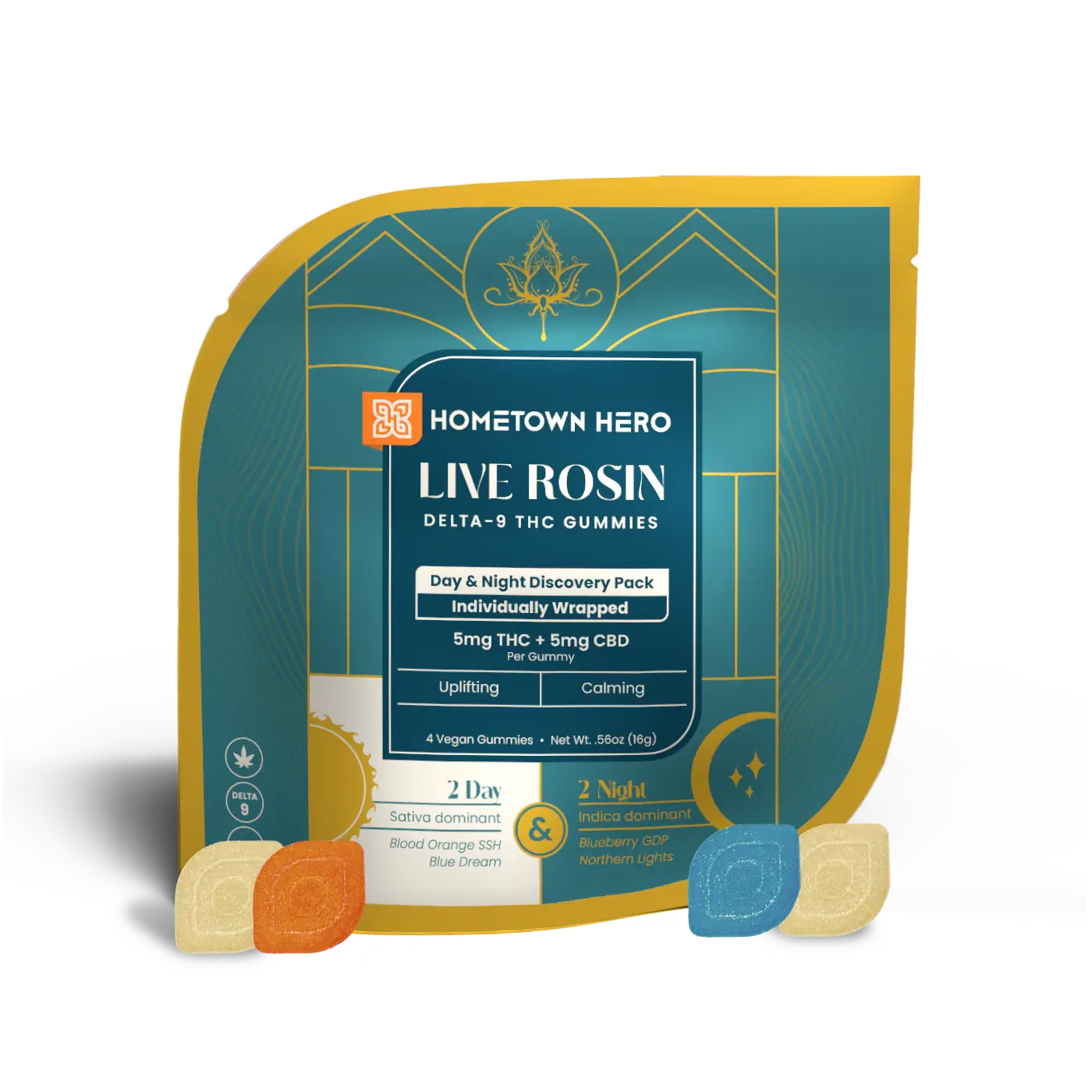
Hometown Hero 5mg Live Rosin Day & Night Discovery Pack
Solventless live rosin gummies in both daytime and evening formulations, 5mg THC per piece
What “Live Rosin” Actually Means for the Experience
The extraction method in a gummy matters more than most labels make clear. Distillate-based gummies – which dominate the budget end of the market – are made from highly purified THC stripped of most supporting compounds. You get a consistent, clean dose of THC, but you often lose nuance: the entourage of terpenes and minor cannabinoids that influence whether the effect feels focused or spacey, warm or cerebral.
Live rosin is made from fresh-frozen cannabis flower pressed using only heat and pressure – no solvents – which preserves the full terpene and cannabinoid profile close to what the plant actually contained. The result tends to be a more textured experience at the same THC dose. For creative purposes, that can mean the difference between a gummy that makes you stare at the ceiling and one that makes you actually want to pick up the guitar.
The Hometown Hero Matcha variant is a good example: a single-origin live rosin gummy with a profile that skews calm and grounding without being sedating, which fits nicely into an afternoon work session when energy isn’t the issue but mental chatter is.
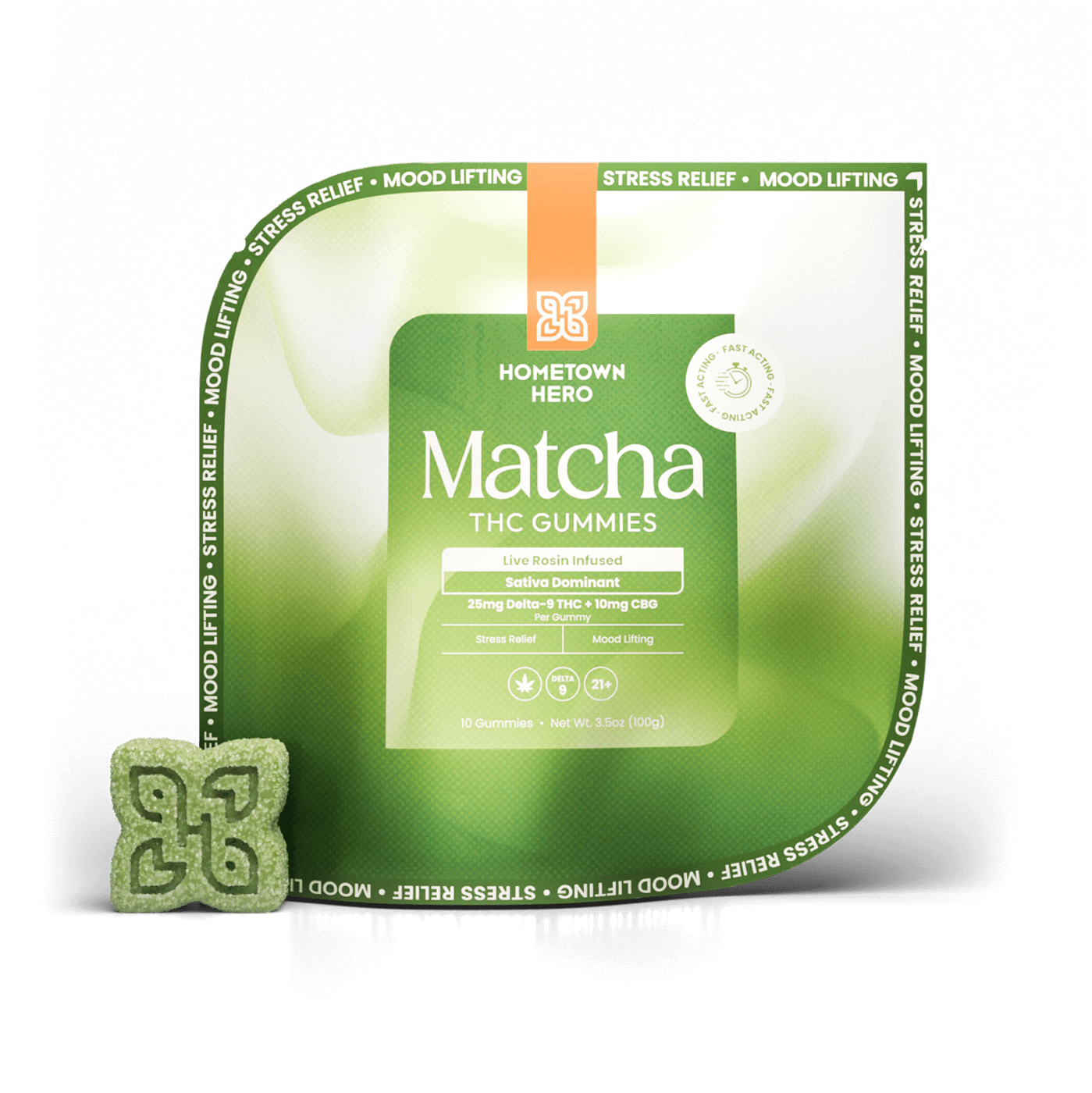
Hometown Hero Delta-9 Live Rosin Gummies – Matcha
Solventless Delta-9 live rosin in a calming matcha profile, suited for focused afternoon sessions
THCA Gummies and the New Creative Toolkit
THCA gummies represent a newer corner of the market worth understanding. THCA in raw form is non-intoxicating – it’s the precursor that converts to THC through decarboxylation with heat. In a gummy context, the conversion depends on how the product is manufactured. Some THCA gummies are formulated to deliver Delta-9 effects through partial or full conversion during processing; others make less clear claims.
What makes THCA plus Delta-9 combination gummies interesting for creative purposes is the potential for a more layered onset. This is still relatively under-studied, so approaching with reasonable curiosity rather than certainty makes sense. The Cookies brand has entered this category with a two-piece format that keeps the per-serving dose modest by design – useful for people who want to experiment without overshooting. The Huckleberry Gelato variant pairs a fruit-forward flavor profile with smooth onset that doesn’t ask you to clear your afternoon schedule.
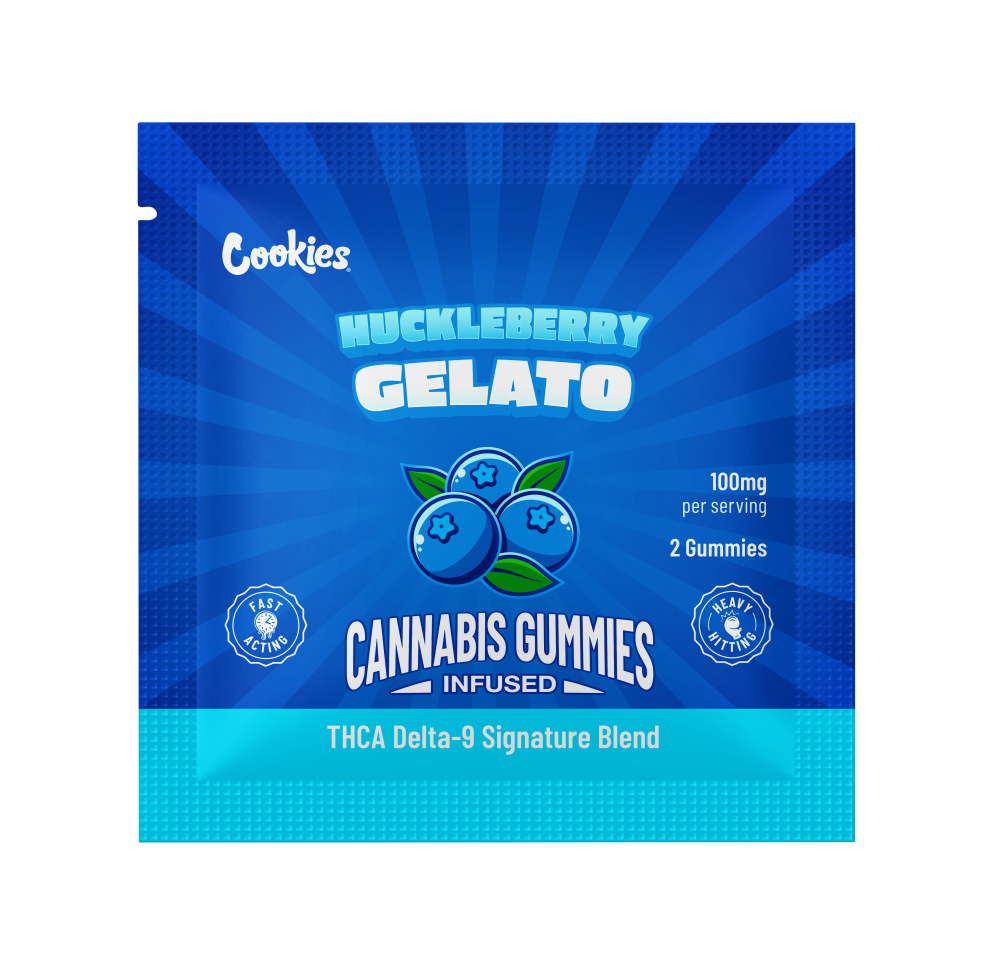
Cookies THCA + Delta 9 Gummies – Huckleberry Gelato – 2ct
Two-piece serving format with THCA and Delta-9 combination, fruit-forward profile from a legacy cannabis brand
Sleep, Recovery, and the Creative Long Game
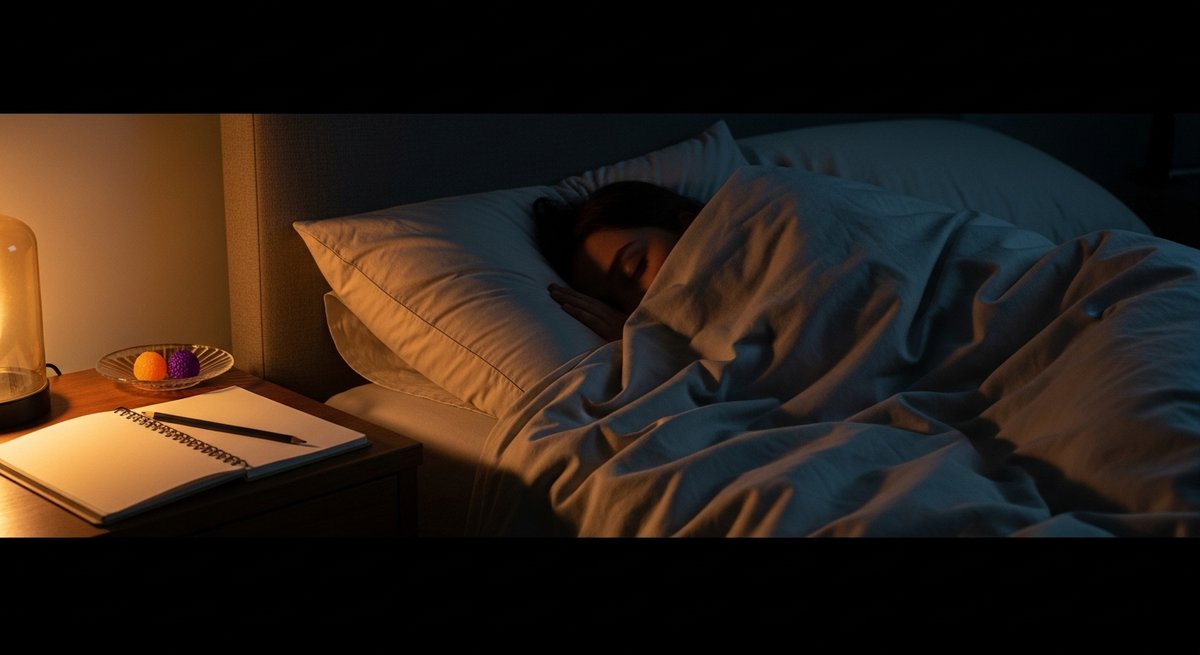
Creativity isn’t only about the hours you’re actually creating. A huge part of creative output depends on what happens when you’re not working – how well you sleep, how thoroughly you recover, and whether your nervous system gets enough downtime to consolidate what you’ve been building. This is the less glamorous dimension of gummies for creatives, but probably the more important one for sustained practice.
Some people use low-dose gummies in the evening not to create but to decompress – to step off the mental hamster wheel so the next session starts from a rested place. CBD-heavy gummies taken an hour or two before bed fit this use case reasonably well for many users, though the evidence on cannabis and sleep architecture is still being worked out. If sleep is part of your creative recovery strategy, the complete guide to CBD gummies for sleep covers the evidence, dose ranges, and most reliable formulation choices in detail.
Expert Insight
Dr. Alexander Tabibi
Dr. Alexander Tabibi
A 2021 narrative review by Corroon et al. examined the body of evidence for cannabinol (CBN) and sleep, surveying eight studies. The review found no clinical trials using validated sleep questionnaires to assess CBN as a standalone intervention. The conclusion was direct: existing evidence does not support the sleep-related claims commonly made about CBN, and typical doses found in commercial products are often lower than those evaluated in any available studies.
This matters for creative people who choose gummies partly for evening wind-down, since many products marketed for sleep lean on CBN as a selling point. CBD has a stronger – though still developing – evidence base for anxiety-adjacent sleep interference than CBN does for sleep directly. Choosing a formulation based on what’s actually been studied tends to serve you better in the long run.
Corroon et al. (2021). Cannabinol and Sleep: Separating Fact from Fiction. Cannabis and Cannabinoid Research, 6(5):366-371. PMID: 34468204
FAQs About Low-Dose Gummies for Creativity
What counts as a low-dose THC gummy?
A low-dose gummy usually contains between 1mg and 5mg of THC per serving. For many artists, writers, and musicians, that range is enough to create a subtle shift in mood, focus, or sensory awareness without feeling overwhelmingly high.
Can low-dose gummies actually help with creativity?
Some people say low-dose THC helps quiet mental noise and makes brainstorming feel more fluid. Others notice enhanced music appreciation, deeper focus during painting, or more imaginative thinking while writing. The experience varies from person to person, though, and creativity still depends heavily on mindset and environment.
Are CBD gummies better for creative work than THC gummies?
CBD gummies are often preferred by people who want calm and clarity without intoxication. THC may feel more stimulating or perspective-shifting, while CBD tends to support relaxation and reduced stress. Some creatives prefer balanced gummies that contain both cannabinoids.
How long do gummies take to kick in?
Most gummies take anywhere from 30 minutes to 2 hours to fully activate. The effects usually last much longer than smoking or vaping, which is why many creators start with a very small amount before working on important projects.
What’s the best THC dose for beginners doing creative work?
For beginners, 1mg to 2.5mg is usually a safer starting point. That amount is less likely to cause anxiety or mental fog, which can sometimes happen with stronger edibles.
Sources
Hurd et al. (2019). Cannabidiol for the Reduction of Cue-Induced Craving and Anxiety in Drug-Abstinent Individuals With Heroin Use Disorder: A Double-Blind Randomized Placebo-Controlled Trial. American Journal of Psychiatry, 176(11):911-922. PMID: 31109198
Corroon et al. (2021). Cannabinol and Sleep: Separating Fact from Fiction. Cannabis and Cannabinoid Research, 6(5):366-371. PMID: 34468204
Important Notice
Cannabis affects individuals differently. If you have a history of anxiety, panic disorder, or other mental health conditions, consult a qualified healthcare provider before using any cannabis product. This article is for informational purposes only and does not constitute medical advice. If you experience severe anxiety, chest pain, difficulty breathing, or feel you are in crisis, call 911 or go to your nearest emergency room immediately.
For adults 21+ only. Cannabis laws vary by state. This content is intended for informational purposes only and does not constitute medical or legal advice. If you are experiencing a medical emergency, call 911 or go to your nearest emergency room immediately.