🚛 FREE DISCREET SHIPPING ON ALL ORDERS $49+












Best Pre-Workout Gummies: Cannabis for the Gym
Most pre-workout conversations center on caffeine, creatine, and beta-alanine. Cannabis rarely enters the picture, yet a growing number of athletes and gym-goers are quietly experimenting with low-dose gummies before training. The question worth asking: is there a real case for using cannabis before a workout, or is this just curiosity dressed up as wellness? The honest answer sits somewhere in

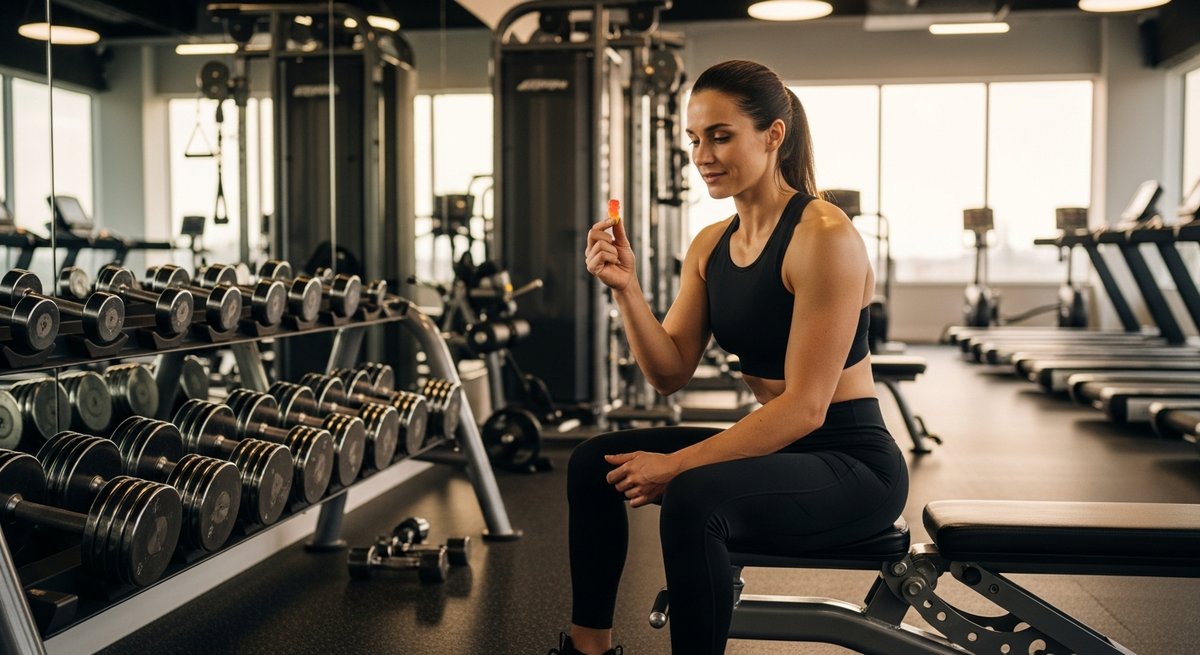
Most pre-workout conversations center on caffeine, creatine, and beta-alanine. Cannabis rarely enters the picture, yet a growing number of athletes and gym-goers are quietly experimenting with low-dose gummies before training. The question worth asking: is there a real case for using cannabis before a workout, or is this just curiosity dressed up as wellness?
The honest answer sits somewhere in the middle. Cannabis affects everyone differently, and the research on cannabinoids and exercise is still early. But the practical interest is real, and understanding what gummies can and cannot do before you train matters if you want results and not a derailed session.
Why some people reach for gummies before training

The endocannabinoid system (ECS) plays a documented role in exercise physiology. Your body produces its own cannabinoids, and physical activity raises circulating endocannabinoid levels. The “runner’s high” long attributed solely to endorphins is now understood to involve anandamide, an endocannabinoid that activates CB1 receptors in the brain.
When people consume a cannabis gummy before exercise, they are layering exogenous cannabinoids on top of that system. Common reported reasons include reducing pre-training anxiety, improving mind-muscle connection during repetitive movements, and making cardio feel less tedious. None of these are guaranteed outcomes, and dosage control is everything.
There is also a recovery angle. Some gym-goers use low-dose gummies to ease post-session soreness, treat the session and the recovery as a single arc, and schedule their consumption accordingly. Understanding that dual use case changes how you think about timing and dose.
What the science actually says about cannabinoids and pain
If muscle soreness is part of your reason for experimenting with pre-workout cannabis, dosing guidance from clinical research is useful context. A modified Delphi consensus involving 20 global pain experts established dosing frameworks for cannabinoids in chronic pain management. The panel recommended starting with CBD-dominant products, titrating toward goals, and introducing THC only when needed. Their suggested ceiling for THC in therapeutic contexts was 40 mg per day.
For gym use, most people land far below those thresholds. A 5 mg THC gummy is the conventional starting point for a reason: it is low enough to observe effects without overwhelming coordination or reaction time. If your goal involves soreness management rather than impairment, staying at the lower end of that range is a reasonable approach.
Expert Insight
Dr. Alexander Tabibi
Dr. Alexander Tabibi
A modified Delphi consensus of 20 international pain specialists established structured protocols for cannabinoid dosing in chronic pain contexts. The panel distinguished between routine, conservative, and rapid titration approaches, recommending a CBD-first strategy with THC introduced gradually when needed. The expert-agreed maximum was 40 mg of THC daily across pain types including neuropathic, inflammatory, and mixed presentations.
These thresholds were built around therapeutic intent, not athletic performance. Still, they offer a useful anchor: the dosing philosophy of starting low and titrating toward a specific outcome applies equally to anyone experimenting with cannabinoids around exercise. Evidence suggests that individual variability is high, and overshooting dose is the most common reason people have a negative experience.
Bhaskar et al. (2021). Consensus recommendations on dosing and administration of medical cannabis to treat chronic pain: results of a modified Delphi process. Journal of Cannabis Research, 3(1):22. PMID: 34215346
Timing: the variable most people get wrong
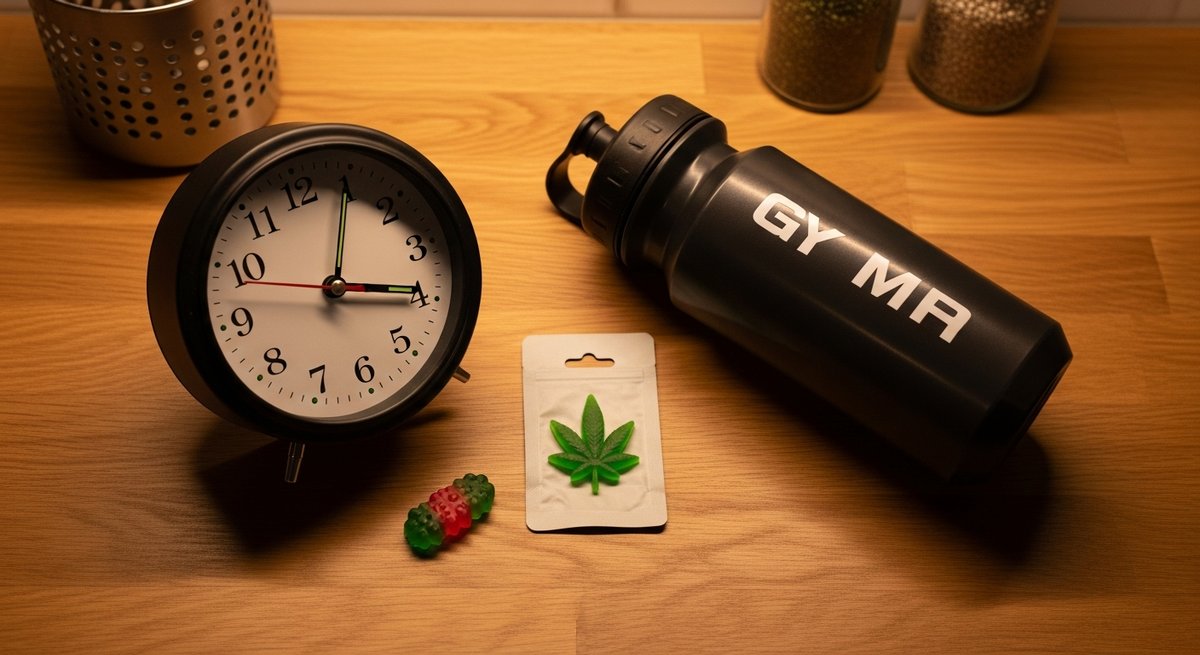
Gummies are an oral delivery method, which means onset is delayed and effects last longer than inhalation. Expect 45 minutes to 90 minutes before effects become noticeable, and the window of peak effects can extend 3 to 5 hours. If you consume a gummy 20 minutes before a workout expecting it to kick in like a pre-workout powder, you will likely be disappointed during training and impaired after.
A practical approach: take your gummy 60 to 90 minutes before your session begins. That timing puts onset at roughly the start of your warmup, and the main window of effects covers the training hour. How much you eat beforehand also matters. A full meal slows absorption; a light snack or fasted state accelerates it. Keeping this consistent across sessions helps you calibrate what works.
People who find the sustained attention needed for steady-state cardio or high-repetition strength work difficult may benefit most from this timing approach. The same principle applies to creative or focus-oriented work, which is explored in the broader context of microdosing gummies for focused sessions without crashing.
THC vs. CBD gummies before exercise
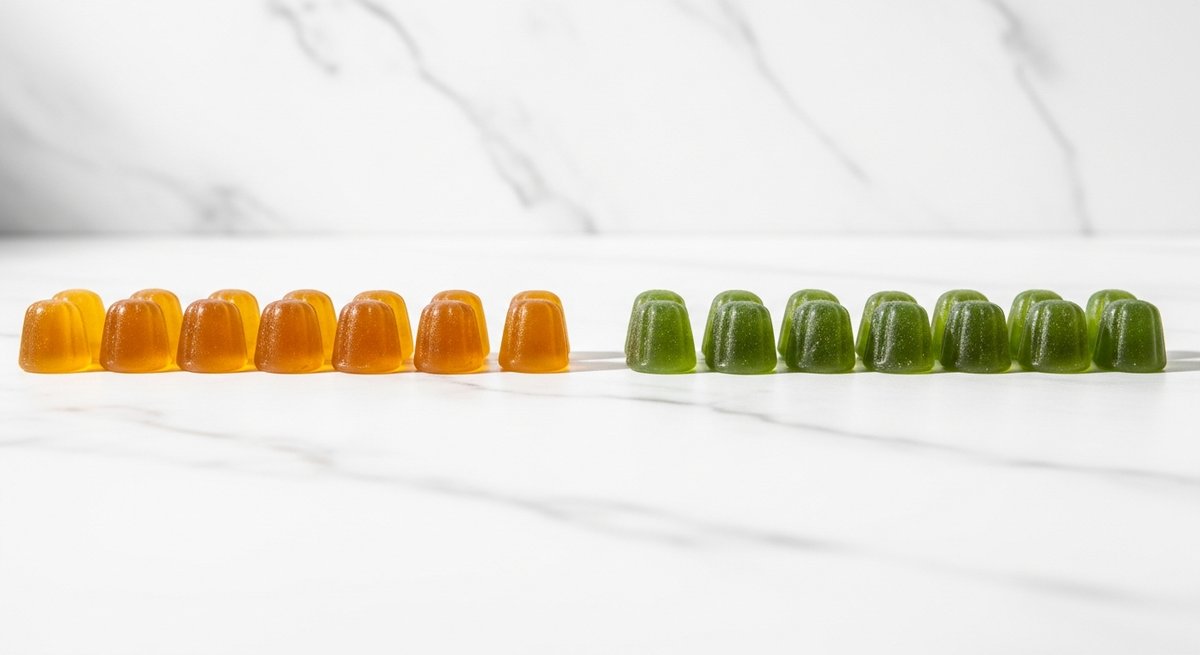
These are fundamentally different tools, and the distinction matters more in an athletic context than almost any other.
THC is psychoactive. At low doses, some people report heightened sensory engagement and reduced anxiety. At moderate to high doses, coordination, reaction time, and decision-making can all be compromised. If your workout involves heavy barbell movements, complex technique, or significant cardiovascular output, impaired coordination is a real safety concern. Staying at 2.5 mg to 5 mg THC is where most experienced users draw the line for training purposes.
CBD is non-intoxicating. It does not produce the perceptual shift THC does, but research suggests it may support mood and help manage situational anxiety. For athletes who want a calming edge without any risk to cognitive function during training, a CBD-dominant gummy is the lower-risk starting point. The range of options, including products that blend both cannabinoids in meaningful ratios, is covered in depth in the guide to focus gummies with CBD and low-dose THC.
Soreness, recovery, and what gummies can realistically offer

Exercise-induced muscle damage triggers an inflammatory response that causes delayed onset muscle soreness (DOMS), typically peaking 24 to 48 hours after training. Cannabinoids interact with CB2 receptors found in immune and peripheral tissue, and CB2 activation is associated with anti-inflammatory signaling in preclinical models. Whether that translates meaningfully to post-exercise soreness in healthy adults has not been rigorously studied in controlled trials.
What is more consistently reported is the subjective experience: people often say soreness feels more manageable rather than dramatically reduced. That is a meaningful quality-of-life benefit for anyone training consistently, even if the mechanism is partly attentional rather than purely anti-inflammatory. If the goal is back and muscle soreness specifically, it is also worth looking at how different cannabis products, including inhalation formats, approach that use case, as explored in the piece on cannabis strains for back pain and muscle soreness.
Expert Insight
Dr. Alexander Tabibi
Dr. Alexander Tabibi
A systematic review and meta-analysis of 69 studies examined cannabis use and cognitive functioning in adolescents and young adults. The pooled effect on cognition was small (Cohen’s d = -0.25). Importantly, when researchers looked only at participants who had abstained for more than 72 hours, the effect became statistically non-significant (d = -0.08), suggesting that many previously observed deficits may reflect residual or acute withdrawal effects rather than lasting impairment.
For practical purposes, this evidence suggests that cognitive concerns tied to cannabis use are most pronounced in the acute and subacute window – not necessarily a long-term baseline shift for adults. That framing is relevant for athletes: if cognitive sharpness matters for your training or competition, the timing of your last dose is a more actionable variable than avoiding cannabinoids entirely. As always, earlier population research in this area focused on heavier use patterns, so lighter recreational or therapeutic doses may carry different implications.
Scott et al. (2018). Association of Cannabis With Cognitive Functioning in Adolescents and Young Adults: A Systematic Review and Meta-analysis. JAMA Psychiatry, 75(6):585-595. PMID: 29710074
Choosing the right gummy: what to look for
Not all cannabis gummies are built with the same goals in mind. When you are shopping with a workout use case in mind, a few factors cut through the noise.
- Dose per piece: Look for gummies with clearly labeled milligrams per piece. 5 mg THC per piece is common; 2.5 mg options exist and give you more control.
- Cannabinoid ratio: A product with balanced CBD and THC may offer steadier effects than THC alone, which can spike and drop more sharply.
- Onset speed: Some gummies use nano-emulsified formulations that absorb faster. If a product advertises faster onset, adjust your timing accordingly.
- Third-party testing: COAs (certificates of analysis) from an independent lab confirm potency and that the product is free of residual solvents or contaminants.
- Cannabinoid type: Standard delta-9 THC gummies from a licensed dispensary give you the most predictable experience. Novel cannabinoids like THC-P are significantly more potent mg for mg, and that distinction matters when you are also moving heavy objects.
A strong option for gym-adjacent recovery: Hometown Hero Live Rosin
For people who want to map one product to both pre-workout and post-workout use across a training week, a discovery pack offers a useful way to explore different doses and formulations without committing to a large quantity of a single SKU. The Hometown Hero 5mg Live Rosin Day and Night Discovery Pack takes that approach directly: it pairs a daytime formulation (designed for alertness and light mood lift) with a nighttime version suited for wind-down and sleep onset. Live rosin extraction preserves a fuller terpene profile compared to distillate-based gummies, which may contribute to what many users describe as a more rounded, less harsh effect. That matters for muscle recovery, where a calm evening body effect is often more useful than a stimulating one.
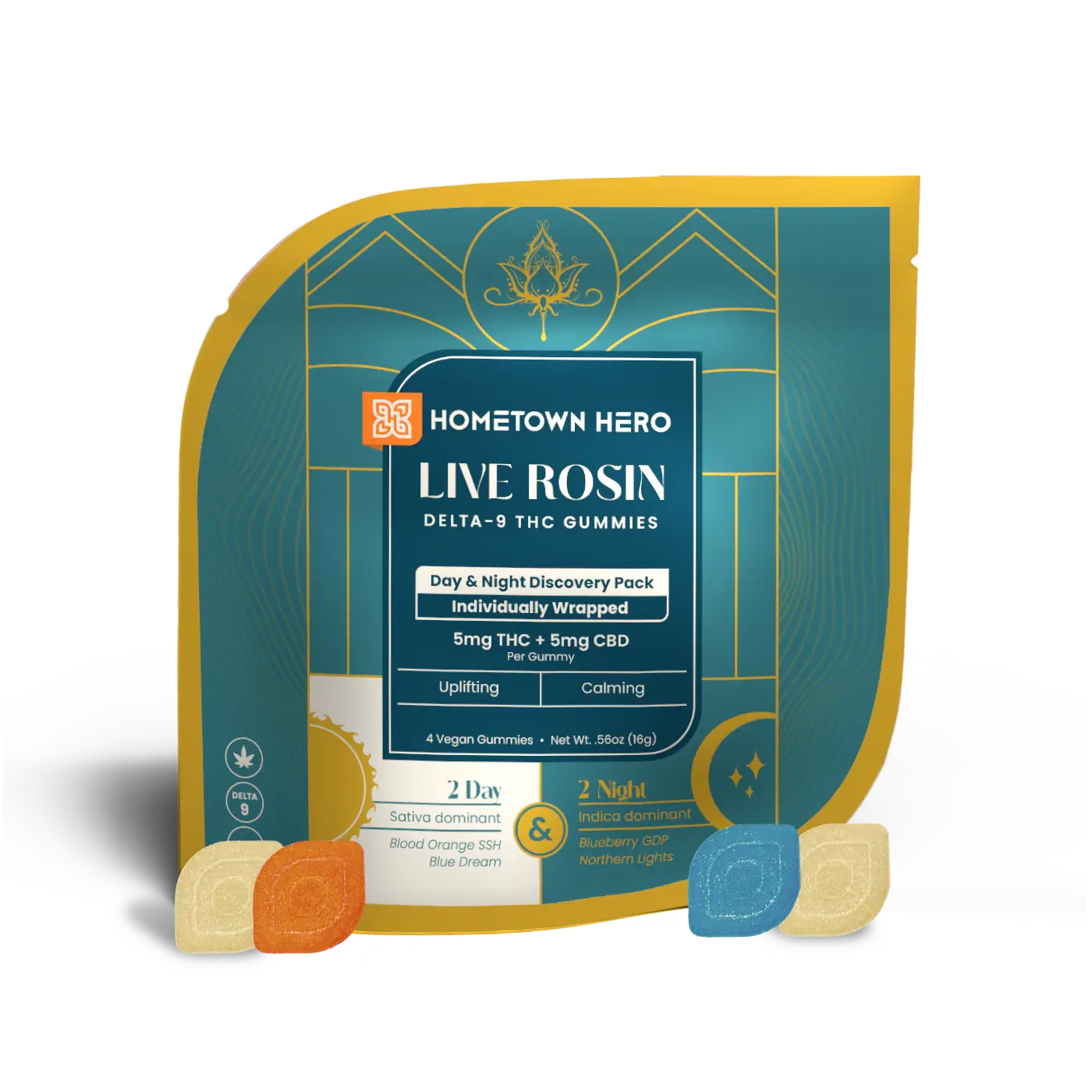
Hometown Hero 5mg Live Rosin Day & Night Discovery Pack
5 mg live rosin gummies in day and night formats – full-spectrum terpene profile, low-dose and stackable
For those interested in higher-potency options: a note on THC-P gummies
Some experienced consumers with high cannabinoid tolerance explore THC-P (tetrahydrocannabiphorol), a naturally occurring but highly potent cannabinoid analog. Research on THC-P is extremely limited. By most estimates, it binds to CB1 receptors far more strongly than standard delta-9 THC, which means that even milligram-equivalent doses produce a significantly more intense effect. This is not a beginner’s choice, and it is almost certainly not appropriate to consume before any workout that involves barbells, machines, or high-intensity cardio.
Where some high-tolerance consumers do consider it is in a post-training, rest-day, or nighttime recovery context, where deep relaxation is the actual goal. If that use case fits your situation and you have already established your tolerance with conventional delta-9 products, the Binoid THC-P Gummies represent one of the more popular options in this category, with clear labeling and consistent third-party testing.
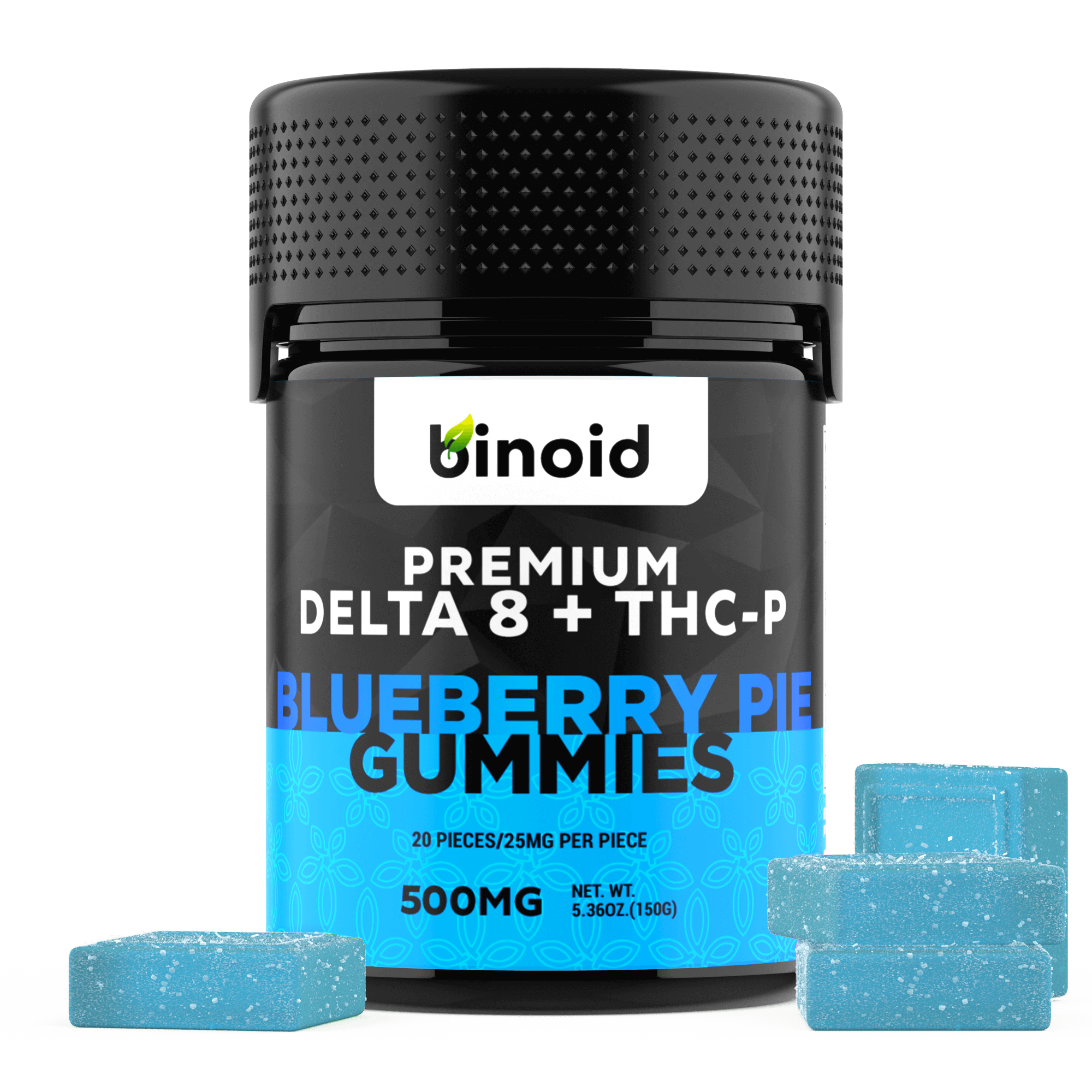
Binoid THC-P Gummies
High-potency THC-P gummies from Binoid – third-party tested, for experienced consumers only
Practical guidelines before your first session
If you have never used a cannabis gummy before a workout, do not start on a heavy training day. Run the experiment on a lighter session – a walk, a mobility workout, or a low-stakes cardio day – so you can observe the effects without any safety risk attached to the outcome. Note the onset time, how your focus and energy felt during movement, and how you felt in the two hours after. Keep a simple log for the first three or four sessions so you can make informed adjustments.
Do not combine cannabis gummies with stimulant-based pre-workouts until you understand how both affect you individually. The interaction between elevated heart rate from stimulants and THC-induced cardiovascular changes (THC can raise resting heart rate transiently) is not well characterized for healthy adults in athletic contexts. Separate the variables first.
Hydration matters more than usual. Cannabis can cause dry mouth and mild dehydration-adjacent symptoms in some people, and exercise already creates a significant fluid demand. Bring more water than you think you need, and consider a drink with electrolytes if your session runs longer than 60 minutes.
Who this approach is and is not for
Cannabis gummies before training are most likely to benefit people who already use cannabis recreationally or therapeutically and want to explore whether it changes their relationship with exercise. They are worth experimenting with for steady-state cardio, yoga, light lifting, and mobility work where the primary goal is enjoyment or consistency rather than maximal performance output.
They are not appropriate before any activity where impaired coordination or delayed reaction time carries injury risk. That includes Olympic lifting, plyometric training, contact sports, and driving to and from the gym after dosing. These are not edge-case concerns; they are the basic risk calculus of combining a psychoactive substance with physical activity.
FAQs – Best Pre-Workout Gummies: Cannabis for the Gym
Can cannabis gummies be used before a workout?
Some adults use low-dose cannabis gummies before exercise to enhance focus, motivation, or enjoyment. Effects vary by person, so start with a low dose and avoid activities that require quick reflexes or coordination until you know how they affect you.
What type of gummy is best before the gym?
Many users prefer low-dose THC gummies or balanced THC:CBD formulas with uplifting terpene profiles. Products featuring limonene, pinene, or terpinolene are often chosen for daytime activities.
How long before a workout should I take a cannabis gummy?
Most cannabis gummies take 30 to 90 minutes to begin working, depending on your metabolism, whether you’ve eaten, and the product. Plan ahead so the effects align with your workout.
Will cannabis improve my athletic performance?
Current research does not show that cannabis consistently improves strength, endurance, or athletic performance. Some people report better focus or greater enjoyment of exercise, while others experience reduced coordination or slower reaction times.
Are THC or CBD gummies better for exercise?
It depends on your goal. THC may promote motivation or make workouts feel more engaging for some users, while CBD is often chosen for post-workout recovery or discomfort without intoxication.
Sources
Scott et al. (2018). Association of Cannabis With Cognitive Functioning in Adolescents and Young Adults: A Systematic Review and Meta-analysis. JAMA Psychiatry, 75(6):585-595. PMID: 29710074
Bhaskar et al. (2021). Consensus recommendations on dosing and administration of medical cannabis to treat chronic pain: results of a modified Delphi process. Journal of Cannabis Research, 3(1):22. PMID: 34215346
Important Notice
Cannabis affects individuals differently. If you have a history of anxiety, panic disorder, or other mental health conditions, consult a qualified healthcare provider before using any cannabis product. This article is for informational purposes only and does not constitute medical advice. If you experience severe anxiety, chest pain, difficulty breathing, or feel you are in crisis, call 911 or go to your nearest emergency room immediately.
For adults 21+ only. Cannabis laws vary by state. This content is intended for informational purposes only and does not constitute medical or legal advice. If you are experiencing a medical emergency, call 911 or go to your nearest emergency room immediately.