🚛 FREE DISCREET SHIPPING ON ALL ORDERS $49+










Best Vapes for Sleep: Strains and Products That Help
Here’s an uncomfortable truth: a lot of people who struggle with sleep have already tried the usual suspects. The melatonin gummies, the white noise machines, the “no screens after 9 PM” experiment that lasted exactly four days. And then, somewhere along the way, they ended up asking a very specific question – does cannabis actually help? And if it does,

Here’s an uncomfortable truth: a lot of people who struggle with sleep have already tried the usual suspects. The melatonin gummies, the white noise machines, the “no screens after 9 PM” experiment that lasted exactly four days. And then, somewhere along the way, they ended up asking a very specific question – does cannabis actually help? And if it does, does a vape make sense for someone trying to wind down at bedtime?
Those are fair questions, and they deserve real answers rather than vague wellness-speak. This guide walks through what the science and user experience actually suggest about vaping cannabis for sleep, which strains tend to show up in the conversation most often, and what to look for when you’re choosing a product. No miracle claims, no hype – just practical information for adults who want to make an informed decision.
Why some people reach for a vape at bedtime
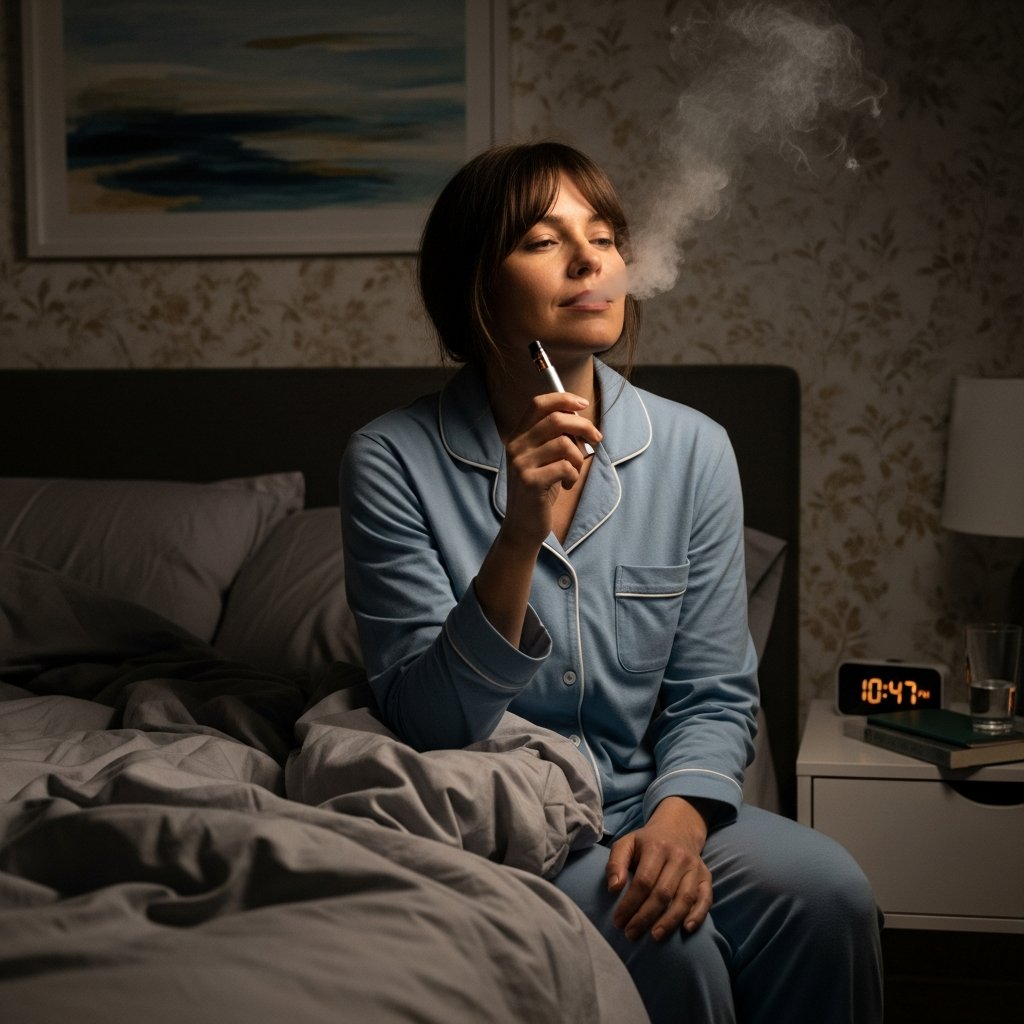
Onset speed is the short answer. When you eat an edible, you’re typically waiting 45 minutes to two hours for effects to arrive, which is frustrating when you just want to lie down and drift off. A vape delivers cannabinoids to the bloodstream through the lungs in minutes, so the timing is far more predictable. You can take a puff or two, set the device on your nightstand, and have a reasonable sense of when things will kick in.
The other factor is dose control. With inhalation, the feedback loop is quick enough that most experienced users learn to stop when they’ve had enough, rather than overshooting (a common edible problem). That precision matters at night, when taking too much can flip the experience from relaxing to restless or mildly anxious – which is the opposite of useful.
That said, vaping isn’t automatically a sleep tool. The strain profile, the cannabinoid ratio, the terpene composition – all of it shapes what you actually feel. A high-THC, high-limonene sativa cart could absolutely keep you wired. Picking the right product is most of the job.
What the evidence says about cannabinoids and sleep
THC is the cannabinoid most directly linked to shortening the time it takes to fall asleep, which researchers call sleep onset latency. Studies in healthy adults have generally found that moderate THC doses reduce how long it takes people to doze off. The caveat is that higher doses and long-term use appear to suppress REM sleep, which is the dream-heavy phase associated with emotional memory processing. That’s a trade-off worth knowing about.
CBD’s role in sleep is more complicated. At lower doses it can be mildly stimulating; at higher doses some studies suggest it promotes alertness during the day and may support sleep quality indirectly by reducing anxiety. In vape products, you’ll often see CBD combined with THC specifically to smooth out the harder sedative edge that high-THC products can produce.
CBN (cannabinol) gets marketed aggressively as the “sleep cannabinoid,” and while early anecdotal and preclinical signals are interesting, the clinical evidence is still thin. If you see a vape cart positioned around CBN content, treat it as a possible bonus rather than a proven mechanism. For a deeper look at how different cannabinoids interact with the sleep cycle, the 2025 guide to cannabinoids for sleep covers the pharmacology in more detail.
Expert Insight
Dr. Alexander Tabibi
Dr. Alexander Tabibi
A widely cited 2017 review by Babson et al. examined THC, CBD, and combined cannabinoid administration in adults with insomnia. The study found that a 15 mg THC dose significantly reduced sleep onset latency compared to placebo, while the 15 mg CBD condition did not significantly alter sleep measures on its own. Notably, the combination of 15 mg THC with 15 mg CBD did not produce greater sleep onset reduction than THC alone, complicating the popular idea that CBD universally enhances THC’s sleep benefit.
The same trial highlighted a well-documented pattern: THC reliably reduces REM sleep duration, meaning users fall asleep faster but spend less time in the dream-heavy stages associated with emotional consolidation. Over extended nightly use, that REM suppression may accumulate into a deficit – and some users report a rebound of vivid or disturbing dreams when they take a break. The takeaway is not that cannabis is harmful for sleep, but that it works differently depending on dose, ratio, and use pattern, and the full picture is still being mapped.
Babson K.A. et al. (2017). Cannabis, cannabinoids, and sleep: a review of the literature. Current Psychiatry Reports, 19(4):23. PMID: 28349316
The strains that keep showing up in sleep conversations

Indica-dominant cultivars dominate sleep-focused vape recommendations, and that’s not arbitrary. The terpene profiles typical of these strains – heavy on myrcene, linalool, and beta-caryophyllene – tend to lean sedating rather than activating. Myrcene in particular is widely discussed as a contributor to that classic “couch lock” feeling, though the science on isolated terpene effects in humans is still developing. If you want to understand how terpenes interact with the cartridge experience, the breakdown of terpenes in Delta 8 vape carts is a useful reference.
Bubba Kush is one of the more consistent names in this category. It tends to run high in myrcene and carries a heavy, earthy profile that people describe as deeply physical – more body relaxation than cerebral stimulation. The Sovereign Bubba variety in particular has developed a following among users who prioritize that heavy-limbed, ready-to-sleep sensation. If you’re curious about the lineage and effects, Sovereign Bubba’s strain profile is worth a read.
Granddaddy Purple (GDP) is another perennial. The grape and berry terpene profile masks what’s actually a pretty sedating cannabinoid and terpene stack. Popcorn Kush, a lesser-discussed but well-regarded option, shares some of that Kush lineage heaviness – the Popcorn Kush strain profile outlines what makes it distinct if you’re weighing options in that family.
On the hybrid side, some users find that a balanced or slightly indica-leaning hybrid works better for anxiety-driven insomnia specifically. A pure sedative can feel overwhelming if racing thoughts are the actual problem; a hybrid that reduces mental noise without pinning you to the couch can hit better. This is very much individual territory, and it’s worth experimenting (cautiously) rather than assuming one category covers everyone.
Cartridge vs. disposable: what matters for a bedtime routine
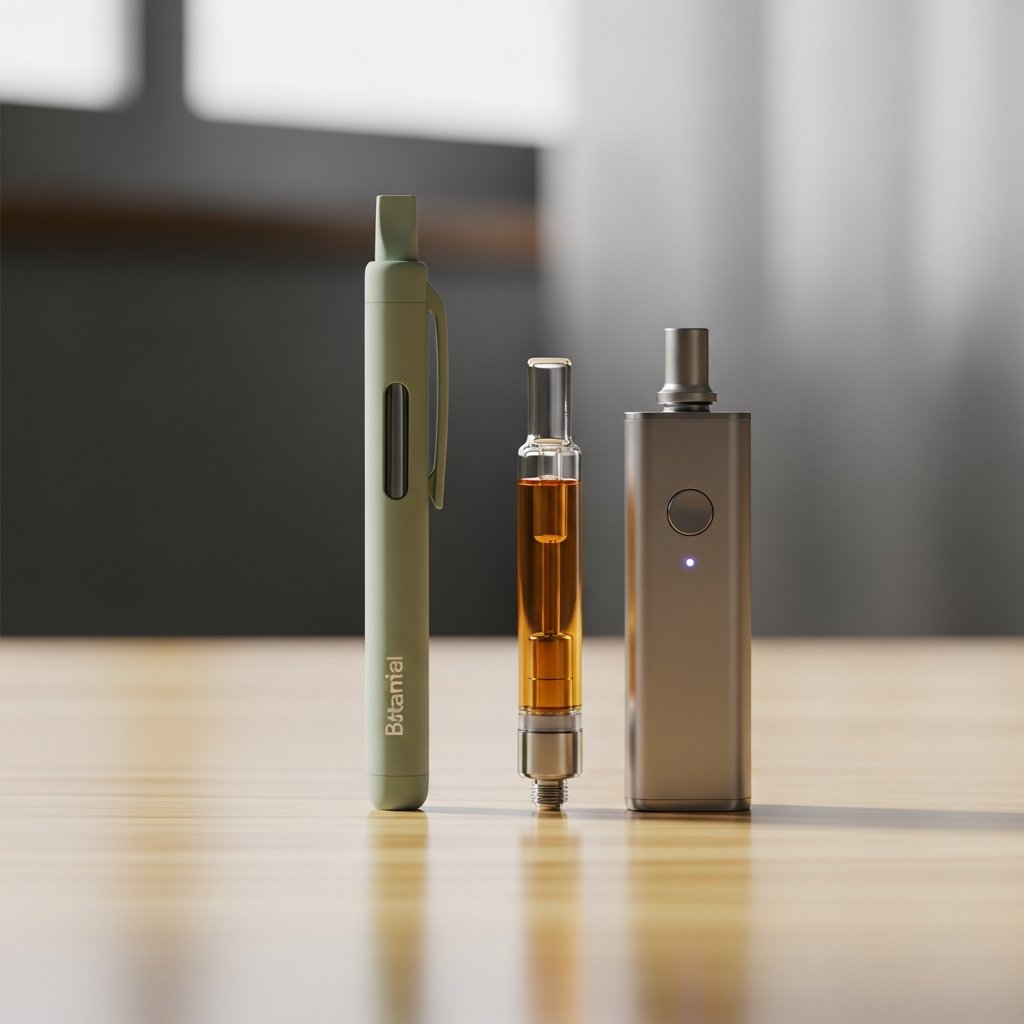
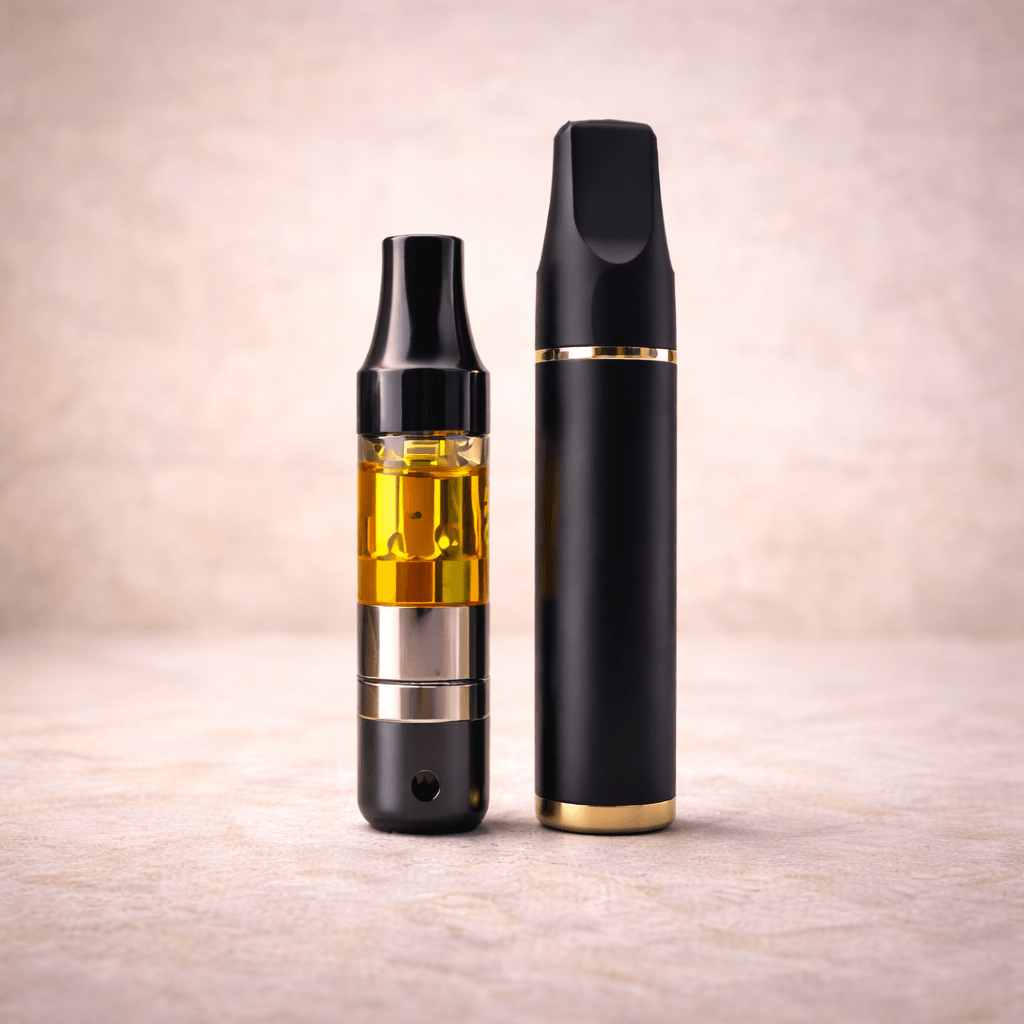
The format question is more practical than people give it credit for. Disposables are convenient, consistent, and require zero setup – which is genuinely valuable when you’re half-asleep and don’t want to fiddle with hardware. The downside is that you’re locked into whatever oil the manufacturer put in the device, with less flexibility to choose strains or ratios.
Cartridges give you more choice. You can swap between strains, adjust based on how a given night is going, and generally get more mileage per dollar. The trade-off is that you need a compatible battery, and cartridge quality varies enormously by brand and market. Third-party lab testing for potency, terpenes, and residual solvents is non-negotiable here – a cart that hasn’t been tested is a cart you’re taking on faith.
Dual-chamber devices occupy an interesting middle ground. They let you access two distinct strain profiles from one device, which is useful if you want something different for early-evening relaxation versus the actual lights-out moment. For users who are weighing hardware options more broadly, the comparison of dab pens versus cartridges covers the key differences in use case and experience.
Products worth knowing about
When you’re looking for a dual-strain option that can cover both the wind-down and the fall-asleep phases of your evening, the Cookies 2G Dual Chamber Vape stands out as a practical choice. The Triple Scoop and Georgia Pie pairing gives you access to two distinct Cookies-lineage profiles in one device – useful for dialing in the right level of relaxation without committing to a single strain all night. Both chambers are filled with Cookies-sourced oil, and the format itself removes a lot of the switching-hardware friction.
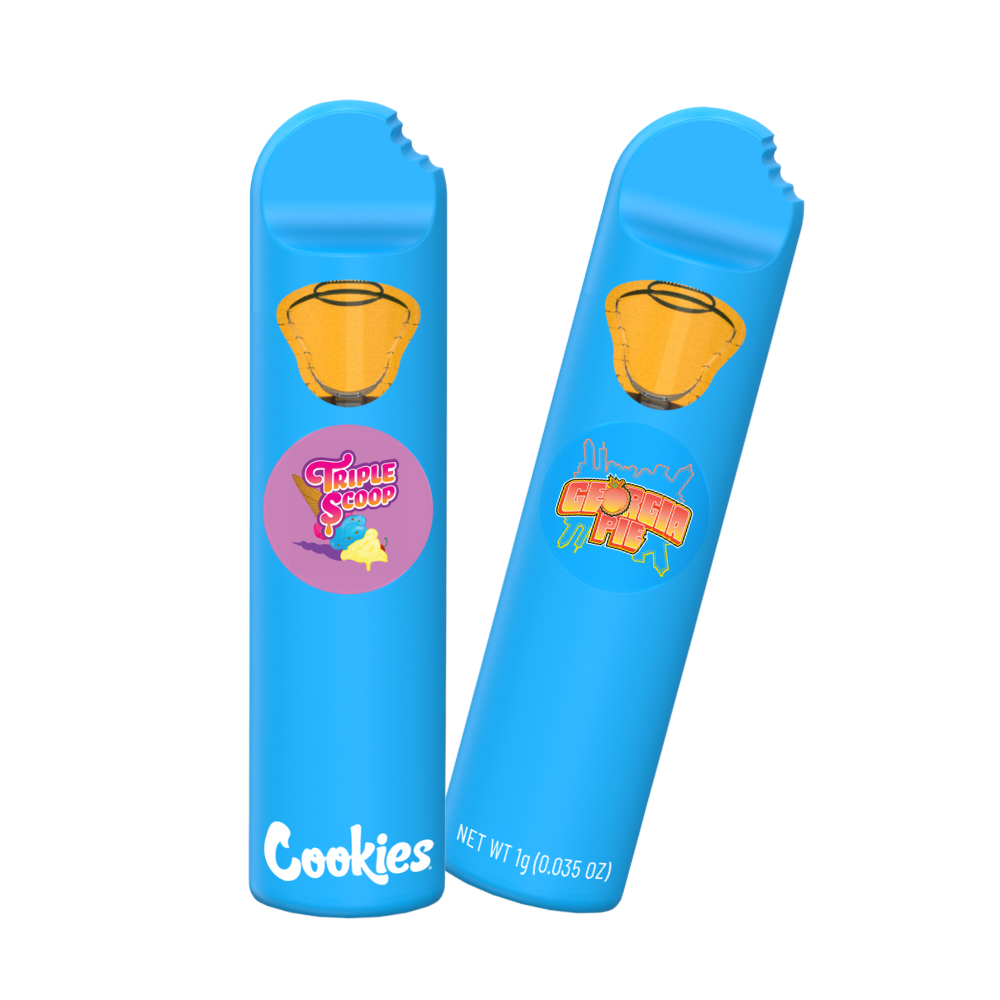
Cookies 2G Dual Chamber Vape – Triple Scoop & Georgia Pie
Two Cookies-lineage strain profiles in one 2G device; switch between chambers as your evening progresses
For users specifically interested in THCA cartridges, the Hi-Lites THCA Vape Cartridge is worth considering alongside strain and ratio. THCA converts to THC upon heating, so the inhaled experience is functionally similar to a standard THC cart – but the THCA labeling matters for compliance in certain markets. The 1g format is practical for nighttime use, where you’re unlikely to want a larger reservoir sitting around between sessions.
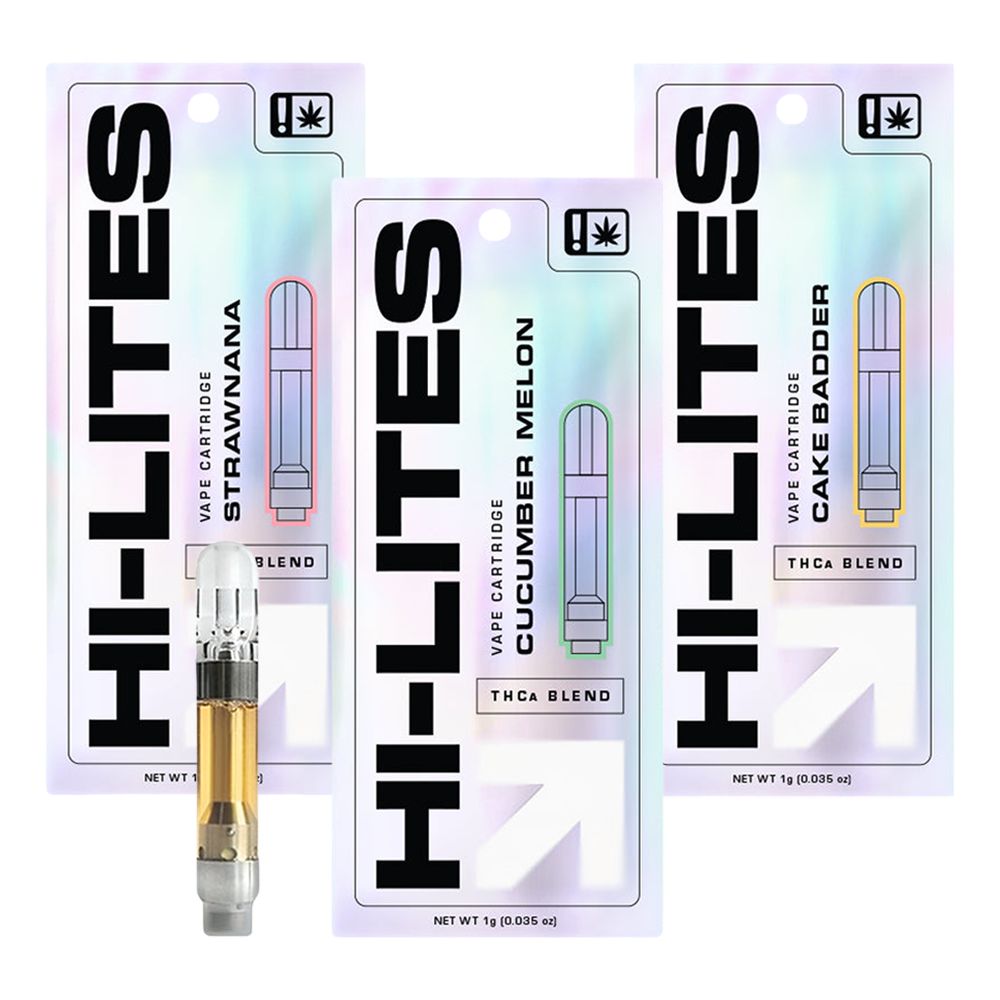
Hi-Lites THCA Vape Cartridge 1g
1g THCA cartridge; converts to active THC on inhalation; practical single-session sizing for nighttime use
A few honest caveats before you commit
Tolerance builds. People who use cannabis nightly for sleep often report that the same dose stops working as reliably after a few weeks, and they need to increase to get the same effect. Taking occasional breaks – even just two or three nights a week – can help prevent that tolerance from climbing quickly. It’s not a comfortable suggestion if you’re in the middle of a bad sleep patch, but it’s worth planning for.
Vaping in general carries respiratory considerations that are separate from the cannabis question. The long-term effects of inhaling vaporized cannabis oil are still being studied, and the 2019 EVALI outbreak (linked to vitamin E acetate in illicit market carts) was a hard reminder that product sourcing matters enormously. Buy from licensed dispensaries, look for products with full panel lab testing, and avoid carts that don’t disclose what’s in the carrier oil.
If you’re already using any sleep medications, sedatives, or CNS-active prescriptions, the combination with cannabis deserves a conversation with a pharmacist or physician before you start. The effects can stack in ways that aren’t always predictable.
Expert Insight
Dr. Alexander Tabibi
Dr. Alexander Tabibi
Research on terpene contributions to the sedating effects of cannabis remains in early stages. Myrcene is frequently cited as a key driver of physical sedation in indica-dominant cultivars, but most of the supporting evidence comes from rodent models or isolated cell work rather than controlled human trials. The practical implication is that strain-level variation in terpene profiles is real and measurable in lab testing, but predicting how a specific terpene ratio will affect your sleep is still more informed intuition than hard science.
What makes this interesting from a formulation standpoint is the entourage hypothesis – the idea that cannabinoids and terpenes modulate each other’s effects. Some researchers argue that a THC-dominant oil with a rich terpene profile produces a meaningfully different experience than the same THC concentration in a distillate with terpenes re-added post-extraction. Whether that translates into measurable sleep benefit is genuinely unresolved, and anyone claiming certainty here is outrunning the evidence. That doesn’t mean terpene profiles are irrelevant; it means they’re one variable among several, not a standalone predictor.
Russo E.B. (2011). Taming THC: potential cannabis synergy and phytocannabinoid-terpenoid entourage effects. British Journal of Pharmacology, 163(7):1344-1364. PMID: 21749363
How to approach your first few nights
Start low – genuinely low. One or two puffs, not five. Wait ten minutes before deciding you need more. The window between “this is nice” and “this is too much and now I can’t sleep” is narrower than most new users expect, especially with higher-potency modern cultivars.
Give yourself 20 to 30 minutes between that first puff and lights out. That gap lets you assess how you’re feeling before you’re already horizontal, and it tends to produce a smoother transition into sleep. Using a vape and then immediately trying to pass out sometimes produces a restless, half-awake state that isn’t particularly useful.
Keep a simple log for the first couple of weeks – strain, puff count, rough onset time, and how you felt in the morning. It sounds tedious, but sleep is notoriously hard to self-assess in the moment, and having even rough notes makes it easier to spot what’s actually working. If you find that vaping isn’t the right delivery method for you, it’s also worth knowing that there are solid alternatives; the best cannabis gummies for anxiety and stress relief covers the edible side of the equation for comparison.
Frequently asked questions
What makes a vape strain good for sleep?
Indica-dominant strains with
high myrcene, linalool, and beta-caryophyllene content tend to produce the body relaxation most associated with sleep. A moderate THC level and minimal limonene or pinene help avoid the stimulating effects that can work against falling asleep.
How long does a vape take to work for sleep?
Effects typically arrive within 5 to 15 minutes of inhalation. Most users find a 20 to 30 minute gap between vaping and attempting sleep produces the smoothest transition, giving the cannabinoids time to reach their peak effect before you’re fully horizontal.
Is it better to use a disposable or a cartridge for bedtime use?
Disposables are simpler and require no hardware setup, which matters when you’re drowsy. Cartridges offer more strain variety and better value over time. Either works; the more important variable is the strain profile and lab-verified cannabinoid content inside the device.
Will vaping cannabis every night affect my sleep quality over time?
Regular nightly use can suppress REM sleep and build tolerance, meaning the same dose becomes less effective over weeks. Taking one or two nights off per week helps manage tolerance. Some users also report vivid dream rebound when they stop after extended daily use.
Does CBD in a vape actually help sleep?
CBD alone shows mixed results in sleep research. At low doses it can be mildly alerting; higher doses may reduce anxiety enough to support sleep onset. In combination with THC, CBD can soften the harder sedative edge, though evidence that it significantly improves the sleep benefit of THC is limited.
What should I look for on a vape cart lab report?
Check potency (THC and CBD percentages), terpene profile, residual solvents, pesticides, and heavy metals. A full-panel certificate of analysis from an accredited third-party lab is the minimum standard. Avoid any product that links only to in-house testing or provides no COA at all.
Can I use a sleep vape if I take prescription sleep medication?
Not without checking first. Cannabis and sedative medications including benzodiazepines, Z-drugs, and some antihistamines can stack unpredictably. Speak with your prescribing physician or pharmacist before combining them to avoid compounded sedation or unexpected interactions.
Important Notice
The information in this article is provided for educational purposes only and does not constitute medical advice. Cannabis affects individuals differently and may not be appropriate for everyone. If you are experiencing chronic sleep disorders, consult a qualified healthcare provider before using cannabis or any other sleep aid. Do not use cannabis as a substitute for medically prescribed treatments without guidance from your physician.
Sources
Babson K.A., Sottile J., Morabito D. (2017). Cannabis, cannabinoids, and sleep: a review of the literature. Current Psychiatry Reports, 19(4):23. PMID: 28349316
Russo E.B. (2011). Taming THC: potential cannabis synergy and phytocannabinoid-terpenoid entourage effects. British Journal of Pharmacology, 163(7):1344-1364. PMID: 21749363
Kaul M., Zee P.C., Sahni A.S. (2021). Effects of cannabinoids on sleep and their therapeutic potential for sleep disorders. Neurotherapeutics, 18(1):217-227. PMID: 33580483
For adults 21+ only. Cannabis laws vary by state. This content is intended for use in jurisdictions where cannabis is legal. Nothing in this article should be construed as legal or medical advice. If you or someone you know is experiencing a medical emergency, call 911 or go to the nearest emergency room immediately.