🚛 FREE DISCREET SHIPPING ON ALL ORDERS $49+













Can THC Gummies Help You Focus? What the Science Says
Here is a question worth sitting with for a moment: if THC is famous for making people zone out on the couch, how did we end up with an entire corner of the internet insisting that gummies can sharpen your focus? It sounds contradictory, and honestly, it kind of is. But the story is more layered than “weed makes you

Published on: April 30, 2026

Here is a question worth sitting with for a moment: if THC is famous for making people zone out on the couch, how did we end up with an entire corner of the internet insisting that gummies can sharpen your focus? It sounds contradictory, and honestly, it kind of is. But the story is more layered than “weed makes you foggy.” The relationship between THC and attention is dose-dependent, context-dependent, and deeply personal in ways that most hot takes about cannabis never bother to explain.
So let’s actually look at what’s happening inside your brain when a THC gummy kicks in, why some people report laser focus while others report a sudden inability to remember what they were doing, and what the research – such as it is – actually says about using edibles as a productivity tool.
How THC Actually Works in the Brain
THC – tetrahydrocannabinol – binds primarily to CB1 receptors, which are concentrated in the brain regions responsible for memory, attention, movement, and reward processing. The prefrontal cortex, the part of your brain that manages planning, decision-making, and sustained attention, is thick with CB1 receptors. This is both the reason THC can feel mentally stimulating at certain doses and the reason it can completely derail a thought at others.
When THC activates those receptors, it influences dopamine release in a way that can temporarily heighten sensory processing and creative association. This is why a low dose might make background music sound extraordinary or a routine task feel genuinely interesting. The problem is that the same mechanism, pushed further by higher doses, starts disrupting working memory and filtering. Suddenly you have too many thoughts, none of them staying in formation.
With gummies specifically, timing matters enormously. Unlike smoking or vaping, edibles are metabolized through the liver, converting delta-9 THC into 11-hydroxy-THC – a compound that crosses the blood-brain barrier more efficiently and tends to produce a stronger, longer-lasting effect. The onset is slower (typically 45 minutes to two hours), but the cognitive impact once it arrives can be considerably more pronounced than an equivalent inhaled dose. For a deeper look at exactly what happens after you swallow a weed gummy, the science behind how edibles affect the body covers the metabolic pathway in useful detail.
The Dose-Dependent Paradox
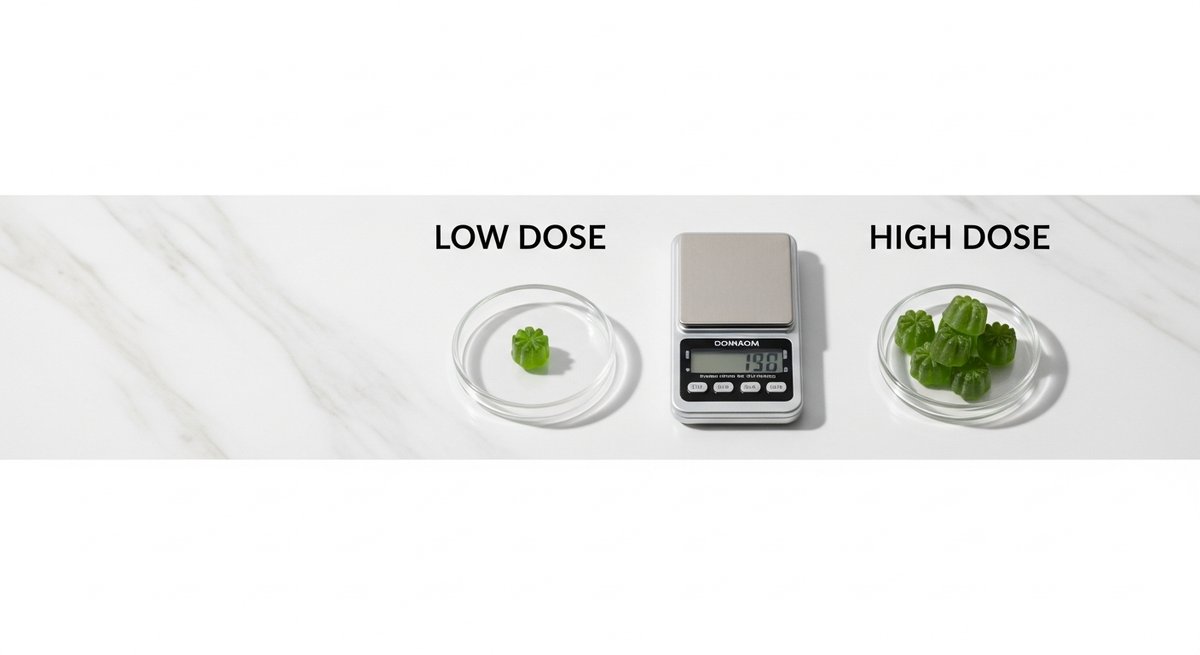
Here is the core tension, and it is worth stating clearly: low doses of THC and high doses of THC do not produce the same cognitive experience. Not even close. This is sometimes called the biphasic effect, and it is the reason you hear wildly different accounts from different people using what they both describe as “a THC gummy.”
At low doses – roughly 2.5 to 5 mg for most adults – THC can reduce the kind of low-grade mental background noise that many people experience as anxiety, restlessness, or boredom-driven distraction. When that noise quiets, focusing on a specific task becomes easier. It is not that THC is enhancing cognition directly. It is more that it is reducing the interference. The distinction matters.
At higher doses – 10 mg and above, which is where most standard gummies start – the picture shifts. Working memory degrades, reaction time slows, and the pleasant looseness of thought that felt creative at lower doses starts collapsing into distraction, paranoia, or flat-out sedation depending on the person and the strain. If you are trying to write a report or troubleshoot something technical, that is not where you want to be.
The practical upshot: if someone tells you a THC gummy helped them concentrate, their dose is probably lower than the gummy you are imagining. And if someone tells you it turned their brain to static, they likely took too much, too fast, or both.
The Anxiety Connection: Focus’s Hidden Enemy

Anxiety and focus are deeply intertwined in ways people rarely discuss when talking about productivity. If your inability to concentrate is being driven partly by anxious rumination – the internal cycling of what-ifs that pulls attention away from the present task – then something that reduces anxiety can, indirectly, improve focus. Low-dose THC may work partly through this pathway.
The endocannabinoid system plays a meaningful role in regulating the hypothalamic-pituitary-adrenal (HPA) axis – the stress-response system that governs cortisol release. When the ECS is functioning well, it helps keep stress responses proportionate. THC mimics the endocannabinoids that naturally dampen that system, which is part of why many users describe a quieting of stress chatter after a low dose.
Expert Insight
Dr. Alexander Tabibi
Dr. Alexander Tabibi
A 2012 review published in Neuroscience examined how endocannabinoid signaling regulates the HPA axis across three phases: basal activity, acute stress, and glucocorticoid-mediated negative feedback. The authors found that endocannabinoids – anandamide and 2-AG in particular – act across the prefrontal cortex, amygdala, and hypothalamus to suppress HPA output. THC, which mimics these molecules at CB1 receptors, can produce similar suppression, which offers a plausible mechanism for why low-dose cannabis is often described as reducing anxious mental noise.
The review is preclinical and mechanistic – it does not tell us what dose of THC in a gummy produces the “right” level of HPA suppression for a given person. What it does establish is that this is a real biological pathway, not anecdote. Dose, individual ECS tone, and the presence of other cannabinoids like CBD likely all modulate how strongly that pathway is activated in practice.
Hill et al. (2012). Endocannabinoid signaling, glucocorticoid-mediated negative feedback, and regulation of the hypothalamic-pituitary-adrenal axis. Neuroscience, 204:5-16. PMID: 22214537
This anxiety-focus connection is worth keeping in mind if you have ever read that cannabinoids might help with obsessive or intrusive thought patterns. The research on THC and OCD is early and limited, but some findings suggest that by quieting anxious loops, cannabinoids may free up cognitive bandwidth that was previously occupied. It is not exactly “focus enhancement” in the nootropic sense. It is more like removing a competing drain on your attention.
If anxiety is a significant part of your focus problem, you might also want to look at how different cannabinoid combinations approach this. The breakdown of CBD and THC gummies for managing anxiety is particularly useful for understanding how ratios and formulations shape the experience.
What the Research Actually Says (And Doesn’t)
Let’s be honest about where the science stands. There are no large-scale randomized controlled trials specifically studying THC gummies for focus in healthy adults. The research that exists tends to look at attention and cognition as secondary outcomes in studies focused on pain, spasticity, or sleep – or it comes from observational surveys where people report their own experiences. Neither is ideal for drawing firm conclusions about focus enhancement.
What we do have is a reasonably solid mechanistic picture (THC affects dopamine, CB1 receptors in the prefrontal cortex, and stress response systems) and a large body of anecdotal reports that cluster consistently around the dose-dependent pattern described above. That convergence is informative even without a clinical trial dedicated to the exact question.
Research on heavier or habitual THC use, though, is considerably less ambiguous. Studies consistently find that regular high-dose cannabis use is associated with slower processing speed, reduced verbal memory performance, and attentional deficits – particularly in younger users whose prefrontal cortex is still developing. This does not mean moderate adult use carries the same risks, but it is a meaningful data point for anyone planning to use THC gummies as a daily productivity strategy.
Sleep is also a factor that gets underestimated in focus conversations. Poor sleep is one of the biggest drivers of attention problems, and some people use low-dose THC specifically to improve sleep quality, with better daytime focus as the downstream benefit. The research on cannabinoids and sleep deserves its own careful look – you can find a solid comparison of cannabinoid options for sleep in this examination of CBN versus CBD gummies and how each affects sleep differently.
Strain, Ratio, and Formulation: Why Not All Gummies Are the Same
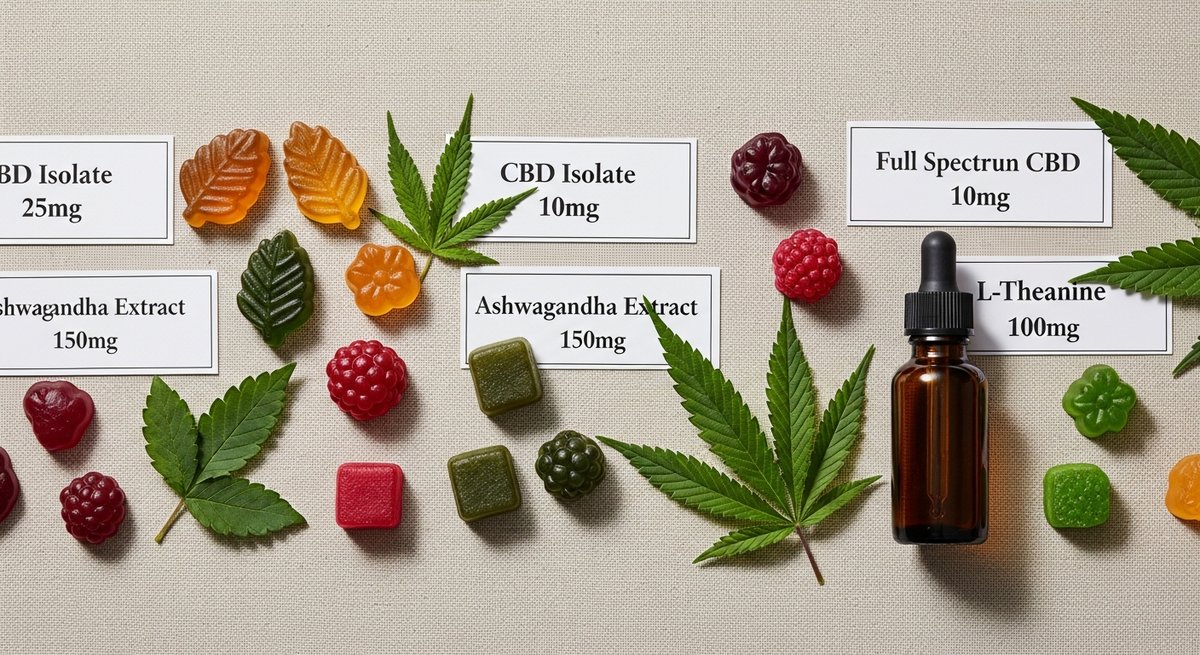
Not every THC gummy is going to produce the same experience, and this is where a lot of conversations go sideways. The presence of other cannabinoids – especially CBD – changes how THC behaves in the body. CBD is thought to modulate CB1 receptor activity, blunting some of THC’s more disorienting effects while preserving or even amplifying some of its calming properties. A 1:1 THC-to-CBD gummy will feel meaningfully different from a pure THC product at the same milligram dose.
Terpenes are another layer. The prevailing view is that terpenes like limonene and pinene skew toward alertness and mental clarity, while myrcene and linalool trend toward sedation. Full-spectrum and live rosin gummies preserve these compounds from the original plant material, whereas distillate-based products typically strip them out. If you care about the character of your experience – energized and clear versus relaxed and heavy – this formulation distinction matters more than most product descriptions acknowledge.
For people who want to explore a THCA-plus-delta-9 format with a clearly defined terpene-forward character, Cookies THCA + Delta 9 Gummies in Tahitian Lime offer a useful example. The citrus-dominant profile suggests limonene-forward terpenes, which tend to pair better with daytime use than heavy myrcene profiles. Cookies is a well-recognized brand with consistent formulation quality, and the 2-count format makes dose experimentation straightforward.
Expert Insight
Dr. Alexander Tabibi
Dr. Alexander Tabibi
A guided systematic review of 31 studies examining medical cannabis and mental health found that the relationship between THC and anxiety is genuinely dose-dependent in both directions. At lower doses and in users without pre-existing psychotic vulnerability, evidence suggests cannabis may produce anxiolytic effects through CB1 receptor modulation in the amygdala and prefrontal cortex. At higher doses, the same receptor system can produce the opposite outcome — elevated heart rate, racing thoughts, and a threat-signaling cascade that closely resembles a panic response. The review identified this biphasic pattern as one of the most consistent findings across the mental health and cannabis literature.
Critically, the review also confirmed that psychotic disorders may worsen with cannabis use regardless of dose, and that cognitive function can be acutely affected even in users without a psychiatric history. The direction of effect at low doses is useful clinical information; the exact milligram threshold where benefit tips into risk varies by individual metabolism, tolerance, and baseline anxiety state — making personal titration the only reliable calibration tool available outside a controlled setting.
Walsh Z, Gonzalez R, Crosby K, Thiessen MS, Carroll C, Bonn-Miller MO. (2016). Medical cannabis and mental health: A guided systematic review. Clinical Psychology Review, 51:15-29. PMID: 27816801
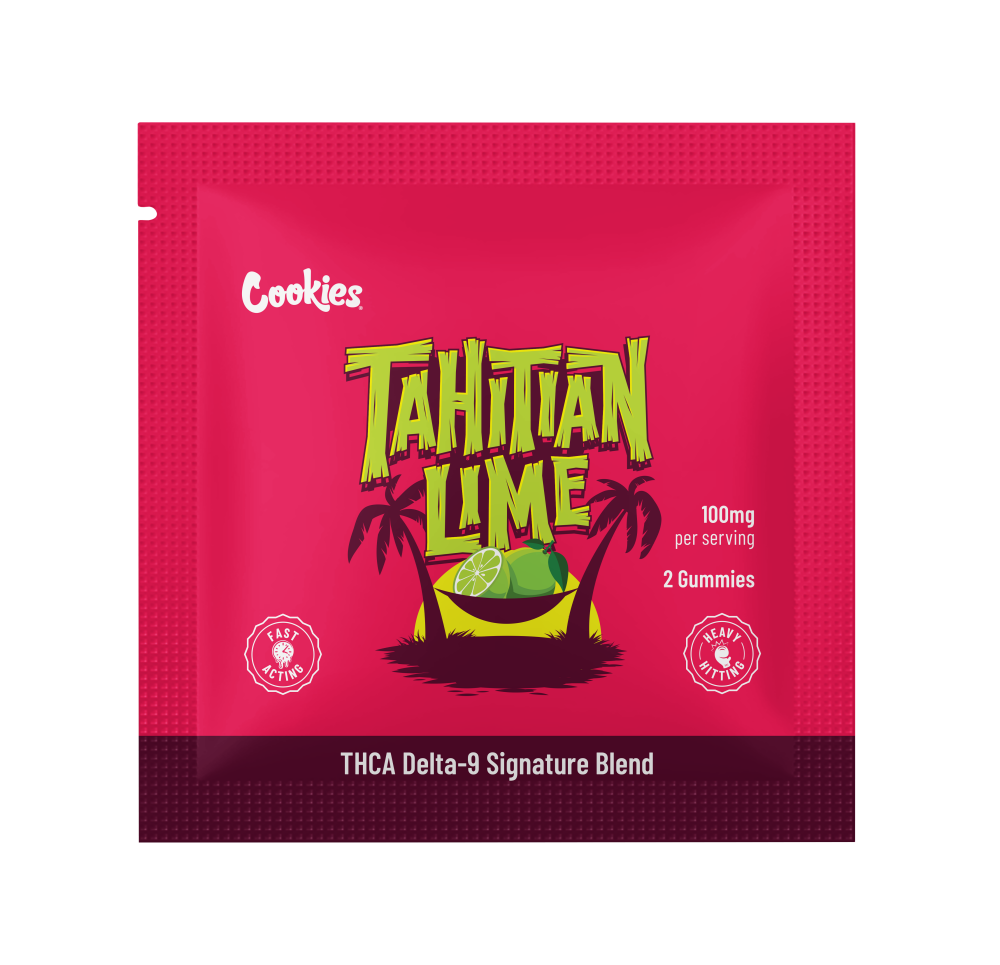
Cookies THCA + Delta 9 Gummies – Tahitian Lime – 2ct
THCA and delta-9 combined; citrus-forward profile suited to daytime experimentation
For those who prefer to experiment across both day and higher-dose evening windows, the Hometown Hero 25mg Live Rosin Day and Night Discovery Pack is worth considering. The live rosin process retains the plant’s full terpene complement, and the paired day-and-night format lets you observe how dose and timing interact with your next-day clarity – something a single-format product rarely allows.
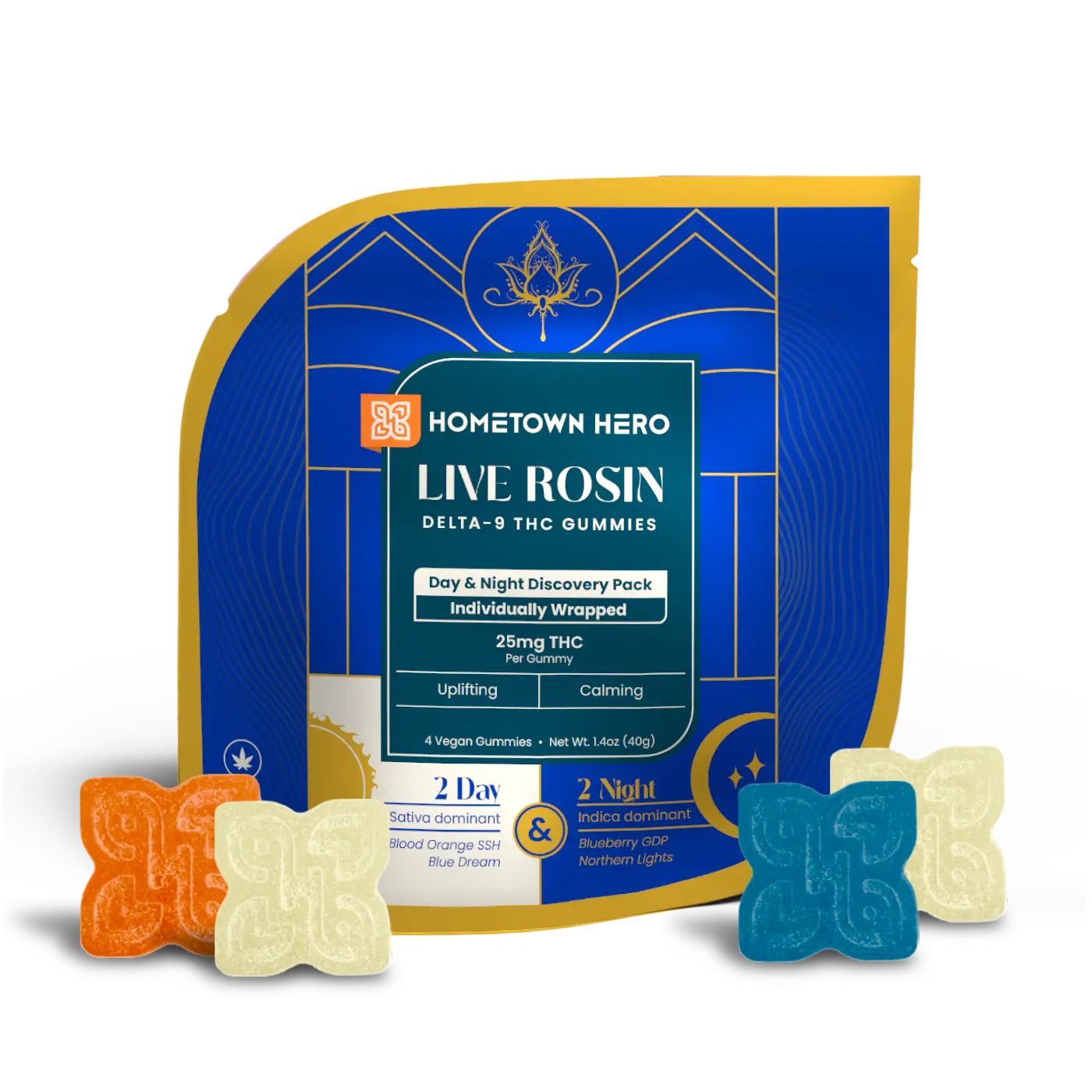
Hometown Hero 25mg Live Rosin Day & Night Discovery Pack
Full terpene live rosin in paired day and night formats; structured for dose-timing exploration
If you are drawn to a more novel cannabinoid and want to understand how potency differences play out across product types, the Binoid THC-P Gummies represent a meaningfully different category. THC-P is reported to bind CB1 receptors with considerably greater affinity than standard delta-9, which means dose calibration matters even more than usual. These are not a starting point for someone new to edibles, but they illustrate how the gummy market has expanded well beyond a single THC compound.
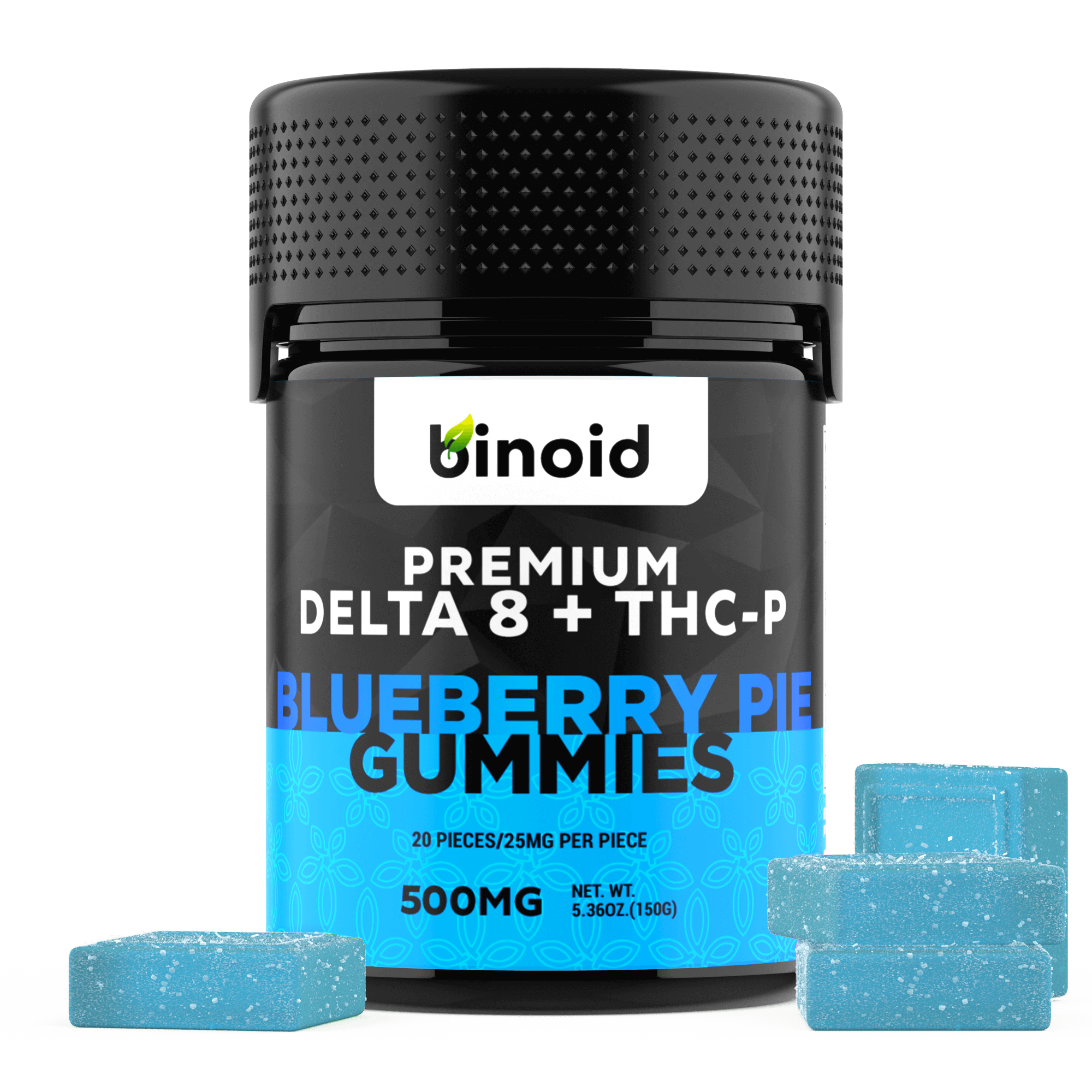
Binoid THC-P Gummies
High-affinity cannabinoid format from Binoid; intended for experienced users with careful dose awareness
The ADHD Question
One specific context worth addressing: a meaningful number of people who report using THC gummies for focus have ADHD, diagnosed or suspected. This is worth exploring carefully rather than dismissing. Some people with ADHD describe cannabis as the first thing that has ever made sustained attention feel achievable, while others find it makes their symptoms significantly worse. The research here is genuinely mixed and underexplored.
The dopamine hypothesis of ADHD suggests that the condition involves dysregulated dopamine signaling in the prefrontal cortex – the same region where THC exerts its primary cognitive effects. Stimulant medications work by increasing dopamine availability in that circuit. THC also modulates dopamine, but not in the same targeted, predictable way that a pharmaceutical does. For some people, the effect might overlap favorably. For others, particularly at higher doses, it amplifies the scatter rather than reducing it.
If you are using cannabis alongside ADHD medications or any other prescription drugs that affect your central nervous system, the interaction question becomes important. This is not an area where internet advice is sufficient.
FAQs: Can THC Gummies Help You Focus?
Can THC gummies improve focus?
In very small doses, THC may help some people feel more engaged or creative. But effects vary, and higher doses often reduce concentration.
What is considered a low dose of THC for focus?
A low dose is usually around 1–3 mg of THC. This range is less likely to cause impairment and may support mild mental stimulation.
Why do higher doses of THC hurt focus?
Higher THC levels can overstimulate the brain, leading to anxiety, brain fog, or distraction. This makes it harder to stay on task.
Is CBD better than THC for focus?
CBD is often better for focus because it reduces stress without causing a high. Many people prefer CBD or CBD-dominant products for productivity.
How long do THC gummies take to work?
They usually take 30–90 minutes to kick in. Effects can last several hours, so timing and dosage are important.
Sources
Walsh Z, Gonzalez R, Crosby K, Thiessen MS, Carroll C, Bonn-Miller MO. (2016). Medical cannabis and mental health: A guided systematic review. Clinical Psychology Review, 51:15-29. PMID: 27816801
Hill et al. (2012). Endocannabinoid signaling, glucocorticoid-mediated negative feedback, and regulation of the hypothalamic-pituitary-adrenal axis. Neuroscience, 204:5-16. PMID: 22214537
Important Notice
Cannabis affects individuals differently. If you have a history of anxiety, panic disorder, or other mental health conditions, consult a qualified healthcare provider before using any cannabis product. This article is for informational purposes only and does not constitute medical advice. If you experience severe anxiety, chest pain, difficulty breathing, or feel you are in crisis, call 911 or go to your nearest emergency room immediately.
For adults 21+ only. Cannabis laws vary by state. This content is intended for informational purposes only and does not constitute medical or legal advice. If you are experiencing a medical emergency, call 911 or go to your nearest emergency room immediately.