🚛 FREE DISCREET SHIPPING ON ALL ORDERS $49+









CBD Vape vs THC Vape for Sleep: Which One Is Right for You?
Here’s a scenario that might sound familiar: it’s 11 p.m., you’re lying in bed, and your brain has decided this is the perfect time to replay every awkward conversation you’ve had since 2009. You’ve heard that cannabis can help with sleep, and now you’re staring at two options on your nightstand – a CBD vape and a THC vape –


Here’s a scenario that might sound familiar: it’s 11 p.m., you’re lying in bed, and your brain has decided this is the perfect time to replay every awkward conversation you’ve had since 2009. You’ve heard that cannabis can help with sleep, and now you’re staring at two options on your nightstand – a CBD vape and a THC vape – wondering which one is actually going to get you some rest.
It’s a genuinely confusing choice, and the internet hasn’t made it easier. Half the content out there reads like a pharma brochure, and the other half sounds like it was written by someone who’s never actually tried either one. So let’s sort through this properly – what each compound actually does, how vaping fits into the sleep picture, and which one might make more sense for you specifically.
Two Very Different Compounds, One Common Goal
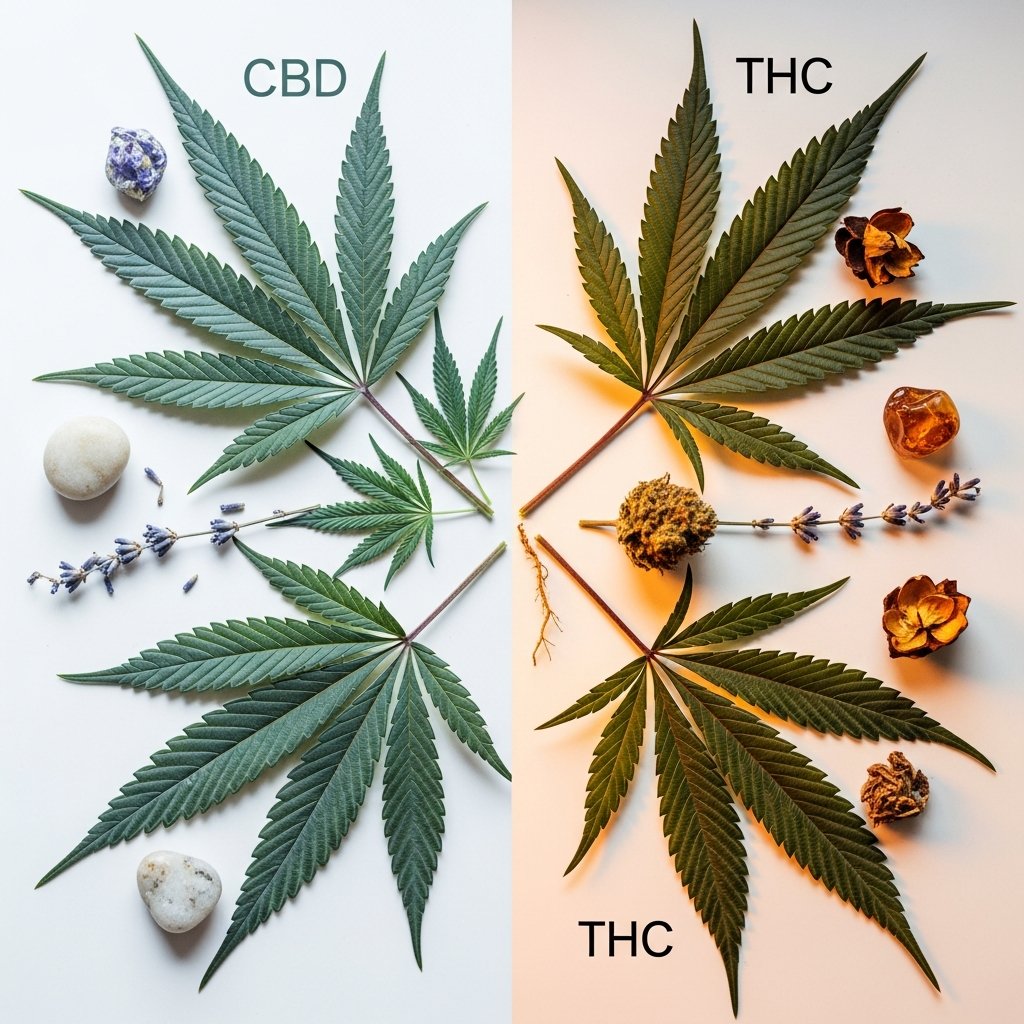
CBD (cannabidiol) and THC (tetrahydrocannabinol) come from the same plant, but they behave very differently once they’re inside your body. THC is the compound responsible for the classic cannabis high – the psychoactive effects, the altered perception, the “I can’t remember what I was just saying” feeling. CBD, on the other hand, doesn’t produce intoxication at all. It interacts with the endocannabinoid system through different pathways, and its effects are subtler, though not necessarily weaker.
For sleep specifically, both cannabinoids have earned a reputation, but they earn it differently. THC tends to work faster and more dramatically – it can reduce the time it takes to fall asleep and produce a sedative effect, particularly with indica-leaning strains or higher doses. CBD’s relationship with sleep is more nuanced: at lower doses it may actually be mildly alerting, while higher doses lean toward calming and anxiolytic effects that create better conditions for sleep rather than knocking you out directly.
Why Vaping Changes the Calculation
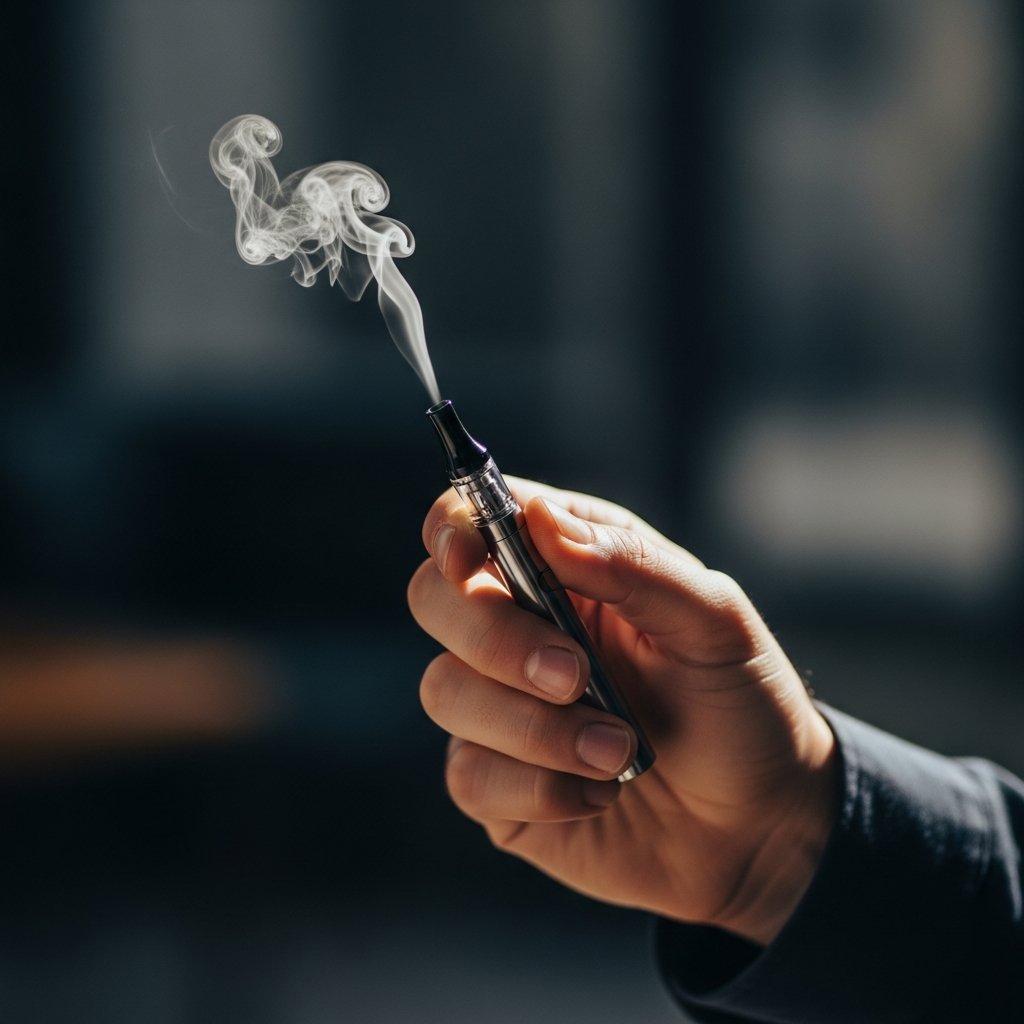
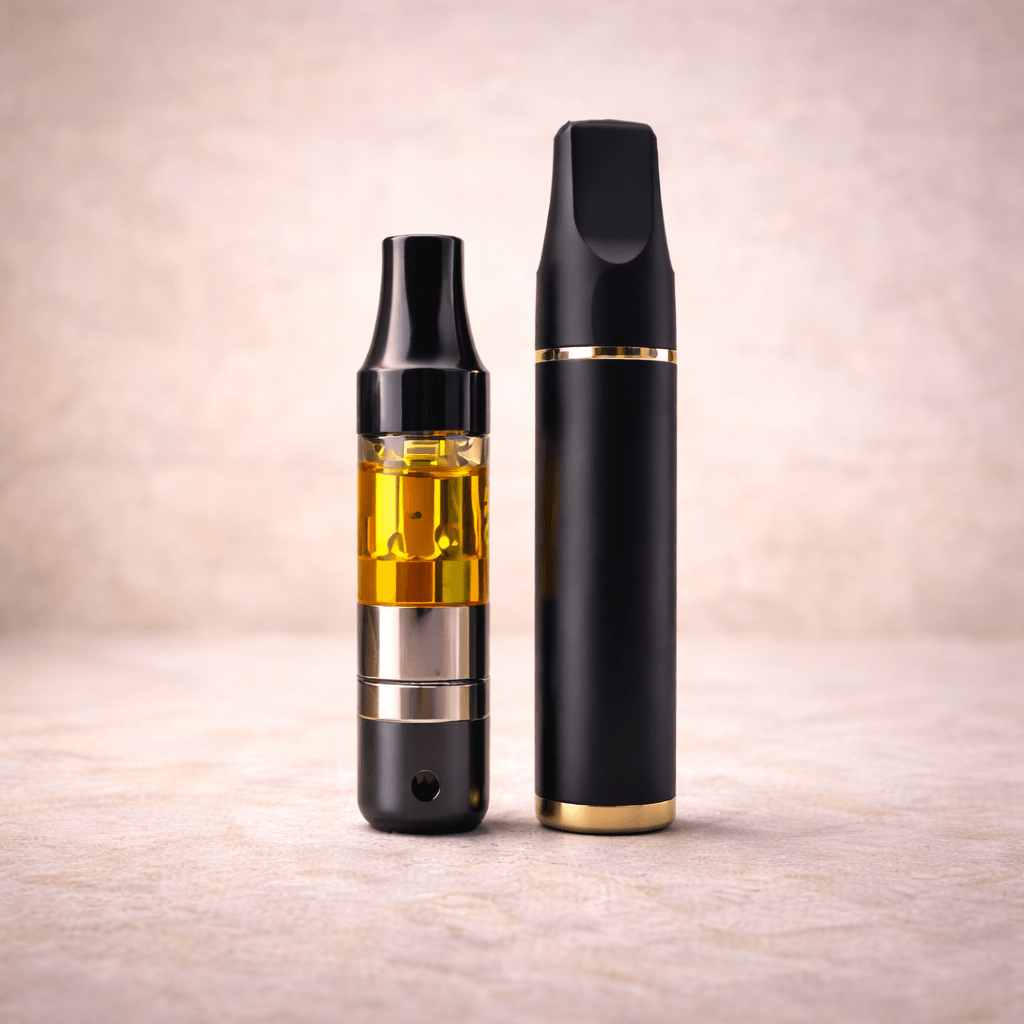
The delivery method matters as much as the compound here. When you vape CBD or THC, the cannabinoids enter your bloodstream through your lungs rather than your digestive system, which means the onset is fast – typically within minutes rather than the 45-to-90-minute window you’d wait for an edible. For sleep purposes, that’s actually a significant advantage. You don’t have to time anything; you take a couple of puffs 10 or 15 minutes before you want to be asleep, and you’re in the right window.
The tradeoff is duration. Vaped cannabinoids don’t last as long as edibles. You’re looking at two to four hours of active effect for most people, compared to four to eight hours from an ingested dose. For people who struggle to fall asleep but sleep fine once they’re under, that’s usually fine. For people who wake up at 3 a.m. and can’t get back to sleep, a vape alone may not carry them through the whole night.
If you’re still weighing whether vaping is the right format for your routine in the first place, the comparison between THC vape pens and cannabis flower is worth reading before committing to either product type.
What the Science Actually Says (and Doesn’t)
Expert Insight
Dr. Alexander Tabibi
Dr. Alexander Tabibi
Research on THC and sleep shows consistent short-term findings on onset. A 2020 systematic review and meta-analysis by Bhagavan et al. examining cannabinoids in the treatment of insomnia disorder found that THC reduced sleep-onset latency compared to placebo across multiple doses in a single ascending-dose RCT — with mean reductions ranging from 43 to 62 minutes depending on dose. The authors also noted that nabilone, a synthetic THC analogue, improved insomnia severity scores compared to amitriptyline in a double-blind crossover trial.
The complication is what happens over time. Regular THC use suppresses REM sleep — the stage associated with dreaming and emotional processing — and tolerance to the sedative effect develops relatively quickly for many users. Stopping after a period of regular use can trigger REM rebound, meaning vivid or disrupted dreams for a week or two. CBD’s sleep evidence is less voluminous but does not carry the same REM suppression concern; it may work better as a long-term tool for people whose sleep problems are anxiety-driven rather than purely onset-related.
Bhagavan C., Kung S., Doppen M., et al. (2020). Cannabinoids in the treatment of insomnia disorder: a systematic review and meta-analysis. CNS Drugs, 34(12):1217-1228. PMID: 33244728
One thing that often gets lost in the CBD-versus-THC debate is how much individual biology shapes the outcome. Two people can vape the same CBD cartridge at the same dose and have noticeably different experiences. Your endocannabinoid tone, your body weight, your anxiety baseline, and whether you’ve eaten recently all play a role. That’s not a cop-out – it’s the actual science, and it’s why trying both and paying attention to your own response is more useful than following a universal prescription.
The Case for CBD Vapes for Sleep
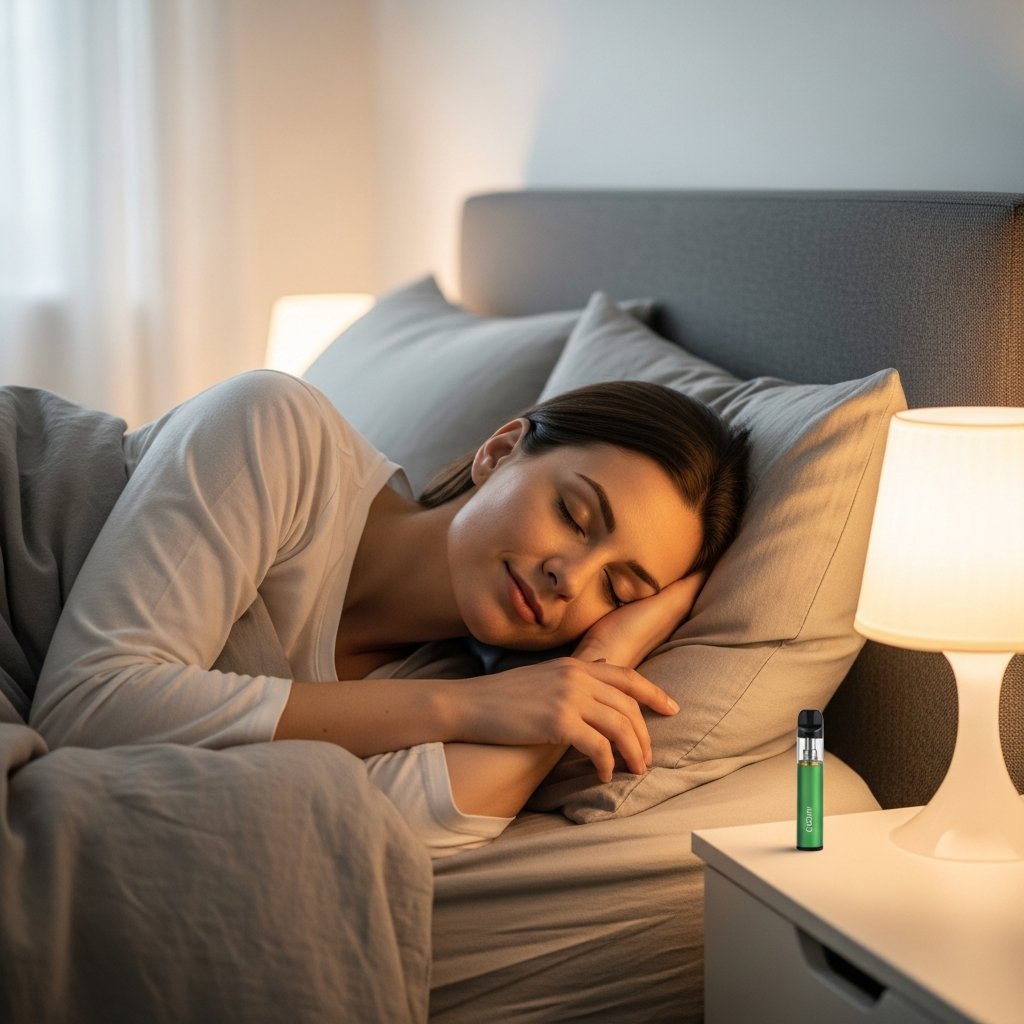
CBD vapes tend to suit people who are light sleepers, people who experience sleep anxiety rather than full-blown insomnia, or people who simply can’t have any psychoactive effect because they need to be functional the next morning – or because they’re subject to drug testing. There’s no intoxication, no grogginess hangover in most cases, and no risk of building a tolerance that undermines the effect over weeks.
CBD also stacks reasonably well with other sleep hygiene practices. Some users report that it lowers the mental noise enough for things like breathing exercises or a consistent wind-down routine to actually work, where before they’d lie there doing the breathing exercise while simultaneously making a mental grocery list. It doesn’t do the sleeping for you; it lowers the activation energy required to get there.
The dose question matters a lot with CBD. The alerting-at-low-doses, calming-at-high-doses pattern means you want to be in the right range for sleep – typically 25 mg or above for most adults, though individual variation is wide. The comprehensive cannabinoid dosage guide covers this range in more useful detail than a single paragraph can.
The Case for THC Vapes for Sleep
THC vapes are generally more powerful sleep inducers in the short term. If you’ve ever used cannabis and found yourself unable to keep your eyes open 20 minutes later, you already understand the mechanism. For people dealing with acute stress, physical discomfort that makes sleep difficult, or serious sleep onset problems, THC’s sedative effect is often more immediately noticeable than CBD’s.
The strain and formulation matter here. Indica-dominant products or those higher in the terpene myrcene tend to deliver more sedative effects than sativa-leaning options. THCA vape products are worth understanding in this context – THCA is the non-psychoactive precursor to THC that converts when heated (which happens during vaping), so a THCA cart effectively delivers THC once you draw from it. For a thorough background on how that works, the beginner’s guide to THCA walks through the chemistry clearly.
For readers curious about what a quality THCA vape cart looks like in practice, the Hi-Lites THCA Vape Cartridge is a solid example of the format – a 1g cart that converts to active THC when vaped, offering the full sedative potential of the cannabinoid in a compact, easy-to-dose format.
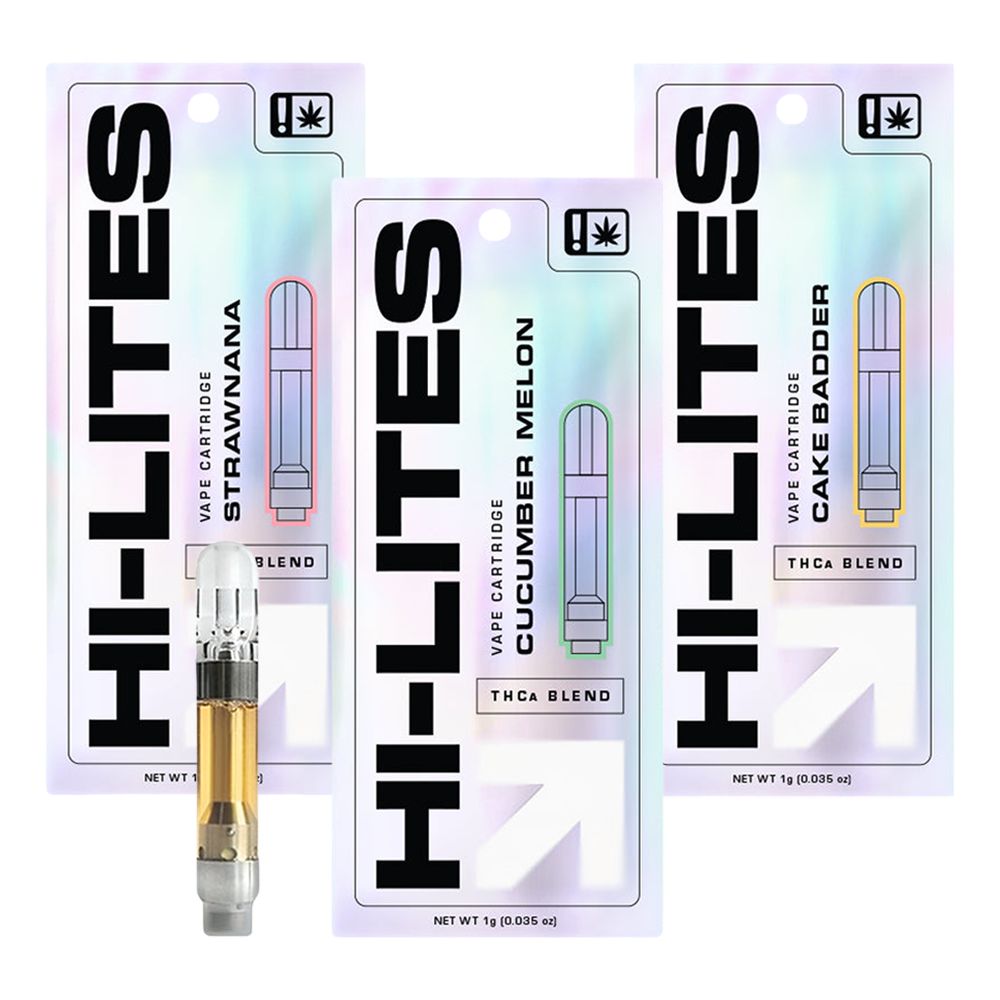
Hi-Lites THCA Vape Cartridge 1g
1g THCA cart; converts to active THC when vaped for full sedative effect
Combining CBD and THC – The Case for Not Choosing
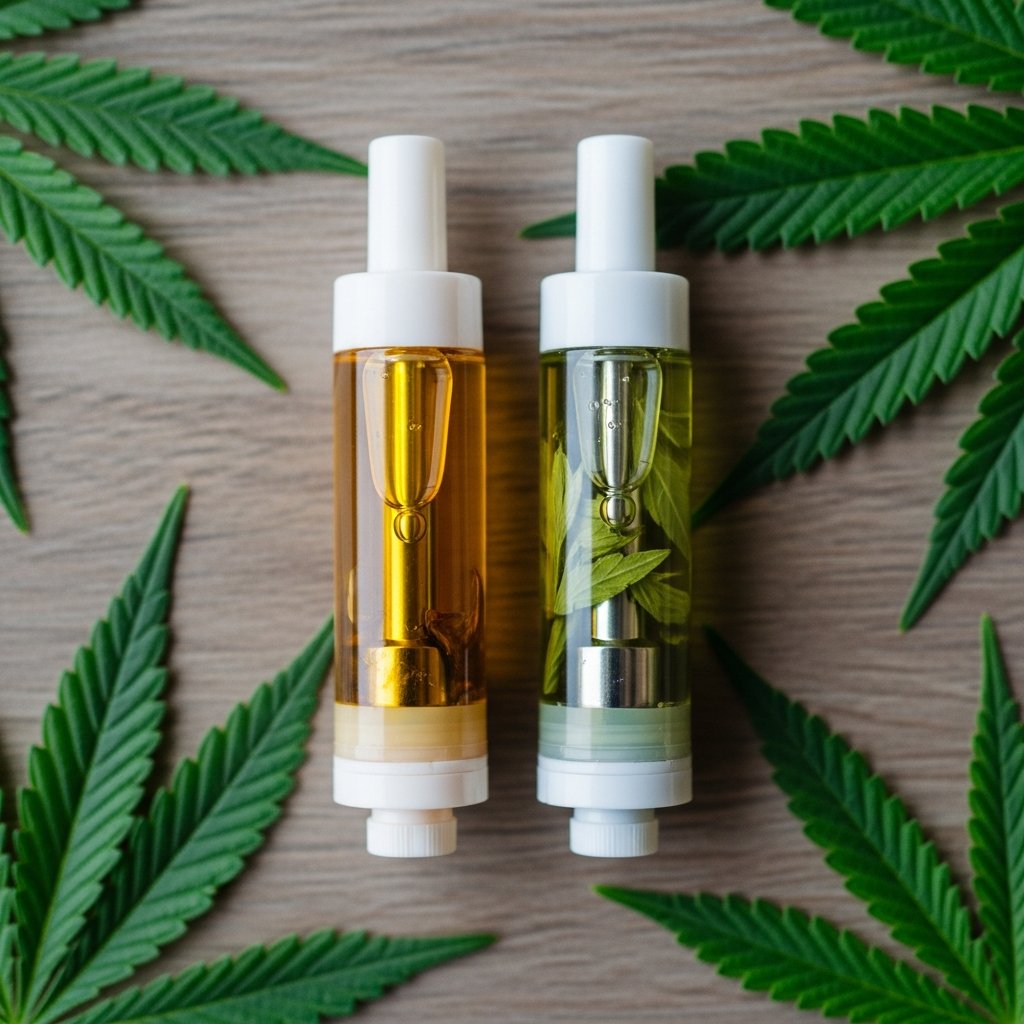
Here’s something the binary framing of “CBD vs. THC” tends to obscure: these compounds interact with each other in ways that can be more useful than either alone. CBD appears to moderate some of THC’s less desirable effects – including anxiety and racing heart rate – without blunting the sedative benefit. Products that offer both cannabinoids in the same device give you more flexibility to find a ratio that works for your particular sleep issues.
A dual-chamber vape format is one practical way to approach this – you can pull from the CBD side to calm anxiety, the THC side for deeper sedation, or alternate depending on what your night calls for. The Cookies 2G Dual Chamber Vape (Triple Scoop and Georgia Pie) is a good example of this format: two distinct strains in one device, which lets you experiment with balance rather than committing to a single cannabinoid profile.
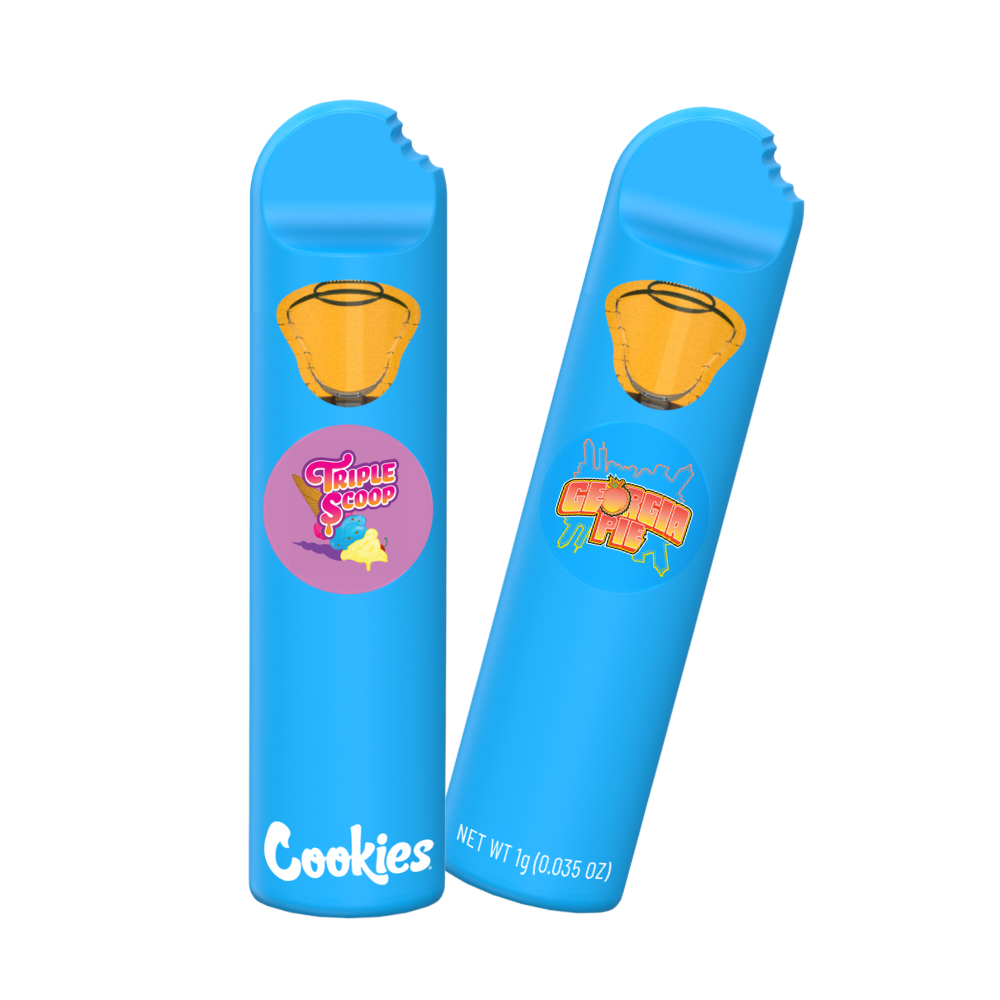
Cookies 2G Dual Chamber Vape – Triple Scoop & Georgia Pie
Two distinct strain profiles in one 2g device for flexible cannabinoid ratios
Making the Choice: A Few Practical Filters
Rather than declaring a winner, it’s more useful to think about which profile matches your actual situation. If you need to be unimpaired the next morning – early meeting, driving responsibilities, operating machinery – CBD is the clear choice. It clears your system without psychoactive residue and doesn’t carry the next-day grogginess that high-THC products can leave in some people.
If your primary problem is truly not being able to fall asleep, and you don’t have drug testing concerns or a sensitivity to psychoactives, a low-to-moderate THC vape used a few nights a week (rather than every single night) will likely produce more immediate results. The intermittent-use approach also helps mitigate the tolerance issue – you stay more responsive to the effect without needing to increase your dose over time.
If your sleep problem is rooted in anxiety or a hyperactive mind rather than a physical inability to relax, CBD deserves a genuine try before you move to THC. It’s less dramatic, but it works through a mechanism that actually addresses the underlying issue rather than just overriding it with sedation.
Expert Insight
Dr. Alexander Tabibi
Dr. Alexander Tabibi
CBD’s anxiolytic properties are better characterized in the literature than its direct sleep effects. A 2019 case series by Shannon et al. found that CBD administration was associated with improved sleep scores in 66.7% of patients within the first month, though scores fluctuated over time. Anxiety scores improved in 79.2% of patients and remained improved for most of the study duration – which supports the interpretation that CBD helps sleep primarily by reducing the anxiety component that interferes with it.
It’s worth being transparent about the limits here: this was a retrospective case series with a small sample, not a randomized controlled trial. The doses used were also oral (capsules), not inhaled, so direct translation to vaping requires some caution. That said, the direction of the finding – CBD reducing anxiety first, sleep improving as a downstream effect – is consistent with the proposed mechanism and aligns with what many users report anecdotally.
Shannon S et al. (2019). Cannabidiol in anxiety and sleep: a large case series. The Permanente Journal, 23:18-041. PMID: 30624194
The honest answer is that neither compound is a sleep cure, and using either as a permanent substitute for addressing the root causes of your insomnia – stress, screen time, irregular schedule, underlying health issues – is not a long-term strategy. But as a tool that helps you get to sleep on nights when your brain won’t cooperate, both have real utility, and choosing the right one comes down to knowing yourself.
Frequently Asked Questions
Is CBD or THC better for falling asleep quickly?
THC tends to produce faster, more noticeable sedation in the short term. CBD works better when anxiety or racing thoughts are the main barrier, but its effects are subtler. Your best option depends on what’s actually keeping you awake.
Will a CBD vape make me feel high before bed?
No. CBD does not produce intoxication or psychoactive effects. You may feel calmer or less anxious at higher doses, but there is no impairment, altered perception, or “high” associated with CBD regardless of the delivery method.
Can I use a THC vape for sleep every night?
Daily THC use for sleep carries tolerance and REM suppression concerns over time. Many users find intermittent use – a few nights per week rather than every night – preserves the effect better and avoids dependency patterns. Speak with a healthcare provider if sleep problems are chronic.
How long does a vaped CBD or THC dose last for sleep?
Inhaled cannabinoids typically produce effects lasting two to four hours, shorter than edibles. For people who wake during the night and struggle to return to sleep, a vape alone may not provide full-night coverage.
Does the strain type matter when choosing a THC vape for sleep?
Yes. Indica-leaning strains and products higher in myrcene are generally associated with more sedative effects. Sativa-dominant products can be energizing and are less appropriate as sleep aids for most people.
Are THCA vapes the same as THC vapes for sleep purposes?
Effectively yes, once heated. THCA converts to active THC during vaping, so the sleep effects are comparable to a standard THC cartridge. The distinction matters more for legal classification than for how the product functions when used.
Disclaimer: This article is for informational purposes only and does not constitute medical advice. Cannabis affects individuals differently. If you have a sleep disorder, anxiety condition, or any underlying health concern, consult a qualified healthcare provider before using cannabis products. Do not use cannabis as a substitute for professional medical treatment.
Sources
Shannon S, Lewis N, Lee H, Hughes S. Cannabidiol in anxiety and sleep: a large case series. The Permanente Journal. 2019;23:18-041. PMID: 30624194
Bhagavan C., Kung S., Doppen M., et al. (2020). Cannabinoids in the treatment of insomnia disorder: a systematic review and meta-analysis. CNS Drugs, 34(12):1217-1228. PMID: 33244728
Babson KA, Sottile J, Morabito D. Cannabis, cannabinoids, and sleep: a review of the literature. Current Psychiatry Reports. 2017;19(4):23. PMID: 28349316
Russo EB, Guy GW, Robson PJ. Cannabis, pain, and sleep: lessons from therapeutic clinical trials of Sativex, a cannabis-based medicine. Chemistry and Biodiversity. 2007;4(8):1729-1743. PMID: 17712817
Kaul M, Zee PC, Bhatt DL, Bhatt M. Effects of cannabinoids on sleep and their therapeutic potential for sleep disorders. Neurotherapeutics. 2021;18(1):217-227. PMID: 33074525
For adults 21+ only. Cannabis laws vary by state. This content is not intended to diagnose, treat, cure, or prevent any disease or medical condition. If you are experiencing a medical emergency, call 911 or visit your nearest emergency room immediately.