🚛 FREE DISCREET SHIPPING ON ALL ORDERS $49+










CBD:THC Ratio Gummies for Anxiety: Finding Your Sweet Spot
Here is a question worth sitting with for a second: if both CBD and THC come from the same plant, why does one make some people feel calm while the other can, for certain folks at certain doses, kick anxiety into a higher gear? That tension is exactly why ratio gummies have become one of the more interesting tools in

Published on: April 30, 2026
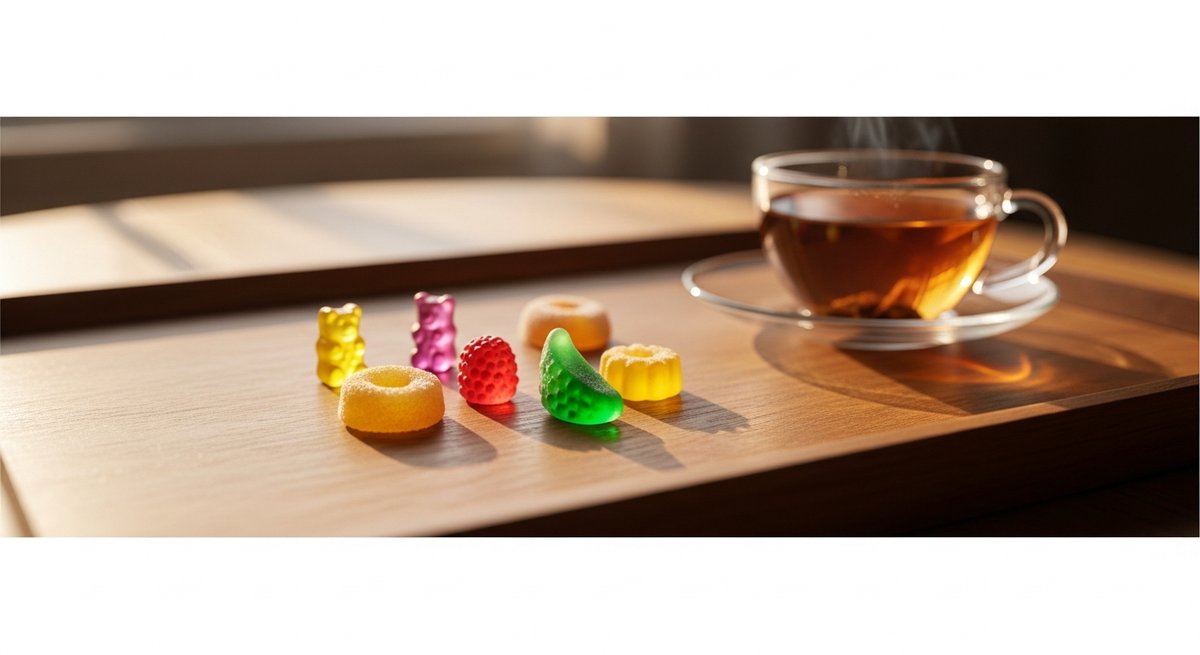
Here is a question worth sitting with for a second: if both CBD and THC come from the same plant, why does one make some people feel calm while the other can, for certain folks at certain doses, kick anxiety into a higher gear? That tension is exactly why ratio gummies have become one of the more interesting tools in the cannabis toolkit. Getting the ratio right is less about finding a magic number and more about understanding how these two compounds interact with your own nervous system – and that is genuinely worth knowing before you eat anything.
Why the Ratio Actually Matters

A 1:1 CBD to THC gummy and a 20:1 CBD to THC gummy are not the same product wearing different labels. The ratio tells you something real about what you are likely to feel. THC binds directly and powerfully to CB1 receptors in the brain, which is what produces the classic high – and, at higher doses for some people, the racing thoughts and chest tightness that feel anything but relaxing. CBD does not bind to CB1 receptors the same way. It behaves more like a modulator, dialing down some of THC’s intensity while bringing its own mild calming effects through different receptor pathways.
So when someone says a high-CBD ratio “takes the edge off,” they are describing something that has a real pharmacological basis. The CBD gummies is essentially softening the experience. That is why a 10:1 or 20:1 CBD:THC gummy can feel completely functional for someone who is THC-sensitive – you get subtle cannabinoid effects without the cognitive fog. But if you go too far toward pure CBD and drop THC to near zero, some of the entourage benefits that research keeps pointing toward start to fade as well.
The sweet spot is personal, but the framework for finding it is fairly logical. Think of it on a sliding scale: more CBD relative to THC means less psychoactive intensity and more gentle, grounding effects. More THC relative to CBD means more of the classic high, which some people find deeply relaxing and others find overstimulating depending on dose and context.
A guided systematic review of 31 studies examining medical cannabis and mental health confirmed that CBD’s anxiolytic signal in human trials is real but consistently dose-dependent — with the available data suggesting an inverted-U response pattern where both under-dosing and over-dosing reduce efficacy relative to a middle range. The review identified CBD’s partial agonism at serotonin 5-HT1A receptors and its modulatory effect on CB1 receptor activity as the most pharmacologically plausible mechanisms, while noting that the controlled trial dose ranges showing benefit often substantially exceed the milligram amounts found in standard retail gummies.
What the review could not resolve — and what remains genuinely open — is how these findings translate to combined CBD:THC oral products used in everyday contexts. The participant populations, delivery methods, and absence of THC in most CBD anxiety trials all limit direct extrapolation to ratio gummies. Evidence suggests the mechanistic signal is valuable as a directional guide, but individual dose thresholds in real-world ratio products require personal calibration rather than reliance on study numbers alone.
Walsh Z, Gonzalez R, Crosby K, Thiessen MS, Carroll C, Bonn-Miller MO. (2016). Medical cannabis and mental health: A guided systematic review. Clinical Psychology Review, 51:15-29. PMID: 27816801
Common Ratios and What Each One Tends to Feel Like

Let’s be honest: most people trying ratio gummies for the first time have no idea what numbers like “20:1” or “1:1” actually mean in practice. Here is a rough map. High CBD ratios – think 20:1 or higher – deliver almost no perceptible psychoactive effect. These are the gummies that people often describe as “I barely felt anything different,” which can actually be exactly what someone with anxiety wants. The THC content is trace-level, just enough to potentially support the entourage effect without triggering any cognitive shift.
A 4:1 or 5:1 CBD:THC ratio starts to introduce a little more THC presence. Some people feel a mild, warm settling sensation without losing mental clarity. This range is popular among people who want something more noticeable than a CBD-only product but do not want to feel impaired. Many daytime users land here. A 2:1 ratio pushes closer to balanced territory – you will likely feel the THC at this point, though CBD still provides considerable counterweight against anxiety or paranoia.
A 1:1 ratio is often described as the most “complete” experience – full cannabinoid interplay, moderate psychoactivity, and the broadest potential for what researchers call the entourage effect. For anxiety-prone people it is also the trickiest because the THC is genuinely present. Timing, setting, and starting with a very low milligram dose matter a lot at 1:1. If you have never tried cannabis before or are highly sensitive to THC, starting here is not the move.
Dosage Logic: Start Lower Than You Think You Need To

Edibles are famously slow. After swallowing a gummy, THC is metabolized by the liver into 11-hydroxy-THC, a compound that crosses the blood-brain barrier more efficiently than inhaled THC. This means the onset can take anywhere from 45 minutes to two hours, and the effects often peak harder and last longer than people anticipate. The number of people who have eaten a second gummy because “I don’t feel anything yet” and then deeply regretted it is not a small number.
For someone approaching ratio gummies specifically because of anxiety, starting with 2.5 to 5 mg of THC is a sensible ceiling on the first attempt – regardless of how much CBD is in the same piece. If the gummy is a 5:1 ratio and you eat 5 mg THC worth, that means roughly 25 mg CBD alongside it, which is a reasonable and well-tolerated dose for most adults. Give it two full hours before deciding whether to adjust. Write down what you took, when, what you ate beforehand, and what you felt. The notes feel unnecessary until the third session when they suddenly become very useful.
Body weight has some influence, but tolerance history and individual endocannabinoid system variation tend to matter more. A 120-pound person with years of regular cannabis use will likely handle more THC than a 200-pound person who has never used it before. This is one of those situations where the standard “start low, go slow” advice is not just a disclaimer – it is genuinely the fastest path to finding what actually works for you.
When you are specifically shopping for a gummy designed to let you calibrate, discovery packs make more practical sense than buying a full 30-count bag of an untested ratio. For example, the Hometown Hero 5mg Live Rosin Day & Night Discovery Pack is structured around exactly this use case – smaller, lower-dose pieces that let you experiment across different formulations before committing to a larger purchase.
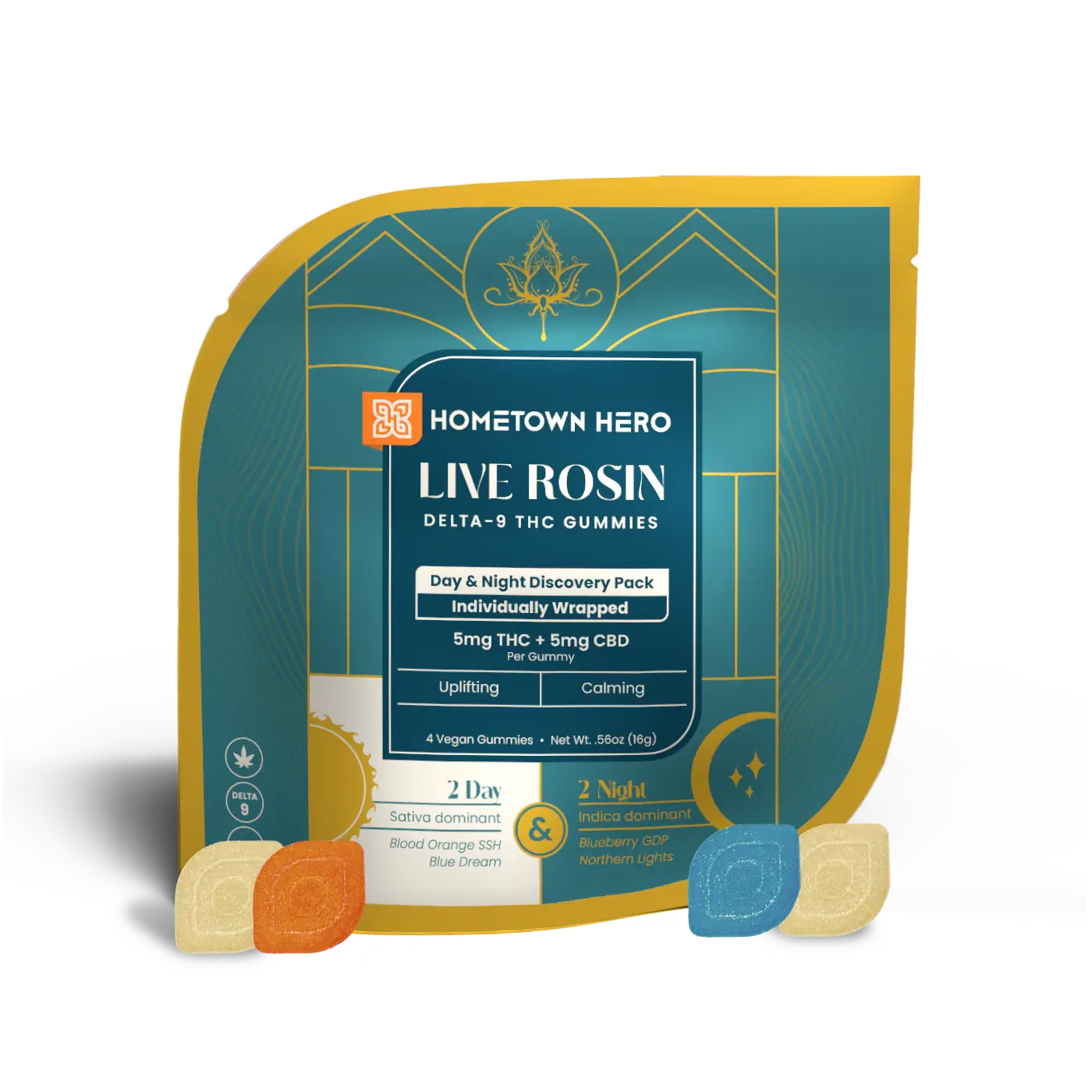
Hometown Hero 5mg Live Rosin Day & Night Discovery Pack
Low-dose live rosin gummies in day and night formulations – ideal for finding your ratio starting point
The 1:1 Ratio: Why Balanced Gummies Have Their Own Devoted Following
Here is the thing about 1:1 gummies – they polarize people in interesting ways. Some users swear they are the only format that actually addresses their anxiety with any real depth. Others tried them once, found the THC too present, and switched back to a higher CBD ratio permanently. Both responses make sense, and neither person is wrong.
What the 1:1 advocates are responding to is likely the entourage effect in its most complete form – the idea that THC, CBD, terpenes, and minor cannabinoids working together produce something qualitatively different from any single compound. The anecdotal reports from this camp consistently include words like “grounded,” “present,” and “the anxiety just stopped being interesting.” That is a real signal worth paying attention to, even while we wait for more controlled clinical data.
If you want to explore a well-formulated balanced option, the Hometown Hero Balance THC:CBD Gummies in Mango are built specifically around the 1:1 concept, giving you equal parts THC and CBD in a controlled, consistent dose per piece – which matters a lot when you are trying to replicate an experience or adjust from it methodically.
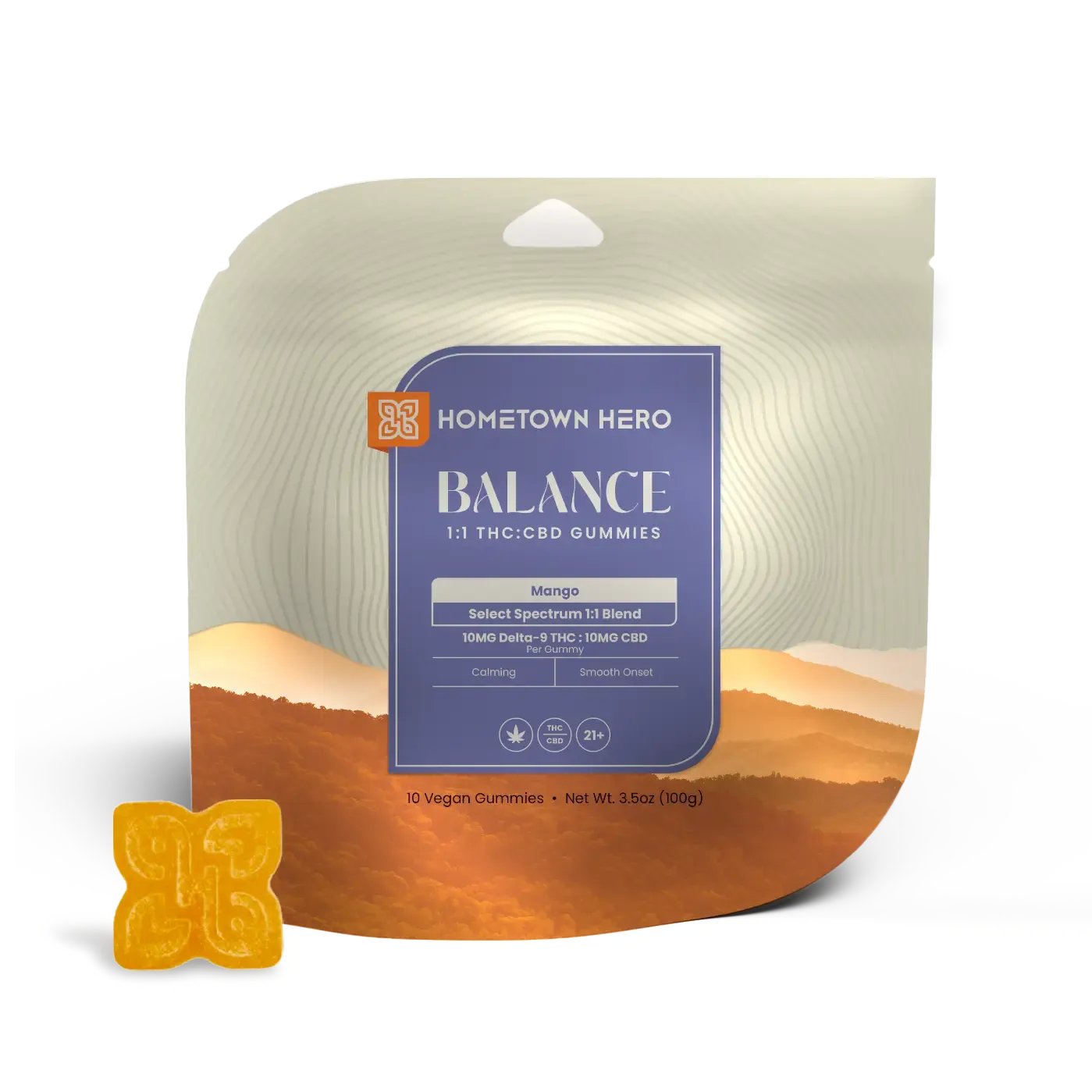
Hometown Hero Balance THC:CBD Gummies – Mango
Equal-ratio THC and CBD per piece – a consistent starting point for exploring the 1:1 experience
Context, Setting, and the Variables That Change Everything

Expert Insight
Dr. Alexander Tabibi
Dr. Alexander Tabibi
A review of cannabinoid interactions with cytochrome P450 liver enzymes established that CBD is the most potent cannabinoid inhibitor of CYP2C9, CYP2C19, and CYP3A4 — the primary pathways responsible for metabolizing a wide range of drugs including SSRIs and benzodiazepines. In ratio gummies where CBD and THC are consumed together, this metabolic interaction means the effective concentration of both the cannabinoids themselves and any co-administered medications can shift in ways that are clinically meaningful but not yet fully characterized across different dose combinations and ratios.
This pharmacokinetic reality is one reason why ratio gummies behave differently at different CBD:THC proportions beyond simple receptor occupancy — the metabolic environment CBD creates affects how THC itself is processed, which contributes to the qualitatively different experience users describe when moving from a 20:1 to a 1:1 product. Evidence suggests that anyone combining ratio gummies with prescription medications, particularly those processed by CYP450 enzymes, should treat the drug interaction question as a clinical priority and discuss it with a prescribing provider before establishing a routine.
Zendulka O, Dovrtelova G, Noskova K, Turjap M, Sulcova A, Hanus L, Jurica J. (2016). Cannabinoids and Cytochrome P450 Interactions. Current Drug Metabolism, 17(3):206-26. PMID: 26651971
Dosage and ratio are only part of the equation. Two people can eat the exact same gummy and have completely different experiences, and the reason is often not biology – it is context. Cannabis is acutely sensitive to set and setting. If you eat a 5 mg THC gummy while already stressed, rushed, or in an unfamiliar environment, you are giving anxiety a running start before the cannabinoids even kick in.
The best conditions for your first few sessions with ratio gummies: a familiar space, no pressing obligations for at least four hours, someone you trust nearby (or you alone if you prefer), and a clear head going in. Food matters too. A gummy taken on a full stomach will onset more slowly and sometimes more gently than one taken fasted. Neither is better in absolute terms, but knowing the difference helps you predict the experience.
Frequency of use also affects your baseline. With regular THC consumption, tolerance builds relatively quickly – meaning a dose that felt significant in week one may feel minimal by week four. CBD does not appear to build the same kind of classic tolerance, which is one reason some people use CBD-dominant ratios more liberally while reserving
higher-THC ratios for specific occasions.
Important
CBD:THC ratio gummies are not a treatment or cure for anxiety disorders. If you are experiencing clinical anxiety, please speak with a qualified healthcare provider before using cannabis products. Cannabis can interact with certain medications and is not appropriate for everyone. The information here is educational and does not constitute medical advice.
Frequently asked questions
What is the best CBD:THC ratio gummy for anxiety?
There is no single best ratio – it depends on THC sensitivity, experience level, and what kind of relief you want. Most anxiety-prone beginners do well starting with a 10:1 or 20:1 CBD:THC ratio and moving toward 5:1 or 1:1 only after establishing how they respond to smaller amounts of THC.
Can a gummy with THC make anxiety worse?
Yes, particularly at higher THC doses or in people with elevated THC sensitivity. THC activates CB1 receptors in the amygdala, a brain region involved in fear responses. Taking too much, especially in a stressful setting, can amplify rather than reduce anxious feelings. Starting low and keeping CBD content high reduces this risk considerably.
How long do ratio gummies take to work for anxiety?
Onset typically ranges from 45 minutes to two hours after eating. Liver metabolism converts THC to 11-hydroxy-THC, which is more potent and longer-lasting than inhaled THC. Eating beforehand slows onset further. Wait a full two hours before considering a second dose to avoid accidentally taking too much.
Does CBD cancel out THC anxiety side effects?
CBD modulates, but does not fully cancel, THC’s effects. It reduces THC’s binding efficiency at CB1 receptors and influences serotonin and GABA pathways that affect anxiety. A higher CBD:THC ratio meaningfully softens the psychoactive intensity for most people, though the degree of protection varies individually and by dose.
Is a 1:1 CBD:THC gummy too strong for anxiety beginners?
For most THC-naive users, yes. A 1:1 gummy has meaningful psychoactive THC content even at low milligram amounts. Beginners are generally better served by a high-CBD ratio first. Experienced users or those with moderate THC familiarity may find 1:1 gummies at 2.5 to 5 mg THC per piece quite manageable.
Does tolerance to THC affect how ratio gummies work for anxiety?
Yes. Regular THC use downregulates CB1 receptor density, meaning the same dose feels less intense over time. This can shift someone who previously found 5 mg THC activating into a range where it feels grounding instead. Tolerance breaks periodically help reset sensitivity and keep lower doses effective for anxiety management.
Should I take ratio gummies with or without food for anxiety relief?
With food generally produces a slower, smoother onset, which tends to be easier to manage for anxiety-prone users. Fasted consumption can cause faster and sharper onset, which some people find more difficult to navigate. A moderate meal before dosing is a reasonable default when you are still learning how a ratio affects you.
Sources
Walsh Z, Gonzalez R, Crosby K, Thiessen MS, Carroll C, Bonn-Miller MO. (2016). Medical cannabis and mental health: A guided systematic review. Clinical Psychology Review, 51:15-29. PMID: 27816801
Zendulka O, Dovrtelova G, Noskova K, et al. (2016). Cannabinoids and Cytochrome P450 Interactions. Current Drug Metabolism, 17(3):206-26. PMID: 26651971
Rodas JD, George TP, Hassan AN. (2024). A Systematic Review of the Clinical Effects of Cannabis and Cannabinoids in Posttraumatic Stress Disorder Symptoms and Symptom Clusters. The Journal of Clinical Psychiatry, 85(1). PMID: 38353645
For adults 21+ only. Cannabis laws vary by state. This content is intended for informational purposes only and does not constitute medical advice, diagnosis, or treatment. If you are experiencing a medical emergency or a severe adverse reaction, call 911 or go to the nearest emergency room immediately. Consult a qualified healthcare provider before using cannabis products, especially if you take prescription medications or have a diagnosed medical condition.