🚛 FREE DISCREET SHIPPING ON ALL ORDERS $49+









Disposable vs Reusable Carts for Sleep: Pros and Cons
Most people don’t think too hard about their vape cart setup until they’re lying awake at 1 a.m., wondering why the thing keeps clogging or running dry. When you’re using cannabis specifically to wind down and sleep, the hardware question actually matters more than people give it credit for. The wrong setup can mean an inconsistent dose, a dead battery

Published on: April 18, 2026
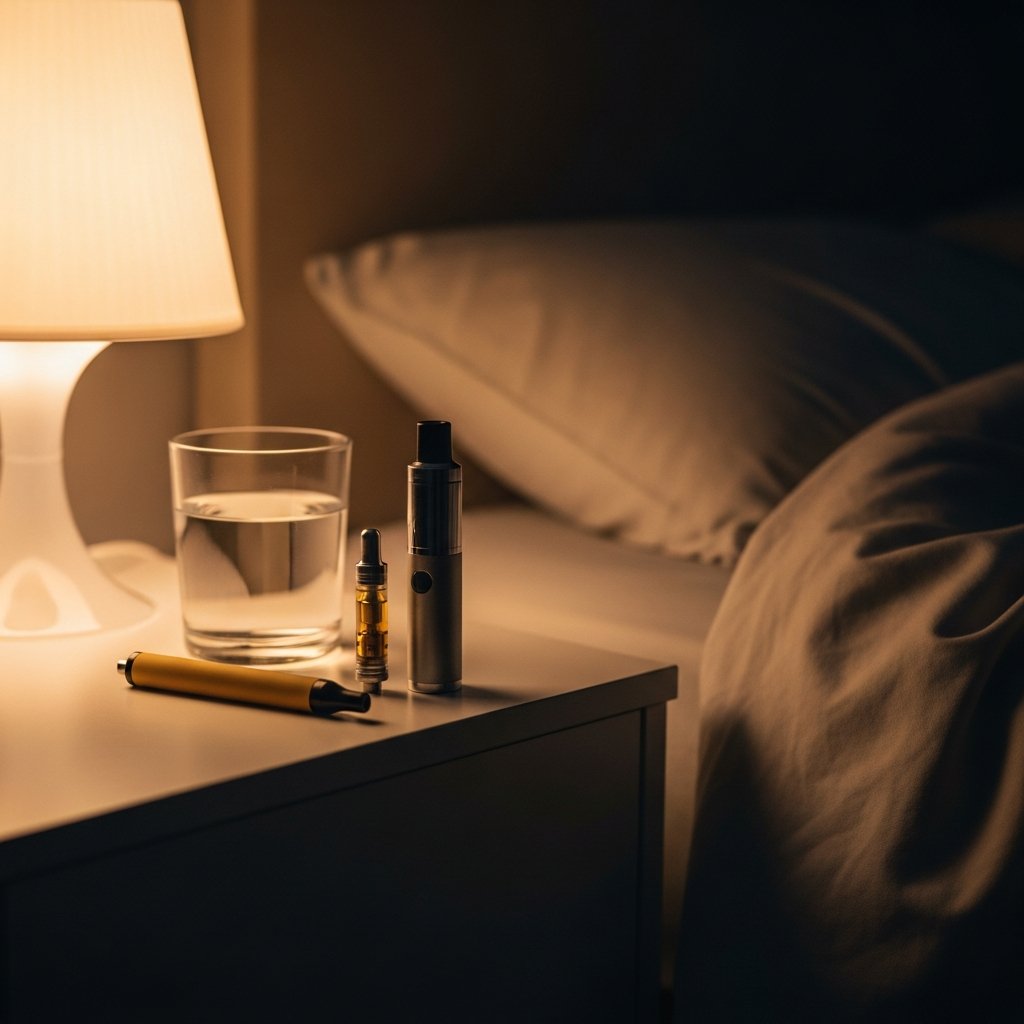
Most people don’t think too hard about their vape cart setup until they’re lying awake at 1 a.m., wondering why the thing keeps clogging or running dry. When you’re using cannabis specifically to wind down and sleep, the hardware question actually matters more than people give it credit for.
The wrong setup can mean an inconsistent dose, a dead battery at the worst time, or wasted oil that could have carried you through another week of restless nights.
So here’s the real question: should you reach for a disposable vape or invest in a reusable cart-and-battery system when sleep is the goal? Both have loyal fans. Both have genuine drawbacks. And the right answer depends on things like how often you use it, what compounds you prefer, and honestly, how much you enjoy fussing with hardware at bedtime.
What we’re actually comparing
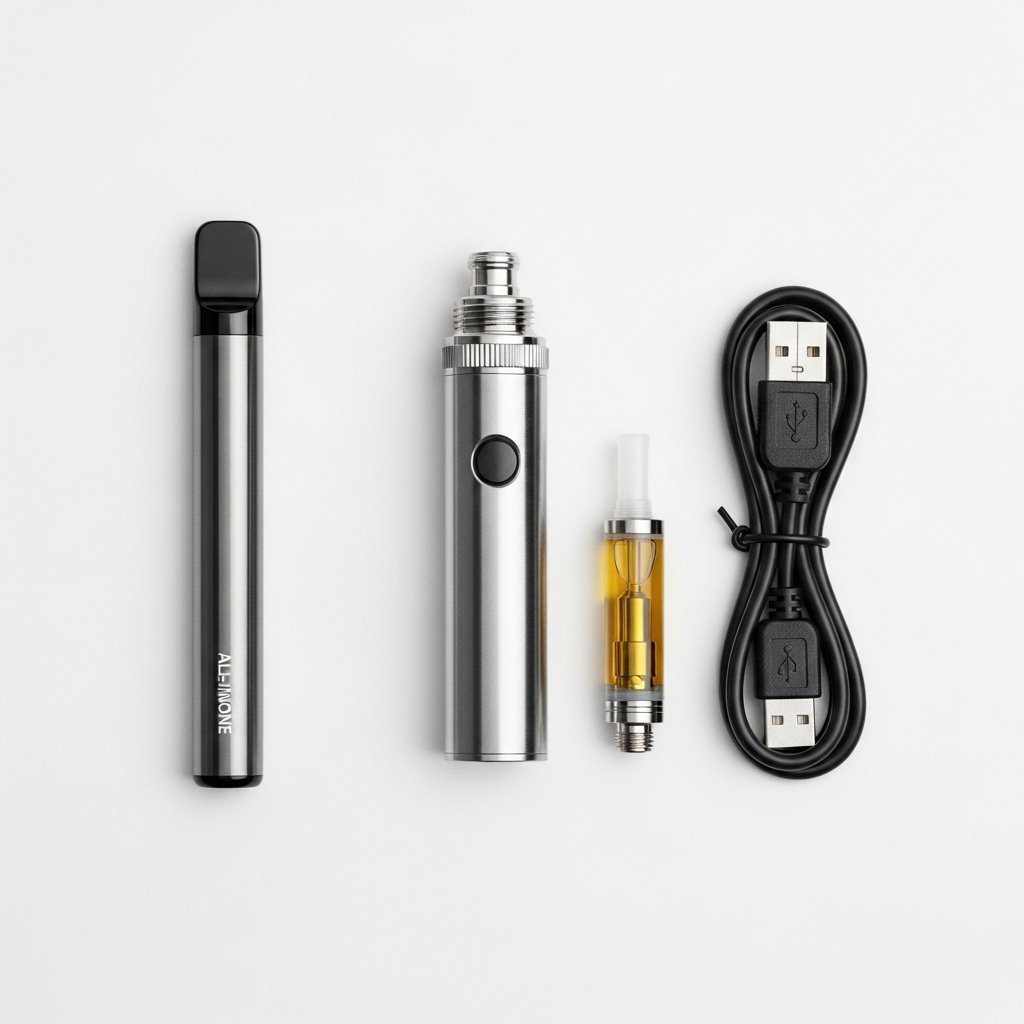
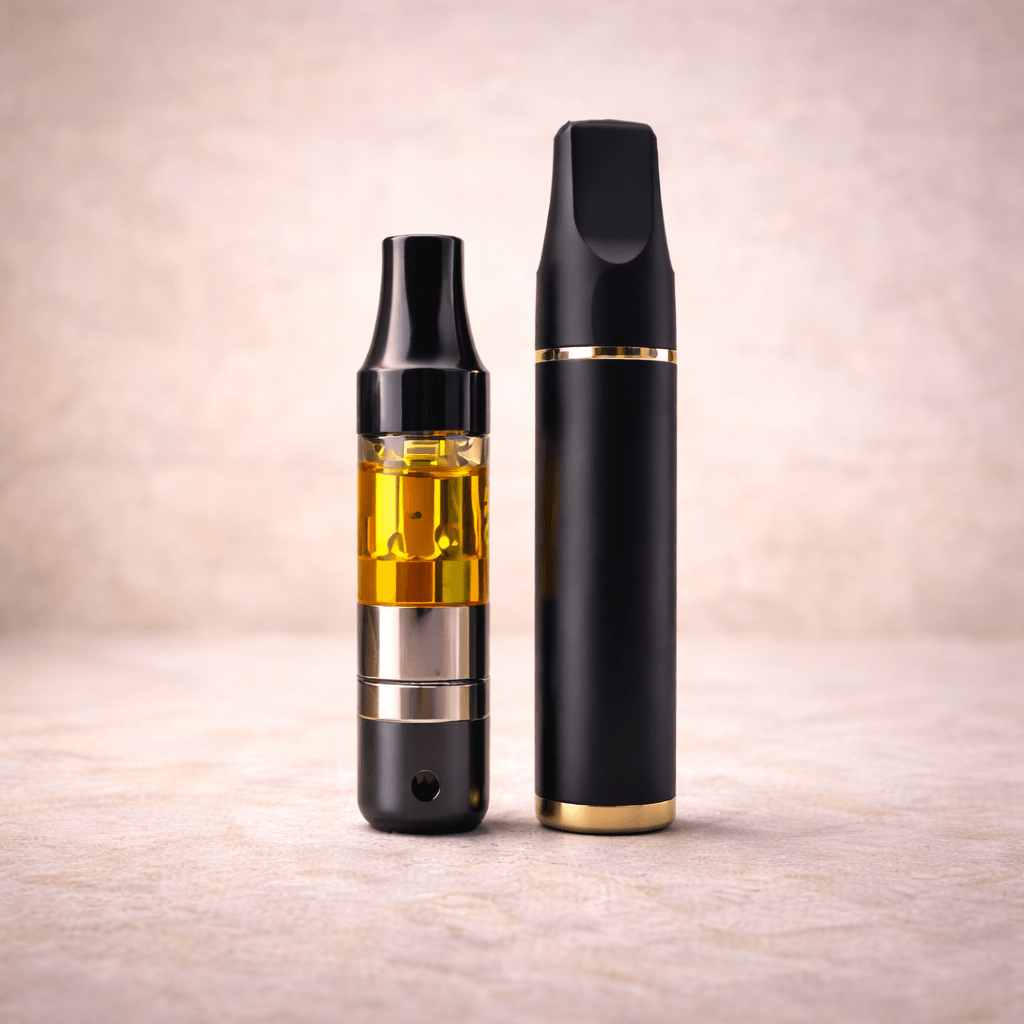
Before jumping into pros and cons, it helps to get clear on what each option actually is. A disposable vape is a self-contained unit: the oil, coil, and battery come pre-assembled, and when the oil runs out (or the battery dies first), the whole thing goes in the trash. No charging required out of the box, no refilling, no swapping parts.
A reusable cart setup flips that model. You buy a 510-thread battery separately and then purchase pre-filled cartridges that screw onto it. When the cart is empty, you toss the cart and attach a new one. The battery stays with you for months, sometimes years, if you take care of it. Same inhalation method, very different relationship with the hardware.
For sleep use specifically, both formats are available across a wide range of cannabinoids – delta 8, delta 9, THCA, HHC, CBD-dominant blends, and combinations that include CBN or terpenes associated with relaxation. The compound you choose matters at least as much as the format, but the format shapes the experience in ways worth understanding.
The case for disposables when you just want to sleep
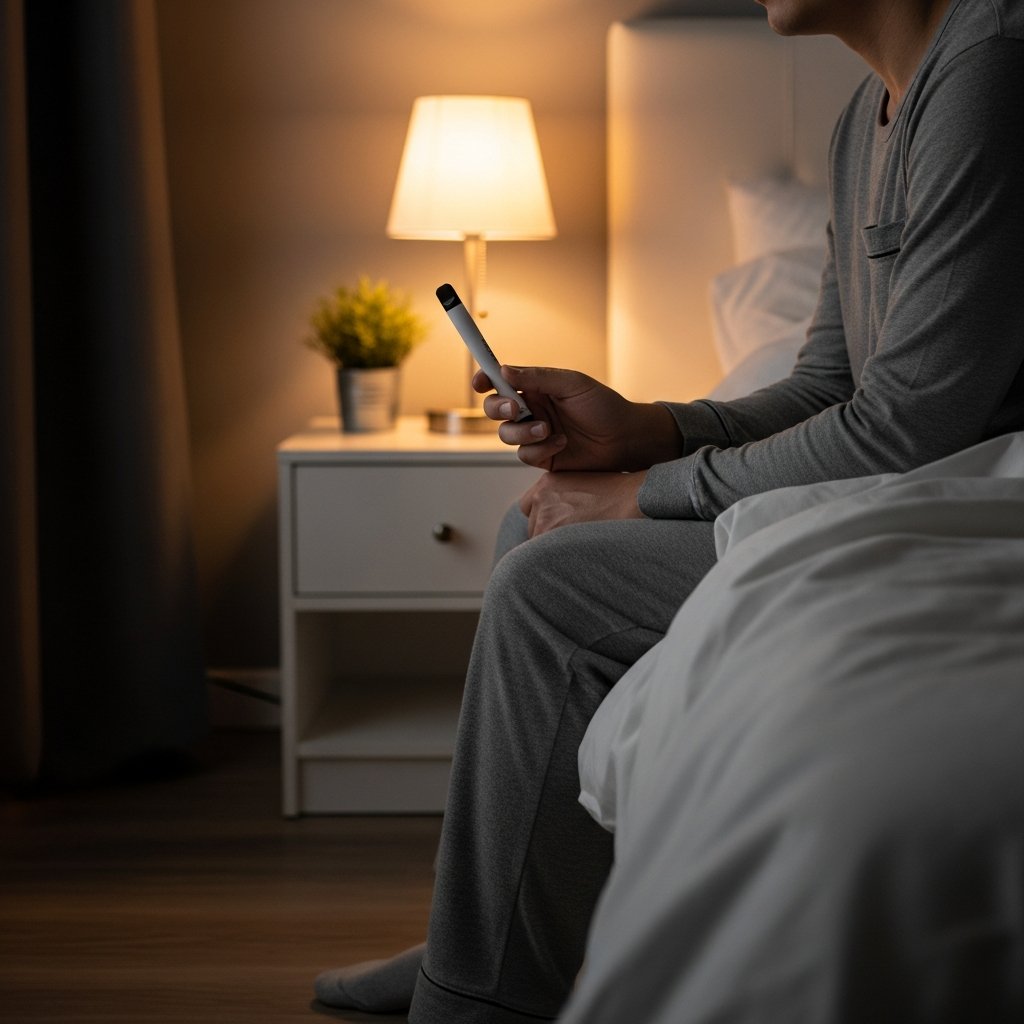
There’s something to be said for simplicity when you’re already tired. Disposable vapes are ready to go from the moment you open the package. No pairing a battery, no adjusting voltage settings, no wondering if the connection is clean. You pick it up, take a draw or two, set it on your nightstand, and that’s it.
Consistency is another underrated advantage. Because the coil and oil are manufactured as a single unit, the draw resistance and vapor temperature are calibrated together. You’re less likely to encounter the dry-hit problem that happens when a 510 cart runs low and the coil briefly overheats. For someone using the same product nightly, that predictability is genuinely useful.
Disposables also travel well. If your sleep struggles follow you to hotels or a partner’s place, a disposable vape is discreet, requires no accessories bag, and won’t leak on your clothes the way an improperly stored cart occasionally can. If you want to understand how different formulations within the disposable category actually feel, the guide to HHC disposable weed pens for a milder high covers the lighter end of the potency spectrum well – which is often the right starting point for new sleep users.
The honest downside is cost-per-gram and waste. Disposable vapes typically cost more per milligram of oil than buying a cartridge of equivalent quality. Over a month of nightly use, that adds up. And environmentally, a single-use lithium battery plus plastic housing every few weeks is a meaningful amount of hardware in the trash. On a personal note I dont like disposables because they are so wasteful and harmful to the environment.
The case for reusable carts as a long-term sleep tool
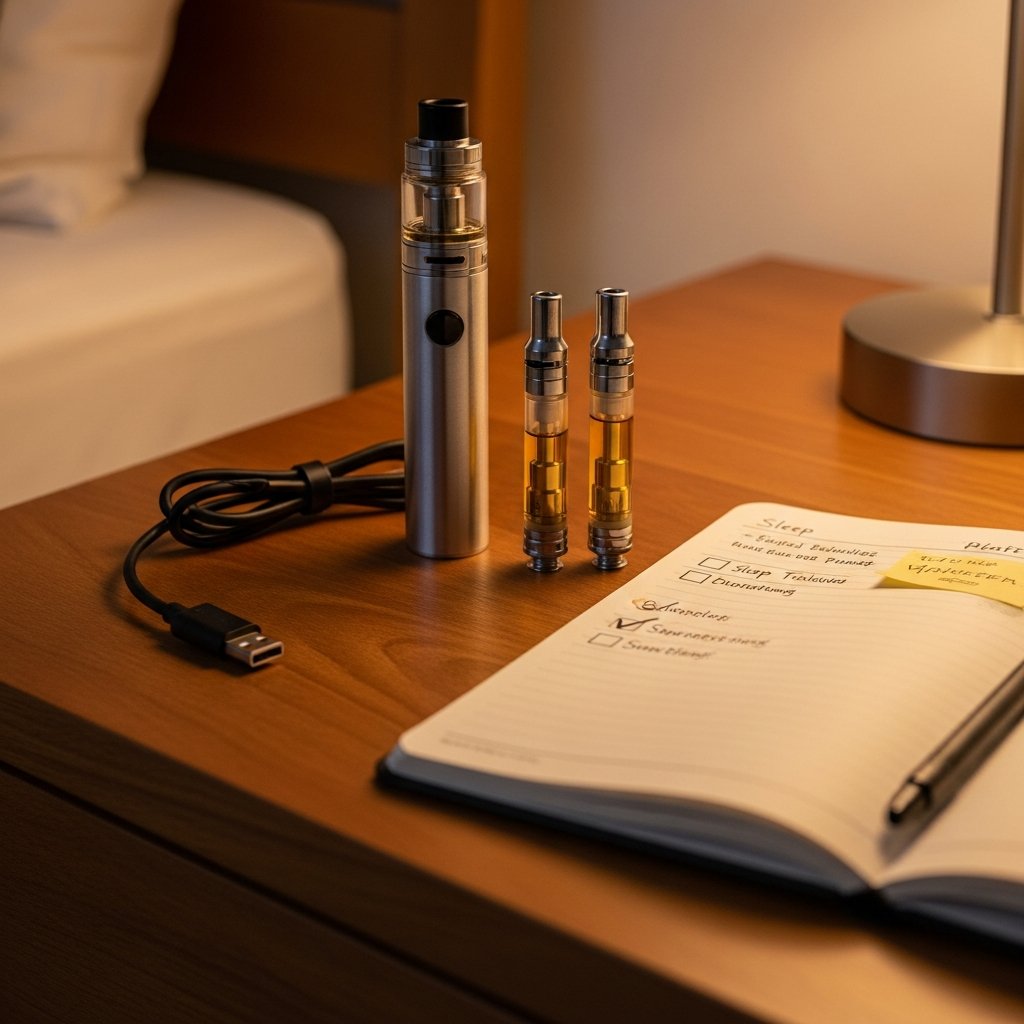
If you’re using cannabis for sleep consistently – not just occasionally – reusable 510-thread setups tend to win on economics and flexibility. A decent variable-voltage battery runs between $20 and $50 and can last a year or more with basic care. The carts themselves often cost less per gram than their disposable counterparts because you’re not paying for a built-in battery each time.
The flexibility argument is meaningful too. With a reusable setup, you can easily switch between cartridges – a higher-CBN (Corroon 2021 (PMID 34468204) blend on nights when you really can’t shut your brain off, a lighter THCA or delta 8 cart when you just need a gentle nudge toward drowsiness. Swapping a 510 cart takes about three seconds. You can even keep two batteries charged to different voltage settings for different formulations.
Variable voltage is worth mentioning separately. Most reusable batteries let you dial the temperature up or down, which changes how the terpenes express themselves in the vapor. Lower temperatures tend to preserve the aromatic compounds – like linalool or myrcene – that many users associate with calming effects. If terpene expression matters to your sleep ritual, a quality variable-voltage battery gives you more control than any disposable can. The breakdown of best terpenes for delta 8 vape carts is worth reading if you want to match your cart choice to specific relaxation compounds.
The friction points are real, though. Reusable setups require charging, and a dead battery at 11 p.m. when you’re already wound up is genuinely annoying. Carts can clog, especially thick oil formulations in cold climates. And if you’re new to cannabis, the combination of managing hardware and calibrating your dose simultaneously adds a layer of complexity that some people just don’t want.
Expert Insight Dr. Alexander Tabibi
A critical review published in Chest examining cannabinoids across insomnia and other sleep disorders confirmed that the endocannabinoid system directly modulates the circadian sleep-wake cycle, and that inhaled THC’s rapid onset — reaching peak effect within minutes — makes it pharmacologically distinct from oral routes in terms of sleep-onset utility. The authors noted this speed is both the format’s primary advantage and a meaningful source of dosing risk: the narrow window between a therapeutically useful dose and one that disrupts sleep architecture is compressed considerably compared to slower-onset formats.
The review also flagged that most controlled sleep trials used oral or vaporized flower rather than concentrate cartridges, which limits direct extrapolation to distillate-based vape products. Evidence suggests the biological plausibility is strong, but the evidence base specific to cartridge formats remains largely user-reported rather than clinically validated. That distinction matters when interpreting product claims about sleep benefits.
Lavender I, McGregor IS, Suraev A, Grunstein RR, Hoyos CM. (2022). Cannabinoids, Insomnia, and Other Sleep Disorders. Chest, 162(2):452-465. PMID: 35537535
Dose consistency: the underappreciated factor for sleep
Here’s where the comparison gets a little more nuanced. When you’re using a vape for sleep, you’re not usually trying to get as high as possible – you’re trying to hit a specific zone. A little too little and you’re still staring at the ceiling. A little too much and you wake up groggy or, depending on the cannabinoid, more alert than you wanted to be.
Dose consistency depends on a few things: the quality of the oil, the coil temperature, the draw length, and how the cart was stored. With disposables, the coil-to-oil pairing is optimized by the manufacturer, which removes one variable. But if you’re someone who draws differently depending on how tired you are, or who doesn’t track how many pulls they’re taking, that optimization only gets you so far.
With reusable carts, you have more ability to control coil temperature via voltage settings, which affects vapor density and, indirectly, how much active compound you’re taking in per draw. That level of control can actually help you find your personal “just right” dose over time – though it takes a bit of experimentation upfront. Proper storage also plays a larger role with reusable carts; poorly stored oil degrades and changes its consistency, affecting both flavor and effect. If storage is something you haven’t thought about, the practical tips in how to store delta 8 carts properly are worth a few minutes of your time before you commit to a routine.
Picking a product that fits your sleep routine
For people who want a no-maintenance, ready-to-use option and are drawn to HHC for its reportedly smoother, less anxious-feeling profile, the TRE House HHC Disposable is a well-regarded example in the disposable category. HHC tends to sit between delta 8 and delta 9 in terms of potency, which some users find better suited to sleep than a more stimulating cannabinoid. At 2 grams, it offers enough oil for several weeks of nightly use without the constant repurchase cycle of smaller disposables.
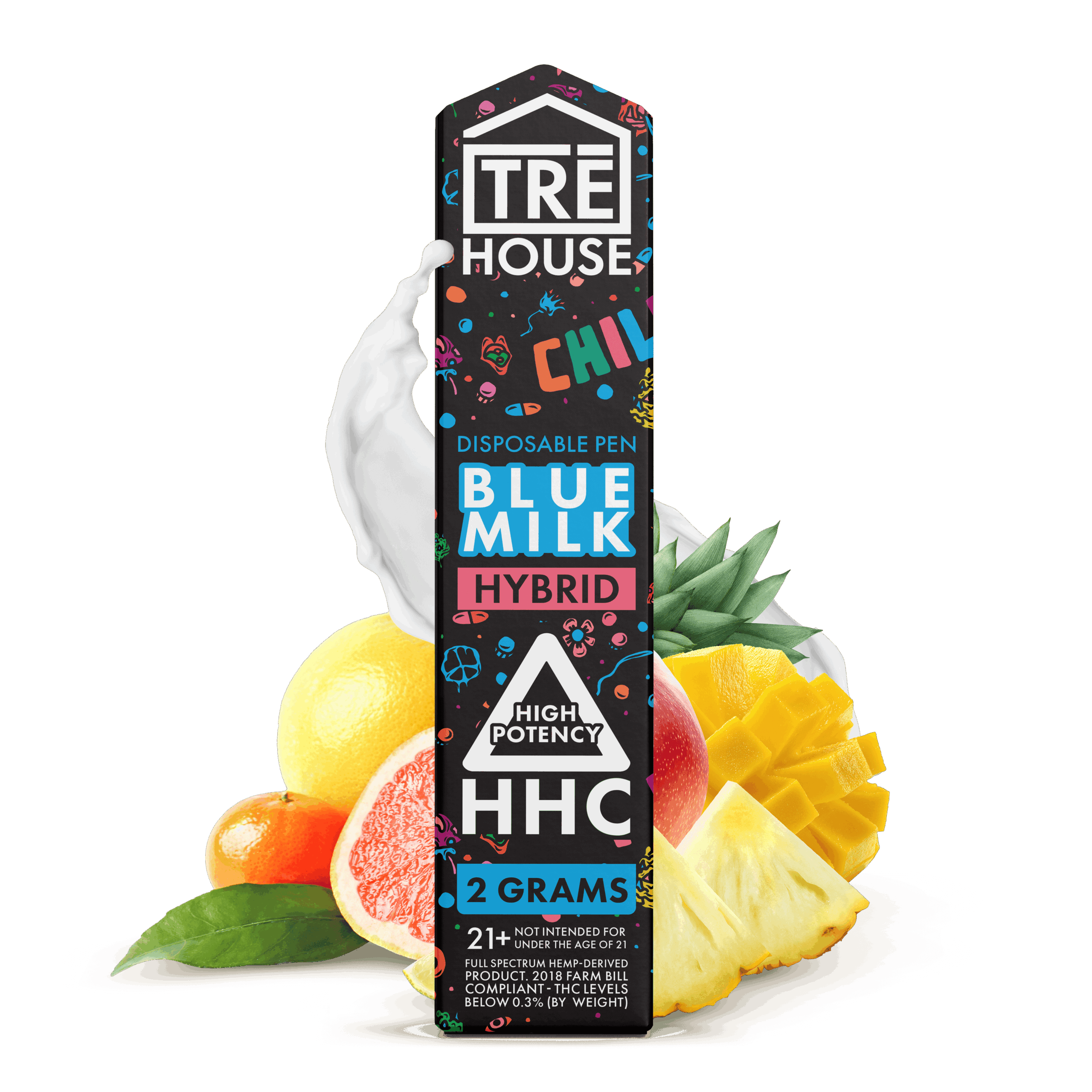
TRĒ House HHC Disposable Vape – Blue Milk – 2G
Ready-to-use 2g HHC disposable, no charging or setup required
If you prefer a THCA-based option and want to try a pre-filled cartridge format – one you’d pair with your own 510-thread battery – THCA disposables like the Binoid Gourmet Desserts line offer a way to explore that cannabinoid without committing to a full reusable rig right away. THCA converts to delta 9 THC upon heating, so the effects are closer to traditional cannabis, and the dessert-forward terpene profiles are designed to be smooth and calming rather than energizing. If you’re newer to THCA and want to understand what you’re working with before purchasing, the complete beginner’s guide to THCA gives a solid foundation without the jargon overload.
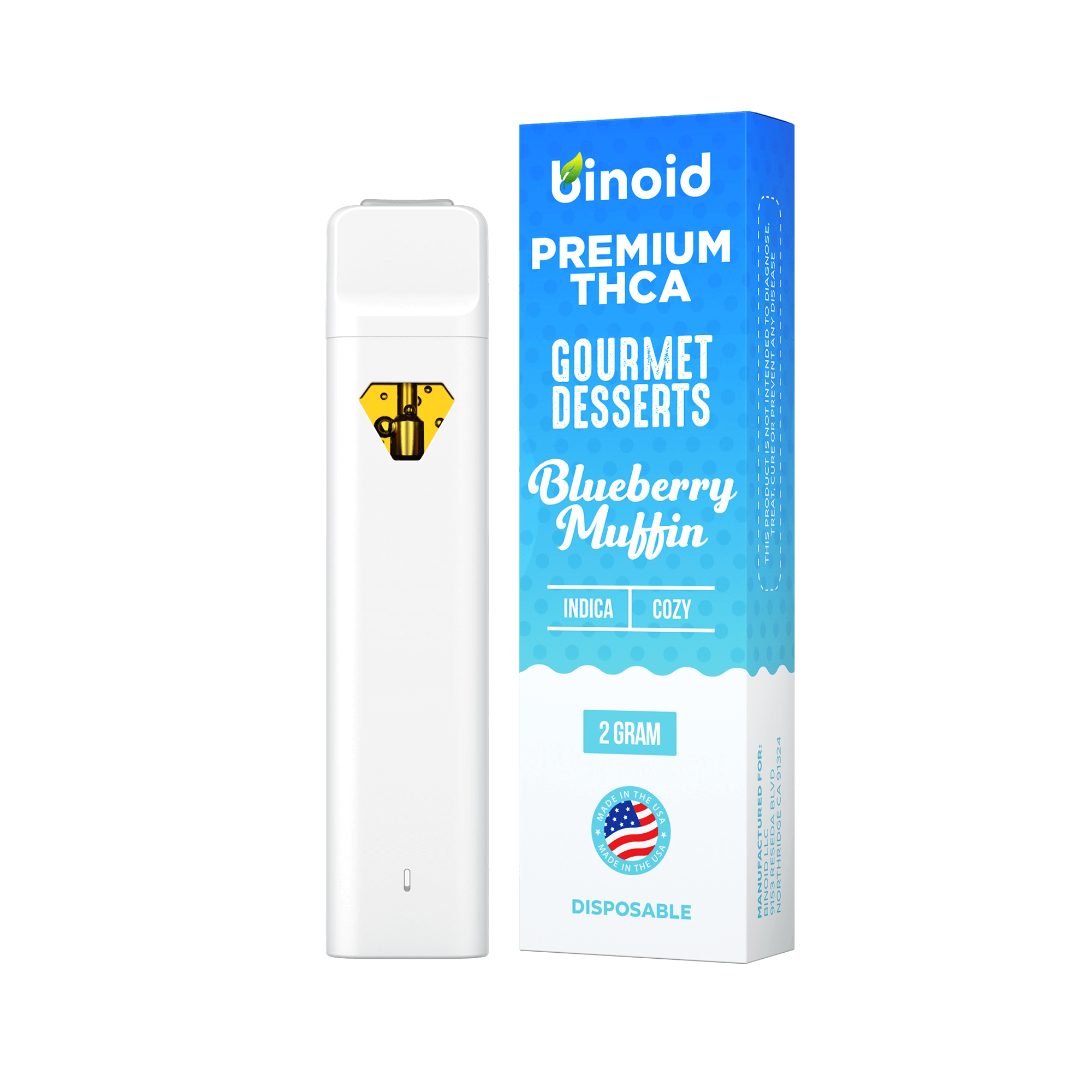
Binoid THCA Disposable – Gourmet Desserts – 2g
2g THCA disposable with calming dessert-forward terpene profiles
The honest side-by-side
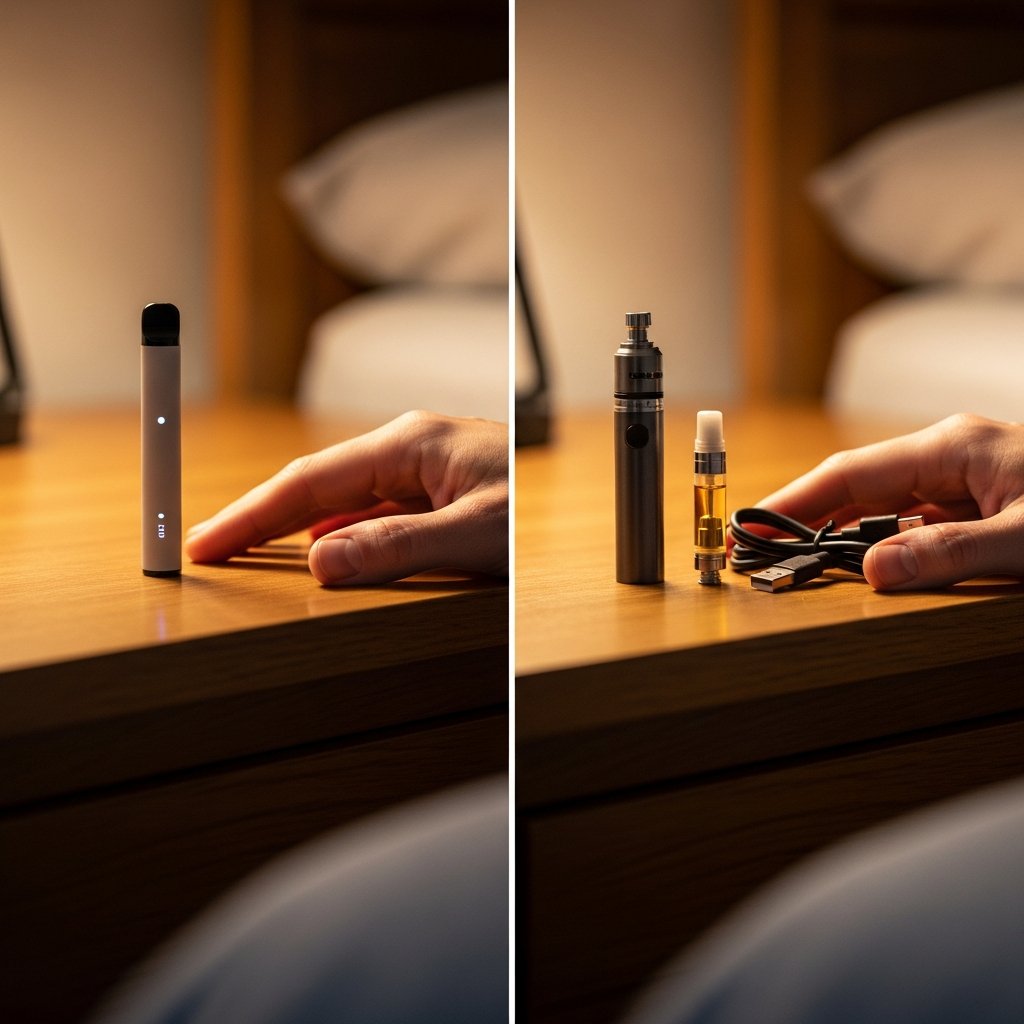
Let’s be direct about what each format does and doesn’t do well in a sleep context. Disposables win on convenience, consistency out of the box, portability, and low barrier to entry. They’re the better choice if you use cannabis for sleep occasionally, travel often, or simply don’t want to think about your hardware.
Reusable carts win on long-term cost, flexibility between formulations, temperature control, and environmental footprint if you’re using them regularly. They’re the better choice if sleep support is a consistent part of your routine and you’re willing to spend a little time learning your setup.
The format question also opens into a broader hardware conversation. If you’ve ever wondered how carts stack up against dab pens in terms of ease of use and dosing control, the side-by-side comparison of dab pens vs carts covers that ground without getting too deep into the weeds on device specs.
Expert Insight Dr. Alexander Tabibi
A modified Delphi consensus involving 20 medical cannabis specialists across 9 countries established practical dosing protocols for cannabinoid administration — and the core principle that emerged consistently across all three protocols was personal titration: starting at the lowest effective dose, waiting for the full pharmacological window before re-dosing, and adjusting incrementally based on individual response rather than standardized amounts. The panel noted that inhalation routes require particular caution in titration because the onset-to-peak window is short and re-dosing decisions are often made before the first dose has fully expressed.
Applied to the disposable versus reusable question, this framework supports the value of any hardware that helps a user reproduce the same draw consistently night over night — whether that’s the standardized coil of a disposable or the calibrated voltage of a quality reusable battery. Evidence suggests the personal titration ritual around use is at least as important as the device format itself in achieving a reliable, predictable nighttime outcome.
Bhaskar A, Bell A, Boivin M, et al. (2021). Consensus recommendations on dosing and administration of medical cannabis to treat chronic pain: results of a modified Delphi process. Journal of Cannabis Research, 3(1):22. PMID: 34215346
A few things worth knowing before you decide
Neither format is categorically better (but one is much more wasteful). What matters is how the format fits your actual life. If you’re someone who charges their phone every night without thinking about it, adding a 510-thread battery to that habit is genuinely not a big deal. If you’re the kind of person who forgets to charge everything and finds depleted devices a source of real annoyance, a 2-gram disposable removes that friction entirely.
It’s also worth acknowledging that the cannabinoid choice – not just the format – does a lot of the heavy lifting for sleep. A well-formulated HHC or CBN-forward oil in a cheap disposable may outperform a poorly chosen distillate in an expensive reusable rig. Hardware is the delivery system; the oil is the actual tool. Don’t spend so much time on the format question that you neglect to think carefully about what’s actually in the cart. Thinking through how potency, formulation, and lifestyle all fit together is covered well in the practical guide to how to choose a weed cart, which is worth reading alongside this one if you’re still in the decision-making phase.
At the end of the day, the best vape for sleep is the one you’ll actually use consistently, that delivers a predictable effect, and that doesn’t add stress to what is supposed to be a winding-down ritual. Start with whichever format feels less intimidating, pay attention to how your body responds over a week or two, and adjust from there.
Frequently asked questions
Are disposable vapes or reusable carts better for someone new to using cannabis for sleep?
Disposables are generally the easier starting point. There’s no setup, no voltage to calibrate, and no separate battery to charge. New users can focus on figuring out which cannabinoid and dose works for them without also learning how to manage hardware at the same time.
How long does a 2-gram disposable vape typically last for nightly sleep use?
For someone taking two to four draws before bed each night, a 2-gram disposable typically lasts three to six weeks. Heavier sessions or longer draws will shorten that range. Keeping the device stored upright at room temperature helps prevent leaking and preserves battery life.
Can I use the same 510-thread battery for different types of carts, like delta 8 and THCA?
Yes, standard 510-thread batteries are compatible with most pre-filled carts regardless of cannabinoid. The main variable to watch is viscosity: thicker THCA or live resin oils may benefit from a slightly higher voltage setting to heat evenly without clogging.
Why do carts clog, and is this more of a problem with reusable setups?
Clogging usually happens when thick oil cools and partially solidifies in the mouthpiece or coil. It can affect both formats, but reusable carts in cold climates tend to clog more because the battery’s heat isn’t always sufficient at lower voltage settings. Warming the cart briefly in your hand before use usually clears it.
Does the type of terpenes in a cart actually affect how sleepy it makes you?
Terpenes like myrcene, linalool, and beta-caryophyllene are associated with calming or sedating effects in preclinical research, though human evidence is still limited. Many users report that high-myrcene profiles feel more relaxing. Lower vape temperatures tend to preserve these aromatic compounds better during inhalation.
Is it worth spending more on a variable-voltage battery if I mainly use it for sleep?
For consistent nightly use, yes. Variable voltage lets you dial in a lower temperature that preserves terpenes and produces smoother vapor, which many people find more conducive to winding down. A quality variable-voltage battery costs $25 to $45 and can last well over a year with basic care.
What should I do if my disposable vape runs out of battery before the oil is gone?
Some disposables have a micro-USB or USB-C port for recharging; check the device before assuming it’s a true single-use model. If it genuinely has no charging port, the remaining oil is unfortunately unrecoverable. Choosing 2-gram disposables from reputable brands reduces the likelihood of the battery dying before the oil runs out.
Important: Cannabis and hemp-derived cannabinoids affect everyone differently. If you have a diagnosed sleep disorder, take prescription medications, or are pregnant or breastfeeding, consult a qualified healthcare provider before using any cannabinoid product. Vaporized cannabis is not a substitute for medical treatment. If you experience chest pain, severe respiratory distress, or a significant adverse reaction, call 911 or go to the nearest emergency room immediately.
Sources
Lavender I, McGregor IS, Suraev A, Grunstein RR, Hoyos CM. (2022). Cannabinoids, Insomnia, and Other Sleep Disorders. Chest, 162(2):452-465. PMID: 35537535
Bhaskar A, Bell A, Boivin M, et al. (2021). Consensus recommendations on dosing and administration of medical cannabis to treat chronic pain: results of a modified Delphi process. Journal of Cannabis Research, 3(1):22. PMID: 34215346
Corroon J. (2021). Cannabinol and Sleep: Separating Fact from Fiction. Cannabis and Cannabinoid Research, 6(5):366-371. PMID: 34468204
For adults 21+ only. Cannabis laws vary by state. This article is for informational purposes only and does not constitute medical or legal advice. If you are experiencing a medical emergency, call 911 or go to the nearest emergency room immediately.