🚛 Free Discreet Shipping on Orders $49+ | Lab-Tested Quality Guaranteed













How Long Do Sleep Gummies Take to Kick In?
You’ve done everything right. You put the phone down early, dimmed the lights, and even skipped that second cup of coffee after noon. Then you pop a sleep gummy, climb into bed, and… stare at the ceiling for an hour wondering if it’s working. Sound familiar? Here’s what’s actually going on: sleep gummies don’t behave like a light switch. They

Published on: April 2, 2026
You’ve done everything right. You put the phone down early, dimmed the lights, and even skipped that second cup of coffee after noon. Then you pop a sleep gummy, climb into bed, and… stare at the ceiling for an hour wondering if it’s working. Sound familiar?
Here’s what’s actually going on: sleep gummies don’t behave like a light switch. They work more like a slow-building tide – gradual, and heavily influenced by a handful of factors you might not have considered. Understanding the timing isn’t just useful; it’s the difference between falling asleep naturally and eating a second gummy out of impatience (which, spoiler, is how people end up wide awake at 3am feeling way too much).
So let’s walk through the real timeline, what affects it, and how to actually get these things to work the way they’re supposed to.
The Honest Timeline: What to Expect After You Take One

Most sleep gummies take somewhere between 30 minutes and 2 hours to kick in. That’s a wide window, and it’s intentional – because the answer genuinely depends on you. Your metabolism, your body weight, whether you’ve eaten recently, and even your gut microbiome all play a role in how quickly the active ingredients get absorbed into your bloodstream.
The general sweet spot most people report is around 45 to 90 minutes. If you’re taking a gummy that contains melatonin alongside THC or CBD, the melatonin typically signals your brain faster – but the cannabinoids take longer because they have to travel through your digestive system before doing anything noticeable.
This is a fundamentally different experience from smoking or vaping cannabis, where effects can arrive in minutes. With edibles of any kind, the liver has to metabolize the compounds first, which converts delta-9 THC into a more potent form called 11-hydroxy-THC. That conversion takes time, but it also tends to produce a deeper, longer-lasting effect – which is exactly why sleep gummies have earned their reputation for actually keeping people asleep, not just helping them fall asleep.
If you want to understand the full picture of what’s happening in your body during this process, the breakdown of how edibles affect the body covers the pharmacology in solid detail.
Why Your Body Is the Biggest Variable
Two people can take the exact same gummy at the exact same time and have completely different experiences. One person drifts off in 45 minutes. The other is still watching the clock an hour later. Neither of them is doing anything wrong.
Body composition matters more than most people realize. People with higher body fat percentages tend to absorb and store fat-soluble cannabinoids differently, which can slow the onset or alter the intensity. Metabolism speed plays a role too – someone with a faster digestive system will generally feel effects sooner than someone whose gut processes things more slowly.
Food is probably the most underappreciated factor here. Taking a sleep gummy on a completely empty stomach can actually speed up absorption – but it can also make the effects feel more intense and unpredictable. Taking one after a heavy meal slows everything down considerably, sometimes pushing onset past the 2-hour mark. A light snack beforehand tends to be the goldilocks scenario for most people. If you want to get more strategic about this, pairing gummies with specific foods can genuinely change the experience – there’s a thoughtful look at how to pair weed gummies with food for a better experience that’s worth reading before you experiment.
Expert Insight
Dr. Alexander Tabibi
Dr. Alexander Tabibi
Oral THC follows a fundamentally different pharmacokinetic path than inhaled cannabis. After ingestion, delta-9 THC is absorbed through the gastrointestinal tract and undergoes extensive first-pass metabolism in the liver, where it is converted to 11-hydroxy-THC – a metabolite that crosses the blood-brain barrier more readily than its parent compound. This conversion accounts for both the delayed onset and the often more sedating character of edible cannabis effects compared to inhalation.
The research picture on individual variability is still developing. Studies consistently show wide intersubject differences in peak plasma concentration timing after oral THC, ranging from roughly 1 to 3 hours in controlled settings. Factors including gastric emptying rate, co-ingested fat content, and baseline endocannabinoid tone all appear to influence this window – which means published average onset numbers are genuinely averages, not reliable personal predictions.
Ohlsson et al. (1980). Plasma delta-9 tetrahydrocannabinol concentrations and clinical effects after oral and intravenous administration and smoking. Clinical Pharmacology and Therapeutics, 28(3):409-416. PMID: 6998011
The Role of Active Ingredients: Melatonin, THC, CBD, and the Rest
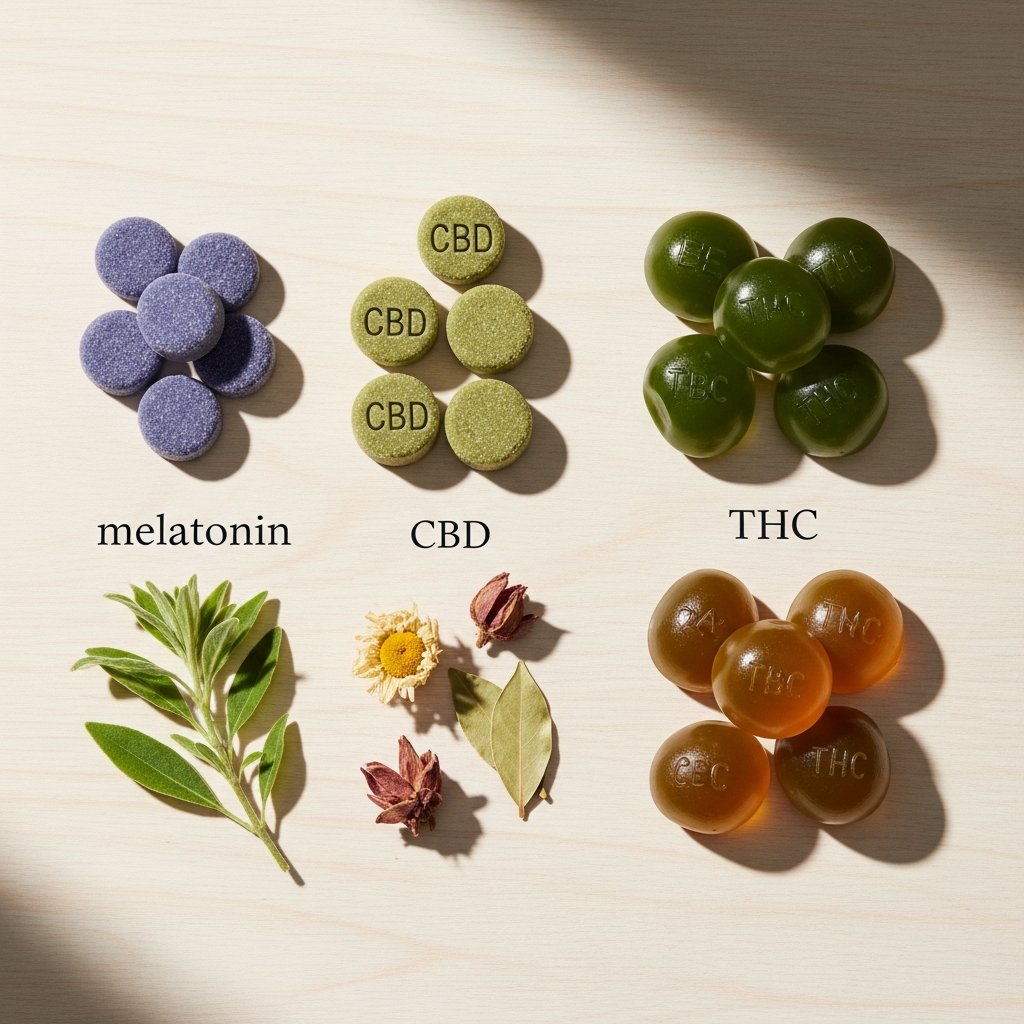
Sleep gummies aren’t a monolith. Some contain only melatonin. Some pair CBD with melatonin. Others use low-dose THC alongside calming botanicals like ashwagandha or L-theanine. And increasingly, you’ll see formulations that combine THC with CBN – a minor cannabinoid that’s drawn attention for its potentially sedating properties.
Each of these compounds has its own onset curve. Melatonin, being a hormone your body already produces, tends to signal sleepiness relatively quickly – often within 20 to 30 minutes for sensitive individuals. CBD takes longer and works more subtly, often described as reducing the noise in your head rather than producing outright drowsiness. THC, depending on the dose, can be deeply sedating but carries more variability in timing because of that first-pass liver metabolism we just talked about.
CBN is the most interesting wildcard. It’s often marketed as the “sleepy cannabinoid,” though the research backing that specific claim is still thin. What we do know is that CBN appears in aged cannabis as THC breaks down, and anecdotal reports of its sedative effects are widespread. Whether it works through a distinct mechanism or simply through synergy with other cannabinoids and botanicals is still an open question.
Formulations that combine multiple active compounds often aim for what’s called the entourage effect – the idea that cannabinoids work better together than in isolation. When you’re choosing a product, paying attention to what’s actually in it matters as much as the dose.
Expert Insight
Dr. Alexander Tabibi
Dr. Alexander Tabibi
The evidence on cannabinoid combinations for sleep is genuinely preliminary. A 2022 randomized crossover study examined low-dose oral THC and CBD on sleep architecture and found modest reductions in sleep onset latency with THC, but also noted some suppression of REM sleep at higher doses – a pattern that warrants attention for anyone relying on cannabis gummies nightly over extended periods.
CBN research at the clinical level remains sparse. Most citations circulating in product marketing trace back to older rodent studies or uncontrolled observations, not to rigorous human trials. That doesn’t mean CBN does nothing – it means the mechanism isn’t confirmed yet. Treating CBN-containing products as promising but unproven is the honest framing right now.
Bhatt et al. (2022). Differing effects of delta-9-tetrahydrocannabinol and cannabidiol on the sleep of healthy adults: a randomized controlled trial. JAMA Network Open, 5(10):e2234914. PMID: 36239959
Choosing a Product That Matches How You Sleep

The sheer variety of sleep gummies on the market is genuinely overwhelming, so it helps to think about what your actual problem is before you buy. Do you struggle to fall asleep? Stay asleep? Both? Those are different issues, and the best formulation for each can differ significantly.
For people who have trouble falling asleep, a product with melatonin and a moderate CBD dose often works well – the melatonin nudges your circadian rhythm while the CBD takes the edge off mental restlessness. For people who wake up repeatedly through the night, a slow-release format with a small amount of THC might be more appropriate, since THC’s extended duration in the system can support longer sleep windows.
For those who want a THC-forward approach to sleep support and prefer something designed specifically with nighttime use in mind, the cbdMD Delta 9 THC Lights Out Sleep Gummies are worth considering. They combine delta-9 THC with CBD and melatonin in a formulation built around that slower, steadier release curve that makes the difference between drifting off and staying asleep.
cbdMD Delta 9 THC Lights Out Sleep Gummies
Delta-9 THC, CBD, and melatonin combined for extended nighttime support
If you’re newer to cannabis-based sleep products and want something with a gentler profile before committing to a THC-forward option, it’s worth reading through how to dose weed gummies safely before making your first purchase. Starting low and going slow is the most consistently useful advice in this space, regardless of which product you choose.
The Biggest Mistake People Make: Redosing Too Soon
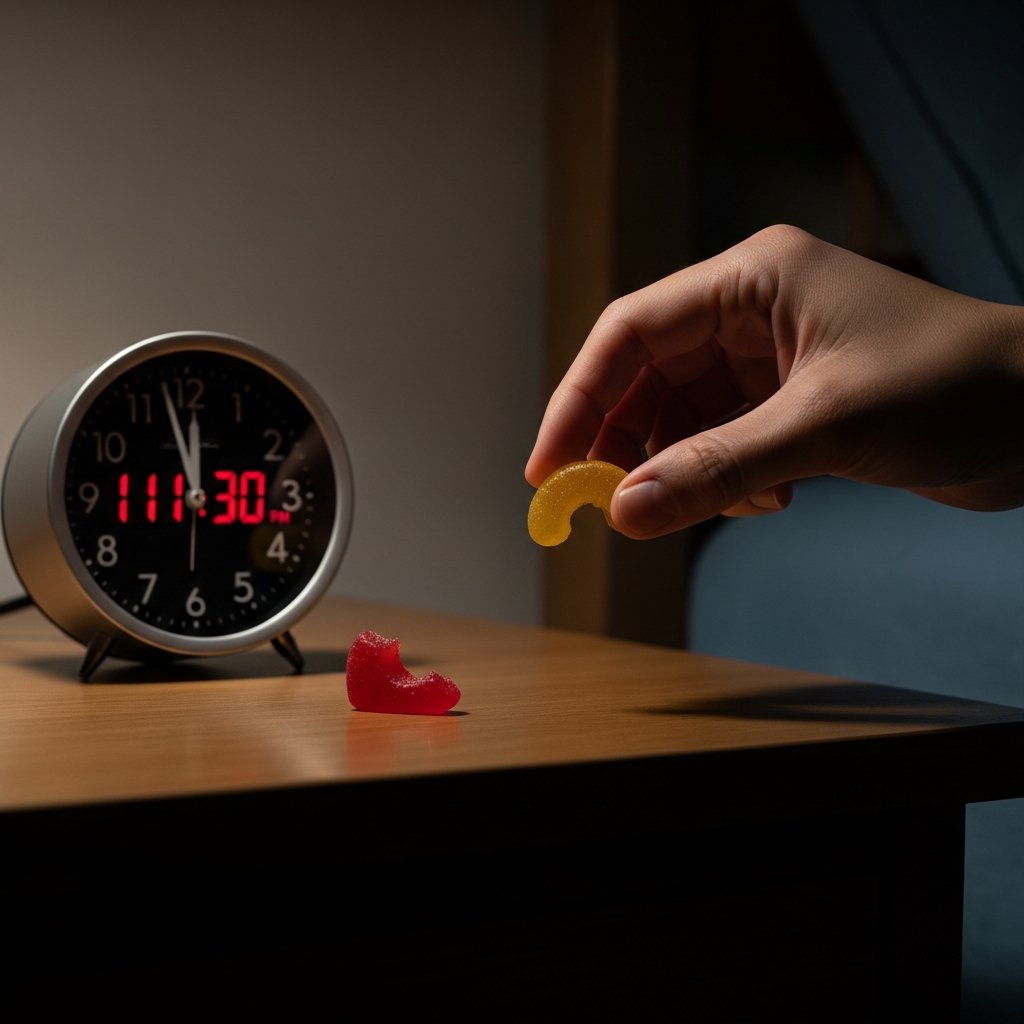
Let’s be direct about this one. The number one mistake with sleep gummies – or any edible – is taking more because you don’t feel anything yet. The 90-minute mark often feels like a plateau of nothing, and the temptation to top up is real. But that second gummy doesn’t override the first; it stacks on top of it, and they both hit around the same time.
The result is usually an experience that feels far more intense than intended – and not in a restful way. Overconsumption of THC in particular can produce the opposite of sleep: elevated heart rate, racing thoughts, and a kind of anxious wakefulness that’s deeply unpleasant.
The practical rule is simple: take one, set a 2-hour minimum timer, and do not redose before that window closes. If you’ve waited two full hours and feel genuinely nothing, that’s the time to reassess – either the dose is too low for your metabolism, or the product itself isn’t working well for you. A next-session adjustment of 2.5mg to 5mg THC is a reasonable increment to try. Jumping from 5mg to 20mg because of impatience is how people have bad nights.
Timing your dose strategically also matters more than most packaging will tell you. Taking a sleep gummy 60 to 90 minutes before you actually want to be asleep – rather than right when you get into bed – tends to align the peak effect window with the moment you actually need it. There’s a useful look at the best times of day to take weed gummies for different effects that gets into the nuance of timing across different goals.
Tolerance, Consistency, and the Long Game
Something worth knowing if you plan to use sleep gummies regularly: tolerance develops. Not dramatically for most people using low doses, but noticeably. The same 5mg that knocked you out in week one may feel like almost nothing by week four. This is your endocannabinoid system adapting, and it’s a normal physiological response – not a product failure.
The most common strategy among regular users is cycling. Using sleep gummies three to four nights per week rather than every night helps prevent tolerance from building as quickly. Taking a one to two week break every couple of months can also reset your sensitivity meaningfully. Neither of these approaches requires you to white-knuckle through bad sleep; combining gummy nights with other sleep hygiene practices – consistent bedtime, cool room, limited screen exposure before bed – tends to make the off nights much more manageable.
It’s also worth knowing that individual responses to cannabis can shift over time for reasons beyond tolerance. Life stress, hormonal changes, and even seasonal shifts in sleep patterns can all affect how your body responds to the same dose. Keeping loose notes about what you took, when you took it, and how you slept isn’t obsessive – it’s just useful data.
Frequently Asked Questions
How long do sleep gummies take to work on average?
Most people feel the effects of sleep gummies within 45 to 90 minutes, though the full range is 30 minutes to 2 hours depending on your metabolism, body composition, and what you’ve eaten. Set an expectation of at least an hour before drawing any conclusions.
Should I take a sleep gummy on an empty stomach?
An empty stomach can speed up absorption but may intensify effects unpredictably. A light snack beforehand is generally the better approach – it buffers the onset without slowing it dramatically. A heavy meal can push onset past 2 hours.
What happens if I take a second gummy because the first isn’t working?
Both doses will likely hit around the same time, stacking their effects. This is the most common cause of overconsumption with edibles. Wait the full 2-hour window before considering any additional amount, and increase by small increments only.
Do sleep gummies work the same for everyone?
No. Body weight, metabolism speed, gut health, and tolerance to cannabinoids all create meaningful differences between individuals. Published onset times are averages, and your personal window may sit noticeably outside them without anything being wrong.
Can I take sleep gummies every night?
Regular nightly use can lead to tolerance buildup over time, particularly with THC-containing products. Many users rotate their use to three or four nights per week to maintain effectiveness. Periodic breaks of one to two weeks can help restore baseline sensitivity.
How long do the effects of sleep gummies last once they kick in?
Effects from cannabis-based sleep gummies typically last 4 to 8 hours depending on the dose and formulation. Melatonin effects are shorter, usually fading within 4 to 5 hours. THC-based effects tend to run longer, which is part of why they’re associated with staying asleep.
If you take prescription medications, speak with your pharmacist or physician before using cannabis products, especially if those medications affect your central nervous system or sleep cycle.
Sources
Ohlsson et al. (1980). Plasma delta-9 tetrahydrocannabinol concentrations and clinical effects after oral and intravenous administration and smoking. Clinical Pharmacology and Therapeutics, 28(3):409-416. PMID: 6998011
Bhatt et al. (2022). Differing effects of delta-9-tetrahydrocannabinol and cannabidiol on the sleep of healthy adults: a randomized controlled trial. JAMA Network Open, 5(10):e2234
914. PMID: 36239959
914. PMID: 36239959
Grotenhermen F. (2003). Pharmacokinetics and pharmacodynamics of cannabinoids. Clinical Pharmacokinetics, 42(4):327-360. PMID: 12648025
Ferracioli-Oda E, Qawasmi A, Bloch MH. (2013). Meta-analysis: melatonin for the treatment of primary sleep disorders. PLOS ONE, 8(5):e63773. PMID: 23691095
For adults 21+ only. Cannabis laws vary by state. This content is for informational purposes only and does not constitute medical advice. If you are experiencing a medical emergency, call 911 or go to the nearest emergency room immediately.