🚛 FREE DISCREET SHIPPING ON ALL ORDERS $49+









How to Read a Cart Label if You Have Anxiety
You pick up a cart at the dispensary, flip it over, and suddenly you’re staring at a wall of percentages, acronyms, and compound names that look like they belong on a chemistry exam. If you already deal with anxiety, this moment can feel unexpectedly overwhelming – not because the label is trying to trick you, but because no one ever

Published on: April 18, 2026

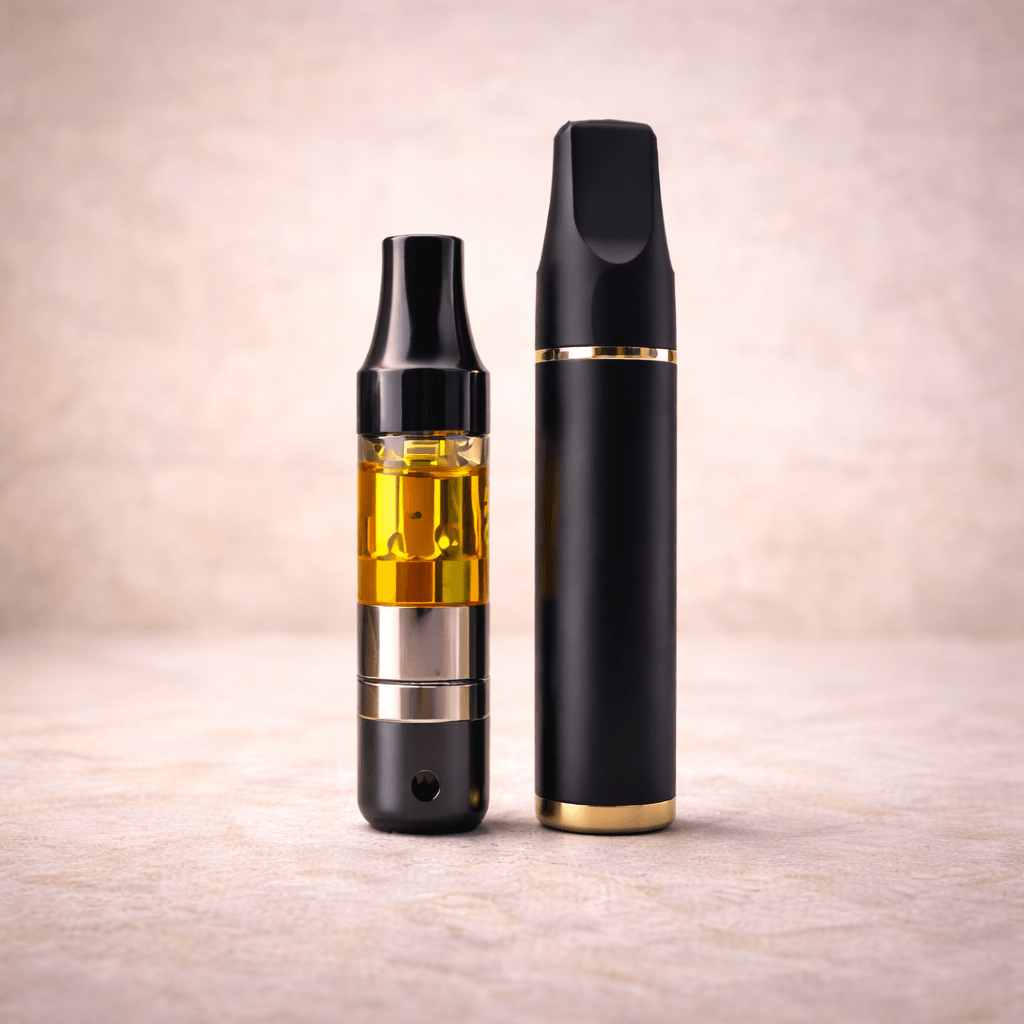
You pick up a cart at the dispensary, flip it over, and suddenly you’re staring at a wall of percentages, acronyms, and compound names that look like they belong on a chemistry exam. If you already deal with anxiety, this moment can feel unexpectedly overwhelming – not because the label is trying to trick you, but because no one ever taught you how to read it. And when you’re shopping specifically to calm your nerves, picking the wrong product can make things worse, not better. So let’s slow this down and actually decode what’s on that label, one piece at a time.
Why Cart Labels Feel So Confusing (And Why That’s Not Your Fault)
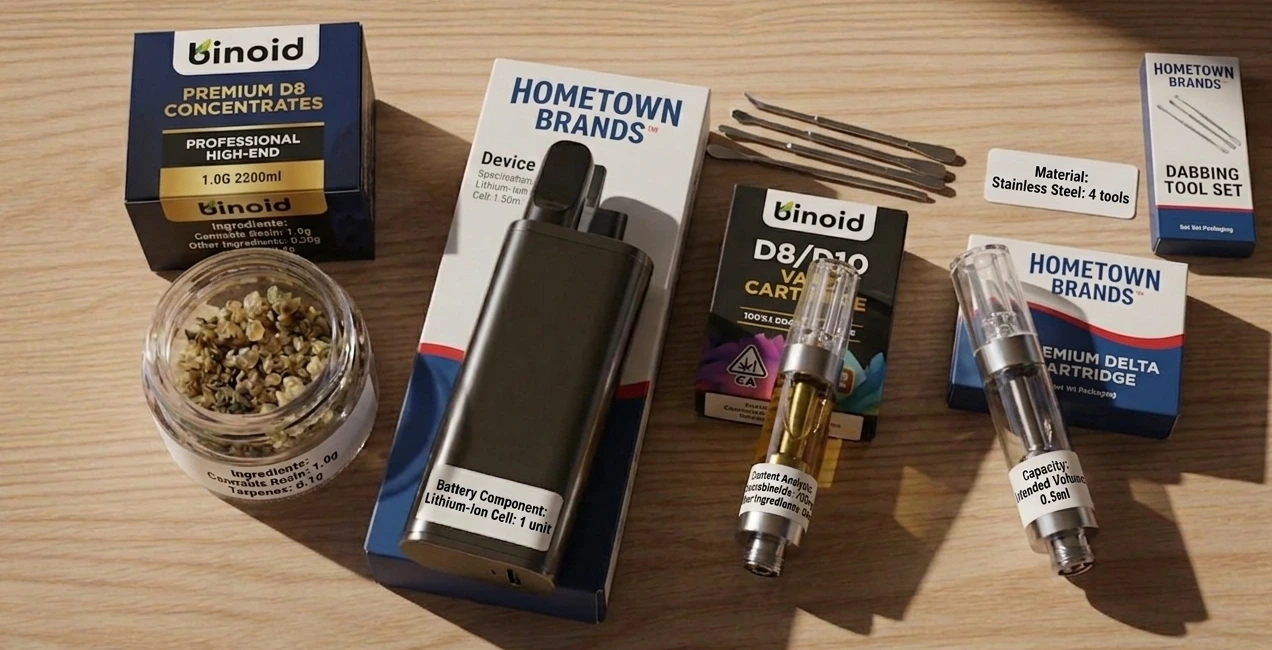
Cannabis labeling regulations vary wildly from state to state. In some places, brands are required to list detailed cannabinoid percentages, terpene profiles, and third-party lab results. In others, the rules are looser, and labels end up being more marketing than information. That inconsistency is the first thing to understand – a label from a California dispensary will look very different from one you pick up in Texas or Oklahoma.
Anxiety tends to amplify confusion. When you feel pressure to make the “right” choice and don’t understand what you’re looking at, that pressure compounds fast. The goal here isn’t to turn you into a cannabis chemist. It’s to give you a working vocabulary so you can feel confident, not panicked, at the shelf.
The Cannabinoid Section: THC, CBD, and the Numbers That Actually Matter
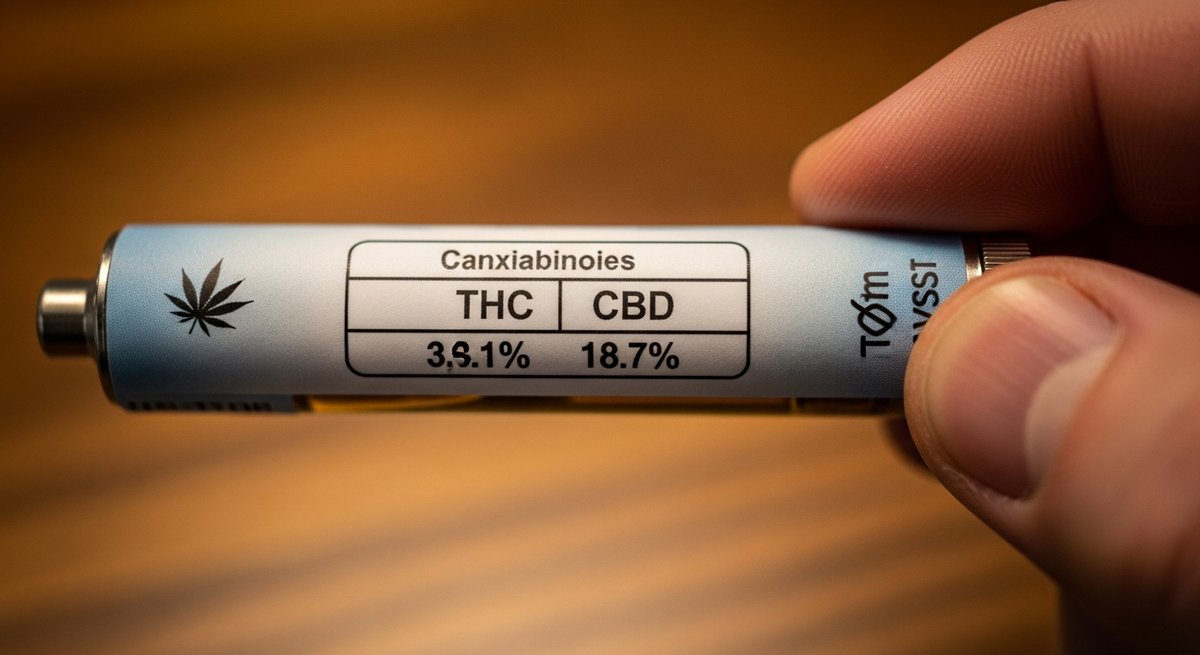
The most prominent numbers on any cart label are usually THC and CBD percentages. THC is the compound responsible for the high, and it has a complicated relationship with anxiety. At lower doses, many people find it calming. At higher doses – especially in concentrates – it can tip into paranoia territory, particularly for people who are already anxious. That’s not a warning to avoid THC entirely; it’s a reason to pay attention to how much is in the product you’re considering.
CBD doesn’t produce a high. It’s often described as the “balancing” cannabinoid because some research suggests it may moderate some of THC’s more intense effects. If you see a cart with a 1:1 THC to CBD ratio, that generally means a more tempered experience than a pure THC cart sitting at 85% or above. For anxiety-prone users, a lower THC percentage combined with some CBD presence is often the more forgiving starting point.
You might also spot Delta-8 THC on some labels. Delta-8 is a hemp-derived cannabinoid that tends to produce a milder, less edgy effect than Delta-9 THC – which makes it worth understanding if standard THC products feel too intense for you. The editorial overview of how vape carts work for beginners goes deeper into the mechanics of how different cannabinoid types translate into actual experiences.
Terpenes: The Part of the Label Most People Skip (But Probably Shouldn’t)
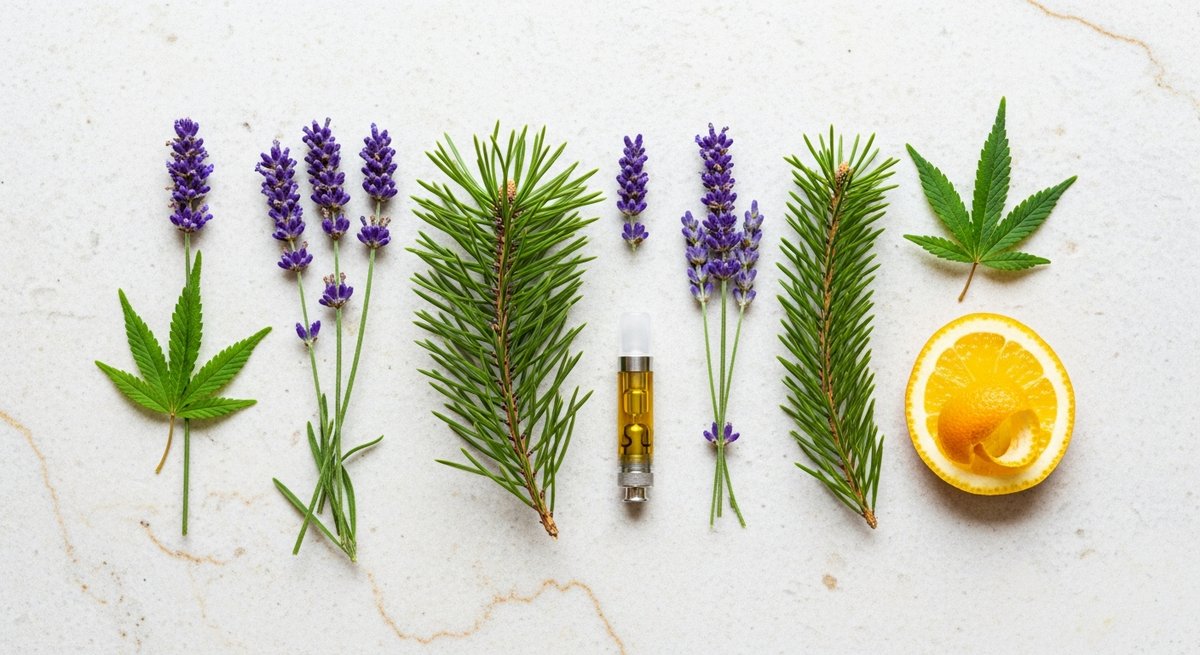
Terpenes are the aromatic compounds that give cannabis its smell – but they do a lot more than make a strain smell like blueberries or pine. They interact with cannabinoids in a way that shapes the character of the effect. For someone managing anxiety, certain terpenes are worth actively looking for on a label.
Linalool, also found in lavender, is commonly associated with calming effects. Myrcene has sedating, relaxing properties. Beta-caryophyllene is interesting because it’s one of the few terpenes that directly binds to cannabinoid receptors and has been associated with stress relief. On the other side, high concentrations of terpinolene or limonene can feel more energizing – which might not be what you want when anxiety is your primary concern.
Not every cart lists individual terpenes – some just say “natural terpenes” or list a strain name. When shopping for a Delta-8 cart, the breakdown of the best terpenes for Delta-8 vape carts gives you a useful reference framework for which profiles track toward calm experiences.
Expert Insight
Dr. Alexander Tabibi
Dr. Alexander Tabibi
A 2018 analysis of 14 commercially available European CBD oil preparations found that 9 out of 14 products had cannabinoid concentrations that differed notably from the amounts declared on the label. Terpene fingerprinting emerged as one of the more reliable quality indicators, suggesting that terpene profiles may carry more practical value than label cannabinoid claims alone – particularly when regulatory oversight is inconsistent.
What this evidence suggests is that a label’s declared potency is a starting point, not a guarantee. For anxious consumers especially, the most practical takeaway is to treat label percentages as approximate ranges rather than precise values, and to look for products backed by third-party certificates of analysis that independently verify both cannabinoid content and terpene presence.
Pavlovic et al. (2018). Quality traits of ‘cannabidiol oils’: cannabinoids content, terpene fingerprint and oxidation stability of European commercially available preparations. Molecules, 23(5). PMID: 29783790
Indica, Sativa, Hybrid: What These Labels Actually Tell You (And What They Don’t)
Almost every cart label will categorize the product as indica, sativa, or hybrid. The conventional wisdom goes: indica equals body-heavy and relaxing, sativa equals heady and energizing, hybrid equals somewhere in between. That framework is not entirely wrong, but most commercially grown cannabis today is so hybridized that pure expressions of either category are rare.
The more meaningful predictor of how you’ll feel is the cannabinoid and terpene profile underneath that categorization. Still, indica-leaning carts tend to be a safer starting point for anxiety because the associated terpene profiles – heavy in myrcene and linalool – often skew toward relaxation. High-THC sativa carts with stimulating terpene profiles can sometimes amplify anxious thinking in sensitive users. The indica or sativa tag is a shorthand, not a promise – but it’s useful shorthand when you know what’s behind it.
The Certificate of Analysis: The One Thing Most People Ignore
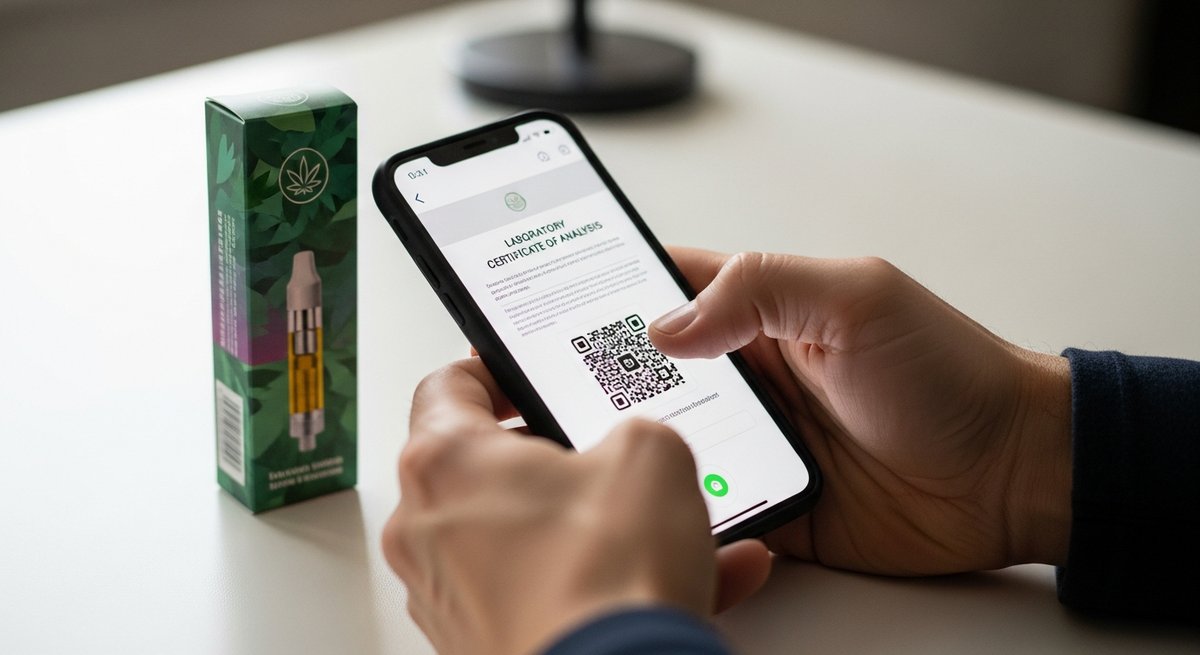
If you see a QR code on the cart label, scan it. That typically links to a Certificate of Analysis (COA) – a third-party lab report that independently verifies what’s actually in the product. This is where label claims get checked against reality, and as the labeling research makes clear, those two things don’t always match up perfectly.
A good COA will show you the cannabinoid profile (including minor cannabinoids like CBN and CBG), terpene concentrations, and panels for pesticides, heavy metals, and residual solvents. For an anxiety-focused buyer, the pesticide and solvent panels matter more than most people realize – certain residual chemicals can affect how a product feels, especially in a vaporized format where you’re inhaling directly. If a cart doesn’t have a scannable code or a searchable batch number, that’s worth noting. Reputable brands make their lab results easy to find.
What the Endocannabinoid System Has to Do With All of This
One reason label literacy matters so much for anxious users is that the compounds in your cart interact with a system in your body directly tied to stress regulation. Understanding this – even loosely – helps explain why some carts feel grounding and others feel like pouring gas on an already lit fire.
Expert Insight
Dr. Alexander Tabibi
Dr. Alexander Tabibi
A 2012 review of endocannabinoid signaling published in Neuroscience found that the endocannabinoid system – particularly endogenous molecules like anandamide and 2-AG – plays a meaningful role in regulating the hypothalamic-pituitary-adrenal (HPA) axis, the body’s central stress-response pathway. Endocannabinoids act across multiple brain regions including the prefrontal cortex, amygdala, and hypothalamus to help suppress excessive HPA activation.
What this evidence suggests is that cannabinoids in a cart are interacting with a system your body uses to manage stress baselines – not just mood in the moment. For someone whose stress response is already dialed up, starting with lower THC concentrations and giving the endocannabinoid system time to respond incrementally is a more measured approach than jumping straight to high-potency options.
Hill et al. (2012). Endocannabinoid signaling, glucocorticoid-mediated negative feedback, and regulation of the hypothalamic-pituitary-adrenal axis. Neuroscience, 204:5-16. PMID: 22214537
A Practical Label-Reading Checklist for Anxious Shoppers
Here’s how to make this actionable the next time you’re standing at the shelf or scrolling through an online menu. You don’t need to memorize everything above – you just need a repeatable scan pattern.
First, check total THC. If you’re anxiety-prone and newer to carts, look for products under 70% THC if possible – many high-quality carts sit in the 60-75% range without being extreme. Second, look for a CBD presence. Even a modest amount (5-10% CBD) can soften the experience meaningfully. Third, scan the terpene list for linalool, myrcene, or beta-caryophyllene – those are your friends. Fourth, find the QR code or batch number and confirm a COA exists. Fifth, note whether the product is indica or indica-leaning as a secondary signal, not a primary one.
One concrete example worth considering when weighing Delta-8 options is the Binoid Delta-8 THC Vape Cartridge in Tangie – a well-documented product from a brand that publishes its lab results, which is exactly the kind of transparency the checklist above rewards.
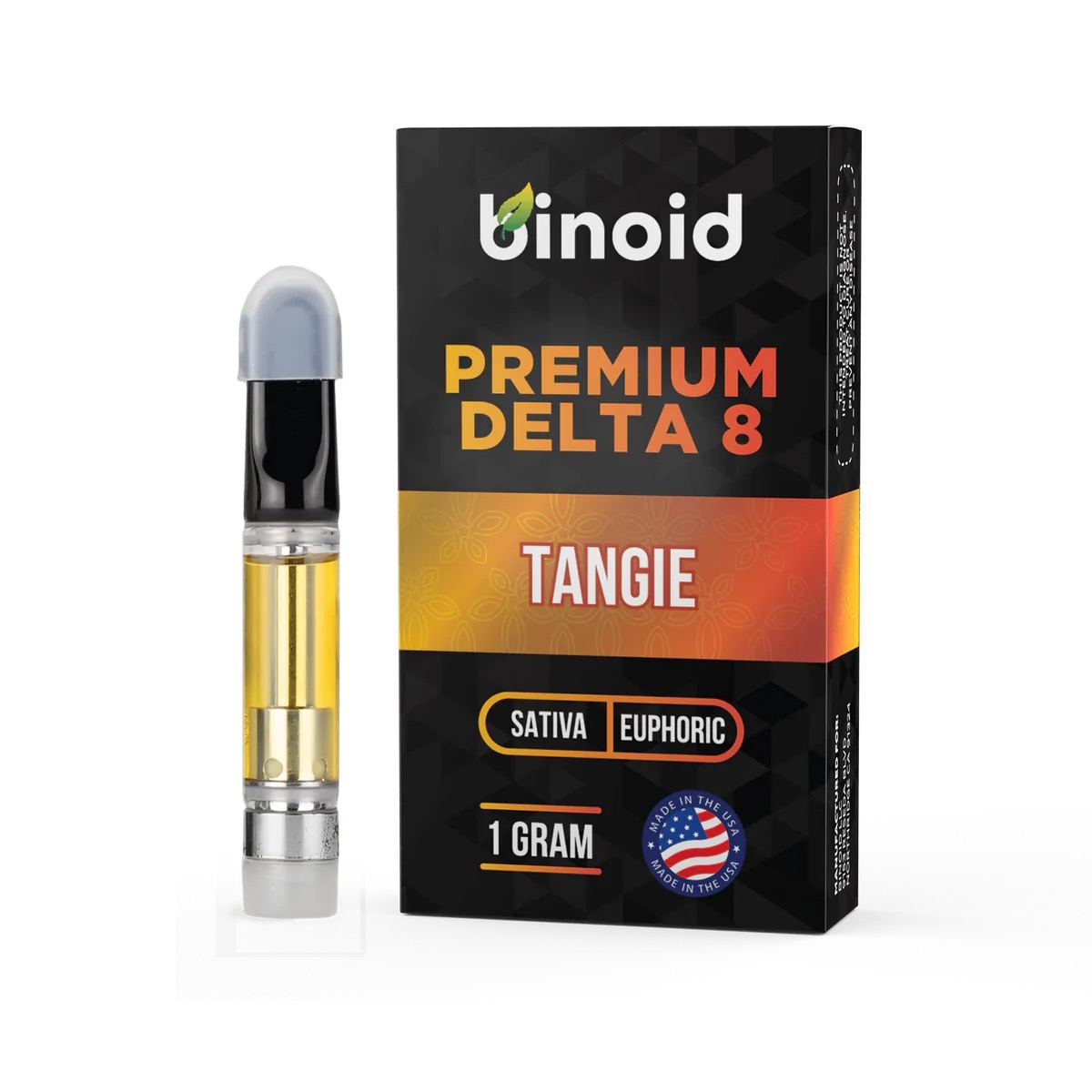
Binoid Delta 8 THC Vape Cartridge – Tangie
Delta-8 THC cart with published COA and citrus-forward terpene profile
When a Cart Might Not Be the Right Format for Anxiety
Carts are fast-acting, which is a feature and a risk at the same time. Effects typically onset within minutes and peak relatively quickly. For some anxious users, that rapid onset can itself feel startling – especially at first. If you’ve tried carts and found the speed unsettling, you’re not doing anything wrong. Some people with anxiety genuinely do better with a slower-building format like an edible or a low-dose gummy, where the gradual onset gives the nervous system more time to adjust. The roundup of the best gummies for anxiety covering both CBD and THC options walks through the slower-onset category in a similarly practical way.
That said, carts offer something gummies don’t: precise micro-dosing in the moment. One small pull, then wait five minutes. That level of control is actually valuable for anxious users, provided you understand what the label is telling you about potency. A single controlled puff from a 65% THC cart is a very different thing from two deep pulls on an 85% live resin concentrate. Same format, very different experience – and the label is the only thing telling you which situation you’re in.
Frequently asked questions
What THC percentage is best for anxiety on a vape cart?
There’s no universal answer, but many anxiety-prone users find carts in the 55-70% THC range more manageable than those above 80%. Lower THC paired with some CBD presence tends to produce a gentler, more controllable effect. Start with one small puff and wait before taking more.
What does a Certificate of Analysis (COA) tell you about a cart?
A COA is an independent lab report that verifies cannabinoid and terpene content, and checks for contaminants like pesticides, heavy metals, and residual solvents. It’s the most reliable way to confirm that what’s on the label matches what’s actually in the cartridge.
Are indica carts always better for anxiety than sativa carts?
Not always, but indica-leaning carts tend to feature terpene profiles – heavy in myrcene and linalool – that track toward relaxation. The indica or sativa label is a useful starting guide, but the terpene profile and THC concentration are more reliable predictors of how the experience will actually feel.
Which terpenes should I look for on a cart label if I have anxiety?
Linalool, myrcene, and beta-caryophyllene are commonly associated with calming and stress-relieving effects. Linalool is also found in lavender, myrcene has sedating properties, and beta-caryophyllene uniquely binds to cannabinoid receptors. Terpinolene and limonene can feel more stimulating, which may not suit anxiety-prone users.
Does CBD on the cart label matter if I’m using it for anxiety?
Yes, meaningfully. Even a modest CBD percentage – around 5 to 10 percent – can moderate the intensity of THC’s psychoactive effects. CBD interacts with the same endocannabinoid system and is generally associated with reduced anxious feelings, making it a worthwhile label detail to check before buying.
Sources
Pavlovic et al. (2018). Quality Traits of ‘Cannabidiol Oils’: Cannabinoids Content, Terpene Fingerprint and Oxidation Stability of European Commercially Available Preparations. Molecules, 23(5). PMID: 29783790
Hill et al. (2012). Endocannabinoid signaling, glucocorticoid-mediated negative feedback, and regulation of the hypothalamic-pituitary-adrenal axis. Neuroscience, 204:5-16. PMID: 22214537
Important Notice
Cannabis affects individuals differently. If you have a history of anxiety, panic disorder, or other mental health conditions, consult a qualified healthcare provider before using any cannabis product. This article is for informational purposes only and does not constitute medical advice. If you experience severe anxiety, chest pain, difficulty breathing, or feel you are in crisis, call 911 or go to your nearest emergency room immediately.
For adults 21+ only. Cannabis laws vary by state. This content is intended for informational purposes only and does not constitute medical or legal advice. If you are experiencing a medical emergency, call 911 or go to your nearest emergency room immediately.