🚛 FREE DISCREET SHIPPING ON ALL ORDERS $49+










How to Vape Before Bed Without Disrupting Your Sleep
Here’s a scenario a lot of people will recognize: it’s 10:30 at night, you’ve had a long day, and you reach for your vape pen hoping it’ll quiet your brain and help you drift off. Sometimes it works beautifully. Other times you’re still staring at the ceiling at 1 a.m., heart doing something slightly too alert for bedtime. Same product,

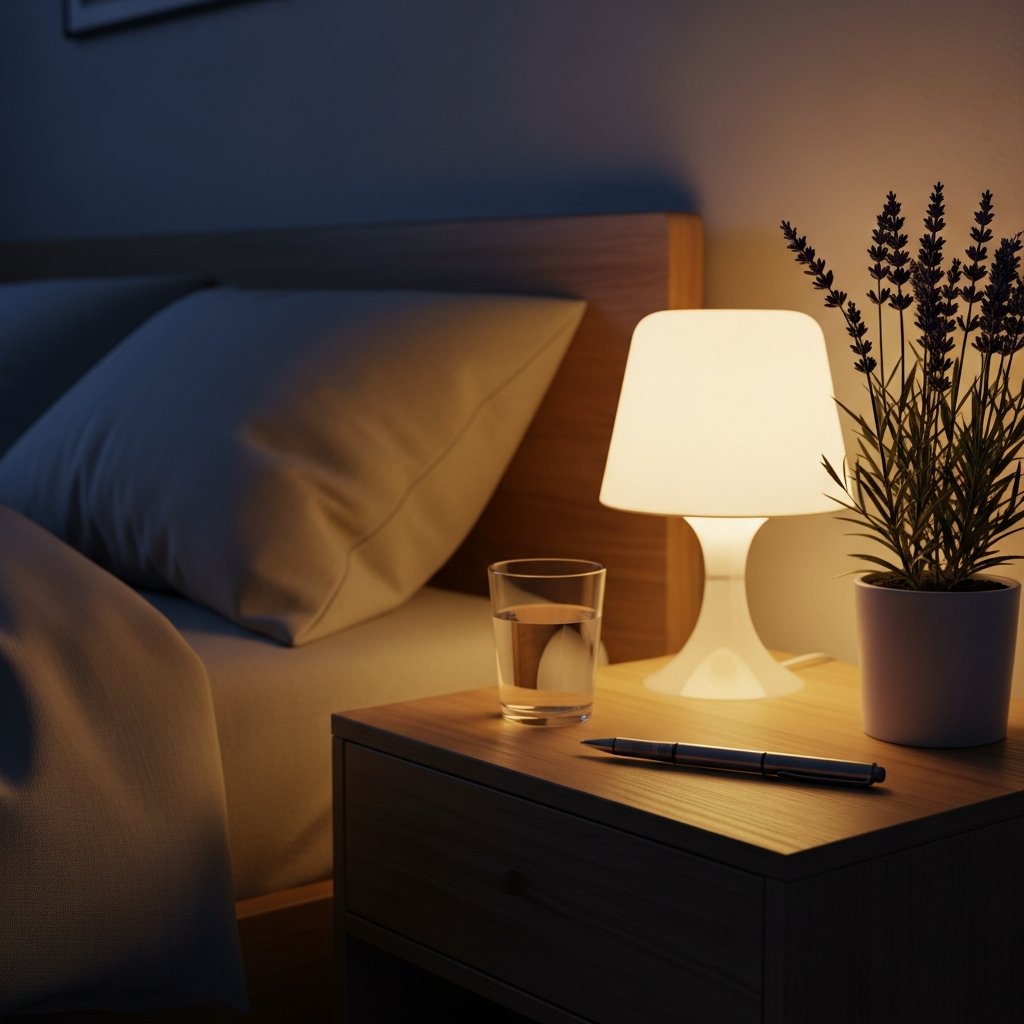
Here’s a scenario a lot of people will recognize: it’s 10:30 at night, you’ve had a long day, and you reach for your vape pen hoping it’ll quiet your brain and help you drift off. Sometimes it works beautifully. Other times you’re still staring at the ceiling at 1 a.m., heart doing something slightly too alert for bedtime. Same product, same person, wildly different results. What’s going on?
The relationship between cannabis and sleep is genuinely complicated – not in a scary way, but in a “there are real variables here worth understanding” way. Timing, strain, dose, your own tolerance, even your body temperature when you climb into bed – all of it plays a role. And because vaping delivers cannabinoids fast, the margin for error is narrower than with, say, an edible that takes an hour to kick in.
This isn’t a piece telling you to stop or start anything. It’s a practical look at how to make vaping before bed actually work for sleep, rather than against it.
Why cannabis and sleep have such a complicated relationship

Cannabis doesn’t just flip a sedation switch. THC activates CB1 receptors in the brain, which can reduce the time it takes to fall asleep – that part most people already know. But here’s the part that gets glossed over: higher doses of THC can suppress REM sleep, the stage associated with dreaming and emotional memory consolidation. Less REM sounds appealing if you’re having vivid nightmares, but over the long term, it’s not a trade-off you want to make every night without thinking about it.
CBD and other cannabinoids tell a slightly different story. At lower doses, CBD appears to have alerting properties for some people. At higher doses, the picture shifts toward something more calming. If you’ve ever taken a CBD product before bed and felt strangely awake, that’s likely why.
Terpenes also matter more than most people realize. The specific aromatic compounds in a cultivar – things like myrcene, linalool, and beta-caryophyllene – interact with your endocannabinoid system and may meaningfully shape how a product affects you. If you want to go deep on that chemistry, the Ultimate Terpene Guide (2025 Edition) is worth reading before you make your next cart purchase.
Expert Insight
Dr. Alexander Tabibi
Dr. Alexander Tabibi
A narrative review examining cannabinoid sleep claims found that after reviewing eight studies on CBN and sleep, no clinical trials measuring cannabinoids against validated sleep questionnaires met the bar for strong evidence. The author also noted that doses found in most commercial sleep products — marketed heavily on subjective sedation claims — are typically far below the thresholds used in any research context where effects were observed at all.
This applies directly to the tolerance question. When the pharmacological signal is already modest at research doses, CB1 downregulation from regular use compresses that window further. The result is a dose requirement that climbs while the ceiling on benefit stays fixed — which is exactly the pattern experienced users describe when their nightly vape stops doing what it once did. Evidence suggests that cannabinoid sleep products are most effective when used intermittently rather than as a nightly default.
Corroon J. (2021). Cannabinol and Sleep: Separating Fact from Fiction. Cannabis and Cannabinoid Research, 6(5):366-371. PMID: 34468204
Timing is doing more work than you think
Vaping hits fast – peak blood levels within minutes, compared to the hour-plus delay of an edible. That speed is useful when you want to use it strategically, but it also means a poorly timed session can catch you at the wrong phase of your pre-sleep wind-down.
The rough consensus among people who’ve dialed this in: somewhere between 30 and 60 minutes before you actually intend to sleep tends to work better than vaping and immediately lying down. That window lets the initial stimulating surge settle into the more sedative tail of the experience. Vaping right before you close your eyes can land in that activated middle phase.
Your environment matters too. If you vape and then keep scrolling your phone, the cannabinoids are competing with blue light and cortisol from whatever you just read. Give the session a ritual – dim the lights, put the phone down, maybe do a few minutes of slow breathing. You’re essentially giving the cannabis a fair chance to do what you’re hoping it’ll do.
Choosing the right product for nighttime use
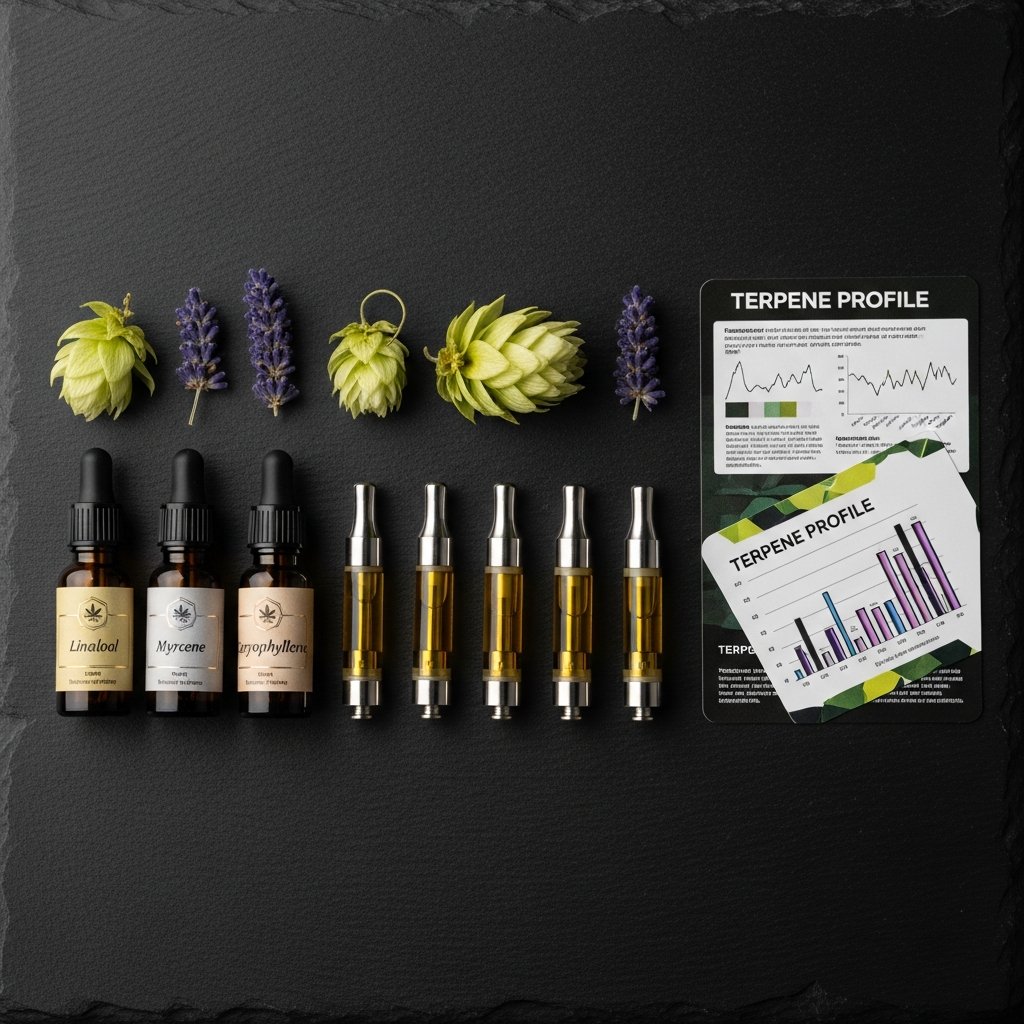
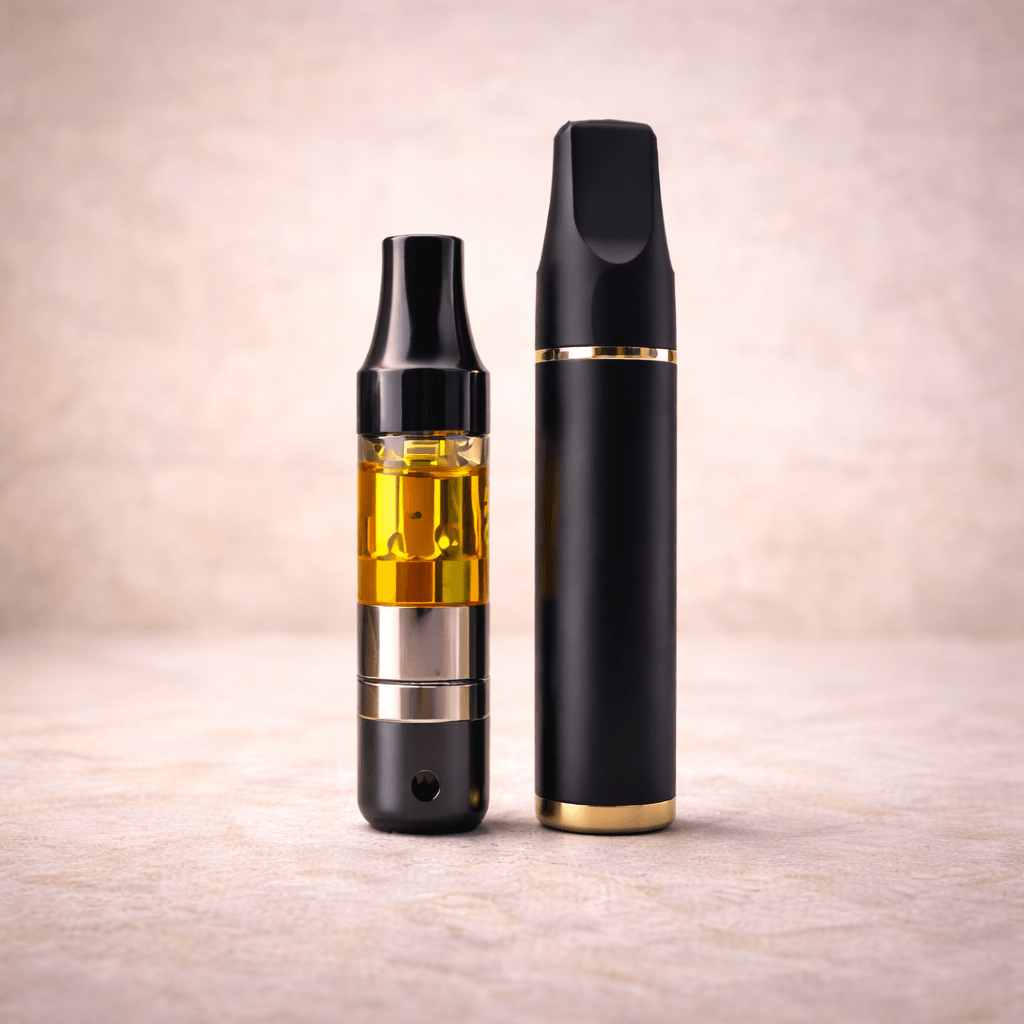
Not all vape carts are built for bedtime. A high-myrcene indica-leaning cartridge is going to behave very differently than a limonene-forward sativa. Pay attention to the terpene profile on the label – it’s not marketing fluff, it’s actually informative.
When you’re shopping specifically for a pre-bed vape, look for cartridges that lean on myrcene, linalool, or beta-caryophyllene. These terpenes are associated with calmer, more body-forward effects. You also want to think about potency – a cart sitting at 90%+ THC distillate with little else in the mix is a very different tool than a full-spectrum or broad-spectrum option that retains more of the plant’s original chemistry.
For people who want a reliable starting point, a full-spectrum THCA cartridge is worth considering. THCA converts to THC when heated, so you’re getting the active compound – but because THCA carts can retain more of the original terpene character compared to stripped distillate, the experience often feels more layered and less one-note.
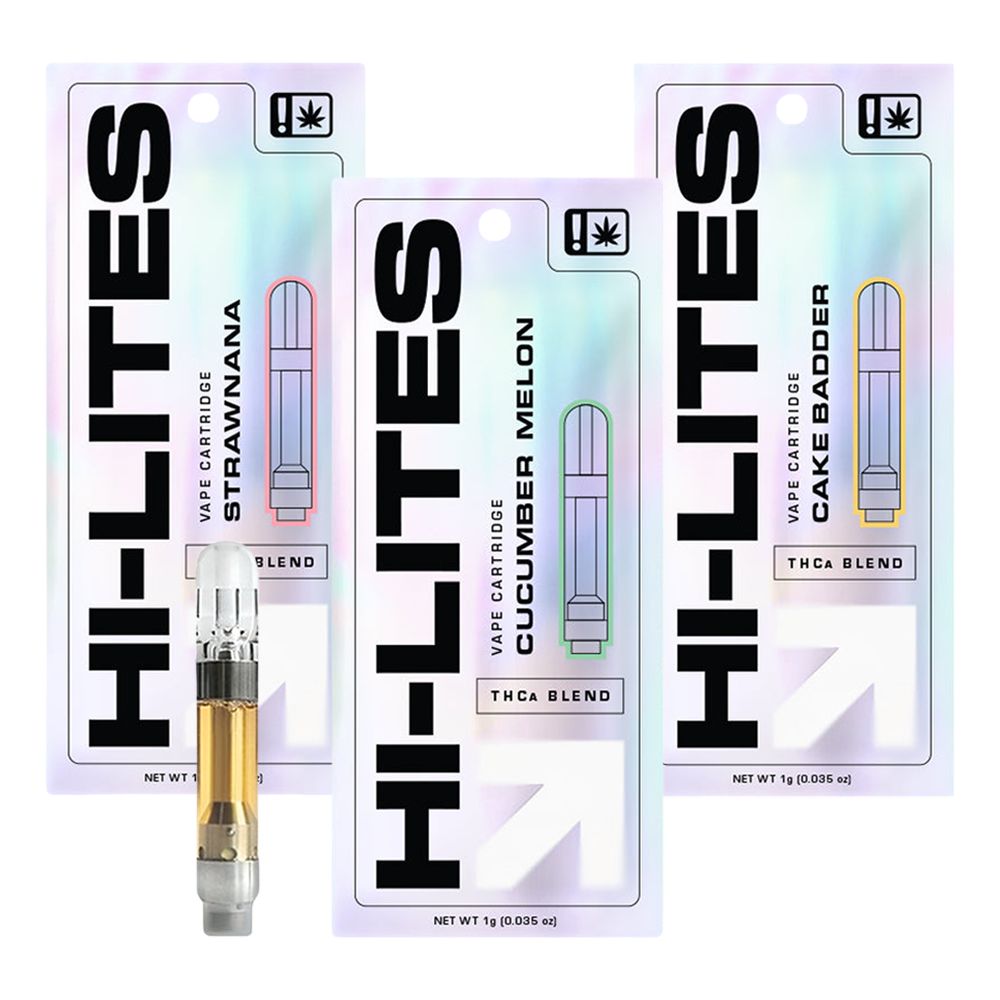
Hi-Lites THCA Vape Cartridge 1g
Full-gram THCA cartridge; retains terpene character for a more complete cannabis experience
Dose and tolerance – the variables most people underestimate
Here’s the thing about tolerance: it doesn’t just affect how high you get, it also affects the sedative quality of the experience. Someone using cannabis daily for months may find that the same cart that used to knock them out now barely registers at bedtime. The dose creep is real, and it quietly erodes the sleep benefit you started with.
If you’ve noticed that you need more puffs to get the same effect, that’s your body adapting. The fix isn’t always taking more – sometimes a short tolerance reset of even a few days can dramatically restore sensitivity. The Ultimate Guide to Cannabis Tolerance (2025 Edition) breaks down how that process actually works and what a structured break looks like in practice.
For dose itself, less is usually more when the goal is sleep. A single short pull and a 10-minute wait will tell you a lot before you decide you need a second. Vaping is easy to re-dose but impossible to un-dose, and overshooting at bedtime tends to produce that alert, slightly anxious feeling that’s the opposite of what you wanted.
Expert Insight
Dr. Alexander Tabibi
Dr. Alexander Tabibi
A critical review published in Chest examined the evidence for cannabinoids — including THC, CBD, and CBN — across insomnia and other sleep disorders. The authors confirmed that the endocannabinoid system modulates the circadian sleep-wake cycle, and that THC’s acute effects on sleep onset latency are biologically plausible. However, the review found that most studies were limited by small sample sizes, short durations, and significant risk of bias — making it difficult to draw firm conclusions about sleep architecture, including REM suppression, from existing data alone.
The authors noted a strong rationale for continued investigation but stopped short of endorsing cannabinoids as a standard sleep intervention. That distinction matters: a plausible mechanism and a proven clinical outcome are different things, and the honest gap between them is worth keeping in mind when interpreting your own nighttime experience with cannabis.
Lavender I, McGregor IS, Suraev A, Grunstein RR, Hoyos CM. (2022). Cannabinoids, Insomnia, and Other Sleep Disorders. Chest, 162(2):452-465. PMID: 35537535
Temperature, hardware, and the details that actually matter
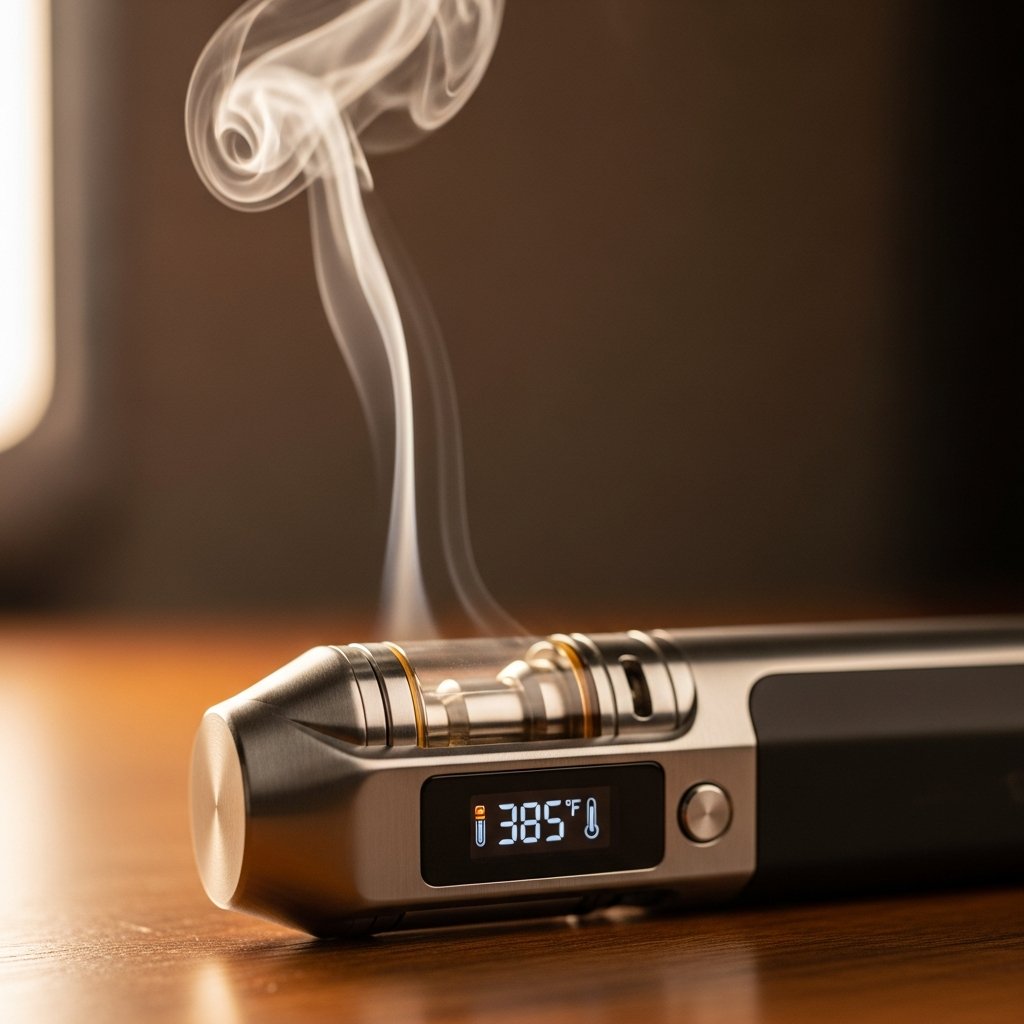
Your vape pen’s heat setting changes the chemical composition of what you’re inhaling. Lower temperatures (roughly 315-375°F) tend to preserve more terpenes and produce a lighter, more nuanced vapor. Higher temperatures extract more THC but also produce more byproducts and a harsher hit that can irritate your airway – which is not ideal when you’re trying to wind down.
If your device has adjustable voltage or temperature, the lower end of its range is usually a better nighttime setting. The experience is gentler, the terpene expression is better, and you’re less likely to cough yourself awake. If you’re new to cartridge vaping and want a grounded primer on technique and safety, how to use a delta 8 vape cartridge safely covers the fundamentals in a way that applies broadly to most cart formats.
Hardware quality also matters more than people expect. A cheap battery that overheats a cart will burn terpenes before you ever inhale them and can degrade the oil faster than you’d like. Keep your cartridge stored properly – upright, away from heat sources – and it’ll perform more consistently night to night.
What to pair with vaping for better sleep results
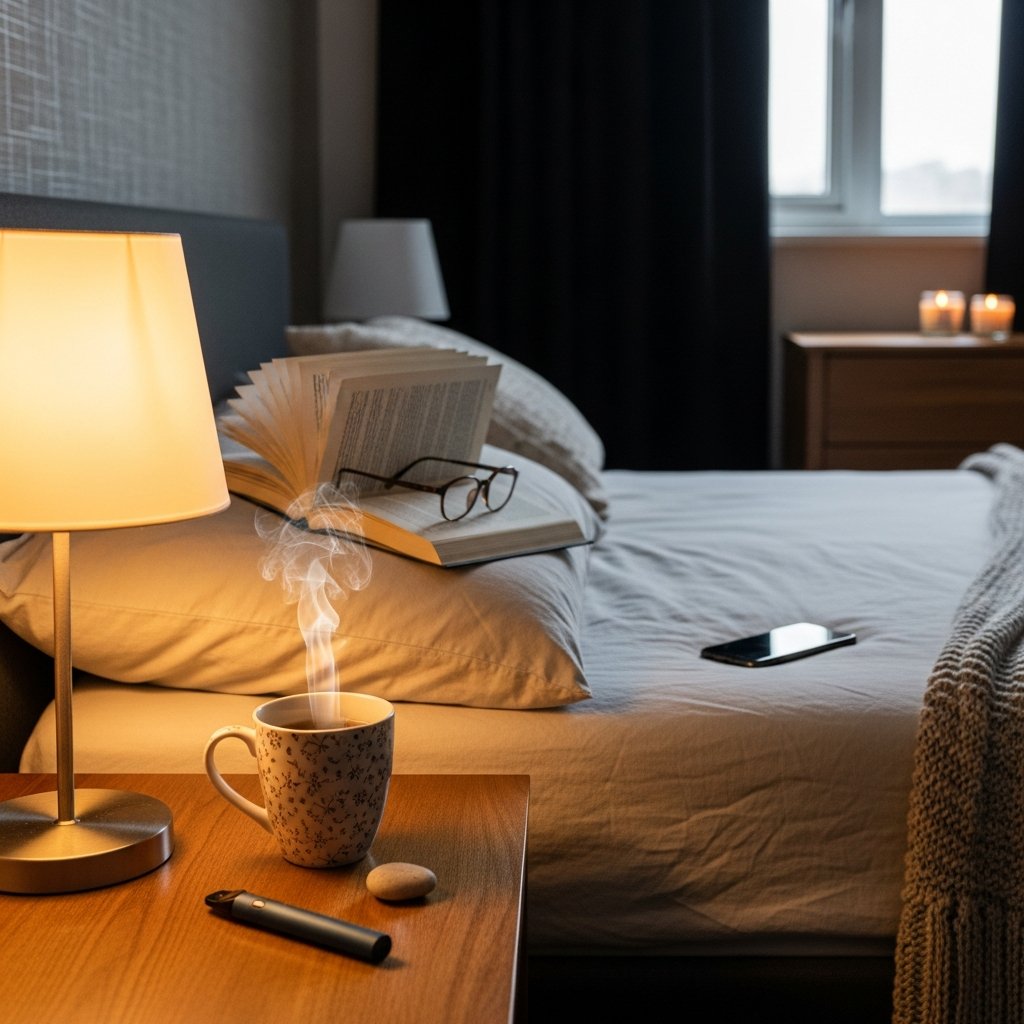
Cannabis works better as part of a sleep routine than as the whole routine. That sounds almost too obvious, but a lot of people use it as a substitute for good sleep hygiene rather than a complement to it. If your room is warm, your phone is in your hand, and you haven’t wound down at all, the vape is fighting an uphill battle.
A few things that tend to compound the effect positively: keeping your room cool (your body needs to drop temperature to fall asleep), shutting down screens at least 20 minutes before bed, and doing something low-stimulation after your session – reading, slow stretching, or just lying quietly in the dark. These aren’t revolutionary suggestions, but paired with a well-chosen vape, they make a real difference.
Some people also find that combining inhalation with a slow-onset product on nights when sleep quality is the priority helps maintain effect through the night, since vaping’s duration is relatively short (roughly 2-3 hours). For those who’ve thought about layering formats, the cbdMD Delta 9 THC Lights Out Sleep Gummies are designed specifically for that extended overnight window – though if you go that route, timing the edible component well in advance of the vape session is key.
And if you want to experiment with a dual-chamber cart that lets you switch between strains depending on where you are in the evening – something more alert early, something more relaxing closer to bed – the Cookies 2G Dual Chamber Vape in Triple Scoop and Georgia Pie is one concrete example of that format.
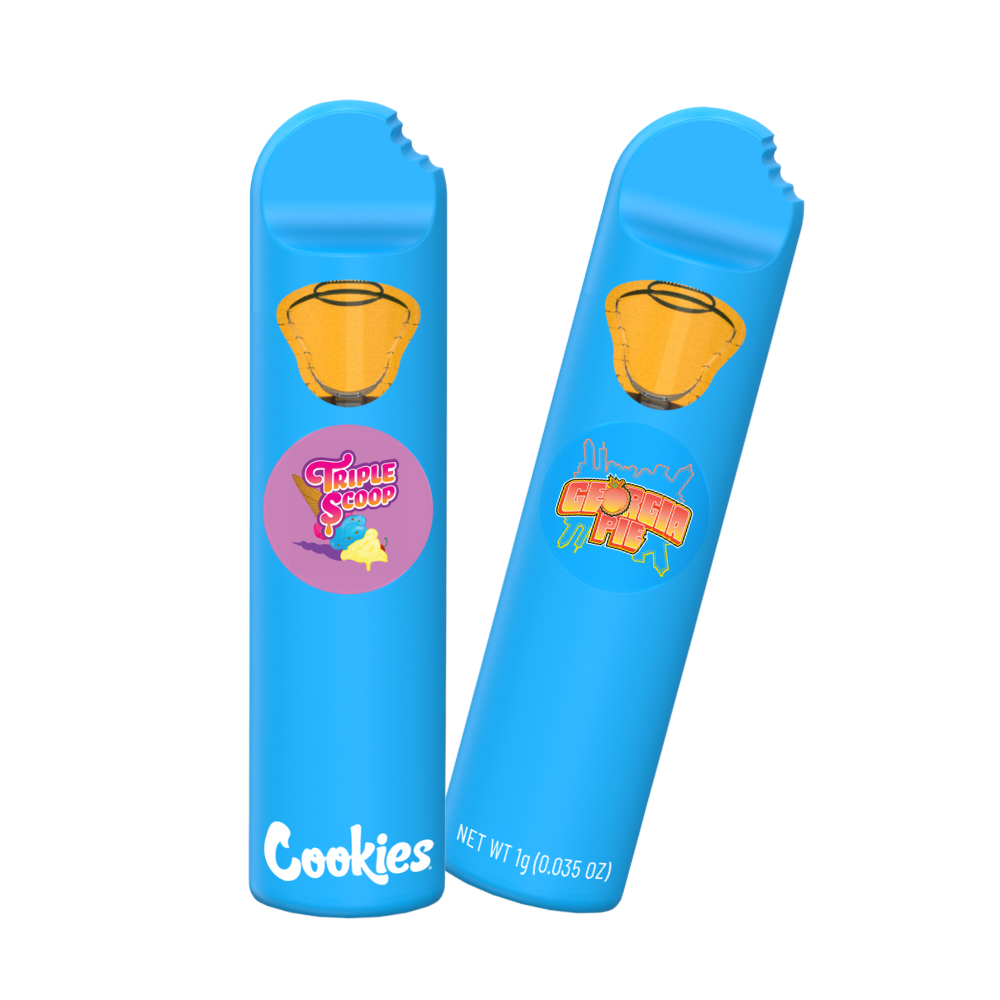
Cookies 2G Dual Chamber Vape – Triple Scoop & Georgia Pie
Two-gram dual-chamber design; switch between cultivars in the same session
When vaping before bed isn’t working – honest signals to watch for
There’s a difference between cannabis not working well for your sleep and cannabis actively making things worse. Racing thoughts after vaping, elevated heart rate, or waking up at 3 a.m. feeling alert are signs that your current approach isn’t calibrated correctly – whether that’s dose, timing, strain, or tolerance.
Anxiety as a side effect of too much THC is one of the more common reasons people feel worse, not better, after a nighttime session. It’s almost always dose-related. Dropping back to a much smaller amount for a week or two and reassessing is usually more useful than switching products entirely.
If you’re relying on vaping every single night to fall asleep and find you simply can’t sleep without it, that’s worth paying attention to. It doesn’t mean you have to stop, but it does mean your baseline has shifted – and that’s useful information for making a conscious choice rather than running on autopilot.
Frequently asked questions
How long before bed should I vape cannabis?
Most people find 30 to 60 minutes before sleep works better than vaping immediately before lying down. That window lets the initial peak settle, so you’re catching the calmer, more sedative tail of the experience rather than the activated onset.
Does vaping cannabis actually improve sleep quality?
It can shorten the time it takes to fall asleep, especially for infrequent users
, but research shows THC suppresses REM sleep, which is important for memory consolidation and emotional processing. Short-term sleep onset benefits are real; long-term sleep quality is more complicated and depends heavily on dose and frequency.
Why does vaping sometimes make me feel more awake at night?
This is usually a dose or terpene issue. High doses of THC can trigger anxiety and alertness rather than sedation. Sativa-leaning carts with limonene or pinene can also have energizing effects. Switching to a lower dose or a myrcene-forward indica-leaning product often resolves it.
What terpenes are best in a vape cart for nighttime use?
Myrcene, linalool, and beta-caryophyllene are the ones most associated with calmer, body-forward effects. Look for these on the cartridge lab panel or product description. Avoiding limonene-heavy or terpinolene-dominant profiles before bed is generally a good call.
Can I build a tolerance to cannabis as a sleep aid?
Yes. Daily use leads to CB1 receptor downregulation, which blunts the sedative effect over time. Many regular users find they need progressively more to achieve the same result. Even a short tolerance break of a few days can meaningfully restore sensitivity without requiring a full reset.
Is it better to use a full-spectrum cart or distillate for sleep?
Full-spectrum or broad-spectrum options retain more of the plant’s original terpene and cannabinoid profile, which many users find produces a more rounded, less one-dimensional experience. Pure high-potency distillate delivers more THC but lacks the supporting chemistry that may contribute to the entourage effect.
What temperature should I vape at for the best nighttime effect?
Lower settings in the 315 to 375 degree Fahrenheit range preserve more terpenes and produce gentler vapor, which is preferable before bed. Higher temperatures extract more THC but can cause harsher hits and airway irritation that work against winding down.
Disclaimer: This content is for informational purposes only and does not constitute medical advice. Cannabis affects individuals differently. If you have a sleep disorder or underlying health condition, consult a qualified healthcare provider before using cannabis. If you experience a medical emergency, call 911 or go to your nearest emergency room.
Sources
-
Lavender I, McGregor IS, Suraev A, Grunstein RR, Hoyos CM. (2022). Cannabinoids, Insomnia, and Other Sleep Disorders. Chest, 162(2):452-465. PMID: 35537535
-
Corroon J. (2021). Cannabinol and Sleep: Separating Fact from Fiction. Cannabis and Cannabinoid Research, 6(5):366-371. PMID: 34468204
-
Baron EP. (2018). Medicinal Properties of Cannabinoids, Terpenes, and Flavonoids in Cannabis, and Benefits in Migraine, Headache, and Pain. Headache, 58(7):1139-1186. PMID: 30152161