🚛 FREE DISCREET SHIPPING ON ALL ORDERS $49+

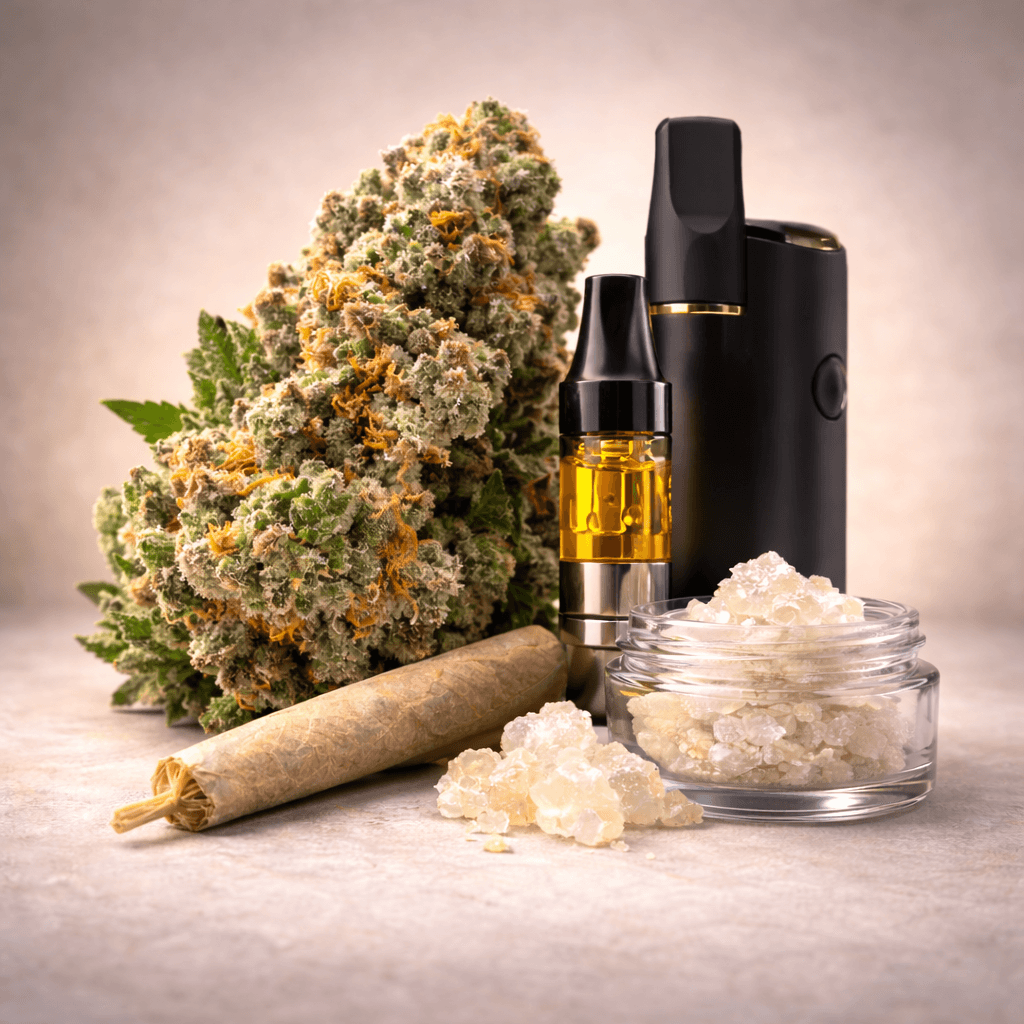







Sativa Vape Pens for Focus: Top Strains to Try
There’s a moment most of us know well. It’s mid-afternoon, you have three hours of work left, your brain is somewhere between foggy and actively hostile, and coffee has officially stopped working. You want to focus, but you don’t want to feel wired or anxious. You want that clean, engaged headspace where ideas actually connect. That’s exactly where sativa-dominant cannabis

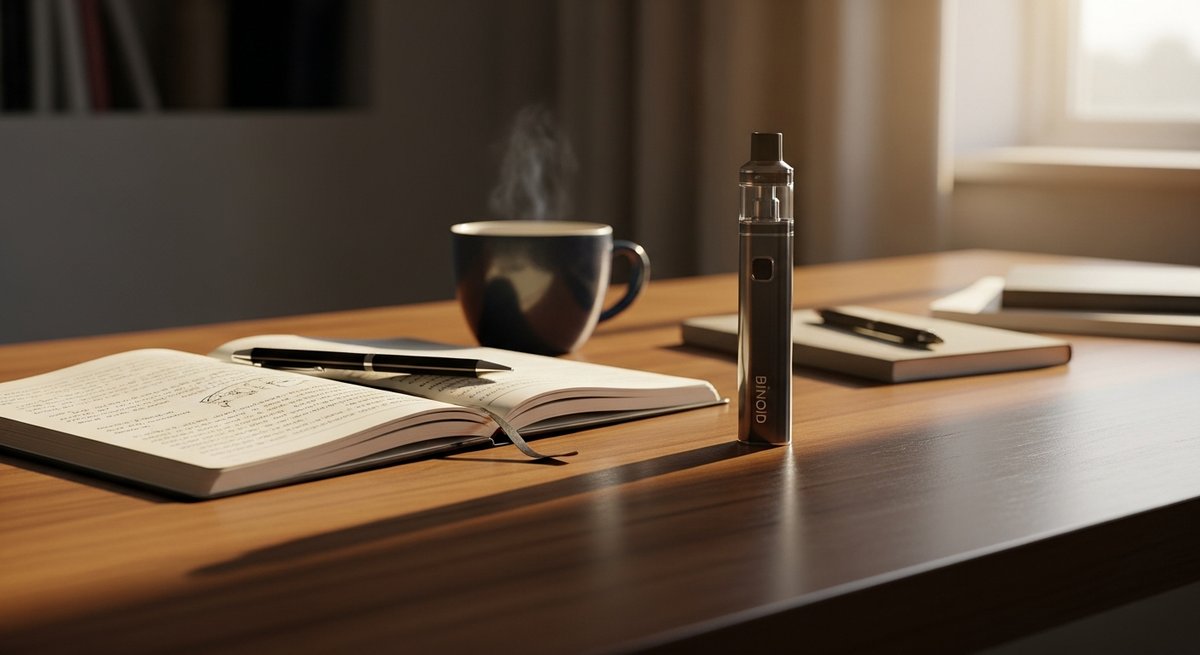
There’s a moment most of us know well. It’s mid-afternoon, you have three hours of work left, your brain is somewhere between foggy and actively hostile, and coffee has officially stopped working. You want to focus, but you don’t want to feel wired or anxious. You want that clean, engaged headspace where ideas actually connect. That’s exactly where sativa-dominant cannabis enters the conversation – and specifically, where the right vape pen can feel like a surprisingly useful tool.
Not every sativa strain is created for focus. Some will send you into a spiral of creative tangents. Others are genuinely uplifting without being scattershot. Finding the right one is the whole game. This guide walks through the strains worth knowing, what to actually look for in a vape cartridge, and how to use them without accidentally torching your productivity instead of improving it.
Why Sativa-Dominant Strains Are Tied to Mental Clarity
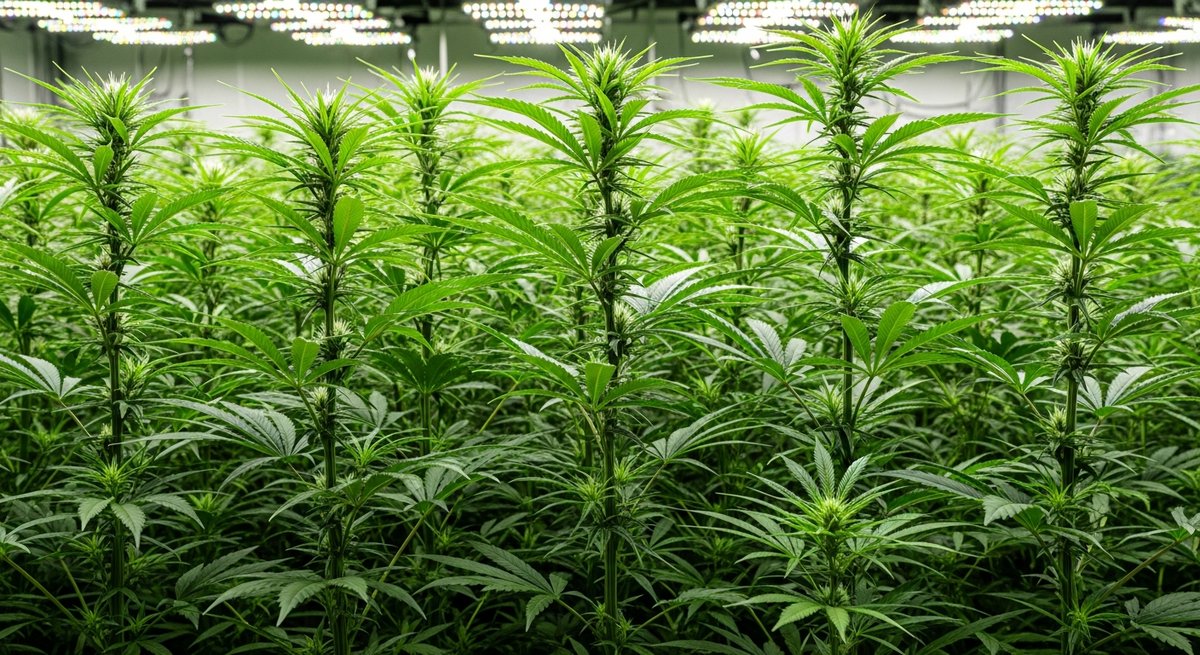
Here’s something that confuses a lot of people. The words “sativa” and “indica” technically describe plant morphology – how tall the plant grows, how its leaves spread – not chemical effects. Modern cannabis breeding has scrambled the genetics so thoroughly that calling something purely sativa is more of a shorthand than a botanical fact. But the shorthand exists for a reason: it points to a general effect profile that tends toward energizing, cerebrally active highs rather than sedating body-focused ones.
What actually drives those differences is the cannabinoid and terpene profile of the flower or extract. High-THCV strains, for instance, are often noted anecdotally for sharper, shorter-duration effects. Terpenes like pinene, limonene, and terpinolene appear frequently in strains associated with focus and mental energy. The relationship between terpenes and subjective effect is still an active area of research, but the patterns are consistent enough that experienced users and budtenders have built useful heuristics around them.
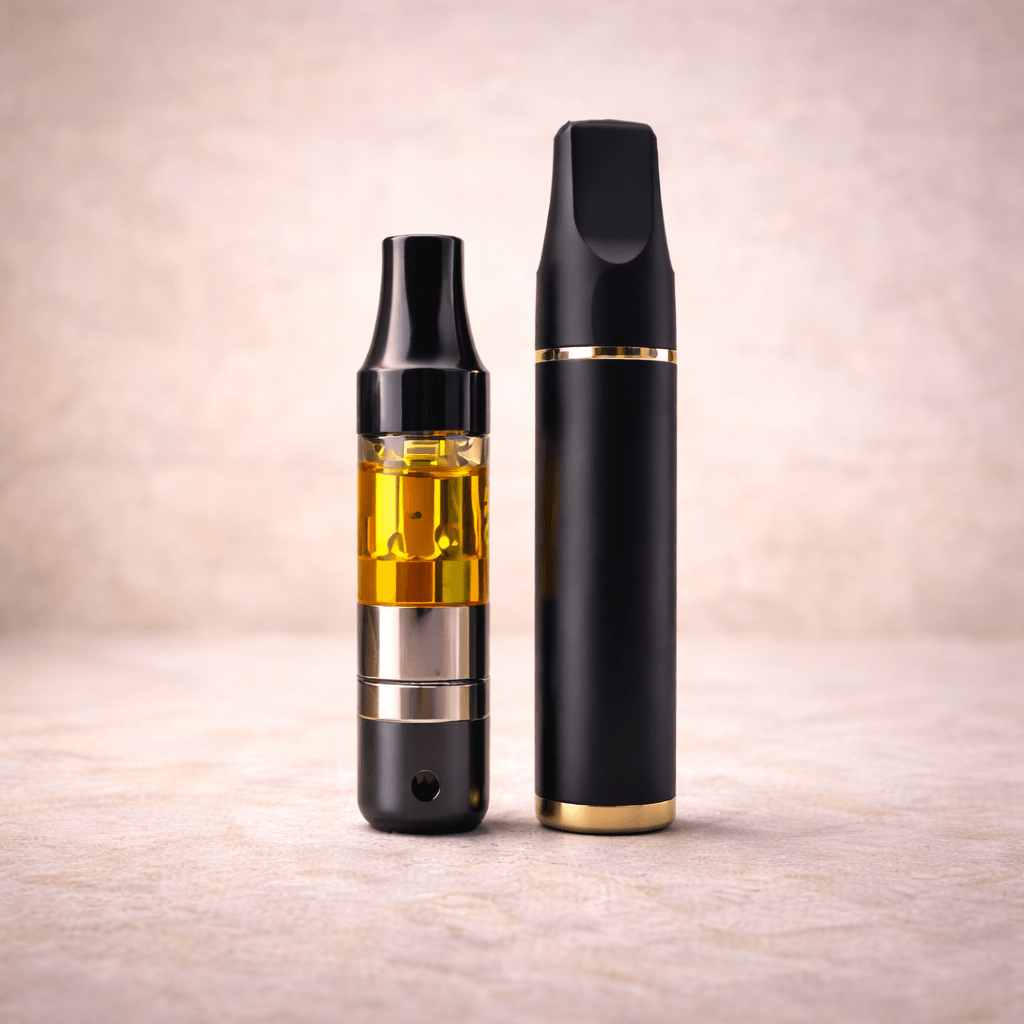
A vape pen delivers those compounds quickly and without combustion byproducts, which is part of why it’s become a go-to format for people who want a functional, daytime-friendly experience. Onset is fast – usually within a few minutes – and you can titrate dose more precisely than with most other formats. That matters a lot when the goal is sharpness rather than sedation.
The Strains That Actually Come Up in Focus Conversations
Ask a group of regular cannabis users which strains they reach for when they need to get things done, and a handful of names come up repeatedly. Green Crack is almost always in the first sentence. It’s a strain that developed a cult following among creative professionals for its clean, sustained energy without a lot of mental noise. The terpene profile is typically limonene-forward with notable myrcene and caryophyllene, giving it a citrus-forward aroma and an effect that feels alert without feeling anxious.
Durban Poison is another one that comes up constantly. It’s a landrace sativa from South Africa, which means it developed largely without the kind of crossbreeding that’s reshaped most modern strains. It tends to run high in terpinolene and THCV, and users describe a clean, functional high that doesn’t linger for hours. For people who want focus without a long commitment to being altered, that’s a real advantage.
Jack Herer is perhaps the most famous focus strain in cannabis culture, named after the late cannabis activist. It’s a balanced hybrid leaning sativa, typically rich in terpinolene, pinene, and caryophyllene. The effect is often described as creative and clear-headed – more like having a good idea than being stoned. It’s been around long enough that it’s available in cartridge form from many reputable producers, which makes it easy to find in a vape format.
Tangie deserves a mention here too. It’s a cross of California Orange and Skunk that leans hard into the limonene-dominant citrus profile. The effect is uplifting and social, which doesn’t always mean “focused” in a deep-work sense, but for tasks that require communication, brainstorming, or anything creative, it’s genuinely excellent. It also tends to be more forgiving at slightly higher doses than some other sativa-dominant options.
For readers weighing vape cartridge options, Tangie shows up in a well-regarded delta 8 format worth knowing about. If you’re curious how delta 8 interacts with classic sativa strain profiles, the effects of delta 8 carts piece on Weed.com covers the pharmacology and what to realistically expect from the experience.
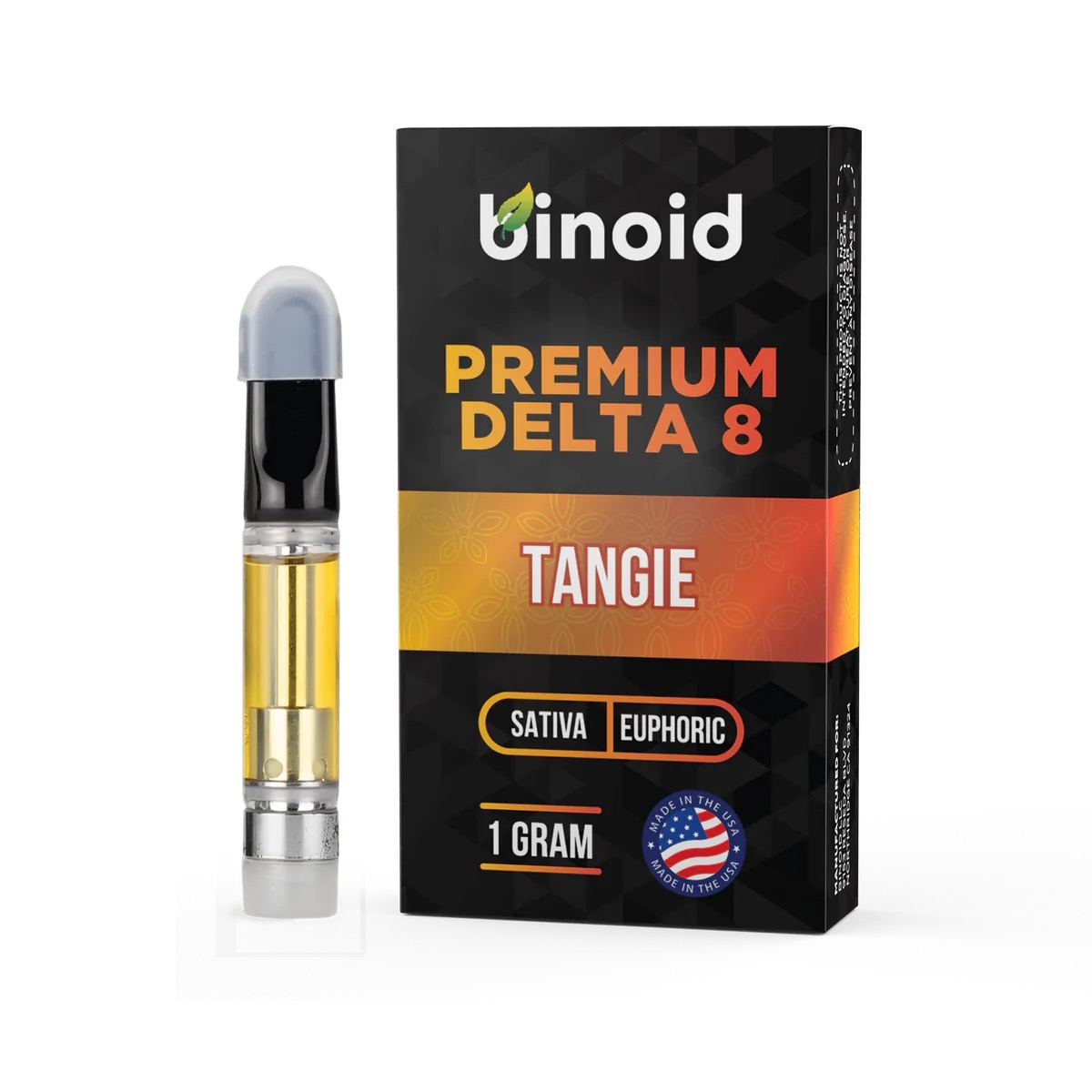
Binoid Delta 8 THC Vape Cartridge – Tangie
Limonene-forward sativa cartridge from Binoid, built on the Tangie strain profile for uplifting daytime use
What to Look For in a Cartridge Beyond the Strain Name
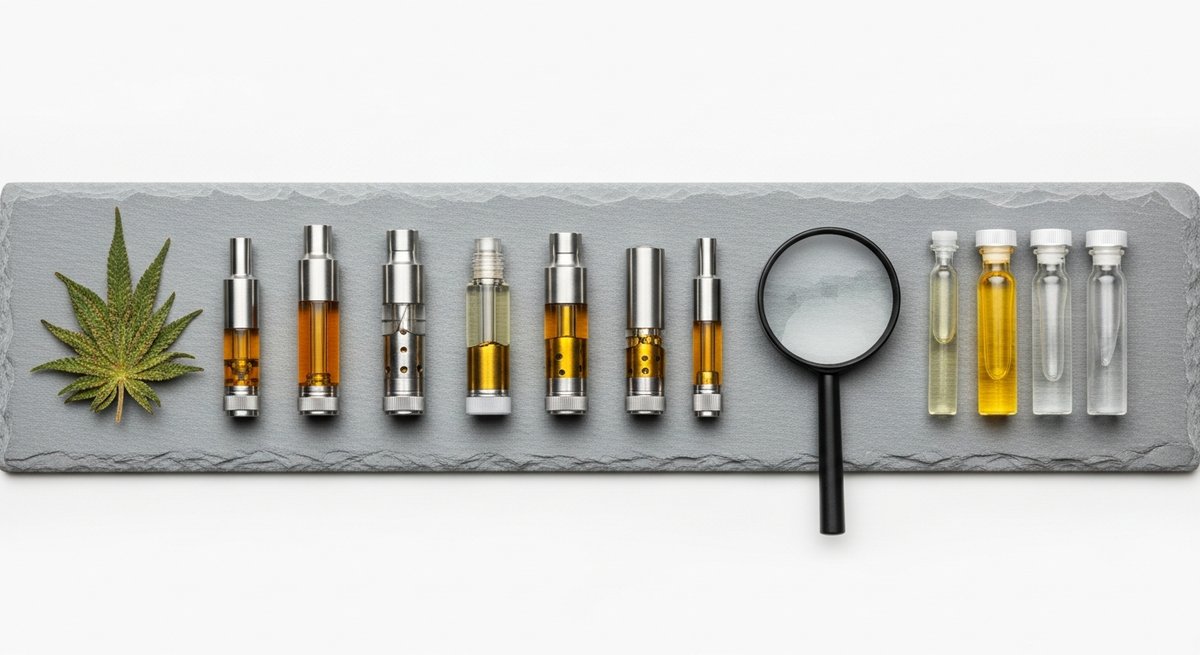
Strain names are a starting point, not a guarantee. The actual quality of your experience with any vape cartridge depends heavily on how the extract was made, what’s in it, and how the hardware handles vaporization. There are a few things that separate a mediocre cartridge from one that actually delivers what it promises.
Live resin and live rosin extracts preserve a broader terpene profile than distillate because they’re made from fresh-frozen or cold-processed plant material rather than dried and cured flower. That matters enormously for focus-oriented strains, where the terpene content is doing a lot of the work. Distillate cartridges that have been “re-terped” with botanical terpenes aren’t inherently bad, but they may not replicate the nuance of a full-spectrum or live extract.
Certificate of Analysis (COA) transparency is non-negotiable. Any brand worth buying from publishes third-party lab results that confirm cannabinoid content, verify terpene presence, and screen for residual solvents, pesticides, and heavy metals. If that information isn’t available, walk away. This isn’t paranoia – it’s basic quality assurance in a market that still has significant variability in product standards.
Hardware matters more than most people expect. Ceramic coil cartridges tend to produce cleaner flavor and more consistent vaporization than wick-based designs, especially at lower temperatures. Lower temperature draws also preserve more of the terpene content – pulling slowly at the lowest effective voltage is almost always better for flavor and effect than blasting it at maximum heat. If your pen has adjustable voltage, start low.
It’s also worth thinking about the cannabinoid type. Delta 9 THC from licensed dispensaries is the most studied and most potent option. Hemp-derived products like delta 8 THC or THCA offer legal availability in many states without a dispensary, and for some users produce a gentler, slightly less psychoactive experience that still carries the sativa energy profile. If you’re new to vaping cannabis for focus, a hemp-derived sativa option with a lower potency starting point gives you more control while you learn your response.
Expert Insight
Dr. Alexander Tabibi
Dr. Alexander Tabibi
Terpenes in cannabis don’t operate in isolation. A 2018 comprehensive review by Baron et al. examined how cannabinoids, terpenes, and flavonoids interact synergistically – a concept often called the entourage effect. Pinene, limonene, and terpinolene, the terpenes most common in focus-associated sativa profiles, each have distinct pharmacological properties that may contribute to the overall subjective experience of clarity and alertness users describe.
That said, evidence for terpene-specific cognitive effects in humans remains observational and largely anecdotal at the clinical level. The review synthesizes preclinical and clinical data across pain, headache, and cannabinoid science, but it stops well short of making prescriptive claims. What it does support is the idea that strain-specific profiles – not just THC percentage alone – are worth paying attention to when selecting a product for functional use.
Baron et al. (2018). Medicinal Properties of Cannabinoids, Terpenes, and Flavonoids in Cannabis, and Benefits in Migraine, Headache, and Pain: An Update on Current Evidence and Cannabis Science. Headache, 58(7):1139-1186. PMID: 30152161
Vaping vs. Flower: Why Format Matters for Functional Use
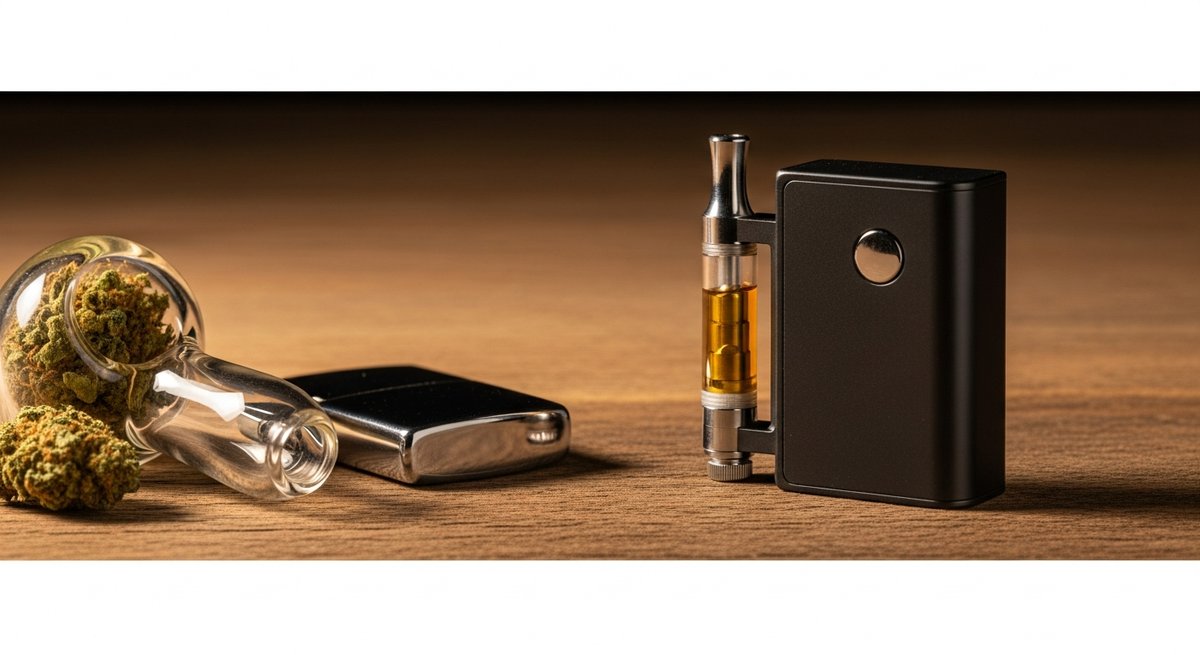
Let’s be honest about something: vaping and smoking flower are not identical experiences even when the strain is the same. The bioavailability is similar, the onset time is roughly comparable, but the flavor, vapor quality, temperature, and consistency of dosing differ in ways that matter for intentional, functional use.
Vape pens offer portability and discretion that flower simply can’t match. A single draw from a cartridge is repeatable – the same hardware, same extract, same temperature. That predictability is useful when you’re trying to find a reliable functional dose rather than experimenting. Flower has more variability batch to batch, requires preparation, and involves combustion chemistry that vaporization avoids entirely.
There are legitimate reasons some people prefer flower, and it’s worth reading a detailed comparison if you’re making this decision thoughtfully. The breakdown of THC vape pens versus cannabis flower covers the practical tradeoffs across potency, onset, health considerations, and convenience in a way that’s genuinely useful if you haven’t landed firmly on one side.
For the specific goal of daytime focus, vape pens tend to win on convenience and dosing control. The question then becomes: which extract type within the vape format best preserves what makes a sativa strain good for focus in the first place?
Dual Chamber and Multi-Strain Vapes: A New Option Worth Knowing
One format that’s gained traction recently is the dual chamber vape, which lets you switch between two distinct strains or cannabinoid profiles in a single device. This is more useful than it sounds. If you want an energizing sativa draw in the morning and something slightly more relaxed in the evening, having both in one piece of hardware is genuinely practical.
The Cookies brand has built a strong reputation in this format, combining distinct strain profiles in one cartridge. For readers curious about a specific example, the Cookies 2G Dual Chamber Vape in the Adios MF and Miami Mint combination pairs a heavy hitter with a refreshing, mint-forward profile – not a pure focus setup, but an illustration of how the dual chamber format allows intentional pairing of effects within a single session.
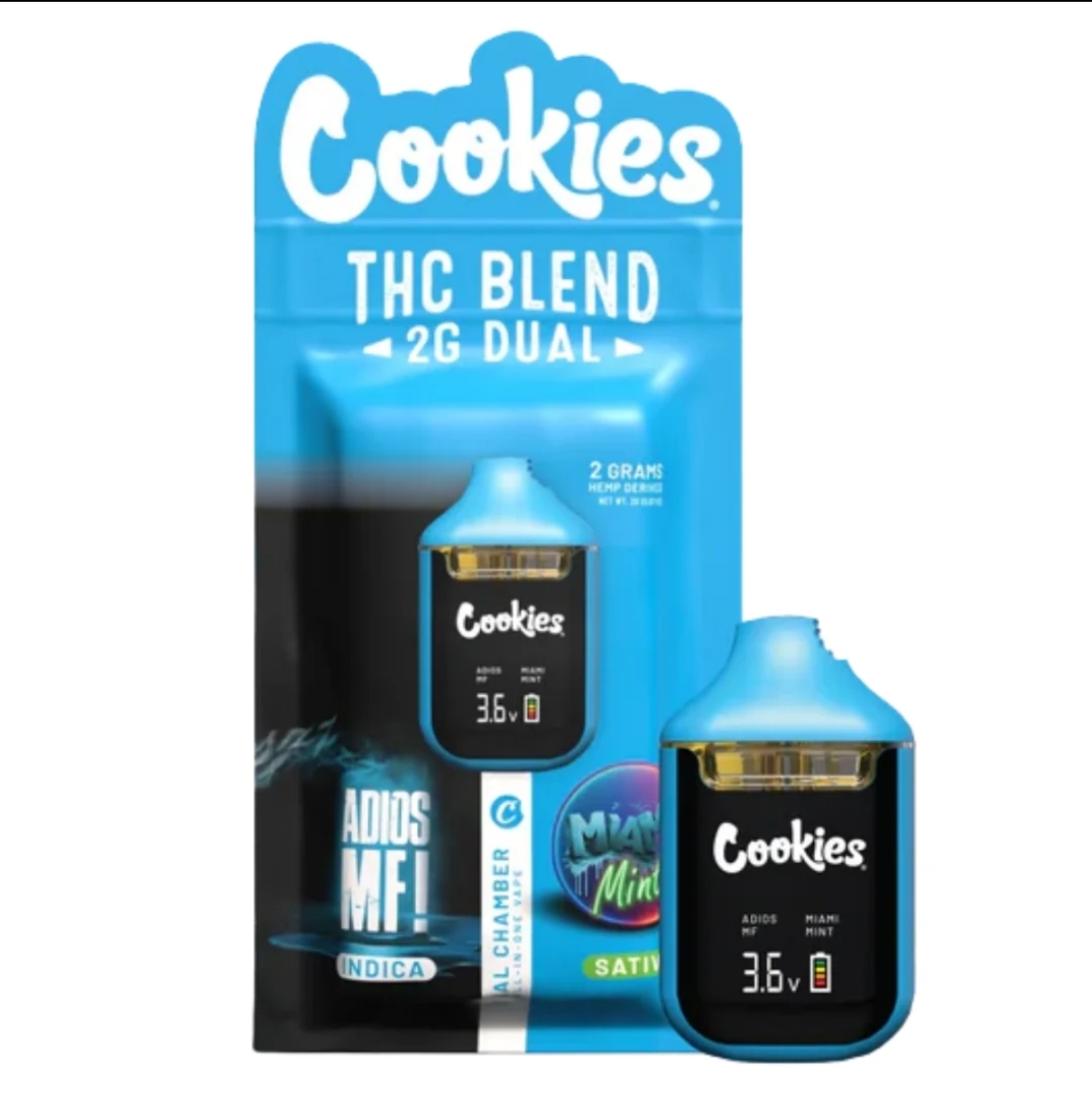
Cookies 2G Dual Chamber Vape – Adios MF & Miami Mint
Two-strain 2G cartridge from Cookies – switch between profiles in one compact device
Dosing for Focus: Less Is Usually More
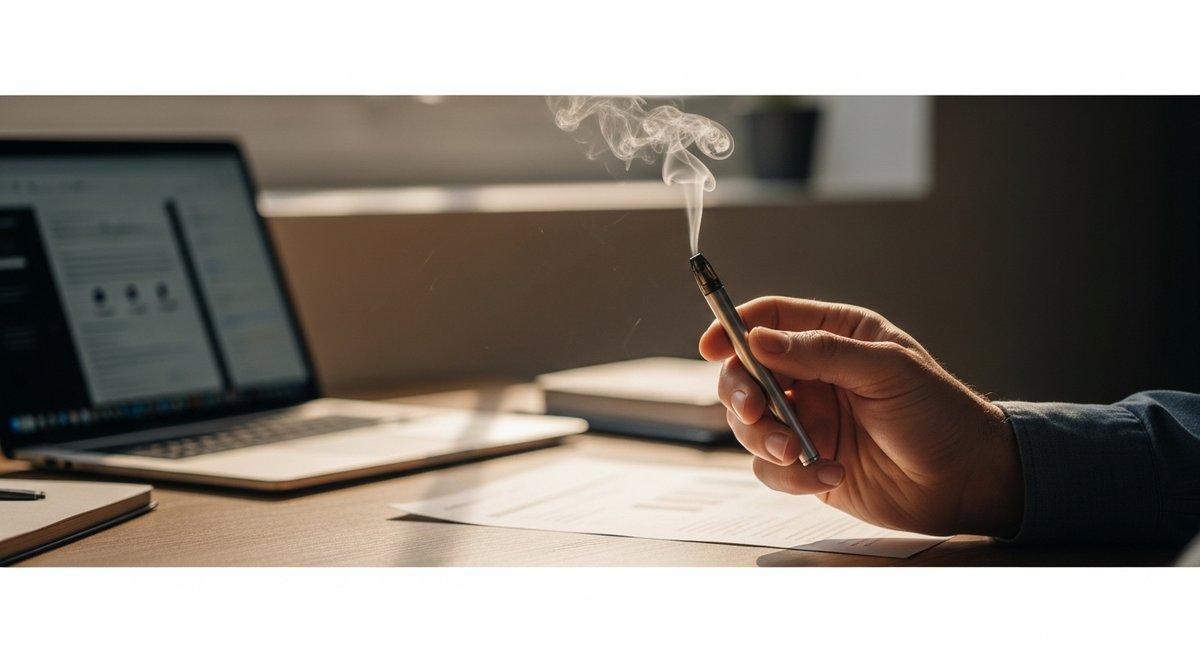
This is where most people go wrong. The dose that makes cannabis useful for focus is almost always lower than what people default to recreationally. At higher doses, even reliably energizing sativa strains will produce cognitive effects that work against concentration – more free-associative thinking, slower verbal processing, more susceptibility to distraction. The therapeutic window for focus is narrow and it sits on the low end of the potency spectrum.
One or two short draws from a cartridge is a reasonable starting point. Wait ten minutes before taking more. The onset from inhalation is fast, but the full effect – particularly with live resin extracts that carry a complex terpene load – can take a few minutes to fully develop. Chasing the onset is how you overshoot.
Tolerance is also a real variable here. If you’re a daily or near-daily user, the functional effects of cannabis on focus may be muted compared to what a less frequent user experiences. This doesn’t mean you need to take more – it means tolerance breaks are genuinely useful if you want to use cannabis intentionally for cognitive tasks rather than habitually.
It’s also worth noting that focus isn’t the only nighttime-adjacent use case for vaping cannabis. If you’re someone who uses different cannabinoid profiles at different times of day, the comparison between sativa-type energizing effects and indica-dominant sleep-oriented profiles is genuinely useful. For readers who also use vaping as part of a wind-down routine, the overview of indica vape pens for sleep and what to look for walks through the complementary side of this equation.
Who Benefits Most – and Who Should Be Cautious
People who tend to report the most consistent benefit from sativa vapes for focus are those doing creative, open-ended work – writing, design, brainstorming, problem-solving that rewards lateral thinking. The effect feels less like laser focus and more like the mental friction between you and the work being reduced. You’re not grinding; you’re flowing.
For highly structured, detail-intensive tasks – tax preparation, copy editing, legal analysis – the verdict is more mixed. Some people find it helpful; others find their attention wanders in exactly the wrong directions. Knowing which camp you fall into requires experimentation, and that experimentation is best done on low-stakes days rather than high-pressure deadlines.
Anyone with a personal or family history of anxiety disorders or psychosis should approach high-THC sativa products cautiously. Energizing sativa profiles can amplify anxiety at higher doses, and this is not a rare side effect – it’s a well-documented phenomenon. Starting with lower-potency options and going slowly is the practical answer here, not avoidance necessarily, but respect for individual variation.
Expert Insight
Dr. Alexander Tabibi
Dr. Alexander Tabibi
A 2016 guided systematic review by Walsh et al., covering 31 studies on medical cannabis and mental health, noted that acute cannabis use may affect cognitive assessment. The pattern observed across studies suggests that short-term cognitive effects – both positive and adverse – are real, variable across individuals, and dose-dependent. This is consistent with what clinicians and researchers have observed in observational data on cannabis and cognitive function.
The review also found that cannabis use was associated with worsening in individuals with psychotic disorders, and flagged that the evidence base for most mental health applications remains preliminary. For functional use in healthy adults – including focus-oriented applications – this translates to a practical message: individual responses vary widely, lower doses are more consistently manageable, and anyone with a relevant psychiatric history should have a frank conversation with a healthcare provider before adding cannabis to a daily routine.
Walsh et al. (2017). Medical Cannabis and Mental Health: A Guided Systematic Review. Clinical Psychology Review, 51:15-29. PMID: 27816801
Used thoughtfully, a sativa vape pen for focus is a practical tool – not magic, but genuinely useful for many adults who find that the right strain, at the right dose, at the right time, smooths the path between intention and output.
Frequently asked questions
What makes a sativa vape pen better for focus than an indica?
Sativa-leaning strains tend to carry terpenes like pinene, limonene, and terpinolene that are associated with alertness and mental clarity. Indica profiles lean sedative, making sativa options more practical for daytime, task-oriented use.
How many draws should I take from a sativa vape pen to help with focus?
Start with one or two short draws, then wait ten minutes before reassessing. Lower doses are more reliably productive for focus. Overshooting the dose is the most common reason sativa vapes feel counterproductive rather than clarifying.
Can I use a hemp-derived sativa vape pen for focus without a dispensary card?
Yes. Hemp-derived options like delta 8 THC or THCA cartridges are widely available online and in retail stores in many states without a medical card. They carry sativa strain profiles and offer a gentler starting point for new users.
Is live resin worth paying more for in a focus-oriented sativa cartridge?
Generally yes. Live resin preserves a fuller terpene profile than distillate, which matters because terpenes contribute significantly to the strain’s functional character. If terpene content is doing cognitive work, live resin delivers more of it.
Which sativa strains are most commonly recommended for focus?
Jack Herer, Green Crack, Durban Poison, Sour Diesel, and Tangie are among the most frequently cited. Each carries a distinct terpene fingerprint, but all lean energizing and mentally clarifying rather than sedating at moderate doses.
Sources
Walsh et al. (2016). Medical cannabis and mental health: A guided systematic review. Clinical Psychology Review, 51:15-29. PMID: 27816801
Baron et al. (2018). Medicinal Properties of Cannabinoids, Terpenes, and Flavonoids in Cannabis, and Benefits in Migraine, Headache, and Pain: An Update on Current Evidence and Cannabis Science. Headache, 58(7):1139-1186. PMID: 30152161
Important Notice
Cannabis affects individuals differently. If you have a history of anxiety, panic disorder, or other mental health conditions, consult a qualified healthcare provider before using any cannabis product. This article is for informational purposes only and does not constitute medical advice. If you experience severe anxiety, chest pain, difficulty breathing, or feel you are in crisis, call 911 or go to your nearest emergency room immediately.
For adults 21+ only. Cannabis laws vary by state. This content is intended for informational purposes only and does not constitute medical or legal advice. If you are experiencing a medical emergency, call 911 or go to your nearest emergency room immediately.