🚛 FREE DISCREET SHIPPING ON ALL ORDERS $49+










Sativa vs Hybrid Gummies for Creative Flow: Which to Pick
You’ve got a blank canvas, a deadline that’s somehow both too close and too far away, and a gummy in your hand. The question isn’t whether cannabis can help you get into a creative groove – plenty of artists, writers, and musicians have been asking that for decades. The real question is which type of gummy actually delivers on that


You’ve got a blank canvas, a deadline that’s somehow both too close and too far away, and a gummy in your hand. The question isn’t whether cannabis can help you get into a creative groove – plenty of artists, writers, and musicians have been asking that for decades. The real question is which type of gummy actually delivers on that promise. Choosing between sativa vs hybrid gummies for creativity isn’t just about flavor or milligrams. It’s about understanding what’s actually inside the package, how your body responds to different cannabinoid profiles, and what “creative flow” really means for your particular brain on a particular kind of Tuesday.
What Sativa and Hybrid Labels Actually Mean on a Gummy
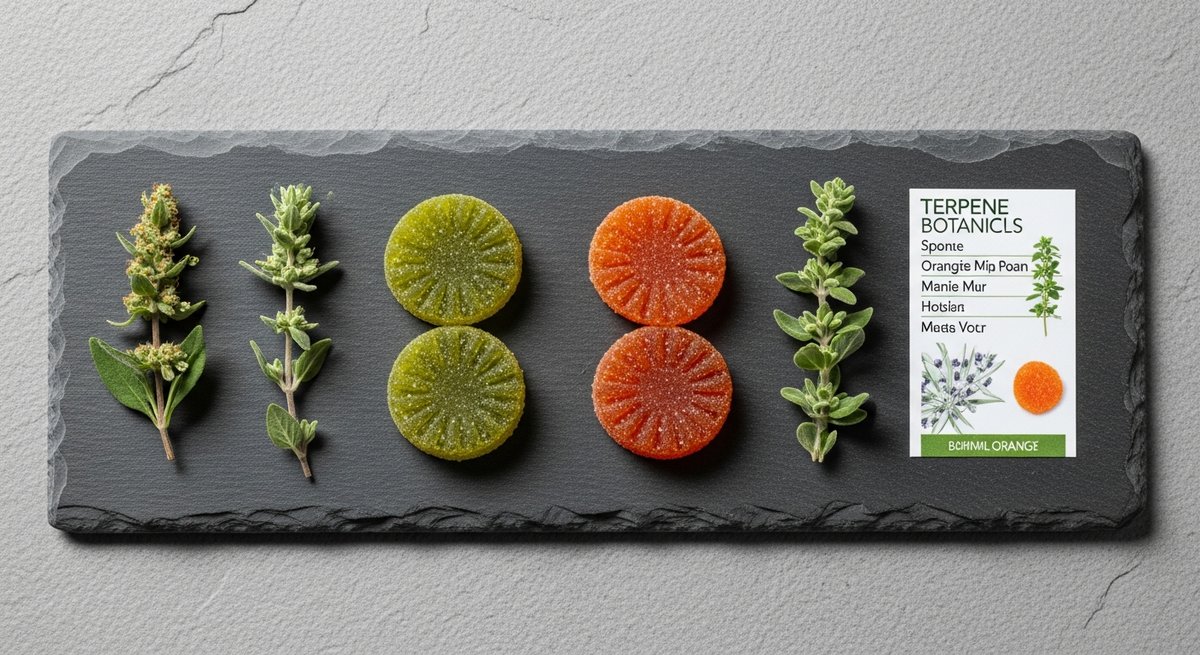
Here’s the thing about gummy labels: they’re borrowing language that originally described whole cannabis plants. When a cultivar is called “sativa,” it traditionally meant tall, loose-leafed plants from equatorial regions, associated with uplifting, cerebral effects. Hybrid” meant a cross between sativa and indica genetics, theoretically blending energizing and relaxing qualities in some proportional balance.
The catch? Modern cannabis genetics are almost entirely hybridized at this point. As covered in depth in the complete guide to indica, sativa, and hybrid cannabis in the modern science era, the botanical distinction has largely collapsed. What actually shapes your experience is the cannabinoid ratio (THC, CBD, CBN, and others) and the terpene profile of the source material.
So when a gummy brand labels something “sativa,” they’re usually signaling a terpene-forward formulation drawing from strains associated with uplifting effects – think limonene, pinene, or terpinolene. A “hybrid” gummy might use a broader terpene blend or a more balanced THC-to-CBD ratio. Neither label is a guarantee, but they’re still useful shorthand if you understand what’s underneath them.
The Case for Sativa-Leaning Gummies When Creativity Is the Goal

Ask a working musician or a freelance illustrator what they reach for before a session, and there’s a decent chance they’ll describe something uplifting, cerebral, and not too sedating. The terpenes typically associated with sativa-leaning products – limonene (citrusy, mood-elevating), alpha-pinene (sharp, clarifying), and terpinolene (floral, slightly energetic) – are thought to interact with THC in ways that promote alertness rather than sedation.
The real appeal of sativa-style formulations for creative work is their tendency to shift associative thinking into a higher gear. You might make connections between ideas that wouldn’t have crossed paths otherwise. That loose, divergent thinking is exactly what early-stage creative work thrives on – brainstorming, sketching, or writing a first draft you know will be messy but necessary.
The flip side: sativa-leaning gummies can amplify anxiety in some people, especially at higher doses. If your creative block is more anxious rumination than flat inspiration, a strongly sativa-forward gummy might make the inner critic louder rather than quieter. Dose conservatively and give yourself time before reaching for a second piece.
Expert Insight
Dr. Alexander Tabibi
Dr. Alexander Tabibi
A 2016 systematic review by Walsh et al., covering 31 studies, found that cannabis and cannabinoid-based therapies showed preliminary evidence of affecting cognition acutely. The review noted measurable short-term impacts on cognitive processing – relevant context when considering cannabis as a creative tool rather than a therapeutic intervention.
The review also cautioned that effects vary considerably across individuals and contexts. Some participants showed cognitive enhancement in specific domains; others showed temporary impairment. Dose, cannabinoid ratio, and individual biology all modulate the outcome in ways no gummy label can fully predict.
Walsh et al. (2016). Medical cannabis and mental health: A guided systematic review. Clinical Psychology Review, 51:15-29. PMID: 27816801
Where Hybrid Gummies Actually Shine for Creative Work
Not every creative session looks like a lightning bolt of inspiration. Sometimes creative work is long, slow, and demands sustained focus that pure sativa energy doesn’t support well. That’s where hybrid gummies earn their place. A well-formulated hybrid targets a middle ground – enough mental lift to stay engaged, with enough body relaxation to stop the physical restlessness that kills long working sessions.
Hybrid formulations often incorporate myrcene alongside more energizing terpenes. Myrcene contributes a mild sedative quality that, in small amounts, can take the edge off anxiety without flattening the experience into couch-lock. The result for many people is something like: alert but not wired, loose but not scattered. That’s a productive creative state.
Hybrid gummies also tend to be more forgiving for newer consumers or those with lower THC tolerance. The balanced profile reduces the risk of an anxiety spiral compared to a high-potency sativa-dominant product. The article on the world of hybridised cannabis strains and crossbred varieties explains how decades of selective breeding produced the layered terpene profiles that modern hybrid gummies draw from – and why two products both labeled “hybrid” can feel remarkably different.
How to Actually Choose Between the Two
The right choice depends on the type of creative work, your relationship with THC, and even the time of day. Here’s a framework that holds up in practice.
If you’re brainstorming, ideating, or working on something that rewards unexpected connections – early-stage writing, visual art sketching, songwriting, conceptual design – a sativa-leaning gummy taken at a low dose (5 mg THC or below if you’re still calibrating) can accelerate associative thinking. Daytime use makes more sense here. You want to be alert, not blissed out.
If you’re doing execution work – writing, editing, refining, building, or producing something that requires sustained attention – hybrid gummies often serve better. Evening sessions especially benefit from the added body ease a hybrid provides. You’re less likely to get three hours in and realize you’ve been sitting in the same uncomfortable position the whole time.
One practical tip: look for gummies made with live rosin or full-spectrum extract rather than distillate. Live rosin preserves the terpene profile of the source plant far better, which means the sativa or hybrid label is more likely to reflect what you’ll actually experience.
Products Worth Considering in Each Category
For anyone who wants to test the sativa-vs-hybrid question without committing to a single large format, a sampler approach is one of the smarter moves. Hometown Hero’s Day and Night Discovery Pack pairs a daytime sativa-leaning formulation with a night-oriented option so you can observe your own response across different creative contexts. The live rosin base means terpene integrity is high, which makes the comparison more meaningful.
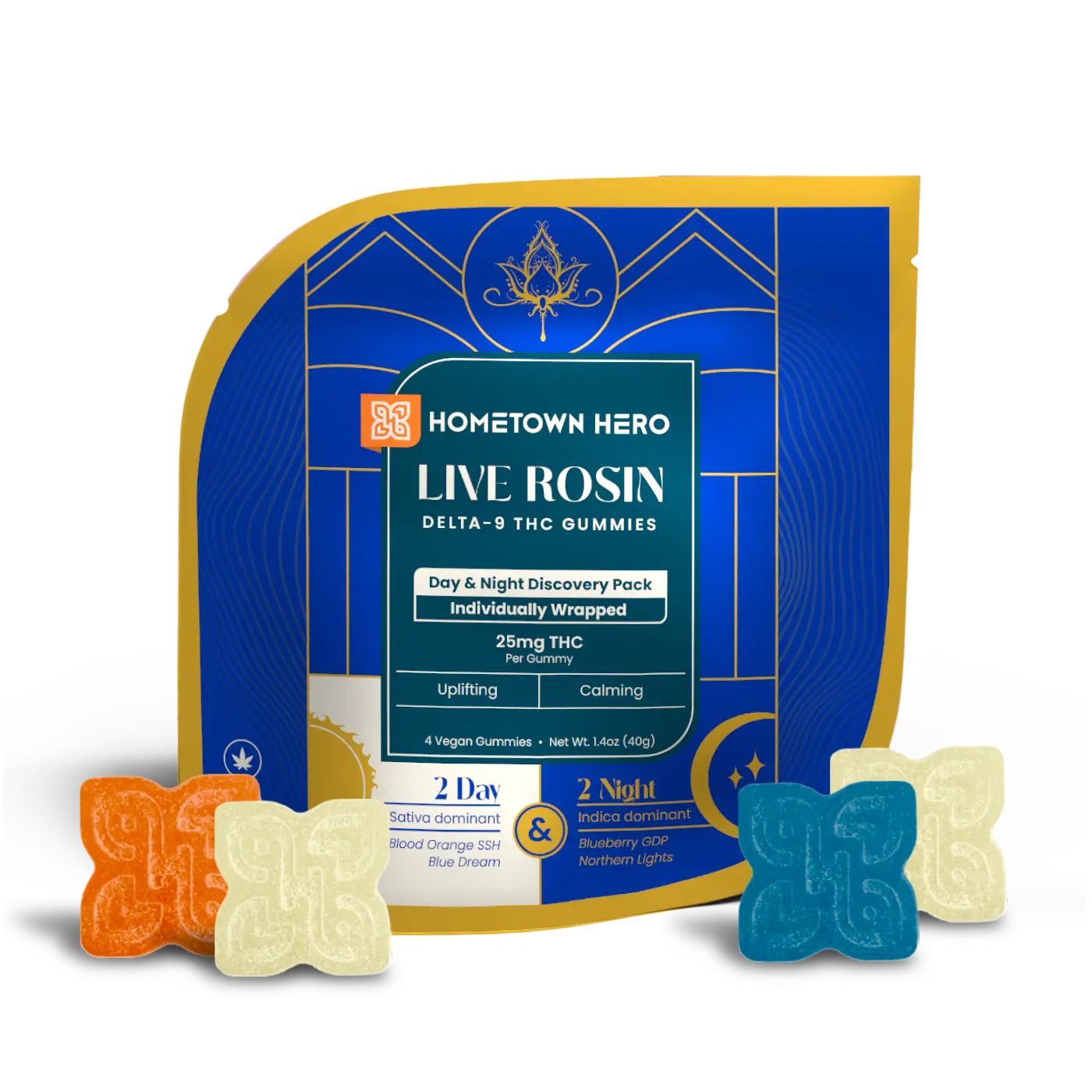
Hometown Hero 25mg Live Rosin Day & Night Discovery Pack
Live rosin gummies pairing a daytime sativa-style and a night-oriented formulation in one pack
For a hybrid gummy that leans into experience as much as function, the Hometown Hero Double Take Gummies in Pineapple Coconut use a layered formulation concept – two cannabinoid layers per gummy – that produces a more nuanced onset and duration compared to single-layer options. That gradual unfolding suits longer creative sessions where you want the effect to stay useful rather than peak and crash.
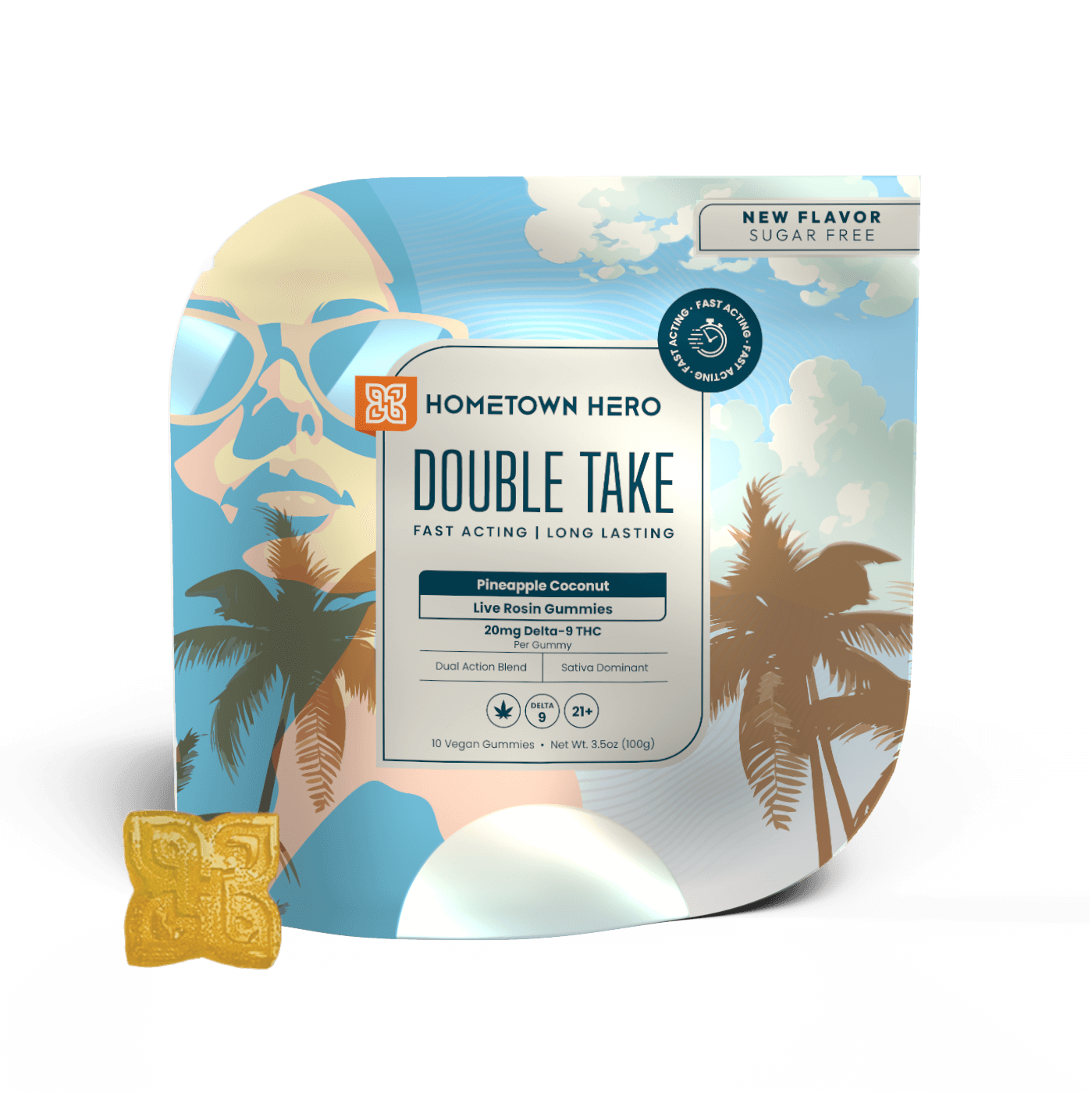
Hometown Hero Double Take Gummies – Pineapple Coconut
Dual-layer hybrid gummies designed for a gradual, sustained onset suited to longer sessions
Terpenes, Set, and Setting – the Variables Nobody Talks About Enough

Cannabis affects creativity partly through chemistry and partly through context. Your expectations, environment, and emotional state going into a session shape the outcome at least as much as the terpene profile does. A sativa gummy taken while stressed, in a chaotic environment, after bad news, is likely to amplify the stress before it does anything useful for your art.
Build a ritual around it if you can. Same space, same rough time of day, materials already out and ready. The gummy becomes a signal to your nervous system that it’s time to work. Over multiple sessions, that context conditioning compounds – the ritual itself starts to lower the barrier to creative entry before the cannabinoids even kick in.
Also worth noting: edibles have a significantly longer onset than inhalation (typically 45 minutes to 2 hours), and effects last considerably longer. If you’re using a gummy for a specific creative window, take it before that window opens – not at the start of it.
Expert Insight
Dr. Alexander Tabibi
Dr. Alexander Tabibi
A 2022 systematic review by Lavender et al. in Chest examined cannabinoids including THC and CBD across multiple domains, including the endocannabinoid system’s role in modulating the sleep-wake cycle and arousal states. The review found strong theoretical grounding for why different cannabinoid ratios produce different alertness profiles – directly relevant when choosing between sativa-type and hybrid formulations for daytime creative work.
The review’s consistent caveat: most available studies are limited by small sample sizes and methodological variability. Individual differences in ECS receptor density, tolerance, and metabolism mean population-level averages often don’t predict individual response reliably. Start low, adjust slowly, and treat your own experience as primary data.
Lavender et al. (2022). Cannabinoids, Insomnia, and Other Sleep Disorders. Chest, 162(2):452-465. PMID: 35537535
A Note on Strains Behind the Gummies
If you want to go deeper than the gummy label and understand the source genetics, it’s worth exploring what individual strains bring to the table. The NF1 strain profile is a good example of how strain-level documentation captures terpene and effect data that often informs what goes into well-made gummies. Understanding the underlying cultivar helps you cross-reference product labels more critically.
Transparency matters here. Brands that publish their source strains, third-party lab results, and terpene percentages are giving you actual information to work with. At the end of the day, the sativa vs hybrid gummies creativity question doesn’t have a universal answer – but it does have a useful framework. Know your creative task, know your tolerance, and trust terpene data more than the label alone.
Frequently Asked Questions
Are sativa gummies actually better for creativity than hybrid gummies?
Not universally. Sativa-leaning gummies often support divergent, idea-generating thinking, while hybrids suit longer execution sessions. The better choice depends on your creative task, tolerance level, and how your individual endocannabinoid system responds to different cannabinoid and terpene profiles.
How much THC should I take in a gummy for a creative session?
Start at 2.5 to 5 mg THC if you are still calibrating your tolerance. Low doses tend to support focus and associative thinking. Higher doses increase the risk of anxiety or cognitive fog that works against creative output.
Why do two gummies both labeled “hybrid” feel so different?
The hybrid label describes a spectrum, not a fixed formula. Source genetics, terpene profiles, extraction method, and cannabinoid ratios all vary between brands. A live rosin hybrid will often feel noticeably different from a distillate-based hybrid labeled identically.
Sources
Walsh et al. (2016). Medical cannabis and mental health: A guided systematic review. Clinical Psychology Review, 51:15-29. PMID: 27816801
Lavender et al. (2022). Cannabinoids, Insomnia, and Other Sleep Disorders. Chest, 162(2):452-465. PMID: 35537535
Important Notice
Cannabis affects individuals differently. If you have a history of anxiety, panic disorder, or other mental health conditions, consult a qualified healthcare provider before using any cannabis product. This article is for informational purposes only and does not constitute medical advice. If you experience severe anxiety, chest pain, difficulty breathing, or feel you are in crisis, call 911 or go to your nearest emergency room immediately.
For adults 21+ only. Cannabis laws vary by state. This content is intended for informational purposes only and does not constitute medical or legal advice. If you are experiencing a medical emergency, call 911 or go to your nearest emergency room immediately.