🚛 Free Discreet Shipping on Orders $49+ | Lab-Tested Quality Guaranteed










Top Terpenes in Sleep Carts You Should Know About
There’s a version of this story that starts with staring at the ceiling at 2 a.m., mind running laps, phone face-down so you stop checking the time. Maybe you’ve already tried melatonin. Maybe you’ve tried the sleep hygiene checklist: dark room, cool temperature, no screens. And maybe none of it quite got you there. So you started looking at cannabis,

Published on: April 2, 2026
There’s a version of this story that starts with staring at the ceiling at 2 a.m., mind running laps, phone face-down so you stop checking the time. Maybe you’ve already tried melatonin. Maybe you’ve tried the sleep hygiene checklist: dark room, cool temperature, no screens. And maybe none of it quite got you there. So you started looking at cannabis, specifically vape carts, and somewhere in that research rabbit hole you landed on the word “terpenes” and wondered what they actually do.
Good question. The honest answer is more interesting than most product pages will tell you.
Terpenes are the aromatic compounds that give cannabis its smell – that piney, earthy, floral, or citrusy quality depending on the strain. But they’re not just branding.
Research into the entourage effect (the idea that cannabinoids and terpenes interact in ways that shape the overall experience) has put terpenes at the center of a real scientific conversation about how cannabis works. For sleep specifically, certain terpenes keep appearing in the conversation, and understanding which ones do what can help you pick a cart that’s actually built for winding down – rather than one that just has “sleep” on the label.
This isn’t a comprehensive pharmacology lecture. Think of it as a field guide to the terpenes worth knowing before your next purchase.
What terpenes actually do in a vape cart
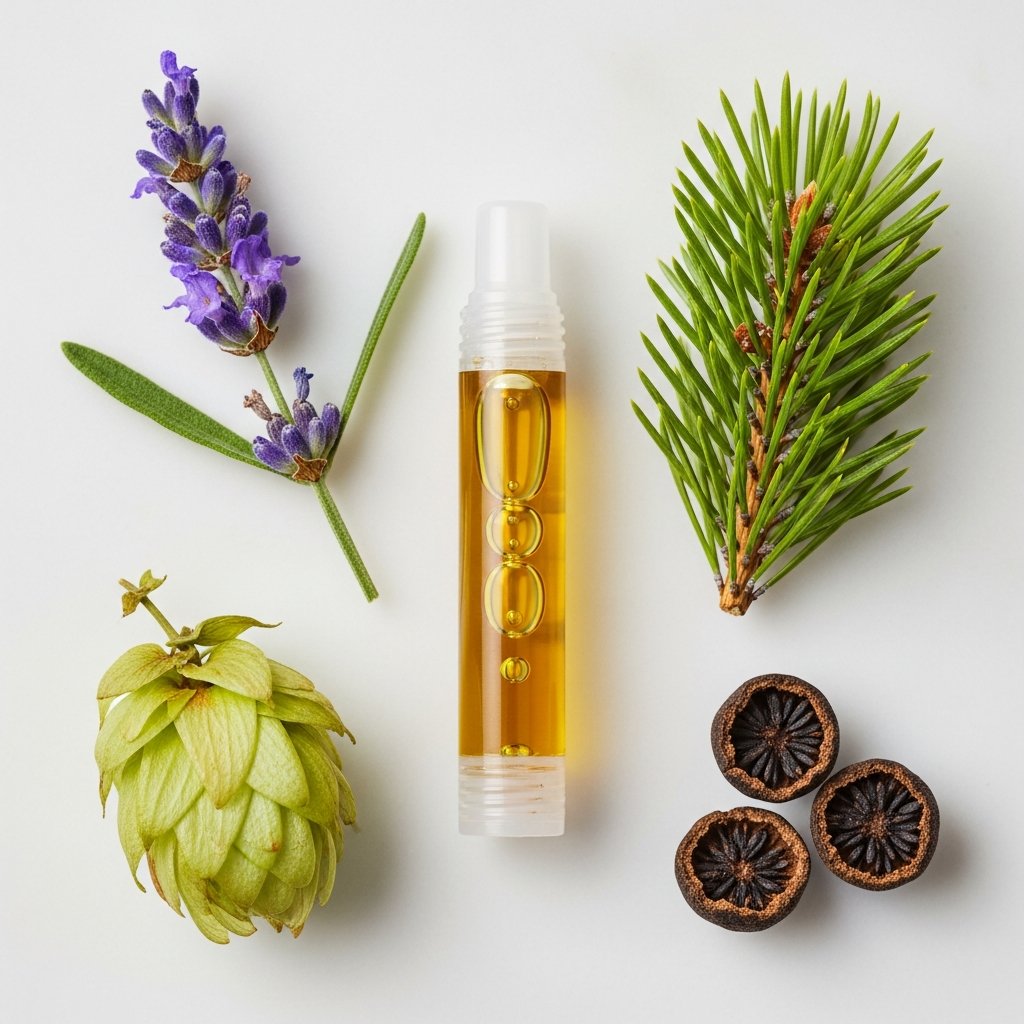
Before getting into the specific compounds, it helps to understand what you’re dealing with. Terpenes occur naturally in thousands of plants – lavender, black pepper, hops, pine trees – not just cannabis. In the plant itself, they serve as attractants for pollinators and deterrents for pests. In your cart, they’re doing something more relevant to you: contributing to the experience.
The entourage effect hypothesis suggests that terpenes modulate how cannabinoids like THC and CBD interact with your endocannabinoid system. Some terpenes appear to have mild sedative properties on their own. Others may potentiate the calming effects of cannabinoids. The science here is still developing – most of the hard data comes from animal models or isolated-cell studies rather than large human trials – but the working theory is consistent enough that formulators take it seriously when building sleep-oriented products.
If you want a broader foundation on how terpenes fit into the cannabis picture, The Ultimate Terpene Guide (2025 Edition) lays out the full landscape, from aroma profiles to the research behind specific compounds. It’s a useful baseline before you go deep on any single terpene.
Expert Insight
Dr. Alexander Tabibi
Dr. Alexander Tabibi
Linalool, the terpene most closely associated with lavender, has demonstrated sedative-like activity in rodent models, reducing locomotor activity and lengthening sleep duration at relevant doses. What’s interesting is the proposed mechanism: some researchers believe linalool interacts with GABA-A receptors – the same receptor family targeted by many pharmaceutical sleep aids – though the evidence in humans remains limited and mostly indirect.
The gap between animal-model findings and confirmed human clinical outcomes is real and worth flagging. The studies are promising, but we’re not yet at the point where you can say a specific milligram dose of linalool reliably produces a specific sleep outcome in a human being. That’s the honest state of the science right now.
Linck et al. (2009). Effects of inhaled linalool in anxiety, social interaction and aggressive behavior in mice. Phytomedicine, 16(7):659-663. PMID: 19345568
The terpenes that show up most in sleep-focused carts
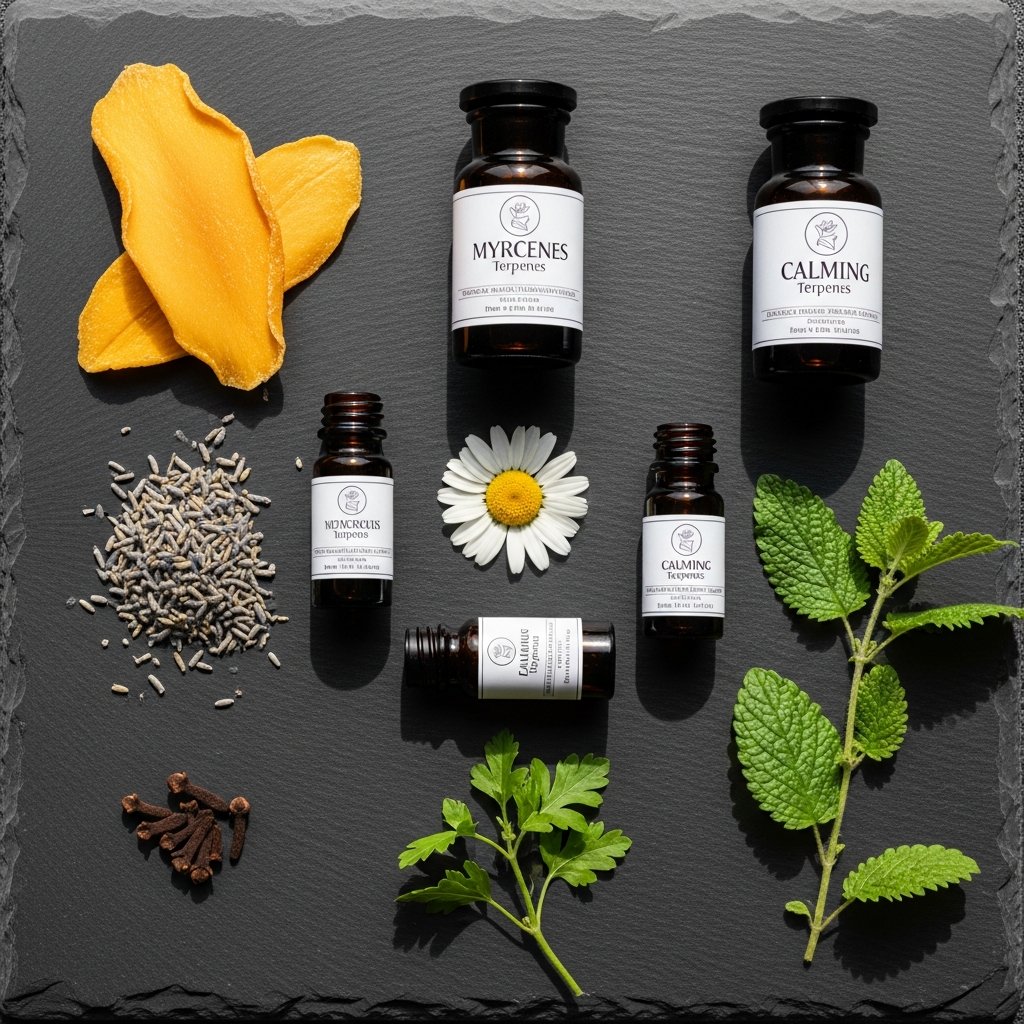
Not every terpene is built for winding down. Some – limonene, for instance – trend energizing. Others sit squarely in the calming column. Here are the ones you’ll encounter most often in sleep-oriented vape formulations, and what each one actually brings to the table.
Myrcene
Myrcene is the most abundant terpene in most cannabis cultivars, and for good reason – it’s a workhorse. It carries that earthy, musky aroma (think ripe mango, a bit funky, vaguely herbal) that people associate with classic indica strains. The folk wisdom that indicas are sleepier than sativas? Myrcene content is a big part of what’s actually driving that distinction.
The compound appears to have muscle-relaxant and sedative properties, and some researchers have proposed it enhances the permeability of the blood-brain barrier, potentially allowing cannabinoids to take effect more efficiently.
That claim is still being debated, but myrcene’s reputation as a couch-lock contributor is broadly consistent across user experience and preliminary research. If a cart’s terpene profile leads with myrcene, expect a heavier, more body-oriented quality to the experience.
Linalool
Linalool is the dominant terpene in lavender, and the aromatherapy world has been banking on its calming properties for decades. In cannabis carts, it tends to appear in smaller concentrations than myrcene, but its effect profile is distinct: more overtly relaxing in a mental sense, less purely physical.
The aroma is floral with a slight spice – recognizable if you’ve ever smelled a lavender field. For sleep applications specifically, linalool is often cited as the terpene with the most direct research interest behind it, even if that research is mostly preclinical (see the Expert Insight above). It pairs well with CBN and low-dose THC in formulations designed specifically for the wind-down window before bed.
Beta-caryophyllene
Beta-caryophyllene is a bit of an outlier because it’s technically a sesquiterpene, and more importantly, it binds directly to CB2 receptors – making it the only terpene that behaves partly like a cannabinoid. That’s a legitimately interesting distinction. CB2 activation is associated with anti-inflammatory pathways and stress modulation, which is relevant to sleep because a lot of sleeplessness is downstream of stress and physical discomfort.
The aroma is peppery and woody – you’d recognize it from black pepper or cloves. In a sleep cart, beta-caryophyllene is more of a supporting player than a headliner, but its CB2 activity means it’s more than decorative. It may genuinely contribute to the calming quality of a well-formulated blend.
Terpinolene
Terpinolene is the terpene that gets described in ways that seem contradictory: floral, herbal, piney, and sometimes slightly citrusy, all at once. It’s less common than myrcene or linalool in sleep formulations, and here’s where you have to read labels carefully. Some people find terpinolene mildly uplifting rather than sedating – it appears frequently in sativa-leaning strains like Jack Herer. A small number of people respond to it with alertness rather than calm.
That said, in combination with high myrcene and linalool, terpinolene can round out a sleep profile nicely. The key is whether the cart you’re looking at is using it as part of a considered blend or just has it because the source strain happens to carry it. Context matters.
Ocimene and Bisabolol
These two show up less frequently but are worth knowing. Ocimene has a sweet, herbal aroma and is typically present in small amounts; its sleep relevance is more anecdotal than researched. Bisabolol – also found in chamomile – has a reputation for mild skin-soothing and anti-inflammatory properties, and in cannabis contexts it’s often included for its gentle, calming aroma profile. Neither is a primary driver of sleep effects, but both can signal that a formulator is thinking carefully about the full terpene blend rather than just leading with one compound.
Expert Insight
Dr. Alexander Tabibi
Dr. Alexander Tabibi
Beta-caryophyllene’s CB2 agonism is one of the more well-characterized terpene-receptor interactions in the literature. A 2014 study by Gertsch and colleagues demonstrated selective CB2 binding activity, which has downstream implications for inflammation and potentially for the stress-axis disruption that commonly drives poor sleep. The mechanism is plausible and the binding data are solid, though sleep-specific human trials using beta-caryophyllene alone remain sparse.
What I’d flag for readers is that CB2 activation is not the same as sedation. It’s more accurate to think of it as a potential contributor to a calmer physiological baseline – reducing one of the inputs (inflammation, stress reactivity) that can interfere with sleep onset. That’s a meaningful distinction when you’re evaluating what a terpene-forward cart might realistically do for you.
Gertsch et al. (2008). Beta-caryophyllene is a dietary cannabinoid. Proceedings of the National Academy of Sciences, 105(26):9099-9104. PMID: 18574142
How to read a sleep cart’s terpene profile
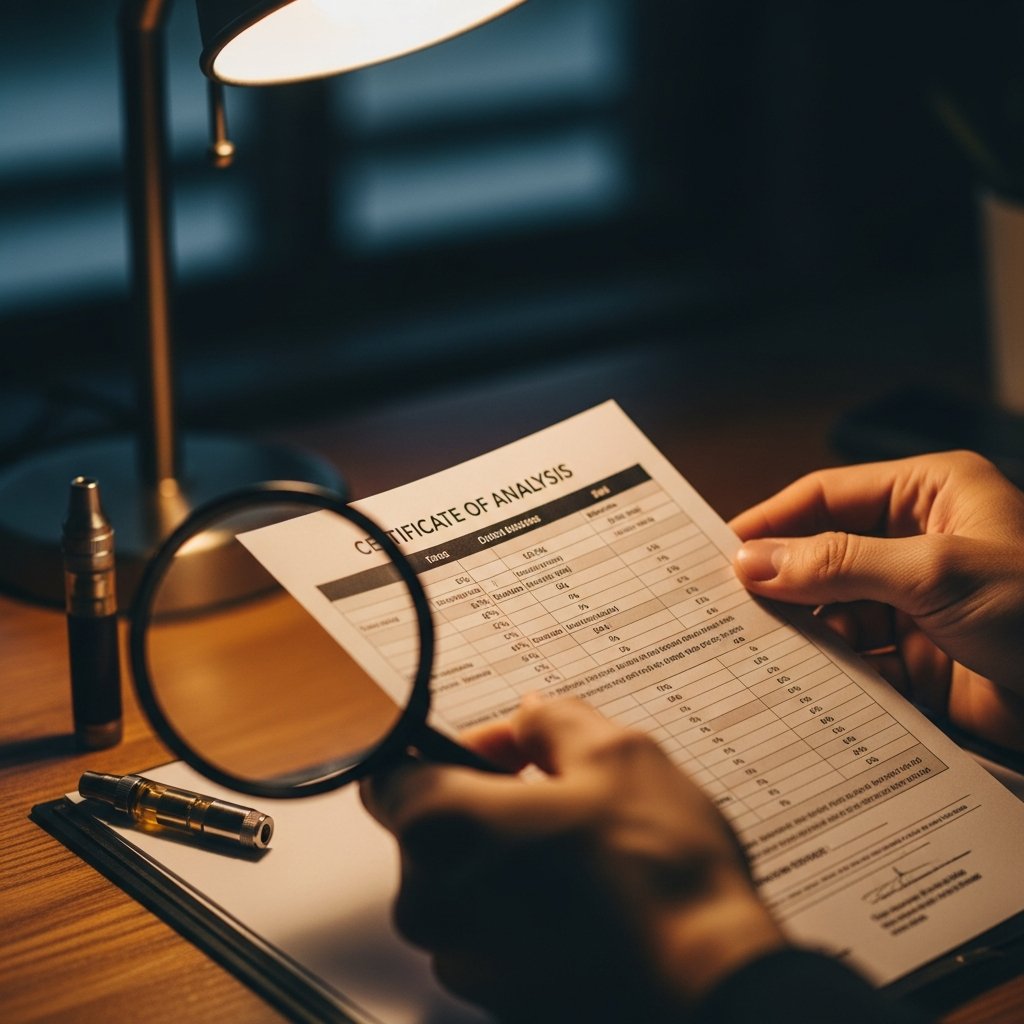
Most reputable carts now include a certificate of analysis (COA) with terpene percentages. When you pull one up, you’re looking for a few things. Total terpene content matters – a cart with 8-12% terpenes is meaningfully different from one with 2-3%. You also want to see myrcene and linalool in the top two or three positions if the cart is marketed for sleep, not just one token calming terpene buried at the bottom of the list.
Be skeptical of vague terms like “indica blend” or “sleep formula” without a disclosed terpene breakdown. Marketing language is easy. A COA is not. If a brand won’t show you one, that tells you something.
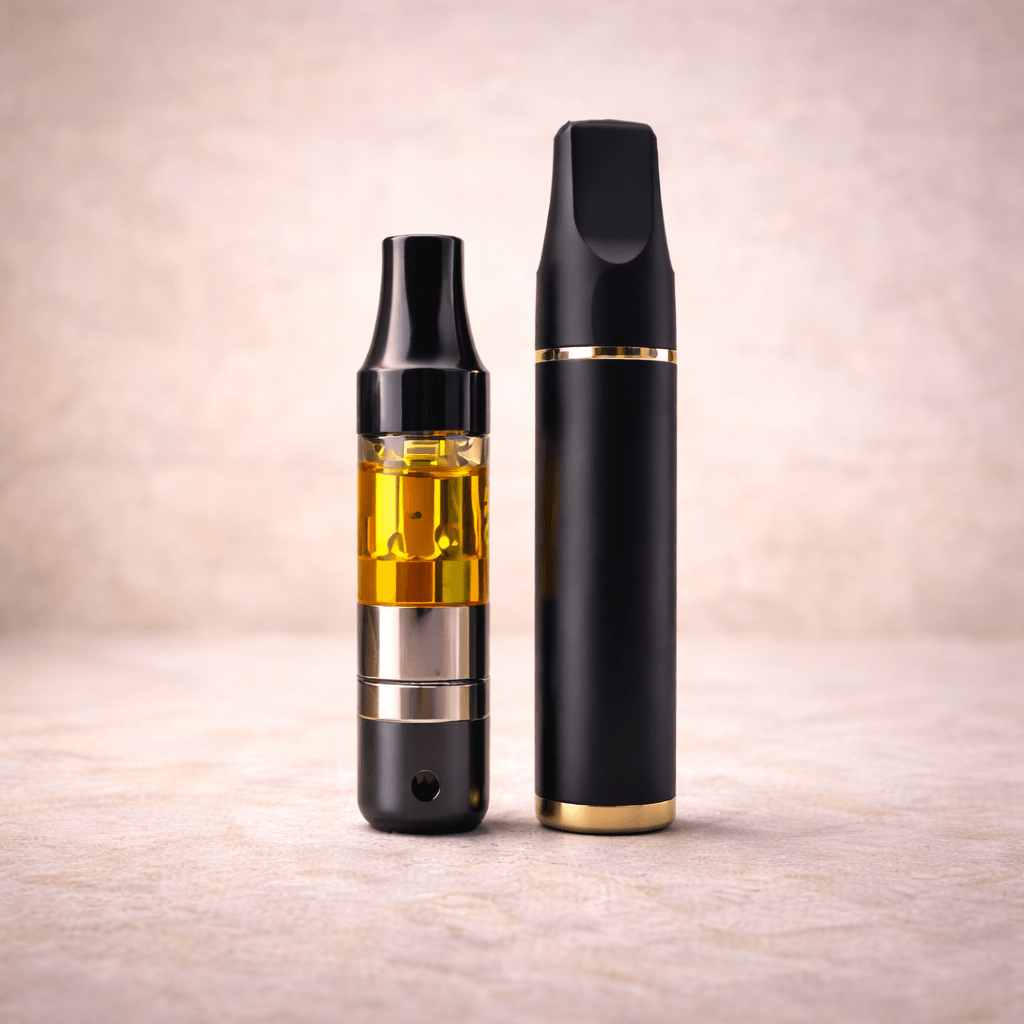
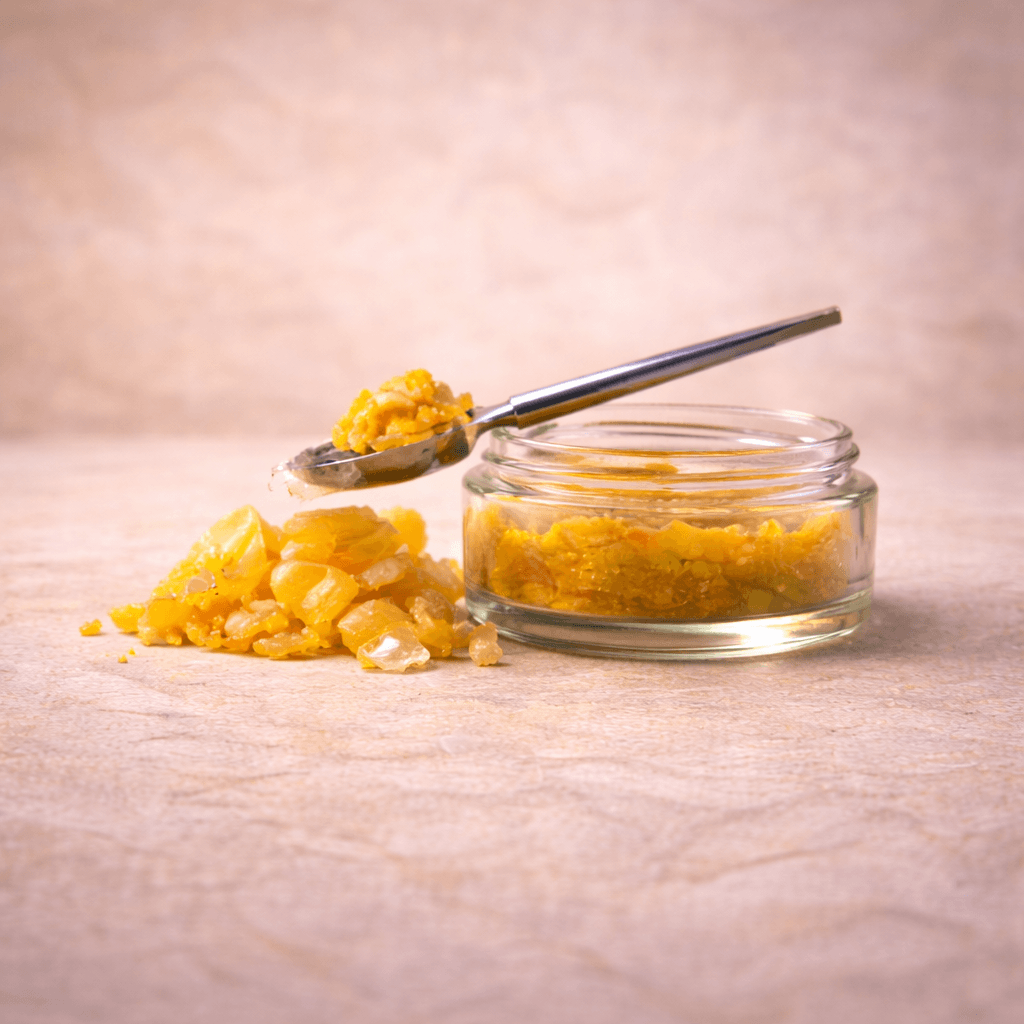
Live resin carts are worth a specific mention here. Live resin is extracted from fresh-frozen cannabis rather than dried and cured material, which preserves a broader, more intact terpene profile. If you’re evaluating carts specifically for terpene quality, live resin formulations tend to deliver a more nuanced and complete expression of the plant’s chemistry – which is directly relevant when you’re trying to get a specific effect like sleep support.
One option worth considering in that category is the Modern Herb Co THCA Disposable Live Resin Liquid Diamonds 2g. Live resin extraction means the terpene profile is more preserved than distillate-based alternatives, and for someone prioritizing a full-spectrum terpene experience rather than an isolated cannabinoid hit, that matters. It’s a concrete example of a live resin format where the extraction method itself is doing meaningful work on the terpene side.
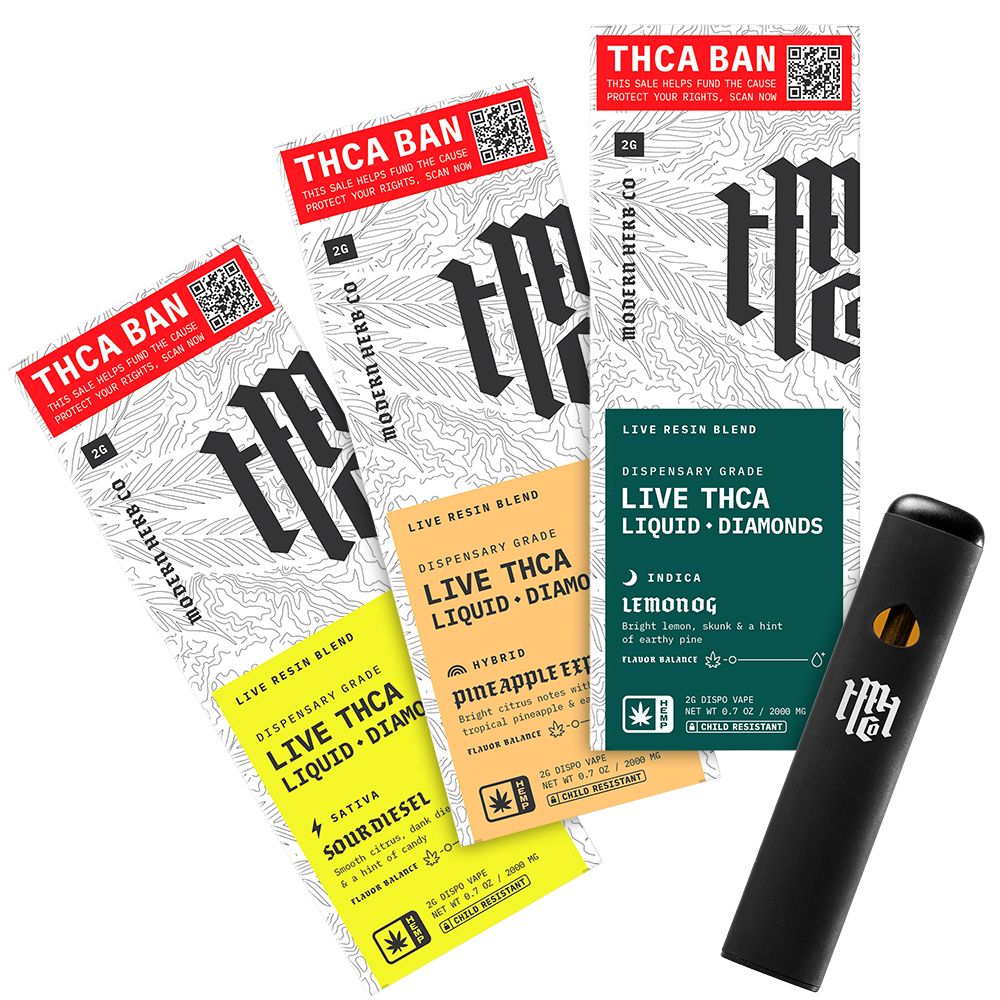
Modern Herb Co THCA Disposable Live Resin Liquid Diamonds 2g
Live resin extraction for a fuller, more intact terpene profile
Terpenes and cannabinoids: the combination question
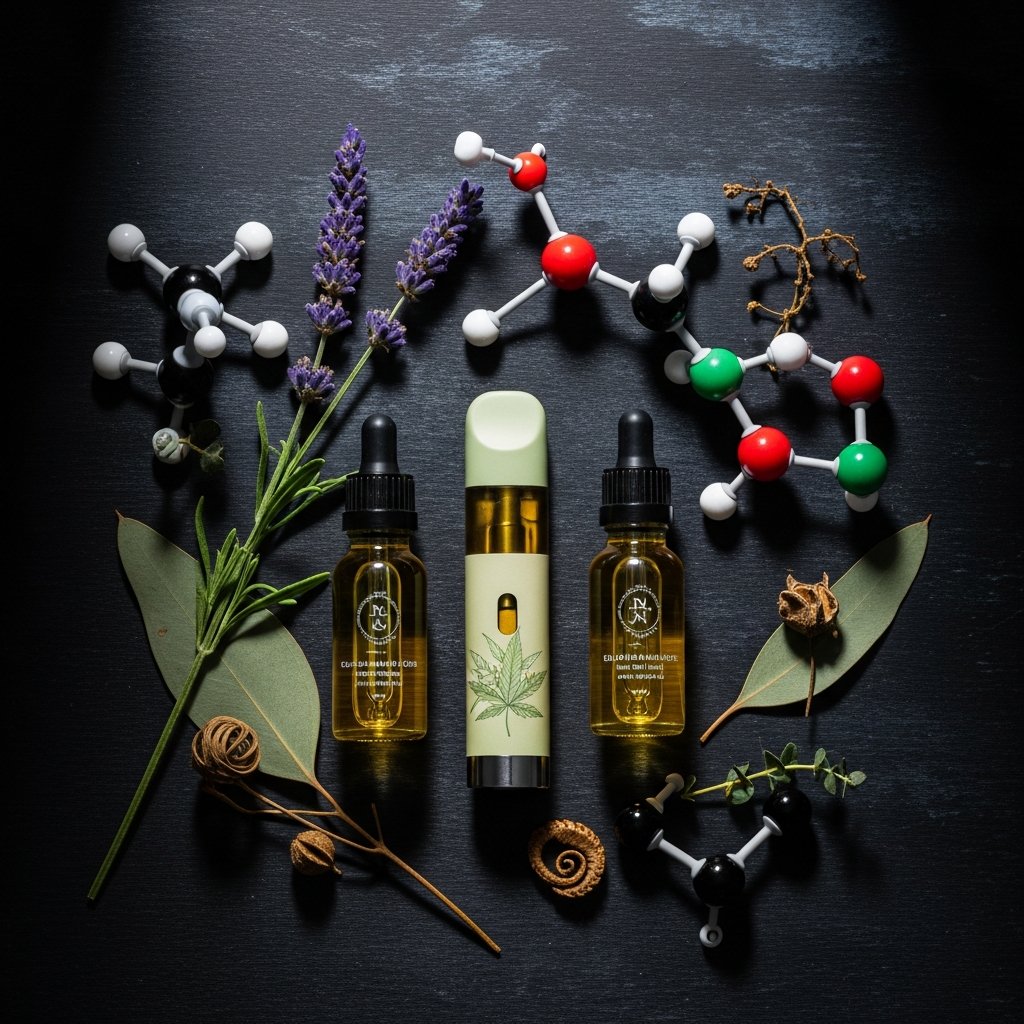
Terpenes don’t operate in isolation in a vape cart. They’re always working alongside whatever cannabinoid base the cart uses – delta 8, delta 9, THCA, CBN, CBD, or some blend. Understanding how those combinations interact is the more complete picture.
Delta 8, for example, is often described as producing a more relaxed, less anxious experience than delta 9 for some users – which makes it a popular base for sleep-oriented carts. When you pair a delta 8 distillate with a high-myrcene, linalool-forward terpene profile, you’re working with the cannabinoid’s baseline character rather than against it. For more on how delta 8 cart experiences tend to play out, The Effects of Delta 8 Carts: What to Expect covers that range honestly, including what the onset and duration picture looks like in practice.
CBN is another cannabinoid worth noting in sleep contexts. It’s a mild, mildly sedating cannabinoid that often gets paired with calming terpenes in dedicated sleep formulations. The research on CBN specifically is thinner than the marketing would suggest, but user reports are consistent enough to take seriously. If you want a deeper look at how cannabinoids stack up for sleep purposes, The Ultimate Sleep Guide: Best Cannabinoids for Sleep (2025 Edition) puts the major options side by side with a reasonable look at what evidence exists for each.
A few things to be realistic about
Here’s the thing about sleep carts: they’re not a clinical intervention. They’re a product, and the best terpene profile in the world won’t override dosing mistakes, tolerance issues, or underlying sleep disorders that need actual medical attention. If you’re using a vape for sleep and finding that it works initially but progressively less well over time, that’s likely a tolerance dynamic rather than a terpene problem. The Ultimate Guide to Cannabis Tolerance (2025 Edition) gets into that cycle in detail and what you can do about it.
Timing also matters more than people expect. Vaping has a fast onset – usually 5 to 15 minutes – and a shorter duration window than edibles. That’s actually a feature for sleep use because you can time it closer to when you’re actually trying to fall asleep, rather than guessing two hours ahead like you might with an edible. But it also means the window narrows if you’re trying to stay asleep rather than just fall asleep. Some people find that a slower-onset edible or tincture serves them better for sleep maintenance specifically.
Start with a small puff and wait. Obvious advice, maybe, but the number of people who take three hits expecting nothing and then wonder why the ceiling is moving is not zero. Cart potency varies considerably, and terpene-forward formulations often hit faster and more fully than people expect from a sleep product.
Frequently asked questions
Which terpene is most commonly found in sleep vape carts?
Myrcene is the most prevalent terpene in sleep-oriented carts. It’s associated with physical relaxation and sedation, and it naturally dominates many cannabis cultivars used in indica-leaning formulations. Linalool is a close second in products specifically marketed for sleep.
Does a higher terpene percentage in a cart mean better sleep effects?
Not necessarily better, but more pronounced. Total terpene content above roughly 8% tends to produce a noticeably fuller, more complex experience than low-terpene distillate carts. Quality and composition matter as much as quantity – a well-balanced blend at moderate levels can outperform a single dominant terpene at high concentration.
Are live resin carts better for sleep than distillate carts?
Live resin preserves a broader terpene spectrum from the original plant, which many users find produces a more complete, nuanced effect. For sleep specifically, that fuller terpene retention can be meaningful. Distillate carts with added terpenes can still work well, but the terpene profile may be less complex.
Can terpenes alone help with sleep without cannabinoids?
Isolated terpenes like linalool and myrcene have shown mild sedative effects in animal studies, but in the context of a vape cart, terpenes are working alongside cannabinoids. The combination is generally considered more effective than either component alone. Terpenes are contributors, not the whole story.
Is beta-caryophyllene considered a cannabinoid or a terpene?
It’s classified as a terpene, specifically a sesquiterpene, but it’s unique in that it also binds directly to CB2 receptors. That dual nature makes it a terpene with cannabin
oid-like properties. Most researchers and formulators still classify it as a terpene, but its receptor activity sets it apart from purely aromatic compounds like myrcene or linalool.
How soon before bed should I use a sleep cart?
Most people find 15 to 30 minutes before bed is a reasonable window for vape carts, given their fast onset. Starting too early risks the effects peaking before you’re ready to sleep. If you’re new to a product, try one small puff first and gauge the onset before adding more.
What should I look for on a COA when evaluating a sleep cart’s terpene profile?
Look for myrcene and linalool listed near the top of the terpene breakdown, total terpene content above 6-8%, and third-party lab verification. A transparent COA showing individual terpene percentages is a stronger signal of quality than marketing language like “indica blend” or “sleep formula” without supporting data.
Important Disclaimer
The information in this article is for educational purposes only and does not constitute medical advice. Cannabis affects individuals differently. If you have a diagnosed sleep disorder or are taking medications, consult a licensed healthcare provider before using cannabis products. Terpene research in humans is still developing; claims based on animal or in-vitro studies may not translate directly to human outcomes.
Sources
Linck VM, da Silva AL, Figueiro M, Caramao EB, Morrone FB, Elisabetsky E. (2009). Effects of inhaled linalool in anxiety, social interaction and aggressive behavior in mice. Phytomedicine, 16(7):659-663. PMID: 19345568
Gertsch J, Leonti M, Raduner S, Racz I, Chen JZ, Xie XQ, Altmann KH, Karsak M, Zimmer A. (2008). Beta-caryophyllene is a dietary cannabinoid. Proceedings of the National Academy of Sciences, 105(26):9099-9104. PMID: 18574142
Russo EB. (2011). Taming THC: potential cannabis synergy and phytocannabinoid-terpenoid entourage effects. British Journal of Pharmacology, 163(7):1344-1364. PMID: 21749363
Karamarkou M, Kontou P, Beis C, Christopoulos A, Tzartos SJ. (2023). Myrcene and its potential sedative properties: a scoping review of the literature. Frontiers in Pharmacology, 14:1182638. PMID: 37538180
Scandiffio R, Geddo F, Cottone E, Querio G, Antoniotti S, Gallo MP, Maffei ME, Bovolin P. (2020). Protective effects of (E)-beta-caryophyllene (BCP) in chronic inflammation. Nutrients, 12(11):3273. PMID: 33105665
For adults 21+ only. Cannabis laws vary by state. This content is not intended to diagnose, treat, cure, or prevent any disease. If you are experiencing a medical emergency, call 911 or go to your nearest emergency room immediately. Nothing in this article should delay you from seeking professional medical help.