🚛 FREE DISCREET SHIPPING ON ALL ORDERS $49+










Why Some Carts Make Anxiety Worse (And How to Avoid It)
You took one hit. Maybe two. Within minutes, your heart picked up speed, your thoughts started looping, and suddenly the whole experience felt less like relaxing and a lot more like bracing. Sound familiar? You are not alone, and more importantly, you are not imagining it. Some vape cartridges genuinely make anxiety worse – and the reasons why are more

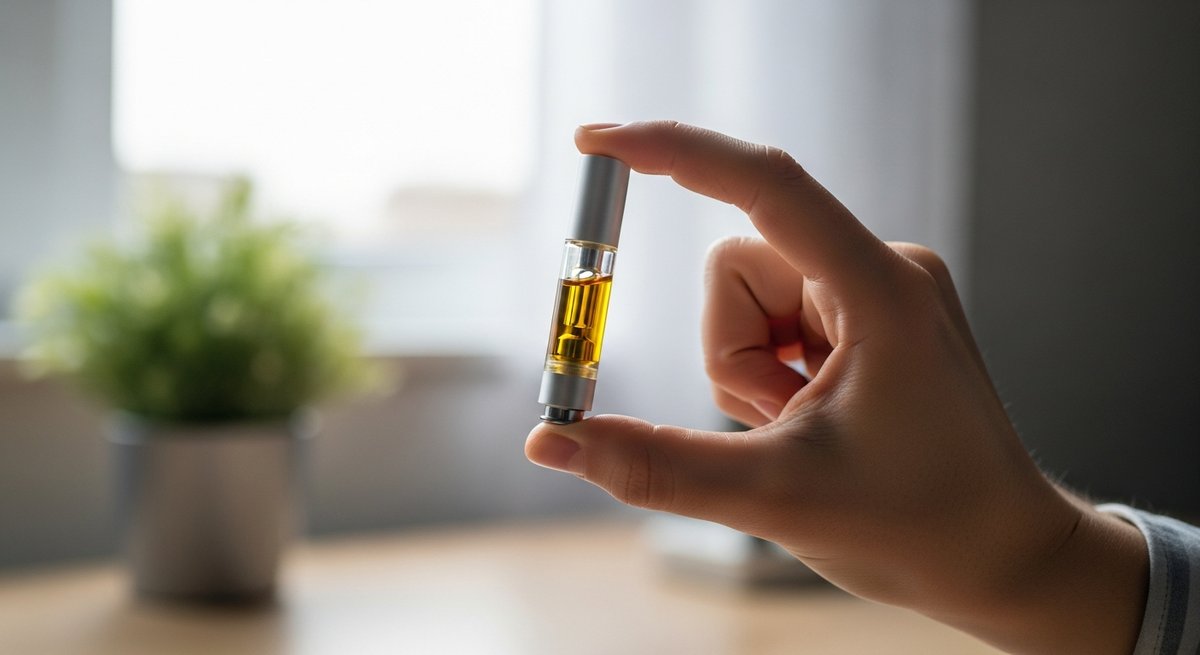
You took one hit. Maybe two. Within minutes, your heart picked up speed, your thoughts started looping, and suddenly the whole experience felt less like relaxing and a lot more like bracing. Sound familiar? You are not alone, and more importantly, you are not imagining it. Some vape cartridges genuinely make anxiety worse – and the reasons why are more specific, and more fixable, than most people realize.
The frustrating part is that it does not always come down to tolerance or “using too much.” Sometimes the cart itself is the problem, the cannabinoid profile, the terpenes, the extraction method, or even what should not be in there at all. Understanding what drives that spiral is the first step toward choosing cartridges that actually work the way you want them to.
The THC-Anxiety Connection Is Real (and Dose-Dependent)
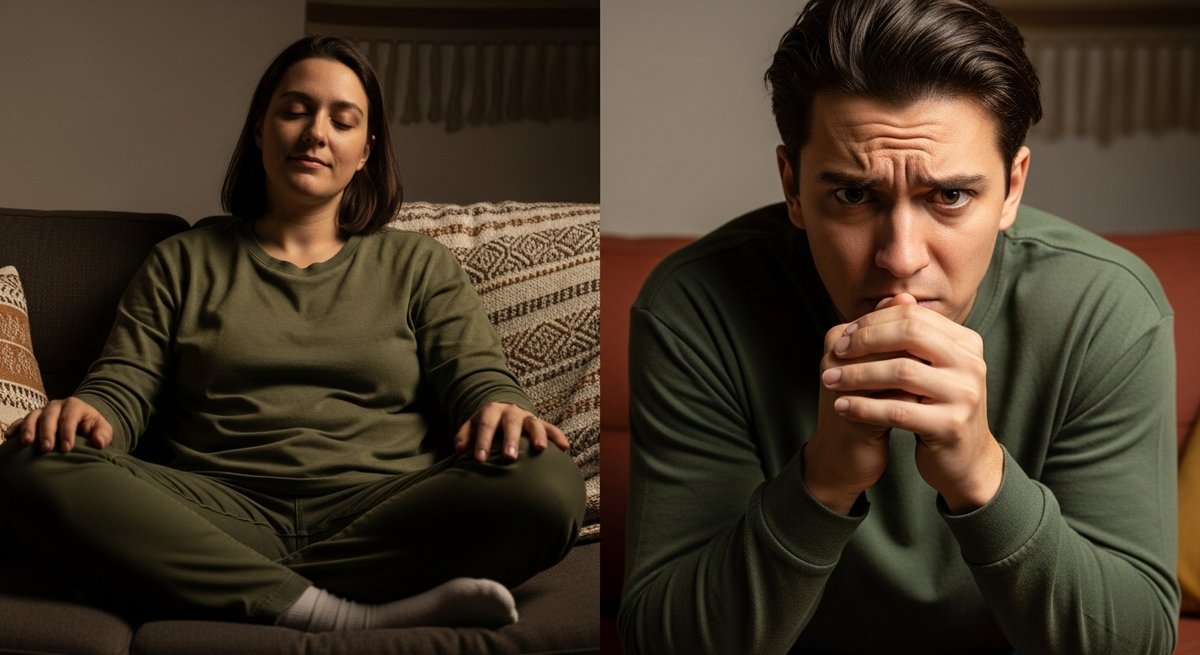
Here is the core tension: THC is the reason most people reach for a vape cartridge in the first place, and THC is also the primary driver of cannabis-induced anxiety. At lower doses and in the right context, it can feel deeply relaxing. At higher doses – or in people who are already anxious, sleep-deprived, or simply wired that day – the same compound activates the same neural pathways that generate stress responses.
The endocannabinoid system has CB1 receptors distributed throughout the amygdala, which is the brain’s threat-detection center. When THC floods those receptors, the amygdala can misread ordinary sensations as danger signals. Your heart rate goes up, your breathing changes slightly, and your brain interprets that physical shift as confirmation that something is wrong. The loop tightens from there.
The delivery method matters enormously here. Vaping is efficient – sometimes almost too efficient. Vapor carries cannabinoids into the bloodstream quickly, which means the onset is fast and the peak can be steep. For someone who misjudges how potent a cart is, that steep ramp can catch them off guard. This is especially common with carts that advertise 90%+ THC concentrations, where a single two-second pull delivers far more than an equivalent puff on flower would.
Cannabinoid Ratios Matter More Than the Number on the Label
A cart that just says “90% THC” is telling you almost nothing useful. What it is not telling you is whether there is any CBD present, what the terpene profile looks like, or whether any other minor cannabinoids survived the extraction process. Those omissions are significant.
CBD appears to counteract some of THC’s anxiogenic effects, at least at the receptor level. It acts as a partial antagonist at CB1 receptors and modulates how aggressively THC binds. A cartridge with a 4:1 or 10:1 THC-to-CBD ratio will generally feel noticeably calmer at equivalent THC doses than an isolate-style distillate cart with zero CBD. This is one reason live resin and full-spectrum carts tend to produce fewer panic-adjacent experiences than ultra-refined distillate products, even when total THC percentages look similar.
CBN, THCV, and CBC are minor cannabinoids that influence the overall character of a high. THCV in particular has been studied for its ability to reduce anxiety-related behavior, at least in preclinical work. These compounds get stripped out during aggressive distillation, which is why a cheap distillate cart filled back up with botanical terpenes rarely feels the same as something that preserved the full plant spectrum from extraction through fill.
Expert Insight
Dr. Alexander Tabibi
Dr. Alexander Tabibi
A 2016 guided systematic review of 31 studies on medical cannabis and mental health found preliminary evidence that cannabinoid-based therapies may be beneficial for certain mental health presentations, including PTSD and anxiety-adjacent conditions. The review also flagged a meaningful caution: individuals with a predisposition to psychotic disorders showed potential for symptom worsening, and acute cognitive effects were observed across several of the included studies. This is not evidence that cannabis is inherently harmful for anxiety, but it underscores that individual variability is genuinely significant – not just a caveat.
The review’s takeaway for practical use is that product type, dose, and personal mental health history all interact. A person using a high-THC distillate cart without any CBD buffer is operating in a very different risk environment than someone using a balanced full-spectrum product at a conservative dose. The evidence does not tell us which cart to choose, but it does support slowing down, reading labels carefully, and erring toward lower concentrations when anxiety is already a concern.
Walsh et al. (2016). Medical cannabis and mental health: A guided systematic review. Clinical Psychology Review, 51:15-29. PMID: 27816801
Terpenes Are Not Just About Flavor

Terpenes are the aromatic compounds found in cannabis – and in lavender, black pepper, pine resin, and hundreds of other plants. They are not inert passengers in a vape cart. They interact with cannabinoid receptors, affect neurotransmitter activity, and genuinely shape how a given product feels beyond just the scent profile.
Myrcene, which is abundant in indica-leaning strains, is often associated with sedative, calming effects. Linalool shares some chemistry with lavender and is similarly associated with reduced arousal. On the opposite end, terpinolene and ocimene tend to produce more stimulating, cerebral effects – which can tip into anxiety-adjacent territory if your system is already elevated. A sativa-dominant cart loaded with either of those terpenes is a different animal than a myrcene-forward indica blend, even if the THC percentages look the same.
The problem with many budget carts is that the terpenes added back after distillation are botanical – sourced from other plants, not cannabis. They may smell close to the real thing, but the specific blend and concentration may not match what was in the original strain. Some manufacturers add terpenes at concentrations high enough to cause irritation or headaches, which is its own issue entirely separate from anxiety.
If you have noticed that the same “strain name” feels different from one brand to another, the terpene profile is a primary suspect. Checking the certificate of analysis for terpene percentages – not just total THC – gives you a much clearer picture of what you are actually vaping.
What Unverified Cartridges Can Contain (And Why It Matters)

Let’s be honest about the unlicensed market for a moment. Counterfeit and gray-market carts remain widely available, and the anxiety problem is particularly acute here. Some unverified cartridges have contained vitamin E acetate, MCT oil cut improperly for inhalation, synthetic cannabinoids, or residual solvents from poor extraction. These contaminants can cause respiratory irritation and cardiovascular effects that are themselves anxiety-inducing, independent of what any cannabinoid is doing.
Even in legal markets, not every brand tests thoroughly. A cart that claims to be 75% THC with a relaxing indica profile might have a certificate of analysis that only covers total cannabinoids – without microbial, pesticide, heavy metals, or residual solvent panels. Those gaps matter. Pesticide residues and certain solvent traces can cause irritation that triggers physiological anxiety responses that have nothing to do with cannabinoids at all.
The baseline rule is straightforward: if a cart does not have a publicly accessible, current certificate of analysis from an accredited third-party lab, it is not worth the risk if anxiety is a concern. This applies to both licensed dispensary products and hemp-derived options in the online market. A QR code that goes nowhere, or a COA that was issued once eighteen months ago, is not meaningful safety documentation.
Strain Type, Set, and Setting Are Not Just Folklore
The old indica-versus-sativa framework is oversimplified, but it is not entirely without basis. Sativa-dominant profiles tend to be higher in energizing terpenes and often deliver a more cerebral, racier effect. For someone who is already running hot – stressed from work, low on sleep, overthinking a situation – that stimulation can tip into what feels exactly like an anxiety attack. Indica-leaning profiles are generally more sedating, which for most people means a lower anxiety ceiling.
Set and setting matter too – probably more than most people give them credit for. Using a high-THC cart in an unfamiliar environment, around people you are not comfortable with, or when you are already anxious about something specific is a reliable recipe for a difficult experience. The cannabis is not causing the anxiety out of nowhere; it is amplifying whatever emotional state you walked in with. This is not a moralizing point – it is genuinely useful information for avoiding bad sessions.
If you are trying to match a cart to your lifestyle and how your nervous system responds under different conditions, the practical guide on choosing the right weed pen for your lifestyle and tolerance walks through that process in much more detail. Matching potency level to your actual tolerance – not your aspirational one – is one of the more practical things you can do before you buy.
Hardware Plays a Role Too
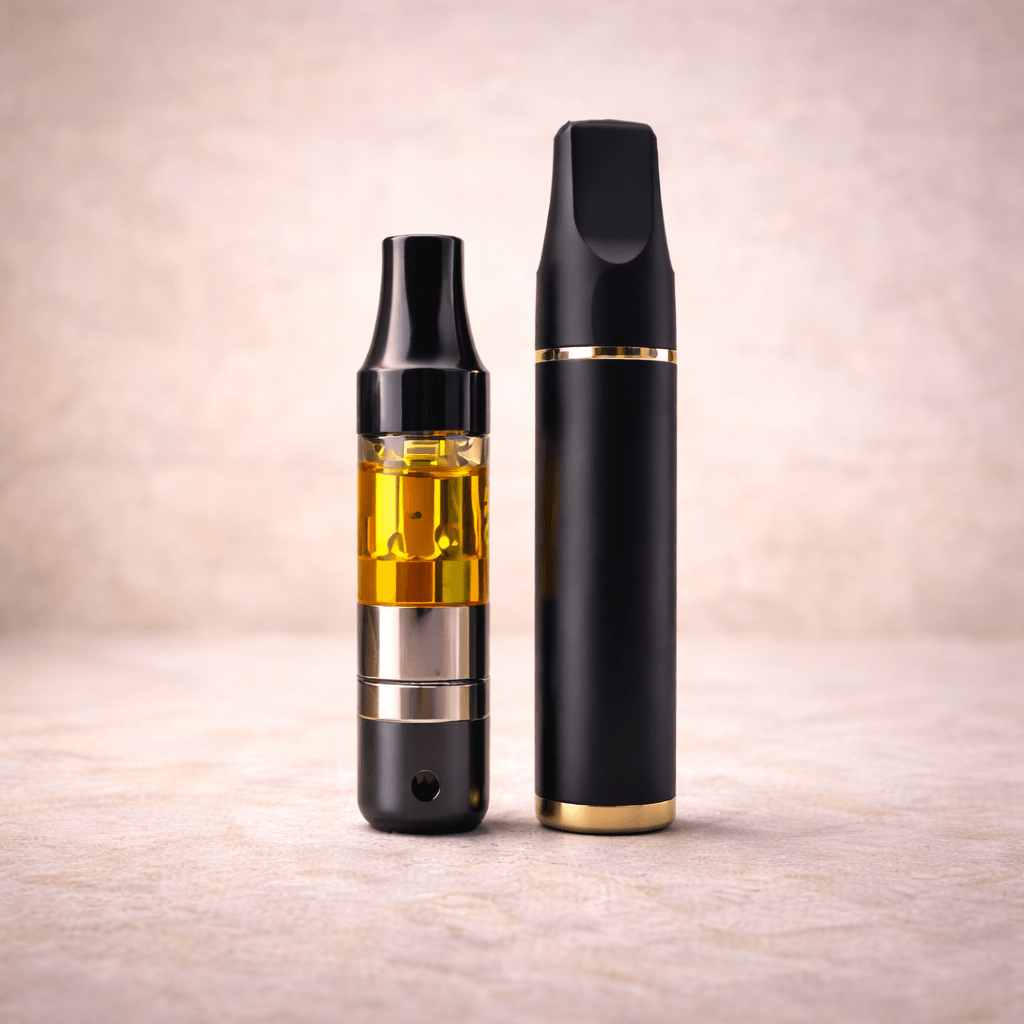
People focus on the oil inside the cart and almost never think about the hardware. That is a mistake. The coil material, the wick, the operating voltage, and the airflow design all affect what you are actually inhaling – and how much of it you get in a single draw.
A cart running on a high-voltage battery produces bigger, hotter hits. The oil aerosolizes more completely per draw, which means you are taking in more total cannabinoids per puff than you might realize. If you are using a pen with variable voltage and you have it cranked to the highest setting because it produces thicker clouds, you are also increasing your dose per draw significantly. Turning the voltage down – or using a fixed-voltage pen designed for a more controlled experience – changes the character of the session without changing the product.
Ceramic coil cartridges tend to produce cleaner vapor at lower temperatures and are generally considered preferable to older cotton-wick or metal-coil designs for both flavor and vapor quality. The hardware market has improved substantially over the past few years, but quality still varies enough that it is worth paying attention to what is actually inside the cart body, not just what is in the oil chamber.
How to Choose a Cart That Works With Your Nervous System
The practical framework is not complicated, even if the underlying chemistry is. Start with the cannabinoid profile: look for something with at least some CBD present, whether that is a 1:1 ratio, a broad-spectrum distillate, or a live resin product that naturally preserves minor cannabinoids. The presence of CBD does not guarantee a calm experience, but it significantly lowers the anxiety ceiling for most people.
Next, look at total THC percentage as a rough ceiling guide rather than a quality signal. A 60% THC live resin cart will generally be gentler than an 88% distillate, not because live resin is magically better but because the lower concentration means you are getting a smaller dose per draw, with more of the original plant’s balancing compounds intact. If you have had anxiety issues with carts before, starting under 70% total THC is a reasonable rule of thumb.
Check the terpene profile if it is listed. Myrcene, linalool, and beta-caryophyllene are the terpenes most associated with calming effects. Beta-caryophyllene is particularly interesting because it also binds to CB2 receptors, contributing to what researchers have described as anti-anxiety effects through a separate pathway than THC’s primary CB1 activity. A cart heavy in any of these three is generally going to be easier on anxious users than one dominated by terpinolene or ocimene.
For people who want an option closer to the cart end of the spectrum but prefer a calmer experience overall, a delta-8 THC product is worth considering. Delta-8 binds to the same CB1 receptors as delta-9 but with somewhat lower affinity, which many users describe as producing a noticeably less intense, less anxiety-prone experience. For someone whose main issue with standard THC carts is that the onset is too sharp and the anxiety ceiling is too low, delta-8 often threads that needle well.
One delta-8 option worth knowing about in this context is the Binoid Delta-8 THC Vape Cartridge in Tangie. Tangie is a citrus-forward strain profile that leans sativa, so it is not the obvious choice for the most sedating experience – but the lower-intensity nature of delta-8 combined with a clear terpene identity makes it a reasonable starting point for people who want to test how their nervous system handles a cart without immediately jumping into high-potency delta-9 territory.
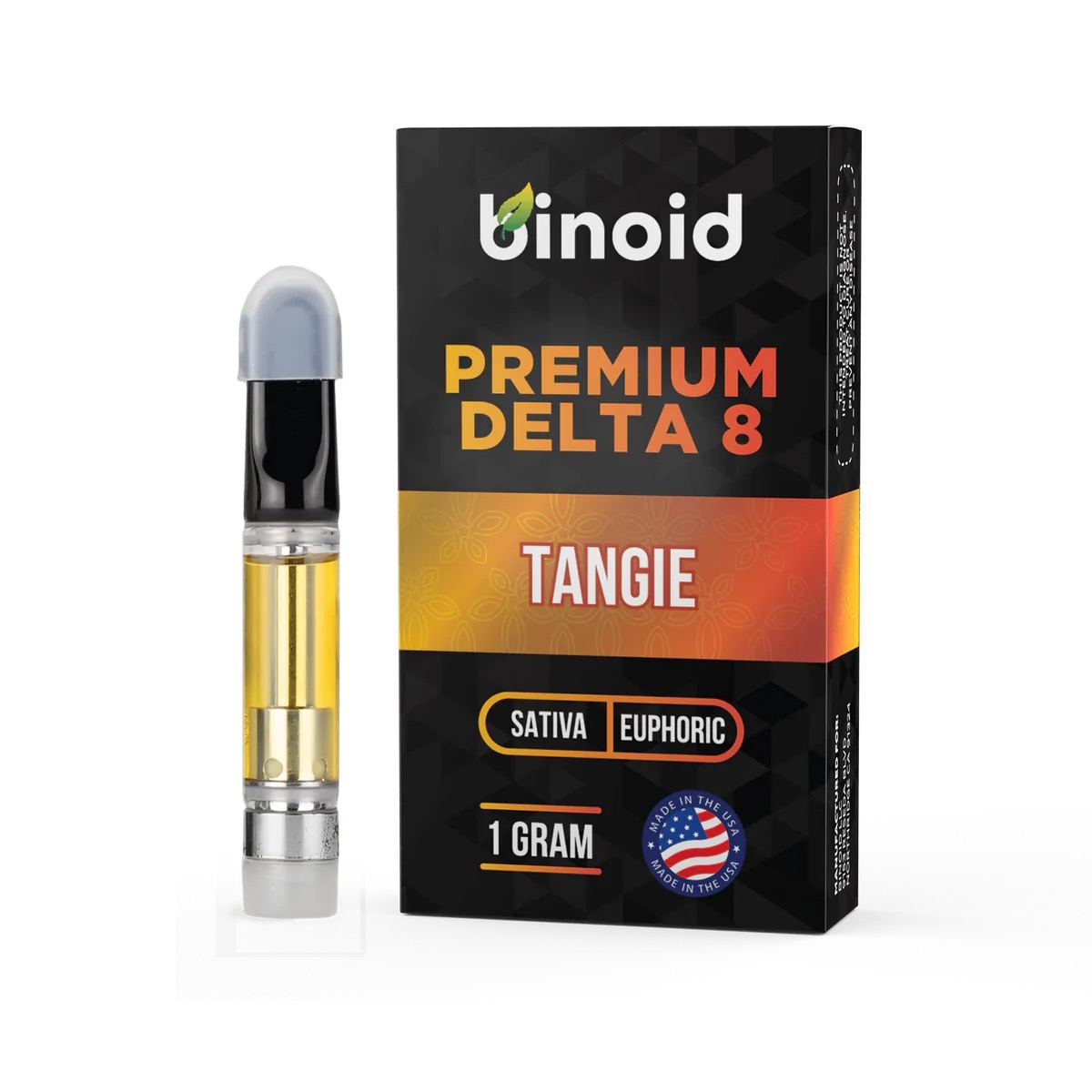
Binoid Delta 8 THC Vape Cartridge – Tangie
Delta-8 cart with citrus Tangie terpene profile; third-party tested by Binoid
What a Good COA Actually Tells You
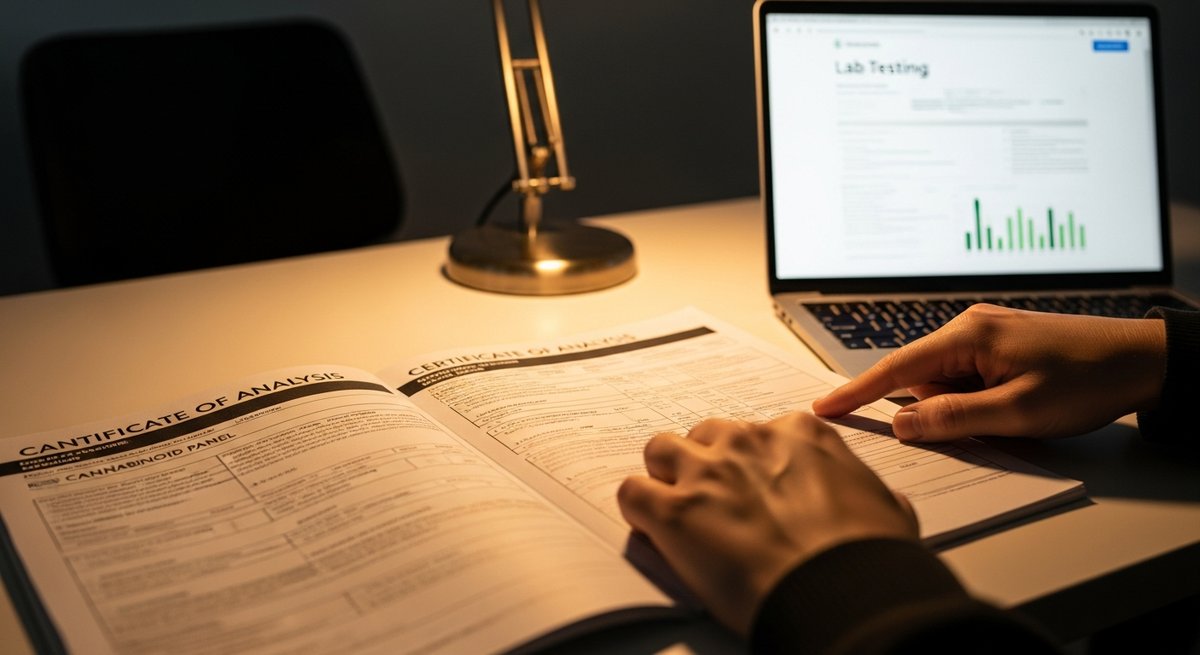
A certificate of analysis from a reputable third-party lab is not just a box-ticking exercise – it is the only objective source of information you have about what is actually inside a cart. The minimum you want to see is a full cannabinoid panel (showing THC, CBD, and ideally minor cannabinoids), a residual solvents panel, a pesticides panel, and a heavy metals panel. Microbial testing is also important but is more relevant for flower and concentrates than for finished oil cartridges.
The lab name on the COA should be accredited – ISO 17025 certification is the standard to look for. A COA issued by an in-house lab, or one from a lab you cannot find any independent information about, offers essentially no meaningful verification. The test date matters too: a COA from two years ago tells you what was in one batch of product, not what is in the cart you are about to purchase.
Some brands also include terpene percentage breakdowns on their COAs, which is genuinely useful. If the lab report shows a terpene panel with myrcene as the dominant compound and linalool in a supporting role, that is a real signal about the likely effect profile – not just marketing language on the package. When you are specifically trying to avoid carts that cause anxiety, that terpene data is arguably more actionable than the THC number.
Expert Insight
Dr. Alexander Tabibi
Dr. Alexander Tabibi
A 2024 systematic review of adverse events associated with cannabis-based products in people living with cancer – covering 152 studies including 61 RCTs – documented that the most commonly reported adverse event categories were nervous system effects (reported in 118 studies), psychiatric effects (101 studies), and gastrointestinal effects (81 studies). The review noted that under-reporting of adverse events was a recurring limitation across the included literature. Products primarily involved oral or inhaled THC and CBD combinations. This pattern is useful context: psychiatric and nervous-system adverse events are the most consistently documented concern across a large body of cannabis research, not rare edge cases.
The review’s findings do not mean that cannabis-based inhalation is broadly unsafe, but they do reinforce that nervous-system and psychiatric effects – including anxiety – deserve serious consideration when selecting product type, potency, and delivery method. People with pre-existing anxiety conditions, or those who have previously experienced cannabis-induced anxiety, are particularly well-served by consulting a physician and choosing lower-THC, better-tested products rather than defaulting to the highest-concentration option available.
Cheah et al. (2024). Adverse events associated with the use of cannabis-based products in people living with cancer: a systematic scoping review. Supportive Care in Cancer, 33(1):40. PMID: 39638875
Important Notice
Cannabis affects individuals differently. If you have a history of anxiety, panic disorder, or other mental health conditions, consult a qualified healthcare provider before using any cannabis product. This article is for informational purposes only and does not constitute medical advice. If you experience severe anxiety, chest pain, difficulty breathing, or feel you are in crisis, call 911 or go to your nearest emergency room immediately.
Frequently asked questions
Why do some carts cause anxiety more than others?
High-THC distillate carts with no CBD buffer, stimulating terpene profiles, and contaminants from poor testing are the primary drivers. The combination of very high THC concentration, fast inhalation onset, and missing balancing compounds creates the most anxiety-prone conditions.
Does CBD in a cart actually reduce anxiety?
Research suggests CBD modulates THC’s anxiety-inducing effects at CB1 receptors. It does not guarantee a calm experience, but most users and available studies indicate that CBD-present products have a meaningfully lower anxiety ceiling than pure high-THC distillate for most people.
Which terpenes should I look for to avoid anxiety?
Myrcene, linalool, and beta-caryophyllene are the most consistently associated with calming effects. Terpinolene and ocimene tend toward stimulating, cerebral effects that can worsen anxiety. Checking the terpene panel on a COA is the most reliable way to confirm what a cart actually contains.
Is delta-8 THC less likely to cause anxiety than delta-9?
Delta-8 binds CB1 receptors with lower affinity than delta-9, and many users report a noticeably milder, less anxiety-prone experience. It is not anxiety-free by default, but for people who find standard delta-9 carts too intense, delta-8 is a commonly recommended starting point.
What should a COA include to be considered trustworthy?
At minimum: a full cannabinoid panel, residual solvents, pesticides, and heavy metals testing from an ISO 17025 accredited lab. A recent test date, a scannable QR code linking to the actual report, and an optional terpene panel are additional markers of a brand worth trusting.
Does vaping hardware affect how anxious a cart makes you?
Yes. Higher battery voltage means larger doses per draw. Using a variable-voltage pen on its highest setting significantly increases cannabinoid delivery per puff. Lowering voltage or switching to a fixed low-voltage device is one of the simplest ways to reduce dose intensity without changing the product itself.
Can set and setting really change whether a cart causes anxiety?
Substantially. Cannabis amplifies existing emotional states rather than overriding them. Using a high-THC cart when already stressed, sleep-deprived, or in an uncomfortable environment dramatically increases anxiety risk. The same product used when calm and in a familiar setting often produces a very different experience.
Sources
Walsh et al. (2016). Medical cannabis and mental health: A guided systematic review. Clinical Psychology Review, 51:15-29. PMID: 27816801
Cheah et al. (2024). Adverse events associated with the use of cannabis-based products in people living with cancer: a systematic scoping review. Supportive Care in Cancer, 33(1):40. PMID: 39638875
For adults 21+ only. Cannabis laws vary by state. This content is intended for informational purposes only and does not constitute medical or legal advice. If you are experiencing a medical emergency, call 911 or go to your nearest emergency room immediately.