🚛 FREE DISCREET SHIPPING ON ALL ORDERS $49+









Best Strains to Vape for Back Pain and Muscle Soreness
Your lower back starts talking to you around Wednesday. By Friday, it’s practically shouting. Whether you spent three days hunched over a laptop, pushed too hard at the gym, or simply slept at the wrong angle, muscle soreness and back pain have a way of making everything else feel secondary. Cannabis, particularly when vaped, has become a go-to option for

Your lower back starts talking to you around Wednesday. By Friday, it’s practically shouting. Whether you spent three days hunched over a laptop, pushed too hard at the gym, or simply slept at the wrong angle, muscle soreness and back pain have a way of making everything else feel secondary. Cannabis, particularly when vaped, has become a go-to option for a growing number of people navigating that exact situation. But not every strain works the same way, and “just grab whatever’s available” tends to disappoint.
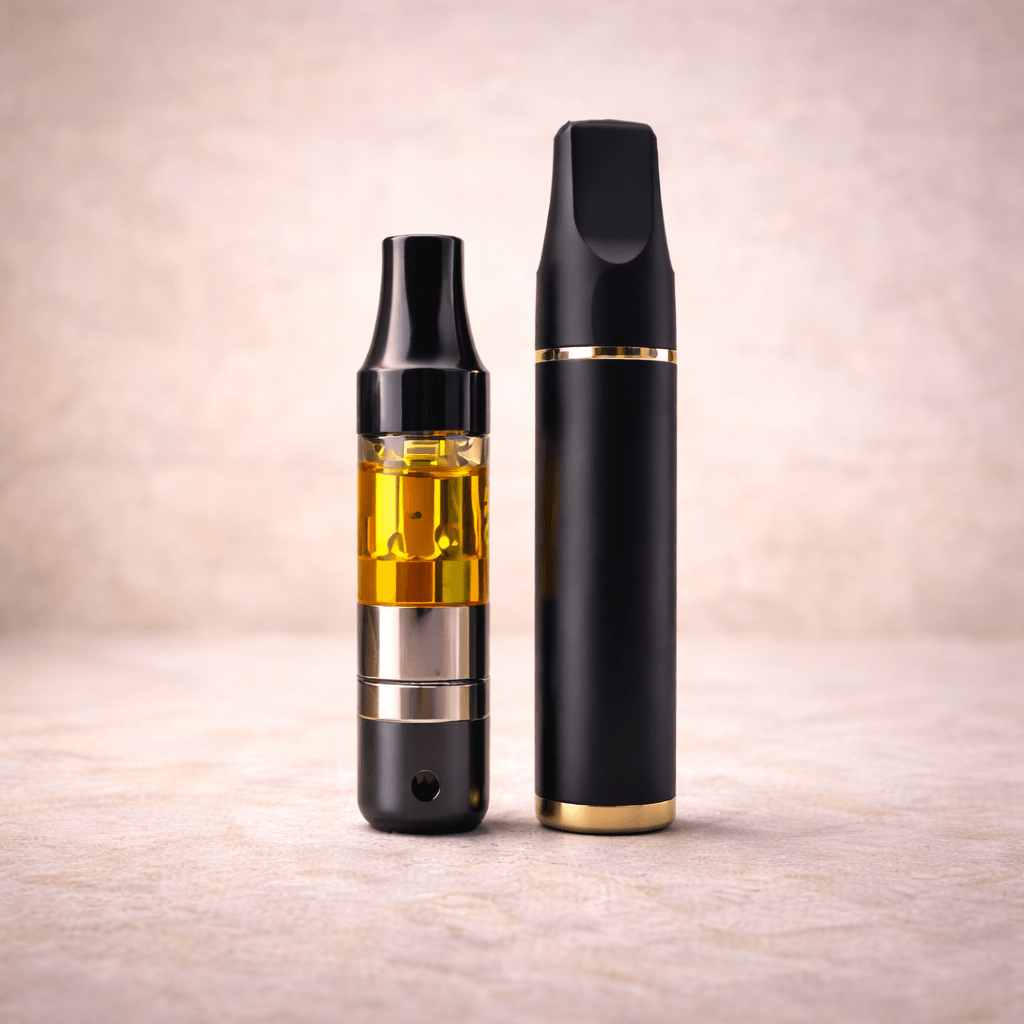
This guide walks through the strains, cannabinoids, and terpenes that actually matter when your goal is relief from back pain and sore muscles. Vaping is the format we’re focusing on because it’s fast-acting, dose-adjustable, and far easier on the lungs than combustion. The right strain in a vape can start working within minutes. The wrong one might leave you more anxious and uncomfortable than when you started.
Why Vaping Makes Sense for Pain Relief
When you’re dealing with acute back pain or post-workout soreness, timing matters. Edibles can take 45 minutes to two hours to kick in. A vape? You’re typically feeling something within five to fifteen minutes. That speed comes from inhalation bypassing the digestive system entirely, delivering cannabinoids directly into the bloodstream via the lungs.
Vaping also gives you real-time control. You take one or two draws, wait a few minutes, assess how you feel, and go from there. That titration is genuinely useful with pain because everyone’s threshold is different. Starting low and slow is not a cliche here – it’s the sensible approach.
The temperature at which you vape also matters more than most people realize. Vaping at lower temperatures (around 325-375°F) tends to preserve more of the volatile terpenes that contribute to relaxation and anti-inflammatory signaling. Higher temperatures extract more THC but can destroy some of those beneficial secondary compounds before they ever reach you.
The Cannabinoids That Do the Heavy Lifting
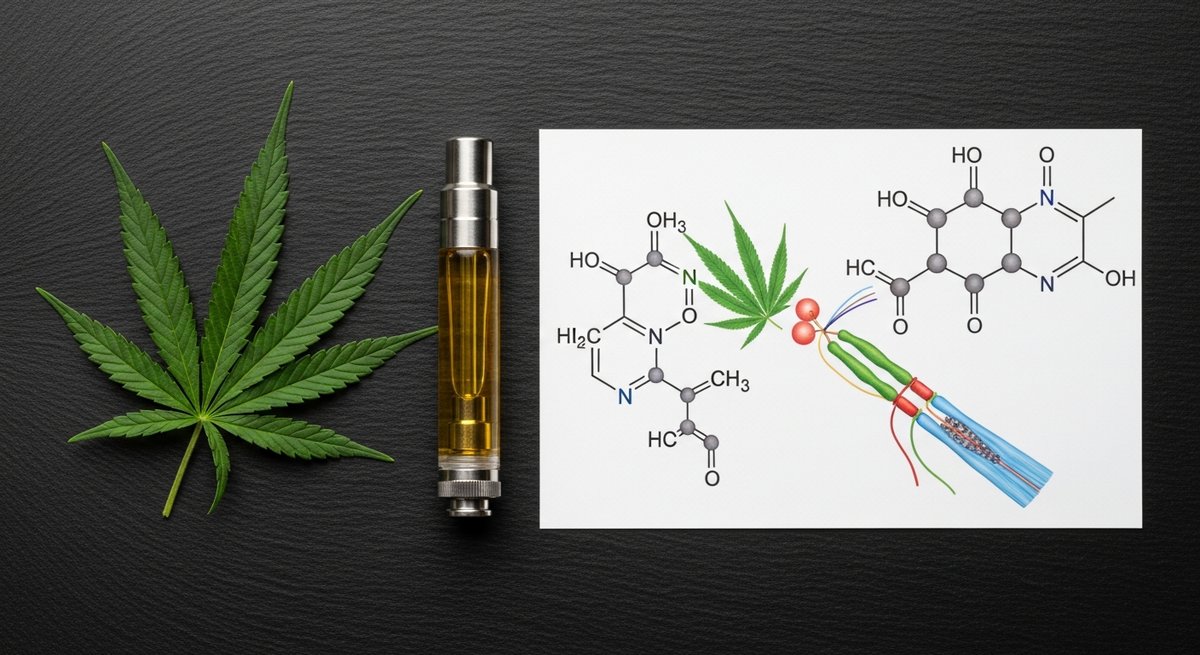
THC is the obvious starting point. It works partly by binding CB1 receptors in the central nervous system, which helps modulate how pain signals are processed and perceived. That’s why even moderate THC can take the sharp edge off a muscle spasm or a nagging lower back ache. But THC alone isn’t necessarily ideal for daytime use – it’s psychoactive, and the cognitive effects aren’t always welcome when you still have things to do.
CBD brings a different set of tools. It doesn’t produce intoxication the way THC does, and it interacts with pain pathways through multiple mechanisms including TRPV1 channels, which are involved in heat and pain perception. A blend of THC and CBD is often more effective for musculoskeletal discomfort than either cannabinoid alone – this synergy is part of what’s commonly called the entourage effect.
Expert Insight
Dr. Alexander Tabibi
Dr. Alexander Tabibi
A comprehensive narrative review by Baron et al. examined the roles of cannabinoids, terpenes, and flavonoids in cannabis across multiple pain types – including headache, migraine, and musculoskeletal pain. The review documents how individual compounds interact with pain-signaling pathways and supports the concept that synergistic combinations (the entourage effect) may enhance analgesic outcomes beyond what single isolated cannabinoids achieve alone.
The evidence summarized is not uniform in quality – it draws together preclinical, observational, and limited clinical data. The authors emphasize that well-controlled human trials are still limited, so strain-specific or terpene-specific recommendations remain more aspirational than fully evidence-based. Still, the terpene-pain connection has a credible mechanistic basis that is increasingly explored in current research.
Baron et al. (2018). Medicinal Properties of Cannabinoids, Terpenes, and Flavonoids in Cannabis, and Benefits in Migraine, Headache, and Pain: An Update on Current Evidence and Cannabis Science. Headache, 58(7):1139-1186. PMID: 30152161
Terpenes to Look For in a Pain-Focused Vape
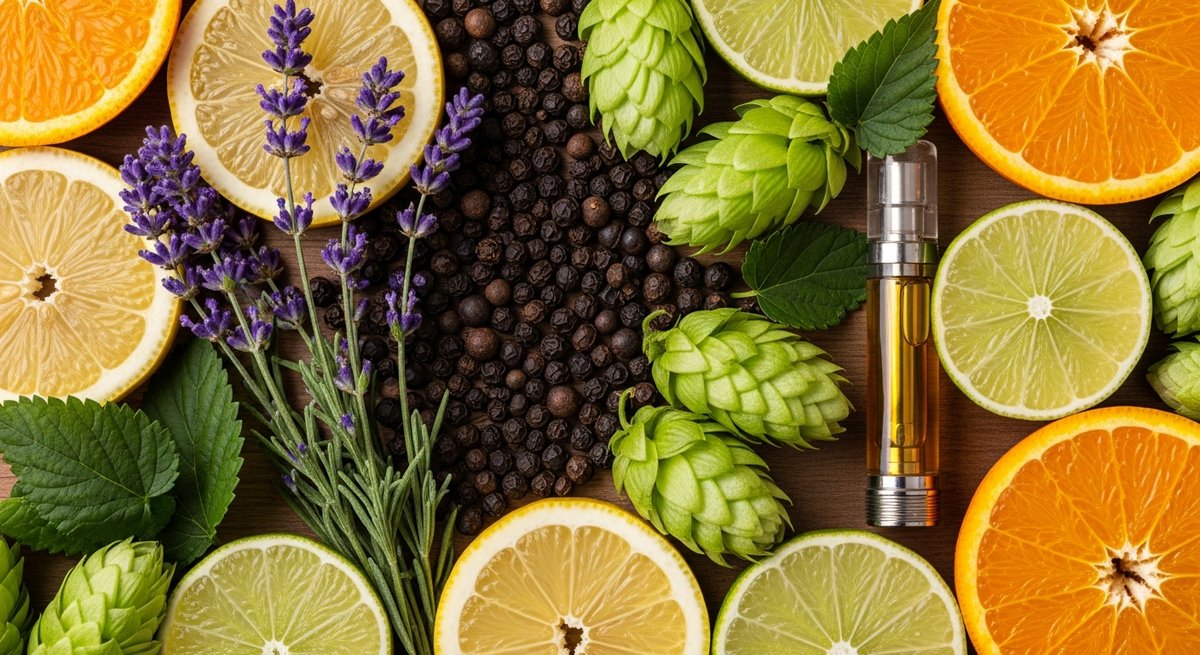
Terpenes are the aromatic compounds that give cannabis its smell and flavor, but they’re not just cosmetic. Several terpenes interact directly with receptors involved in pain and inflammation. If you want to go deeper on this topic, the breakdown of which terpenes work best in delta 8 vape cartridges is worth reading alongside this one.
Beta-caryophyllene is one of the most researched terpenes for pain specifically. It’s a CB2 receptor agonist, which means it can modulate inflammatory pain signaling without producing psychoactive effects. It’s found in high concentrations in strains like GSC (Girl Scout Cookies), Gelato, and various OG crosses. Myrcene is the sedating terpene that dominates most indica-leaning strains and contributes to the body-heavy feeling associated with relaxing into pain relief. Linalool adds a similar quality with anxiolytic properties that complement muscle relaxation.
For daytime pain management, limonene and pinene are more useful. Both have some anti-inflammatory activity and are associated with mental clarity rather than sedation. A strain heavy in these two is more likely to let you stay functional while taking the edge off soreness.
Best Strain Types for Back Pain and Muscle Soreness
Indica-leaning strains tend to have higher myrcene levels, heavier sedation, and are generally more appropriate for evening use when your only job is to rest and recover. OG Kush, Granddaddy Purple, and Northern Lights are classics in this category. Vaped in a cartridge format, they deliver a muscle-relaxing effect that pairs well with a heating pad and a horizontal position.
Hybrid strains like GSC, Wedding Cake, and Blue Dream occupy a middle space that many people find more practical. They dull pain without completely flattening your energy, which is useful if you’re dealing with chronic back issues and still need to function. The beta-caryophyllene content in GSC in particular makes it a strong candidate for people whose soreness has an inflammatory component.
Sativa-leaning strains are less instinctive for pain but can work well for people who find that heavier strains amplify discomfort by making them focus more on their body. A low-to-moderate dose of a limonene-forward sativa can create enough mental shift to reduce pain perception without the couch-lock that makes indicas feel claustrophobic for certain users.
Product Picks Worth Considering
For daytime functionality without heavy sedation, a Tangie-forward delta 8 cartridge fits the bill well. Tangie’s limonene-dominant profile keeps the mental load light while still delivering the analgesic properties of delta 8 THC. Binoid’s delta 8 Tangie cartridge is a reliable option – the full-gram format and terpene-forward distillate make it a solid choice for chronic soreness that doesn’t require total shutdown.
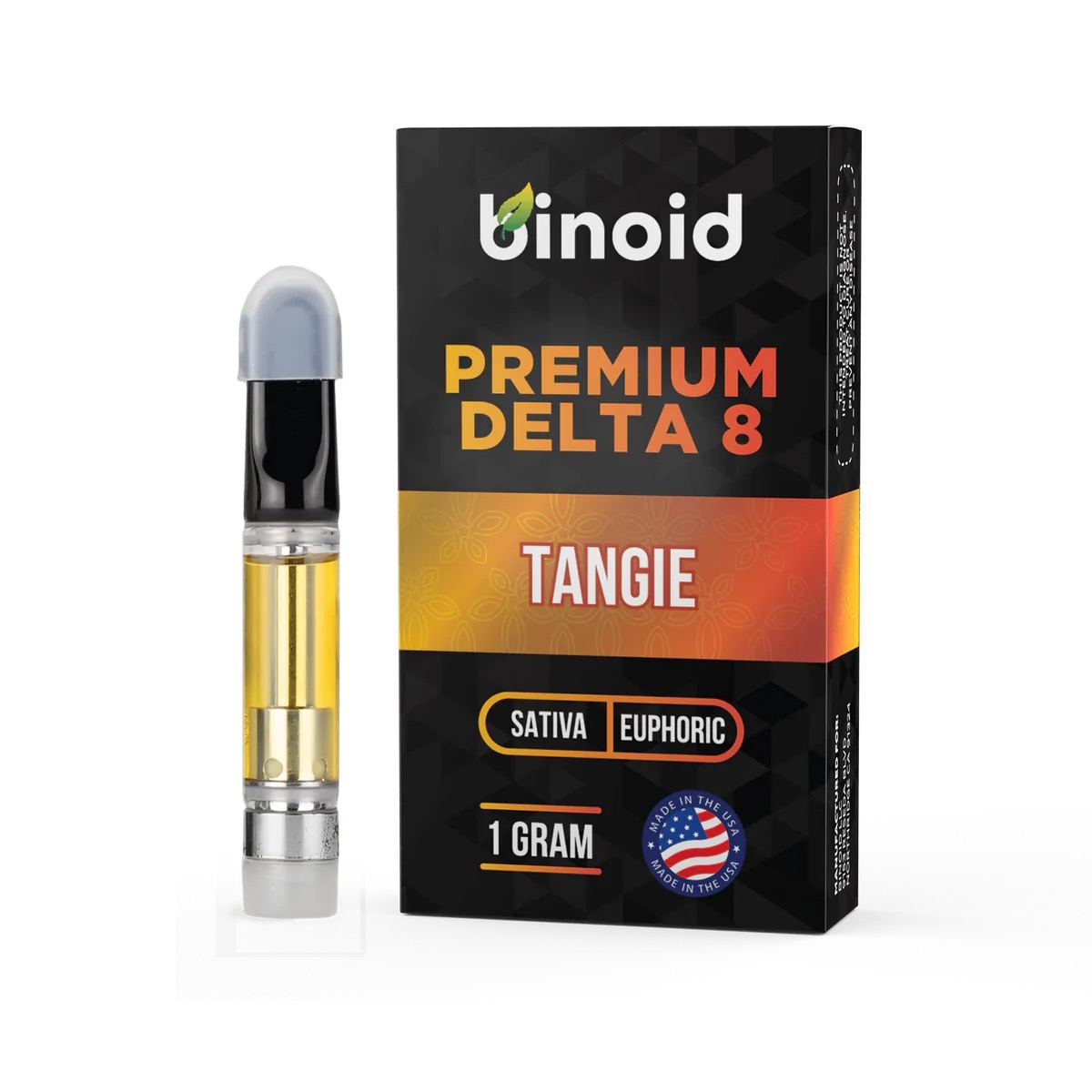
Binoid Delta 8 THC Vape Cartridge – Tangie
Delta 8 distillate with Tangie terpenes; limonene-forward profile suited for daytime pain relief
For evening or night use when back pain is interfering with sleep, a dual-chamber vape covering both a sativa and an indica profile gives you real versatility. Cookies’ 2G Dual Chamber Vape in Adios MF and Miami Mint lets you use both chambers depending on where the evening takes you – more uplift earlier, more body-relaxing effect as you wind down.
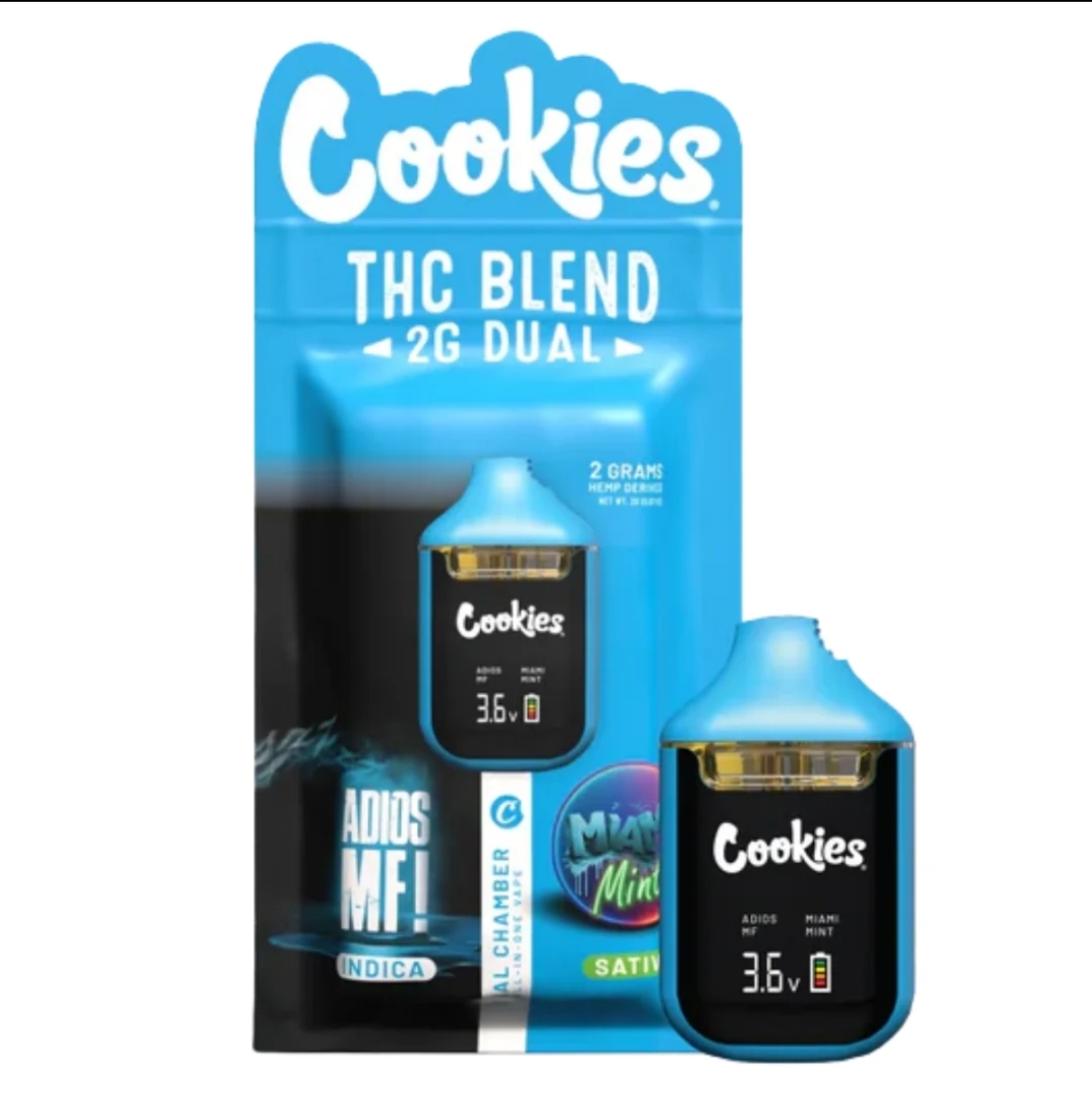
Cookies 2G Dual Chamber Vape – Adios MF & Miami Mint
2-gram dual-chamber disposable with two distinct strain profiles for evening flexibility
When Pain Keeps You Up at Night
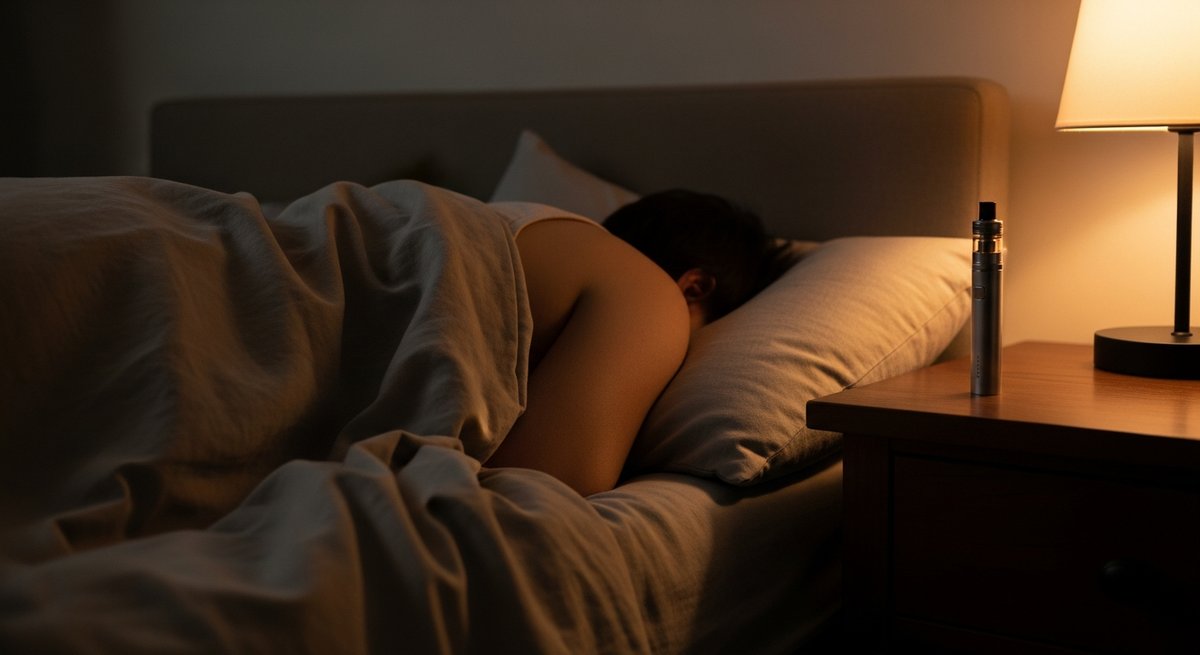
Back pain and muscle soreness have a cruel relationship with sleep. You’re exhausted from the physical stress, but the discomfort won’t let you relax enough to drop off. High-myrcene, indica-dominant strains are well suited here. If you’re specifically trying to address pain-disrupted sleep with a vape, the curated strain and product breakdowns in the guide to the best vapes for sleep, strains and products cover that overlap in much more depth.
Dosing matters here especially. Too much THC close to bedtime can fragment sleep even when it helps you fall asleep faster. Starting with one or two draws and giving it 15 minutes before deciding whether to take more is genuinely good practice. CBD-rich products also earn their keep for pain-related sleep issues – the absence of heavy psychoactivity means you’re less likely to wake up foggy.
Expert Insight
Dr. Alexander Tabibi
Dr. Alexander Tabibi
A preclinical study by Klauke et al. found that oral beta-caryophyllene (BCP) reduced both inflammatory and neuropathic pain in mouse models via CB2 receptor activation. BCP also reduced spinal neuroinflammation and showed no evidence of tolerance development after prolonged treatment – a meaningful distinction from many conventional analgesics.
The study used animal models, so direct translation to human musculoskeletal pain requires caution. What it supports, in preclinical terms, is a mechanism by which terpene-rich cannabis products with substantial beta-caryophyllene may engage peripheral pain and immune pathways differently than THC or CBD alone. Human clinical data for this specific pathway remain limited.
Klauke et al. (2014). The cannabinoid CB2 receptor-selective phytocannabinoid beta-caryophyllene exerts analgesic effects in mouse models of inflammatory and neuropathic pain. European Neuropsychopharmacology, 24(4):608-20. PMID: 24210682
Reading a Lab Panel Before You Buy
Learning to read a certificate of analysis (COA) gives you a real edge when choosing a vape for back pain or muscle soreness. Most reputable brands post these documents on their websites. Look for total cannabinoid percentages, confirm the presence of beta-caryophyllene and myrcene in the terpene section, and check that pesticide and residual solvent panels show clean results. A strain name on a label tells you very little on its own – the actual lab numbers tell you what you’re working with.
Frequently asked questions
What is the best strain to vape for back pain during the day?
Limonene-forward hybrids like Tangie or Blue Dream work well for daytime back pain. They reduce discomfort without heavy sedation, letting you stay functional. A delta 8 cartridge in a similar terpene profile is worth considering if you want milder psychoactivity.
Does vaping cannabis help with pain faster than other methods?
Yes, vaping delivers cannabinoids directly into the bloodstream through the lungs, so effects can be felt within minutes. This makes it useful for quick relief compared to edibles, which can take much longer to kick in.
Which terpenes should I look for in vape strains for muscle pain?
Myrcene is known for its sedative, muscle-relaxing effects, while caryophyllene may help reduce inflammation. Linalool can also add a calming effect that complements pain relief.
Are high-THC vape strains better for back pain?
Higher THC levels can provide stronger pain relief, but they also increase the risk of anxiety or dizziness for some users. Many people find a balanced THC-to-CBD ratio offers effective relief with fewer side effects.
Can CBD vape strains help with muscle soreness?
Yes, CBD-dominant strains can help reduce inflammation and discomfort without causing a strong psychoactive effect. They’re often a good option for daytime use or for those sensitive to THC.
Sources
Baron et al. (2018). Medicinal Properties of Cannabinoids, Terpenes, and Flavonoids in Cannabis, and Benefits in Migraine, Headache, and Pain: An Update on Current Evidence and Cannabis Science. Headache, 58(7):1139-1186. PMID: 30152161
Klauke et al. (2014). The cannabinoid CB2 receptor-selective phytocannabinoid beta-caryophyllene exerts analgesic effects in mouse models of inflammatory and neuropathic pain. European Neuropsychopharmacology, 24(4):608-20. PMID: 24210682
Important Notice
Cannabis affects individuals differently. If you have a history of anxiety, panic disorder, or other mental health conditions, consult a qualified healthcare provider before using any cannabis product. This article is for informational purposes only and does not constitute medical advice. If you experience severe anxiety, chest pain, difficulty breathing, or feel you are in crisis, call 911 or go to your nearest emergency room immediately.
For adults 21+ only. Cannabis laws vary by state. This content is intended for informational purposes only and does not constitute medical or legal advice. If you are experiencing a medical emergency, call 911 or go to your nearest emergency room immediately.