🚛 FREE DISCREET SHIPPING ON ALL ORDERS $49+








Best Carts for Creativity: Strains for Painters Makers and Writers
You have a canvas, a blank document, or a lump of clay in front of you. You also have a vape cart in your hand and a question worth asking: will this help or hurt what comes next? It depends on more than whether you grabbed an indica or a sativa. Terpene profile, cannabinoid balance, and dose all shape whether


You have a canvas, a blank document, or a lump of clay in front of you. You also have a vape cart in your hand and a question worth asking: will this help or hurt what comes next? It depends on more than whether you grabbed an indica or a sativa. Terpene profile, cannabinoid balance, and dose all shape whether you land in a loose creative headspace or spend an hour second-guessing every brushstroke. This guide breaks down what to look for so you can make a smarter pick before your next session.
Why carts and creative work pair the way they do
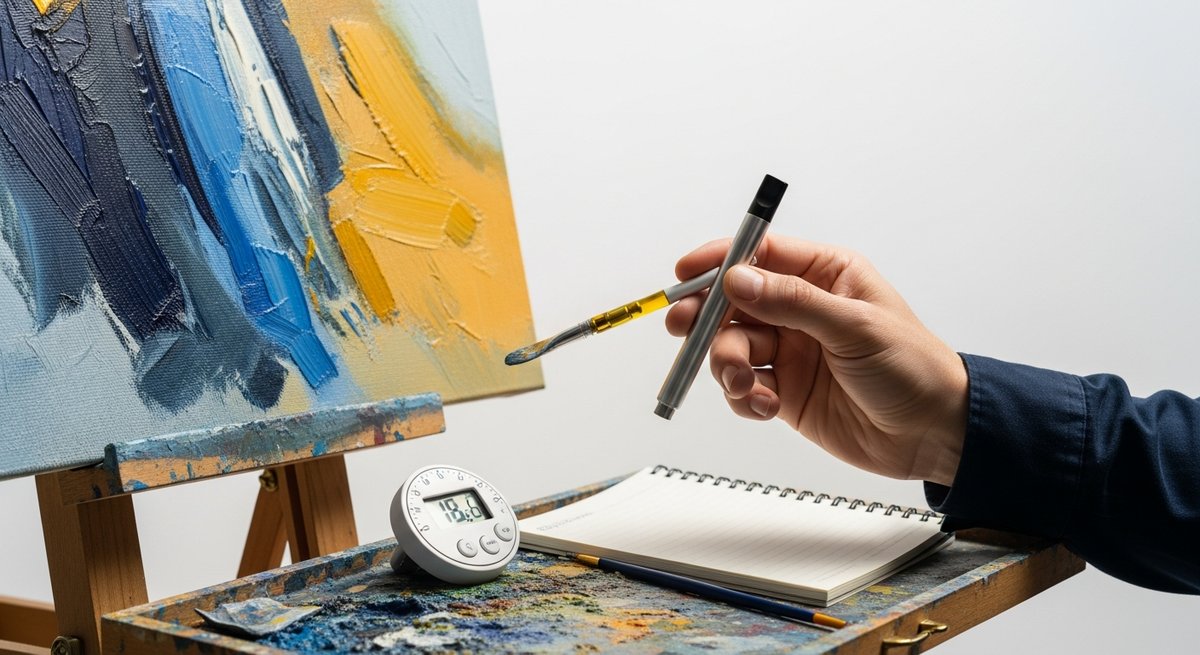
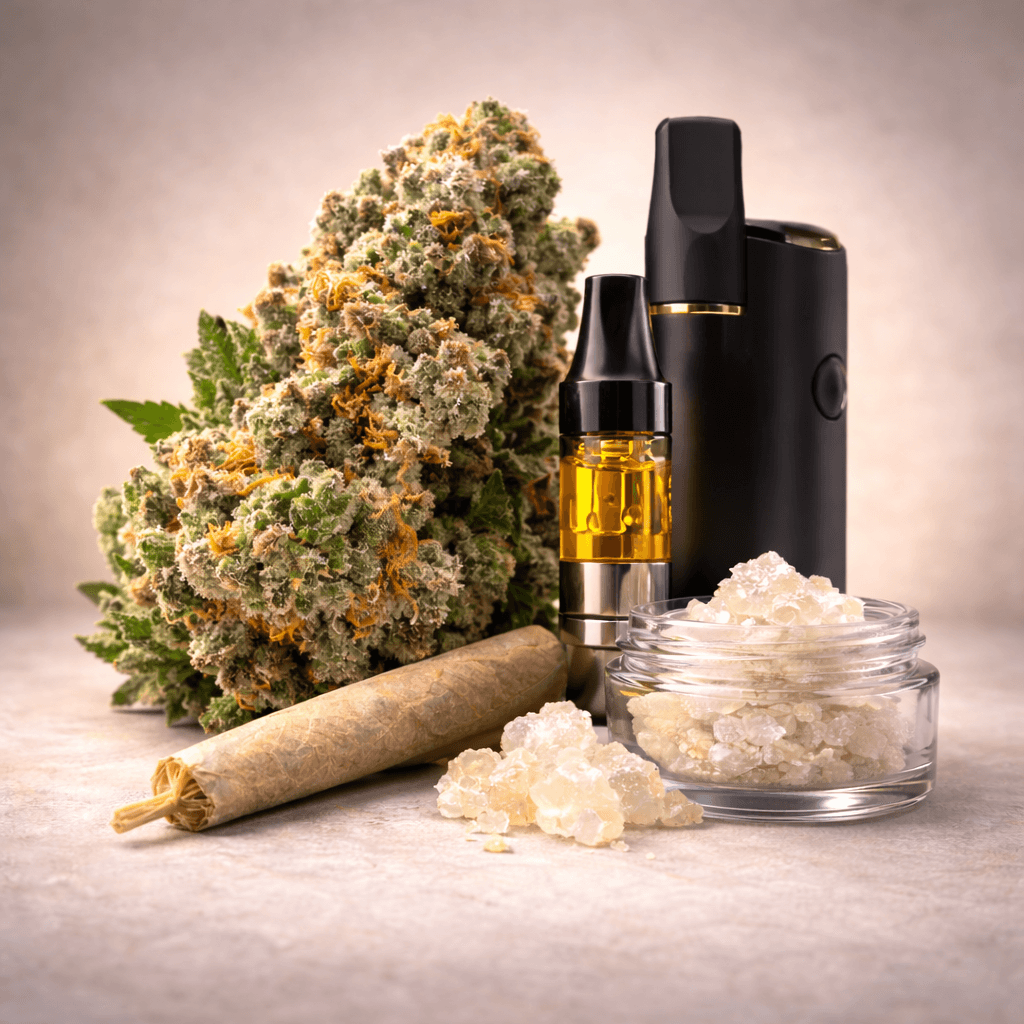
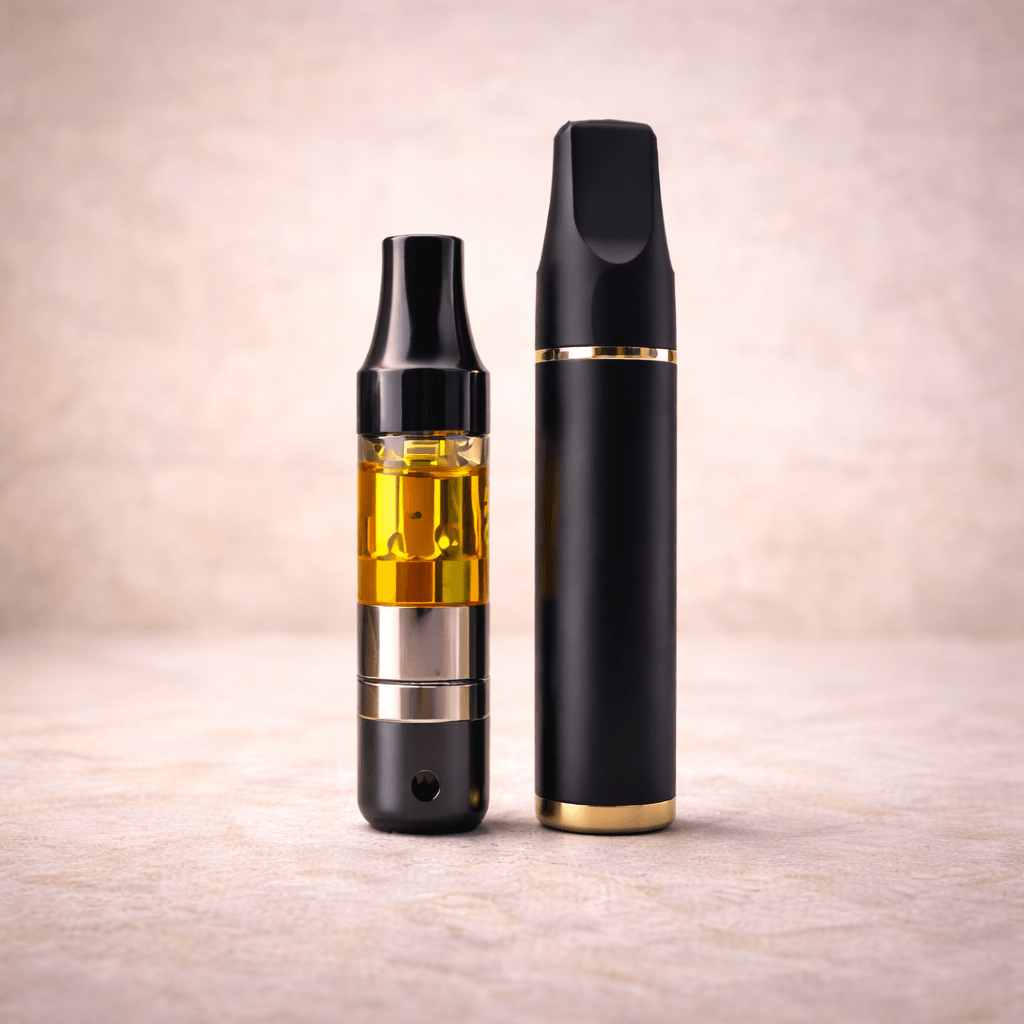
Vape cartridges deliver fast onset, usually within a few minutes, and give you dose control that flower can’t match puff for puff. For creative work, both of those qualities matter. You need to feel the effect before you commit to a two-hour painting session, not discover mid-canvas that you overdid it. A cart lets you take one or two measured draws, wait, then decide whether you need more.
The faster you can gauge where you are, the easier it is to dial in a state that loosens your internal critic without shutting down your judgment. Painters, writers, and makers all report that sweet spot differently. Writers often describe wanting ideas to flow without losing the thread. Visual artists tend to lean toward heightened sensory detail. Makers want focus without rigidity. No single cultivar covers all three, but the right terpene and cannabinoid profile can get you close to your own sweet spot.
Terpenes that actually move the needle for creative work

Terpenes are the aromatic compounds in cannabis that shape both flavor and effect. They interact with cannabinoids and with your own biology, and the combination matters more than THC percentage alone. For creativity, a handful of terpenes consistently come up in both user reports and early research. If you want to go deeper on how terpenes shape your experience in a vape specifically, the breakdown on terpene profiles in Delta 8 vape carts is worth reading alongside this one.
Limonene tends to produce an uplifted, energized mood. It’s common in citrus-forward cultivars and shows up in many sativa-leaning carts marketed toward daytime use. If you feel mentally slow or anxious before sitting down to write, limonene-forward options are worth trying first.
Pinene (alpha-pinene) is associated with alertness and memory retention. That last part is useful for writers who worry about losing their train of thought mid-session. Pinene-rich cultivars include many Jack Herer and Pine OG descendants.
Terpinolene appears in cultivars like Dutch Treat and Jack Herer. It has a complex profile – floral, herbal, and slightly fruity – and users frequently describe it as producing an active, creative, slightly euphoric headspace rather than sedation.
Beta-caryophyllene is the one terpene that also acts as a cannabinoid receptor agonist. It binds to CB2 receptors and has a calming, grounding effect that can take the edge off anxiety without sedating you. For makers doing repetitive hands-on work, a cart with notable beta-caryophyllene content can help you stay present without the mental churn.
Expert Insight
Dr. Alexander Tabibi
Dr. Alexander Tabibi
A comprehensive review of cannabinoids and terpenes finds evidence suggesting that individual compounds, including terpenes like beta-caryophyllene, limonene, and pinene, each contribute distinct biological activity, and that their combined presence may produce effects that differ meaningfully from any single compound in isolation. This principle – sometimes called the entourage effect – is the reason terpene profile matters when you are choosing a cart for a specific task rather than general consumption.
The review covers a wide range of conditions and notes that strain-specific breeding guided by terpene content has clinical relevance. Applying that logic to creative use, a cart with a thoughtfully retained terpene profile will behave differently than a distillate-dominant option even at the same THC concentration. The authors are careful to note that most terpene-specific evidence comes from smaller studies and preclinical data; larger controlled trials are still limited.
Baron et al. (2018). Medicinal Properties of Cannabinoids, Terpenes, and Flavonoids in Cannabis, and Benefits in Migraine, Headache, and Pain: An Update on Current Evidence and Cannabis Science. Headache, 58(7):1139-1186. PMID: 30152161
Cultivar profiles worth seeking for painters, makers, and writers
These cultivars appear frequently in carts positioned for uplifted, creative, or focused effects. They are not universal, and your response will depend on your tolerance and neurochemistry – but they are consistently popular among people who create for a reason.
Tangie
Tangie is a limonene-dominant, citrus-forward cultivar descended from Tangerine Dream. It has a reputation for social, bubbly energy and visual brightness. Painters in particular respond to its sensory lift. Writers report that it loosens the first-draft critic – the internal voice that tells you every sentence is wrong before you finish it.
If Tangie appeals to you, the Binoid Delta 8 THC Vape Cartridge in Tangie is a cart that takes this cultivar’s profile into a Delta 8 format, which many users find produces a somewhat gentler, clearer-headed version of the classic effect. For those who find high-THC carts too intense for focused work, Delta 8 formulations with a strong terpene profile are often a useful middle ground.
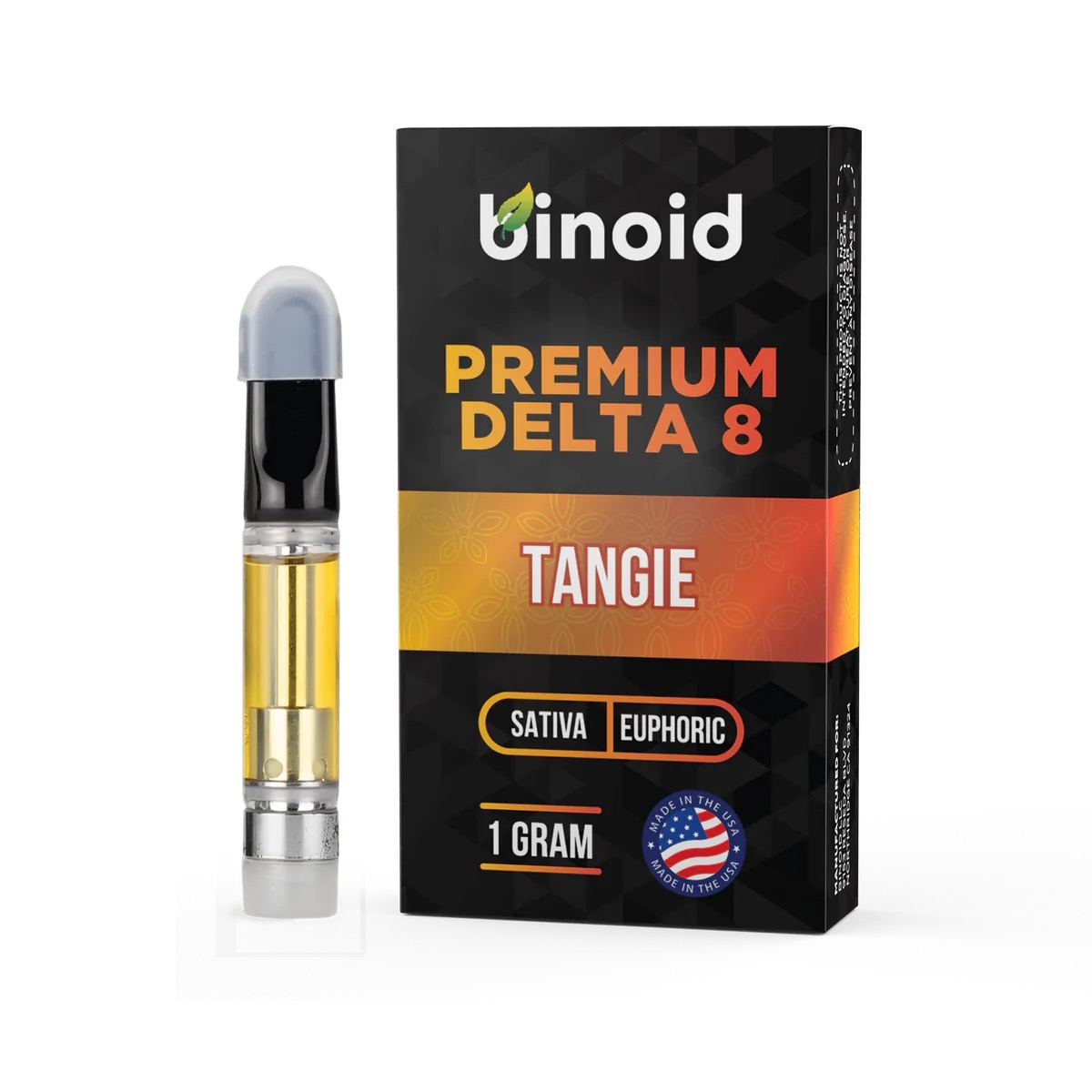
Binoid Delta 8 THC Vape Cartridge – Tangie
Citrus-forward Delta 8 cart with limonene-rich Tangie terpene profile
Jack Herer and Jack-derived cultivars
Jack Herer is one of the most cited cultivars among creatives, and the reason is its terpene combination: terpinolene and pinene together with a moderate THC ceiling tend to produce focus alongside the high rather than replacing it. Writers who need to produce actual output, not just feel inspired, frequently default to Jack-family carts for deadline sessions. The effect is energized without being jittery in most users at moderate doses.
Durban Poison
Durban Poison is a landrace cultivar from South Africa with a distinctive terpinolene-heavy profile and a clean, almost stimulant-like energy. It lacks the body heaviness of many hybrids, making it well suited for standing work like pottery, printmaking, or illustration. The effect tends to be more cerebral and less sedating than most modern hybrids. It is worth noting that its uplifting intensity can push into anxiety territory for THC-sensitive users – low and slow is the right approach on the first try.
Green Crack and Strawberry Cough
Both cultivars are popular for daytime creative work because they deliver high-energy, clear-headed effects without the sedation that can creep in with heavier hybrids. Green Crack is often myrcene-forward but still lands in an alert, motivated headspace at lower doses. Strawberry Cough carries some caryophyllene alongside its characteristic fruity profile and tends to produce a slightly softer, more socially pleasant lift.
Dual-chamber options for creative sessions with shifting moods

Creative sessions don’t stay in one emotional register. You might start a writing session needing an uplifted push, then want something calmer when you move into editing. Dual-chamber disposables address this by giving you two distinct cultivar profiles in one device, so you can switch without reaching for a second cart.
For makers who move between high-energy generative work and more careful, precise finishing work, this format has a practical appeal beyond novelty. The Cookies 2G Dual Chamber Vape in Triple Scoop and Apples and Bananas pairs two distinct flavor and effect profiles that many users find useful for exactly this kind of session arc – one profile for getting started, one for settling into detail work.
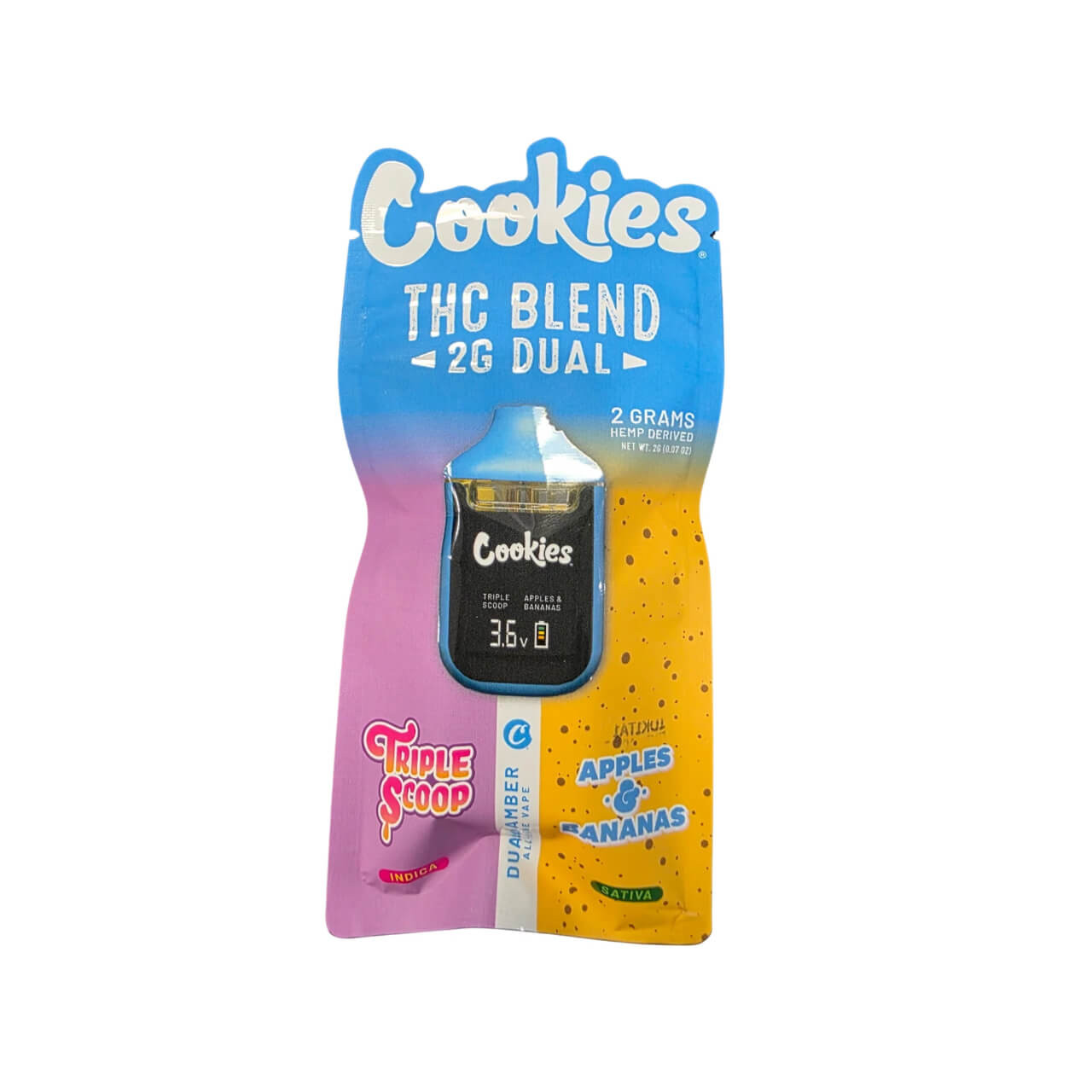
Cookies 2G Dual Chamber Vape – Triple Scoop & Apples and Bananas
Two cultivar profiles in one device for shifting creative moods
Dose matters more than cultivar for most creative work
The same cultivar at a low dose and a high dose can produce opposite results for creative output. Low doses of THC tend to support divergent thinking – the kind that helps with brainstorming, free writing, and visual experimentation. Higher doses often shift toward convergent fixation, where one idea feels extremely important and nothing else can compete. That state is rarely useful for producing finished work.
Start low, go slow is not a cliche here – it is the practical framework for any creative session. Two modest draws and a 10-minute wait before your work begins is a sensible protocol if you are new to a cart. You can always add; you cannot subtract once the effect is underway.
It is also worth keeping in mind that anxiety – which carts can sometimes trigger at higher doses – is one of the biggest creative blockers. If you have had anxious experiences with carts before, the guide on THC carts for anxiety and avoiding paranoia covers cultivar and dose strategies directly relevant to that problem.
Expert Insight
Dr. Alexander Tabibi
Dr. Alexander Tabibi
A systematic review of 31 studies on medical cannabis and mental health found that acute cognitive effects, including changes in attention, working memory, and processing speed, are among the most consistently documented short-term outcomes. The authors note that these effects are dose-dependent and may present differently across individuals. For creative work, this is directly relevant: the cognitive window in which cannabis may support rather than hinder complex thinking is narrow and varies by person.
The review also notes that individuals with existing vulnerabilities to psychotic symptoms may experience worsening with cannabis use. That finding underscores the importance of honest self-assessment before choosing cannabis as a creative tool. Evidence in this area continues to develop, and the authors emphasize that most studies were observational or had small sample sizes, limiting what can be concluded with certainty.
Walsh et al. (2016). Medical cannabis and mental health: A guided systematic review. Clinical Psychology Review, 51:15-29. PMID: 27816801
Matching the cart to the creative discipline
Not every creative discipline responds to the same effect profile, and it is worth thinking about what your particular work actually demands. Writing requires sustained verbal reasoning, so a cart that dims your vocabulary or slows retrieval can be counterproductive even if it feels pleasantly relaxed. Painting and illustration benefit from heightened color perception and loosened perfectionism, which is where limonene-dominant, energized profiles tend to earn their reputation. Making and craft work – especially anything requiring hand-eye coordination – benefits most from a light, focused lift rather than deep psychoactivity.
If your creative work runs late into the evening and bleeds into sleep, it may be worth reading about how cart use can affect your wind-down. The top cart picks for sleep quality breaks down which profiles transition well into rest rather than leaving you wired at midnight after a creative session.
What to look for on the label before you buy
Not all cart labels tell you enough to make a confident choice. Here is what to prioritize when evaluating options at a licensed dispensary or on a reputable online platform:
- Terpene panel, not just THC%. A cart listing limonene, terpinolene, or pinene as primary terpenes is far more informative than one that only lists total cannabinoids.
- Live resin or full-spectrum distillate. These formats retain more of the original terpene profile than standard distillate, meaning the entourage effect argument from the research actually applies.
- Third-party lab reports (COAs). Any legitimate cart will have a certificate of analysis confirming cannabinoid and terpene content and screening for contaminants.
- Hardware quality. Ceramic coil carts heat more evenly than cotton-wick designs and preserve terpene integrity at lower temperatures – relevant for the aromatic compounds you are actually seeking.
Temperature setting also matters if your device allows control. Lower temperature draws (around 180-200 degrees Celsius) preserve terpenes better than high-heat rips and produce a cleaner, more nuanced effect that is generally more useful for sustained creative work than a single large hit.
FAQs: Best Carts for Creativity: Strains for Painters, Makers, and Writers
What makes a vape cart good for creativity?
Many users look for vape carts that provide an uplifting, clear-headed experience without excessive sedation. The ideal cart often combines a moderate THC level with terpene profiles associated with focus, energy, and inspiration.
Which terpenes are commonly associated with creative effects?
Limonene, pinene, and terpinolene are frequently mentioned by cannabis consumers seeking creative experiences. These terpenes are often found in strains favored by artists, writers, and makers.
Are sativa carts better for creativity?
Many consumers prefer sativa-dominant or sativa-leaning hybrid carts for creative projects because they are commonly associated with mental stimulation and energy. However, individual responses can vary significantly.
What are some popular strains known for creativity?
Strains often mentioned in creative circles include Jack Herer, Sour Diesel, Blue Dream, Super Lemon Haze, and Green Crack. Many users report that these strains support brainstorming and creative exploration.
Sources
Baron et al. (2018). Medicinal Properties of Cannabinoids, Terpenes, and Flavonoids in Cannabis, and Benefits in Migraine, Headache, and Pain: An Update on Current Evidence and Cannabis Science. Headache, 58(7):1139-1186. PMID: 30152161
Walsh et al. (2016). Medical cannabis and mental health: A guided systematic review. Clinical Psychology Review, 51:15-29. PMID: 27816801
Important Notice
Cannabis affects individuals differently. If you have a history of anxiety, panic disorder, or other mental health conditions, consult a qualified healthcare provider before using any cannabis product. This article is for informational purposes only and does not constitute medical advice. If you experience severe anxiety, chest pain, difficulty breathing, or feel you are in crisis, call 911 or go to your nearest emergency room immediately.
For adults 21+ only. Cannabis laws vary by state. This content is intended for informational purposes only and does not constitute medical or legal advice. If you are experiencing a medical emergency, call 911 or go to your nearest emergency room immediately.